
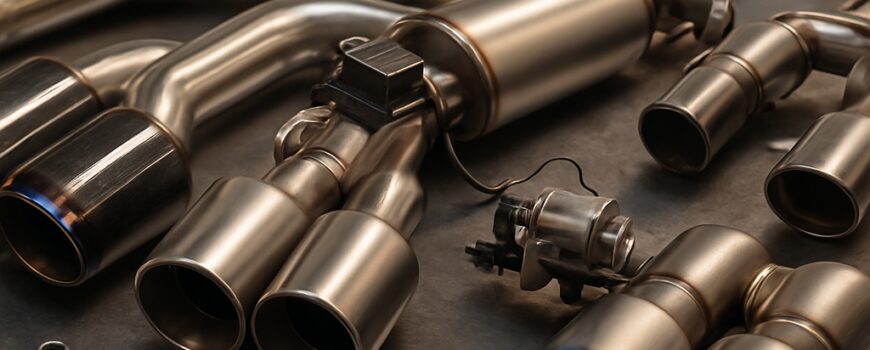
Few bolt-on upgrades alter a car’s character like an IPE Exhaust; it shifts the auditory and performance profile instantly. If you want a frank, evidence-driven breakdown of how top valved and performance systems stack up, this analysis isolates sound, build, fitment, and measurable gains across FI Exhaust, Armytrix Exhaust, Akrapovic Exhaust, Valvetronic Exhaust, and Ryft Exhaust options.
IPE Exhaust: sound signature and engineering realities
IPE systems are engineered for theatrical low-end presence and a pronounced mid-range bark. Measured objectively, their valvetronic tuning leans toward aggressive resonance rather than subtle harmonic refinement.
Practically speaking, that means more cabin intrusions at cruising RPMs and a distinct boost in perceived loudness. If your priority is a statement exhaust with pronounced burble and throaty pops, IPE delivers; if you want clinical refinement, expect trade-offs.
FI Exhaust and its performance trade-offs
FI Exhaust designs emphasize flow optimization and modular components. Their architecture favors lower backpressure and incremental horsepower gains on high-rev engines.
However, FI systems sometimes sacrifice mid-range torque for top-end power, depending on pipe diameter and muffler packing. Consequently, tuning strategy and ECU adaptations are essential to realize advertised gains.
Armytrix Exhaust: valved dynamics under scrutiny
Armytrix specializes in electronically actuated valves and aggressive sound profiles. The systems are versatile—switchable between stealth and full-throat modes—but their loudest calibrations can create persistent drone at steady throttle positions.
From a build perspective, Armytrix uses robust stainless alloys and offers precise valve actuation. Nevertheless, real-world installation shows variance in fitment tolerance across different chassis, so expect potential fabrication or adapter needs.
Akrapovic Exhaust: materials, weight, and measurable gains
Akrapovic remains the benchmark for lightweight construction and acoustic tuning. Titanium options deliver tangible weight savings and a cleaner harmonic spectrum without harsh overtones.
On a dyno, Akrapovic frequently demonstrates consistent gains across the rev range and a driver-friendly resonance profile. The premium price reflects material choice and engineering rigor rather than theatrics.
Valvetronic Exhaust: control and customization
Valvetronic systems provide granular valve behavior and often integrate with OEM electronics. This control allows for tailored aggression levels without unnatural transitions between open and closed states.
That said, integration complexity is higher. Expect additional software work and occasional calibration to avoid limp-mode triggers or erratic idle behavior, especially on newer ECUs.
Ryft Exhaust: niche strengths and practical compromises
Ryft focuses on balance—acceptable sound levels with respectable flow. Their systems often target enthusiasts seeking durability and a sporty note without excessive cabin drone.
Ryft’s appeal is cost-to-value for drivers prioritizing consistency and lower maintenance. The trade-off is that Ryft rarely produces the extreme sonic character of IPE or Armytrix at full open-valve settings.
Comparative metrics: sound, weight, and horsepower
When evaluated side-by-side, sound profiles vary from Akrapovic’s harmonic precision to IPE’s theatrical presence. Weight reduction is most significant with titanium Akrapovic options, while stainless systems like Armytrix or FI offer robustness at lower cost.
Carefully read dyno charts: peak horsepower can be similar among top systems, but torque curves and transient response reveal real driving differences. Small gains on paper can translate to pronounced on-road behavior depending on gearing and turbo lag.
Fitment, warranty, and compliance considerations
Fitment tolerance and bumper clearance are common pain points. Armytrix and Ryft sometimes require vehicle-specific adapters; Akrapovic typically provides better OEM-fit options. Warranty and emissions compliance differ by brand and region, so check local regulations before purchase.
Moreover, aftermarket systems that alter backpressure can necessitate remapping. Factor ECU tuning and potential catalytic converter issues into total cost of ownership.
How to choose: a practical decision framework
First, define priorities: sound charisma, weight savings, raw flow, or integrated control. Next, listen to side-by-side recordings in a similar vehicle platform—real acoustic samples reveal more than specifications.
Additionally, request dyno sheets from your vendor, inspect construction material and flange quality, and confirm warranty coverage. Finally, budget for ECU calibration and potential fitment adjustments.
Ultimately, selecting between an IPE Exhaust, FI Exhaust, Armytrix Exhaust, Akrapovic Exhaust, Valvetronic Exhaust, or Ryft Exhaust is about aligning engineering trade-offs with your driving priorities. Use targeted listening tests, dyno evidence, and fitment checks as your primary selectors, and budget for installation and tuning to secure the engineered performance you expect.