
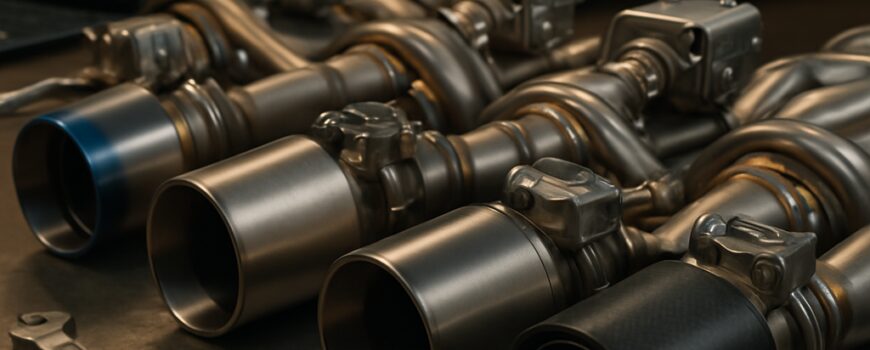
IPE Exhaust systems often headline conversations about valved performance pipes, but the true question is which system aligns with your priorities: sound authenticity, weight savings, or day-to-day usability. This piece cuts through marketing rhetoric to evaluate IPE, FI Exhaust, Armytrix Exhaust, Akrapovic Exhaust, Valvetronic Exhaust, and Ryft Exhaust on measurable criteria. If you want a decisive, evidence-oriented take rather than enthusiast hyperbole, read on.
IPE Exhaust: Sound Character and Usability
IPE typically emphasizes a deep, aggressive tone with pronounced mid-range resonance. In practical terms, the brand targets drivers who prioritize theatrical sound on throttle while tolerating some cabin drone at cruising speeds.
From a materials perspective, IPE offers stainless and titanium options; however, installation fitment and noise control often dictate the final experience more than the alloy choice. If you demand controllable loudness and OEM-like refinement, expect trade-offs in either complexity or cost.
FI Exhaust: Tuning Flexibility and Build Quality
FI Exhaust systems position themselves as tuners’ favorites due to modular components and straightforward valve integration. That modularity favors custom backpressure tuning and easier ECU mapping when optimizing for torque or top-end flow.
Moreover, the construction quality is typically consistent, with mandrel-bent piping and corrosion-resistant finishes. That said, FI’s sound signatures lean toward utilitarian rather than sculpted—effective but less nuanced than some competitors.
Armytrix Exhaust: App-Controlled Valve Dynamics
Armytrix made a name by combining aggressive acoustics with smartphone-controlled valve actuation. The result is an appealing blend of on-demand theatrics and suburban practicality when you silence the system.
Nevertheless, the electronics add points of failure and complexity. In maintenance terms, the app-enabled convenience must be balanced against potential warranty or reliability considerations when used on daily-driven vehicles.
Akrapovic Exhaust: Materials Science and Weight Savings
Akrapovic consistently leads on material innovation, especially with titanium and carbon-fiber components that substantially reduce mass. That weight advantage translates to tangible handling improvements, not just aesthetic prestige.
Acoustically, Akrapovic systems are engineered with harmonic precision—refined, with a clear high-end bite but generally less rawness than aftermarket rivals. Expect a premium price for engineering excellence and strong OEM partnerships.
Valvetronic Exhaust: Valve Mechanisms and Sound Tuning
Valvetronic systems deserve scrutiny for their valve actuation logic and how that interacts with engine mapping. The key difference is whether the valves alter backpressure curves meaningfully or simply redirect flow for sound.
Practically speaking, Valvetronic’s success lies in software calibration: well-tuned valves can mitigate drone and preserve low-end torque, while poor calibration can create unpredictability in response and emissions behavior.
Ryft Exhaust: Value Proposition and Everyday Performance
Ryft aims for a balance between cost-effectiveness and satisfying sound, positioning itself as an accessible entry into valved systems. For budget-conscious buyers seeking louder exhaust without premium pricing, Ryft often checks the right boxes.
However, compromises are visible in finish details and acoustic refinement compared to higher-tier offerings. If budget constrains you, Ryft can be a pragmatic choice; just temper expectations on longevity and fitment tolerances.
Comparative Criteria: Sound, Weight, and Installation
When comparing these brands, evaluate three objective axes: acoustic character (tone, pitch, and drone), mass and materials (titanium vs stainless steel), and installation complexity (electrical valves, ECU mods). These metrics predict real-world satisfaction far better than marketing claims.
Furthermore, listen to systems in person—recordings lie. The interplay between engine tuning, exhaust length, and chambering means the same model can sound materially different across platforms.
Legal and Practical Considerations
Finally, consider emissions compliance, local noise regulations, and warranty implications. Modifying exhaust can affect resale value and serviceability, so document installations and retain OEM parts when possible.
Moreover, prioritize reputable installers who can verify fitment and advise on ECU calibrations to prevent check-engine lights or limp-modes after installation.
Choosing between IPE Exhaust, FI Exhaust, Armytrix Exhaust, Akrapovic Exhaust, Valvetronic Exhaust, and Ryft Exhaust ultimately depends on which compromises you accept: theatrical sound at the expense of cabin comfort, or engineered refinement with a premium price. To act on this analysis, shortlist systems that match your acoustic goals, test them in person when feasible, verify materials and warranty coverage, and plan for professional tuning. That approach ensures your chosen exhaust delivers measurable performance and a sound profile suited to daily use and spirited driving alike.