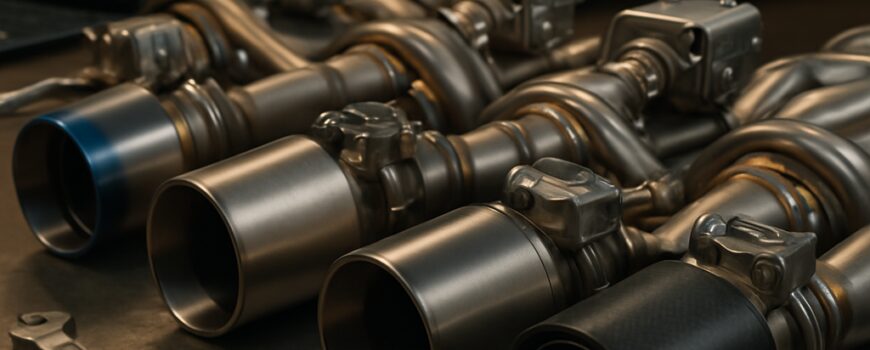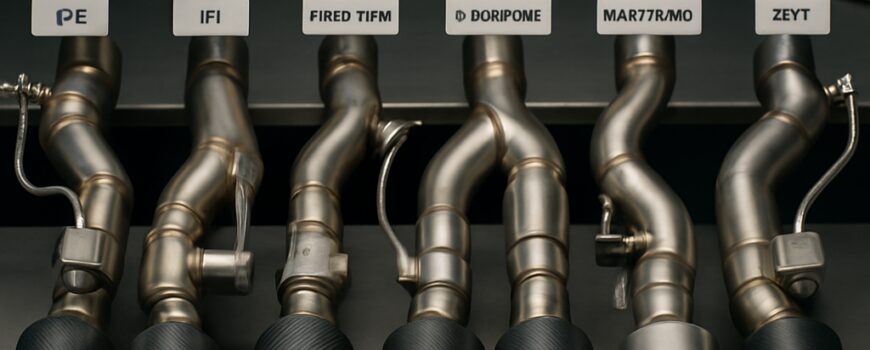
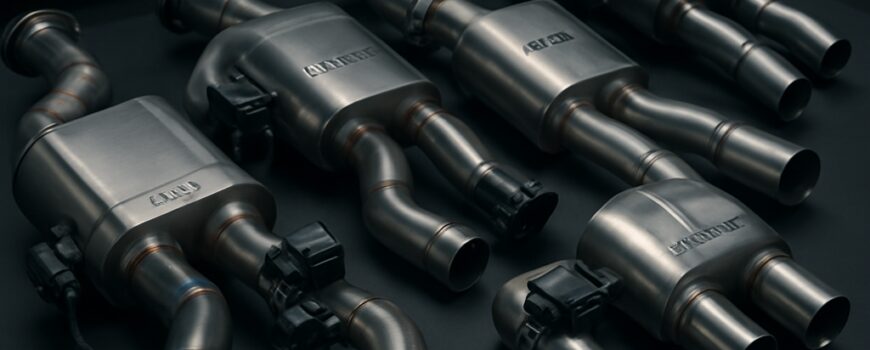
IPE Exhaust often headlines conversations about valved systems, and with good reason: it promises a specific combination of growl and engineering. If you are deciding between brands like FI Exhaust, Armytrix Exhaust, Akrapovic Exhaust, Valvetronic Exhaust, and Ryft Exhaust, the choice should be driven by measurable trade-offs, not marketing. This piece cuts through the noise to evaluate sound, materials, control systems, and real-world usability.
How IPE Exhaust and FI Exhaust differ in build quality and sound
Both IPE and FI offer valved performance exhausts that emphasize aggressive mid-range tone, yet they take different engineering approaches. IPE tends to emphasize resonance tuning and larger chambers to create an orchestral bark, while FI often uses more compact internals and enhanced flow for a raw, metallic note.
In practical terms, the distinction matters: if you want character and presence at cruise, IPE will deliver. If you prioritize sharpness at high RPM and minimal backpressure, FI’s hardware can be more efficient. Moreover, serviceability and available fitment kits vary considerably between the two brands.
Armytrix Exhaust and Akrapovic Exhaust: signature sound versus track-focused engineering
Armytrix is synonymous with loud, electronically valved systems that favor dramatic on/off transitions. Conversely, Akrapovic is engineering-centric, focusing on materials—titanium, Inconel options—and measured performance gains. That contrast defines their target buyers.
Where Armytrix sells emotion and auditory impact, Akrapovic sells weight savings, corrosion resistance, and documented dyno improvements. Transitioning from daily driving to track use, Akrapovic’s lighter assemblies and refined flow often yield better lap-time benefits than a purely theatrical system.
Materials, weight, and thermal behavior
Titanium and high-grade stainless steel change the equation. Akrapovic’s titanium sections reduce mass and heat soak; Armytrix often uses stainless with heavy-duty valving hardware. FI and IPE have mixed strategies depending on the model—steel for cost-effective durability, exotic alloys for flagship lines.
In short: if chassis balance and heat management are priorities, prioritize lighter materials even if initial sound isn’t as pronounced.
Valvetronic Exhaust and Ryft Exhaust: control systems and user experience
Valvetronic and Ryft represent a new wave of electronic valving with emphasis on integration and app-based control. Valvetronic systems often pair tightly with ECU and can offer multiple sound maps; Ryft focuses on modularity and user customization.
That said, integration depth matters. Systems that communicate with the vehicle’s CAN bus typically provide seamless transitions and fewer error codes. Conversely, bolt-on controllers that ignore the vehicle’s electronics may produce CELs or limp-mode triggers. In practical terms, check compatibility and aftermarket support before purchase.
Sound tuning, drone, and daily usability
All these brands advertise an ideal sound, but drone at cruising speeds remains the primary consumer complaint. Akrapovic tends to mitigate drone through chambering and flow optimization; Armytrix and IPE sometimes require additional resonators or software mapping to reduce cabin vibration.
Therefore, evaluate each system under the exact driving conditions you use most. A loud system that shines at 5,500 rpm but drones at 2,000–2,500 rpm can degrade daily usability significantly.
Installation, compliance, and long-term ownership
Installation complexity ranges from plug-and-play to full exhaust replacement with ECU remapping. Ryft and Valvetronic often aim for easier installs, while Akrapovic and FI may require bespoke hangers and thermal shielding. Armytrix sometimes mandates additional wiring for valve actuators and remote controls.
Compliance is critical: check local noise and emissions laws. Akrapovic has more documented homologation options in many markets; others may be strictly for off-road or track use. Warranty and dealer network should weigh into the decision—broken valving or actuator failure is a pain unless supported locally.
To choose wisely, prioritize a short checklist: desired sound profile, acceptable drone levels, weight savings versus cost, materials preference, and legal compliance. Test multiple systems on similar platforms, insist on dyno charts for power claims, and verify integration with your vehicle’s electronics. Take the time to match the system to how you actually drive, and you’ll avoid buyer’s remorse while maximizing both sound and function.