
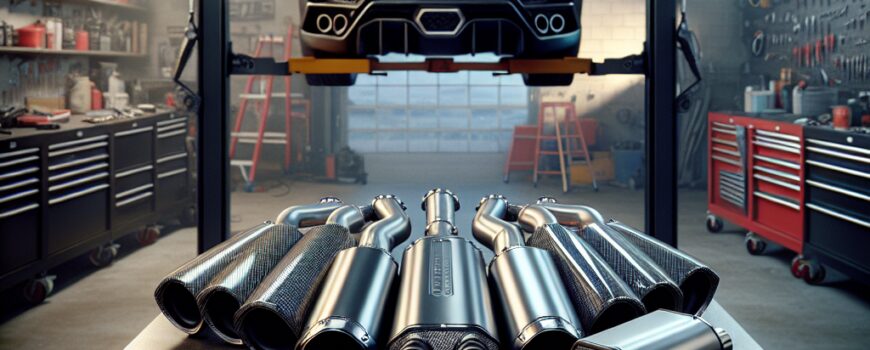
Choosing the right performance exhaust is often emotional, but it should be technical. The IPE Exhaust enters this comparison as a clear example: bold sound claims and valved control promise driver-versatility, but the reality depends on build, fitment, and engineering trade-offs.
IPE Exhaust: sound, engineering, and real-world value
IPE systems deliver a theatrical sound and aggressive valvetronic behavior that appeals to enthusiasts. However, raw volume and electronic valve logic sometimes prioritize theatrics over refinement.
Material choices are generally solid—stainless or titanium options exist—but installation complexity and ECU integration vary between models. Consequently, buyers should weigh brand cachet against exhaust weight, backpressure profiles, and warranty terms.
Sound character and tuning
IPE emphasizes a loud, mechanical tone with pronounced turbo flutter on some turbocharged platforms. That is satisfying for street presence, but on-track or daily driving the peak loudness can be intrusive.
FI Exhaust: modularity, efficiency, and fitment concerns
FI Exhaust systems aim for a balance: modular sections, adjustable valves, and a focus on flow efficiency. In practice, the modular design simplifies repairs but can introduce fitment tolerances that require precise alignment.
Performance gains are credible when paired with proper tuning; however, thermodynamic benefits depend on header design and internal baffling. Without a calibrated ECU map, perceived gains may be marginal.
Armytrix Exhaust: electronics-first performance
Armytrix positions itself around valvetronic sophistication and smartphone control. That electronic layer is convenient, but it adds complexity and more failure points than a purely mechanical valved system.
From an engineering perspective, Armytrix excels at sound staging and loudness control. Still, critics note increased maintenance needs for the actuators and wiring harnesses, especially in harsh climates.
Akrapovic Exhaust: materials, engineering pedigree, and cost
Akrapovic maintains a reputation for rigorous testing, lightweight titanium construction, and racing-derived flow optimization. This engineering pedigree is backed by consistent performance gains and diminished weight penalties.
The caveat is price—Akrapovic is often the premium option. For buyers prioritizing measurable gains in power-to-weight ratio and corrosion resistance, the investment is defensible. For those chasing pure sound theatrics, other brands may provide more volume per dollar.
Valvetronic Exhaust: valve integration and daily usability
Valvetronic-branded systems emphasize seamless valve transitions and driver-friendly sound profiles. Their advantage lies in more predictable valve actuation and often simpler ECU integration than aftermarket electronics-heavy solutions.
Operational smoothness makes Valvetronic strong for street-driven performance cars where civility and occasional spirited driving must coexist. However, peak performance tuning may still require aftermarket headers or re-mapping.
Ryft Exhaust: budget performance and aftermarket realities
Ryft markets value-oriented, aggressive-sounding systems that appeal to budget-conscious enthusiasts. The trade-offs typically appear in materials and long-term corrosion resistance.
Installation is usually straightforward and sound is loud, but dyno-proven gains are inconsistent across platforms. Prospective buyers should demand flow data and real-world reviews specific to their vehicle.
Comparative criteria for valved and performance exhausts
To evaluate any of these options—IPE Exhaust, FI Exhaust, Armytrix Exhaust, Akrapovic Exhaust, Valvetronic Exhaust, or Ryft Exhaust—use consistent criteria. Focus on materials, weight, valve actuation method, flow characteristics, and compatibility with your vehicle’s ECU.
Moreover, consider legal and acoustic compliance: local noise and emissions regulations can negate the benefits of an otherwise great system. Warranty coverage and dealer support also materially affect long-term ownership satisfaction.
Sound vs. performance trade-offs
Exhausts engineered for maximum volume typically sacrifice backpressure control and may impair low-end torque. Conversely, performance-focused designs aim for measurable horsepower or weight savings but may offer less drama in tone.
Therefore, align your choice with driving priorities: aggressive auditory presence, lap-time gains, or daily usability.
Actionable buying checklist
Before purchase, verify fitment for your chassis, request dyno or flow data, confirm valve control method (electronic vs. pneumatic), and check available materials and tip options. Additionally, ensure warranty terms explicitly cover corrosion and actuator failures where applicable.
Finally, plan for a professional installation and post-installation tuning to unlock the advertised performance gains.
Choosing among IPE, FI, Armytrix, Akrapovic, Valvetronic, and Ryft requires separating marketing claims from engineering outcomes. Prioritize documented flow improvements, material durability, and system integration for your vehicle. With that checklist in hand, you can select the exhaust that matches your goals—be it measured track performance, controlled valved dynamics, or maximal street presence—while minimizing regrets and unexpected costs.