If sound control is your priority, a valved, customizable exhaust like a Valve Control Exhaust system beats a fixed cat-back for most 718 Cayman owners, since it lets you stay quiet for daily driving and open up for weekend runs. Chasing power instead? A downpipe or turbo-back setup does more, but check your GPF/OPF status and build date before you buy anything.
TL;DR:
- Valved exhaust systems are the best choice for sound control, allowing quiet daily driving and loud performance modes from the same setup.
- Upgrading to a downpipe or turbo-back system provides the most noticeable power gains, especially when paired with a tune, but may affect emissions compliance.
- Build date and GPF/OPF presence are critical factors in compatibility, with older cars often lacking sensors that complicate installation and trigger check engine lights.
- Installation typically takes three to four hours at a shop, with costs varying widely based on material choice, system complexity, and whether tuning is required.
- Selecting the right exhaust depends on priorities, with valved systems favored for versatility, downpipes for power, and tips or resonators for appearance and sound shaping.
Table of Contents
- What Are Your 718 Cayman Exhaust Upgrade Options?
- What Does an Exhaust Upgrade Actually Change?
- How Do GPF/OPF and Build Date Affect Fitment?
- How Long Does Installation Take and What Does It Cost?
- How Should You Choose the Right Upgrade for Your Priorities?
- How Does Valve Control Exhaust Approach the 718 Cayman?
- How Do Aftermarket Exhaust Brands Compare for the 718?
- Does an Exhaust Upgrade Void Your Porsche Warranty?
- Are Aftermarket Exhausts Legal in Every State?
- What Sound Level Is Legal on the Street?
- How Durable Are Stainless Steel vs. Titanium Exhausts?
- Who Should Upgrade Now, and Who Should Wait?
- How Valve Control Exhaust Can Help You Upgrade
- Sources
- FAQ
What Are Your 718 Cayman Exhaust Upgrade Options?
Every 718 Cayman exhaust upgrade falls into one of four categories, and each one touches a different part of the system.
Valved (valvetronic) exhausts replace the rear muffler section with electronically controlled valves that open or close on demand, either through a remote, an app, or throttle-based automation. You get a quiet startup for your neighborhood and a louder note at redline without swapping parts.
Cat-back systems replace everything from the catalytic converter (or GPF/OPF) back to the tips. This is the most common first upgrade because it doesn’t touch emissions equipment, which keeps fitment and legal risk lower.
Turbo-back and downpipe systems go further upstream, replacing the section between the turbo and the cat-back, sometimes including the catalytic converter itself. This is where real flow gains happen, and where things get complicated.
Resonators and tips are the low-commitment option: swap a resonator, add an X-pipe, or bolt on different tips to reshape tone without touching flow much at all.
Here’s how they stack up by outcome:
- Sound control: valved systems win outright, since they’re the only category that gives you both quiet and loud on the same car
- Power: downpipes and turbo-back systems deliver the most measurable change, especially paired with a tune
- Weight savings: titanium cat-back or axle-back systems shave the most pounds, though at a real price premium
- Looks and easy tone tweaks: tips and resonators cost the least and install the fastest
Daily drivers who want to keep the car civil during a commute tend to gravitate toward valved systems or a well-designed cat-back. Track-day owners chasing lap times look past sound entirely and go straight to downpipes.
What Does an Exhaust Upgrade Actually Change?
Vendor marketing tends to promise more than the dyno delivers, so here’s what actually shifts when you install one of these systems.
Sound changes on demand with valved systems, permanently with everything else. A valvetronic system with remote or app control can open automatically by RPM or throttle position, or on command, so it is possible not to be locked into one volume level 24 hours a day. Fixed systems, whether cat-back or downpipe, give you one tone, all the time, in the driveway and on the highway.
Power gains from bolt-on exhausts are usually modest. Forum owners installing cat-back systems on their 718s routinely report gains that are small or hard to detect on the street, even when a dyno sheet shows a few horsepower. Downpipes paired with a tune move the needle more, particularly in midrange torque, because removing flow restriction ahead of the turbo changes turbo response in a way a cat-back alone can’t.
Reality check: Vendors like Akrapovič advertise dyno-measured horsepower and torque gains for titanium race systems on related 718 models, but treat those figures as vendor-reported, not guaranteed outcomes on your specific car.
Material choice is its own trade-off:
- Stainless steel costs less, holds up well, and is heavier
- Titanium cuts weight substantially and often changes tone character, but commands a much higher price
- Hybrid designs mix stainless piping with titanium tips or mufflers to split the difference
Drone, that droning resonance at highway cruising RPM, comes down to muffler design and pipe diameter more than brand name. Valved systems sidestep drone almost entirely, since you can close the valve for the highway stretch and open it when you want the noise.
How Do GPF/OPF and Build Date Affect Fitment?
Your 718’s build date determines what you can legally and technically bolt on, and this is where most buyers get burned.
Porsche added gasoline particulate filters (GPF, sometimes called OPF) to certain 718 model years to meet emissions standards. A car with a GPF has extra sensors monitoring filter performance, and removing or replacing that section without accounting for those sensors will often trigger a Check Engine Light. Cars built before GPF adoption don’t have this problem, but they also can’t use parts designed around GPF-equipped systems.
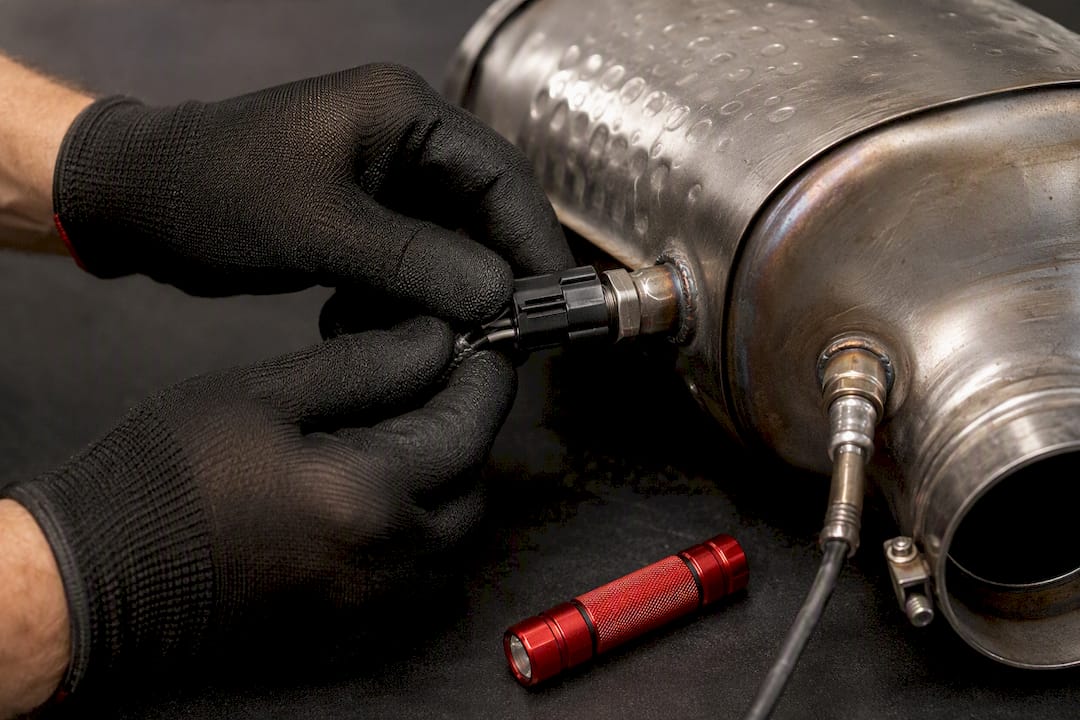
Vendors know this, which is why product pages for parts like the FI Exhaust Sport 200 Cell downpipe for 718 Boxster and Cayman list specific model years (2016 through 2018) rather than a blanket “fits all 718s” claim. Even within a listed range, small bracket or hardware changes between production runs can require adapter pieces that aren’t obvious from a product photo.
Before you order anything:
- Pull your exact build date, not just model year, from your door jamb sticker or Porsche’s own records.
- Ask the vendor directly whether the part is GPF/OPF compatible for your specific build, and get it in writing or in the order notes.
- Request written fitment notes covering sensor retention, bracket variants, and whether an adapter is included or sold separately.
- Confirm whether the system is monitored or unmonitored so you know upfront whether a tune will be part of your budget.
Skipping this step is the single most common reason owners end up with a part that doesn’t bolt on cleanly, or a CEL they didn’t budget for.
How Long Does Installation Take and What Does It Cost?
A cat-back swap is a Saturday afternoon job for most home mechanics with a lift or sturdy jack stands. A downpipe or turbo-back install takes longer and usually calls for a shop with a lift, since you’re working closer to the turbo and heat shielding.
Give yourself more time than the marketing copy implies. Installer guidance around valvetronic systems consistently recommends budgeting three to four hours even for a straightforward bolt-on, because safe jacking, tip alignment, and clearance checks eat more time than the install itself.
Cost bands vary widely by material and complexity:
- Stainless cat-back systems: mid-range parts cost, moderate labor if shop-installed
- Titanium cat-back or valved systems: higher parts cost, plus a premium for electronic valve control hardware
- Downpipes: parts cost varies by sport-cat design, plus labor that’s typically higher than a cat-back due to access difficulty
- Tuning: often a separate line item, and sometimes mandatory rather than optional
Removing or replacing a factory catalytic converter, or installing a catless section, frequently causes a Check Engine Light. Some vendor kits include mitigation strategies, but an ECU tune is often necessary to clear or prevent the fault code entirely, particularly on GPF-equipped cars where the ECU actively monitors filter performance.
Pro Tip: Before you schedule an install, ask your shop directly whether the specific part you’re buying is known to trigger a CEL on your build date. A five-minute phone call can save you a return trip and a diagnostic fee.
If your state runs OBD-based emissions inspections, a persistent CEL from a deleted cat can fail you outright, regardless of how good the car sounds. A catted downpipe or a properly tuned solution that keeps sensors happy is the safer route if you drive in a state with strict inspection programs.
How Should You Choose the Right Upgrade for Your Priorities?
Start with what you actually want out of the car, not what sounds impressive on a spec sheet.
- Sound-first owners who want a quiet commute and an aggressive weekend note should default to a valved, customizable system.
- Power-first owners, especially those tracking the car, get the most from a downpipe or turbo-back setup paired with a tune.
- Value and looks-first owners can get real satisfaction from tips or a resonator swap without touching flow or emissions equipment at all.
Owner threads back this up. Forum posters repeatedly frame the decision as upgrading to your own ears rather than to a spec sheet, since satisfaction tracks with matching the exhaust to personal sound preference far more than it tracks with a horsepower number.
Before you commit, run through this checklist:
- Confirm your build date and GPF/OPF status against the part’s listed compatibility.
- Verify valve-control compatibility if you’re buying a valved system, including remote/app support for your model year.
- Ask about warranty impact on the exhaust itself and on any Porsche coverage still active.
- Ask about inspection legality in your state if the part touches the catalytic converter.
- Get a straight answer on lead time for both the part and any adapter hardware your build might need.
And when you’re on the phone with a vendor or shop, ask these five questions directly: does this exact part fit my build date’s fitment variant, will it trigger a CEL, do I need a tune, what’s the current lead time, and what’s the return or warranty policy if it doesn’t fit?
How Does Valve Control Exhaust Approach the 718 Cayman?
Valve Control Exhaust builds its systems around one core idea: you shouldn’t have to choose between a quiet daily driver and a loud weekend car. The adjustable valve design lets owners run a closed, quiet mode for commuting and school pickup, then switch to an open mode for a canyon run or a track day, all from the same exhaust.
That flexibility solves the trade-off that pushes a lot of 718 owners toward valved systems in the first place: the ability to open valves for spirited driving and close them for civil cruising is consistently cited as the main reason enthusiasts choose valve control over a fixed system.
For owners specifically weighing downpipe options, the FI Exhaust Sport 200 Cell downpipe for Porsche 718 Boxster and Cayman, 2016 through 2018, is worth reviewing as a concrete example of a sport-cat design built to balance flow with emissions compatibility, rather than deleting catalytic function outright.
There are companies working across a wide range of European and luxury performance brands that sell genuine parts sourced directly from authorized manufacturers rather than gray-market copies, which matters when fitment tolerances are this tight.
How Do Aftermarket Exhaust Brands Compare for the 718?
The 718 aftermarket exhaust market has a handful of names that show up repeatedly in build threads and vendor catalogs, and each one has carved out a distinct reputation.
Titanium and race-focused brands like Akrapovič are known for weight savings and vendor-published dyno numbers, and they command premium pricing to match. Owners chasing the lightest possible setup, or a very specific race-derived tone, gravitate here first.
Valvetronic specialists build their reputation on electronic control quality: how smoothly the valves open, how reliable the remote or app connection is, and how well the system holds up over years of use rather than one dyno session. This is the category where Valve Control Exhaust’s customizable, remote-controlled systems compete directly, and where fitment precision across model years matters as much as sound quality.
Sport-cat downpipe makers like FI Exhaust have built credibility around emissions-conscious designs, offering 200-cell catalytic converters that preserve some cat function instead of going fully catless. That approach appeals to owners who want the flow benefits of a downpipe without gambling on inspection failures.
No single brand wins on every axis. A titanium race system beats a valved stainless setup on weight, but loses on daily drivability. A sport-cat downpipe beats a catless one on inspection risk, but gives up some peak flow. Match the brand’s known strength to your actual priority instead of chasing whichever name shows up most in your Instagram feed.
Does an Exhaust Upgrade Void Your Porsche Warranty?
Modifying your exhaust doesn’t automatically void your entire factory warranty, but it can affect coverage for anything the modification directly damages or influences.
Under the Magnuson-Moss Warranty Act, a manufacturer can’t void your whole warranty just because you installed an aftermarket part. What it can do is deny a specific claim if it can show the aftermarket exhaust caused the failure, say, if a downpipe-related tune damaged a turbo or a catless section caused a sensor failure.
That distinction matters practically. Your transmission, suspension, and infotainment system stay covered regardless of what you bolted onto the exhaust. But if you’re chasing a warranty claim on anything downstream of the exhaust, from the catalytic converter back through the turbo, expect a dealer to scrutinize whether your modification is the cause.
If your 718 is still under Porsche’s factory warranty, a bolt-on cat-back with no tuning is the lowest-risk path. Downpipes that require ECU tuning carry more warranty exposure simply because a tune touches more systems than a mechanical swap does.
Are Aftermarket Exhausts Legal in Every State?
Exhaust modification laws vary significantly depending on where you register and drive the car, and there’s no single national standard covering every case.
Federal law under the Clean Air Act prohibits tampering with emissions control equipment on a car used on public roads, which includes catalytic converters and, on GPF-equipped 718s, the particulate filter. Removing or defeating those components for street use is a federal violation, separate from whatever your state’s inspection program checks.
State enforcement is where things diverge sharply. States with mandatory emissions testing, think California, New York, and several others, will fail a car with a deleted cat or a triggered CEL related to emissions equipment. States without emissions inspection programs are far more permissive in practice, even though the federal tampering prohibition technically still applies everywhere.
The safest read for most 718 owners: a cat-back or a sport-cat downpipe that retains catalytic function keeps you compliant almost everywhere. A fully catless downpipe is a track-only or off-road-only proposition if you live anywhere with emissions testing, regardless of how good it sounds on the street.
What Sound Level Is Legal on the Street?
Most states set noise limits somewhere in the 95 to 100 decibel range measured at idle or under a standardized test method, though the exact threshold and testing method vary by state and even by county.
A stock 718 Cayman exhaust typically sits well under any legal threshold. A loud aftermarket cat-back or a catless downpipe run wide open can push past 100 decibels under load, especially at higher RPM, which is exactly the kind of reading that draws attention from law enforcement or fails a roadside noise check in jurisdictions that enforce one.
This is another spot where a valved system earns its keep. Since you can close the valves for street driving and open them only where it’s appropriate, whether that’s a private track day or a stretch of road where nobody’s going to measure you, you sidestep the legal gray zone that a fixed loud exhaust puts you in permanently. Check your specific state or municipal noise ordinance before assuming a “track mode” setting is automatically street legal everywhere you drive.
How Durable Are Stainless Steel vs. Titanium Exhausts?
Stainless steel is the workhorse material for a reason: it resists corrosion well, tolerates years of heat cycling, and rarely needs anything beyond an occasional wipe down to keep its finish. Most cat-back and downpipe systems on the market use some grade of stainless, and it’s the material you’ll find on the bulk of Valve Control Exhaust’s compatible product lines.
Titanium cuts significant weight over stainless, which is why race-focused systems favor it, but that weight savings comes with trade-offs. Titanium is more prone to surface discoloration from heat exposure, developing blue and purple tints over time that some owners love and others polish out. It’s also less forgiving of impact damage. A stray rock that dents stainless might crack titanium.
Maintenance-wise, both materials are low-fuss compared to older mild-steel systems that used to rust through in a few winters. Wipe down road salt in the winter months, inspect welds and clamps annually, and check valve mechanisms on valved systems periodically to make sure electronic actuators aren’t collecting grit. Neither material needs more than that under normal street use.
Who Should Upgrade Now, and Who Should Wait?
If you track your 718 or you’re chasing a specific sound, upgrade now. A valved system from Valve Control Exhaust gives you the flexibility to run quiet and loud without compromise.
If you’re a strict daily driver worried about inspections or warranty claims, wait, or lean toward a cat-back that keeps your GPF intact and skips the tune entirely.
— Info
How Valve Control Exhaust Can Help You Upgrade
Valve Control Exhaust gets you a real advantage the forum-scavenger approach to exhaust shopping can’t: genuine parts sourced directly from authorized manufacturers, with fitment guidance built around your actual build date instead of a generic model-year guess.

Before you reach out, have three things ready: your VIN, your exact build date, and the sound profile you’re after (quiet-daily, track-loud, or somewhere in between). That’s enough for the team to point you toward the right fitment variant instead of guessing from a model year alone.
Start by browsing the Exhaust Parts category if you’re leaning toward a cat-back or valved system, or head straight to the Down Pipe category if power and turbo response are the priority. Need tips, brackets, or a valve controller to round out the build? The Accessories section covers that ground. For a deeper read on the major categories before you commit, the performance exhaust buyer’s guide breaks down IPE, FI, Armytrix, Akrapovic, and other system types side by side.
Once you’ve picked a category, submit your VIN and build date through the product page or contact form, and expect a fitment confirmation before your order ships. That one extra step is what keeps a bracket mismatch from turning into a return shipment.
Sources
- Upgrade Stock 2018 718 Exhaust System? | Porsche 718 Forum
- Rennworks Performance / IPE valvetronic product note
FAQ
Can the 718 Cayman Be Upgraded?
Yes. The 718 Cayman supports the full range of common upgrades, from valved cat-back systems to downpipes and turbo-back setups, though fitment depends heavily on your car’s build date and whether it has a GPF. A valved, customizable system is a practical starting point for owners who want both a quiet commute and a louder weekend drive.
What Year Porsche Cayman Should You Avoid?
There’s no single 718 Cayman model year with a documented widespread defect that owners should categorically avoid; concerns tend to be specific to individual complaints rather than a fleet-wide pattern. What matters more for an exhaust upgrade is confirming your exact build date, since GPF adoption and bracket changes within a model year affect part compatibility more than the model year label itself.
What Exhaust Gives the Best Sound?
The “best” sound is genuinely subjective, and owner threads consistently frame the choice as upgrading to your own ears rather than a spec sheet. A valved system gives you the most control, since you can adjust the tone and volume rather than committing to one fixed note.
Which 718 Cayman Model Is Considered the Best?
This depends on what you value: the base Cayman is the most affordable entry point, the Cayman S and GTS add power and standard performance features, and the GT4 sits at the top for track focus. For exhaust upgrades specifically, the naturally aspirated GT4 and GTS models respond differently to cat-back changes than the turbocharged four-cylinder base and S trims, which benefit more from downpipe work.
Does Removing the Catalytic Converter Trigger a Check Engine Light?
Often, yes. Removing or replacing a factory catalytic converter, particularly on GPF-equipped 718s, frequently triggers a Check Engine Light because the ECU actively monitors filter and sensor performance. A properly tuned solution, or a sport-cat downpipe that retains catalytic function, reduces this risk compared to a fully catless setup.