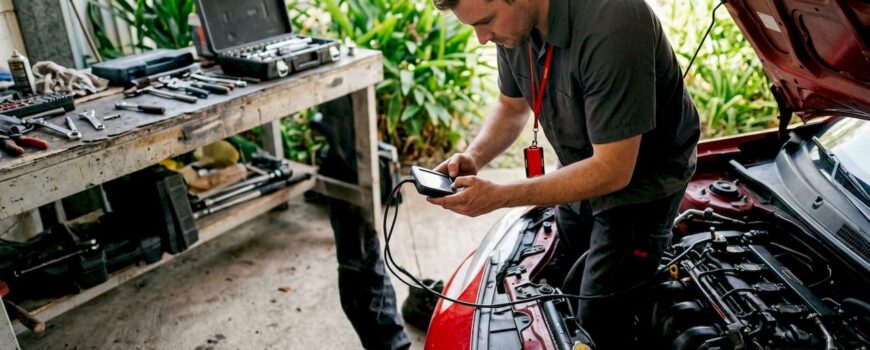
Sports car cold start exhaust control is the practice of managing exhaust valve behavior, idle RPM, and fueling during the first 30–90 seconds after engine startup. Factory systems on vehicles like BMW M-series, Ferrari, and Lamborghini are tuned to run loud and rich at cold start to heat the catalytic converter fast. That works for emissions compliance, but it wakes the neighborhood and leaves you with zero control over your car’s sound. With the right combination of ECU tuning, exhaust valve controllers, and OBD-II diagnostics, you can take that control back.
What equipment do you need for sports car cold start exhaust control?
Three categories of hardware drive effective cold start exhaust management: ECU tuning platforms, exhaust valve controllers, and OBD-II diagnostic scanners.
ECU tuning platforms are the foundation. Tools like Alientech KESS3 or MagicMotorsport Flex allow a tuner to rewrite cold start maps directly. The parameters that matter most are idle RPM targets, fuel enrichment curves, and ignition timing during warm-up. Professional ECU cold-start tuning reduces typical factory cold idle RPMs from 1,200–1,600 down to 800–1,100. That drop alone produces a noticeably quieter startup without touching the exhaust hardware.
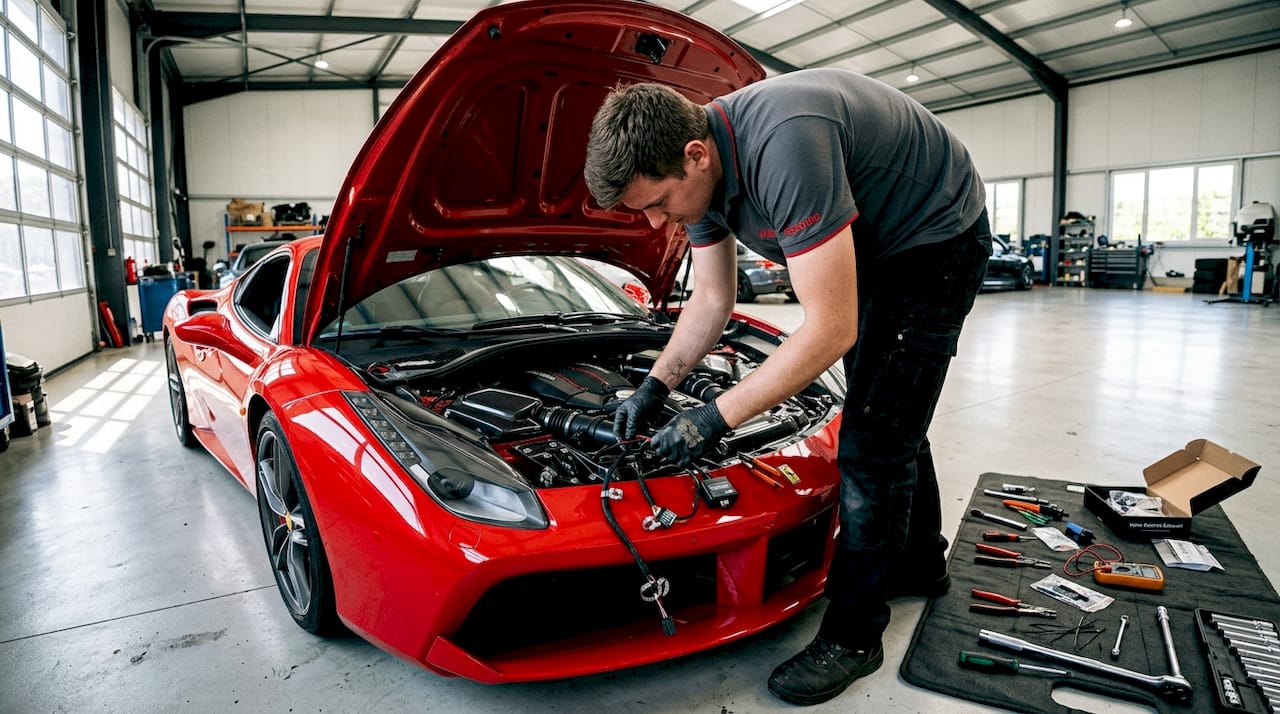
Exhaust valve controllers are the plug-and-play alternative. Valve controller modules integrate with OEM wiring and let you override factory valve behavior through a smartphone app or a physical remote. Some modules offer full manual control; others use preset modes tied to driving conditions. Valvecontrolexhaust builds systems specifically for Audi, BMW, Ferrari, and Lamborghini with this level of integration in mind.
OBD-II diagnostic scanners complete the toolkit. A scanner like the iCarsoft i980 or Autel MaxiSys reads live sensor data and flags fault codes before and after any modification. Running a scan before you tune prevents you from chasing exhaust noise that is actually a VVT solenoid fault or a bad exhaust gas temperature sensor.
| Equipment | Primary function | Approximate price range |
|---|---|---|
| ECU tuning platform | Cold start map rewrite | $800–$2,500 |
| Exhaust valve controller | Real-time valve override | $300–$900 |
| OBD-II scanner (professional) | Fault code reading, live data | $150–$600 |
| VVT solenoid service kit | Maintenance before tuning | $40–$120 |
Pro Tip: Always run a full OBD-II scan and clear any existing fault codes before booking an ECU remap. A tuner working on a car with active codes is working blind.
How to perform cold start exhaust adjustments step by step
Cold start tuning is not a single adjustment. It is a sequence of changes that must work together or you risk oil dilution, rough idle, and failed emissions checks.
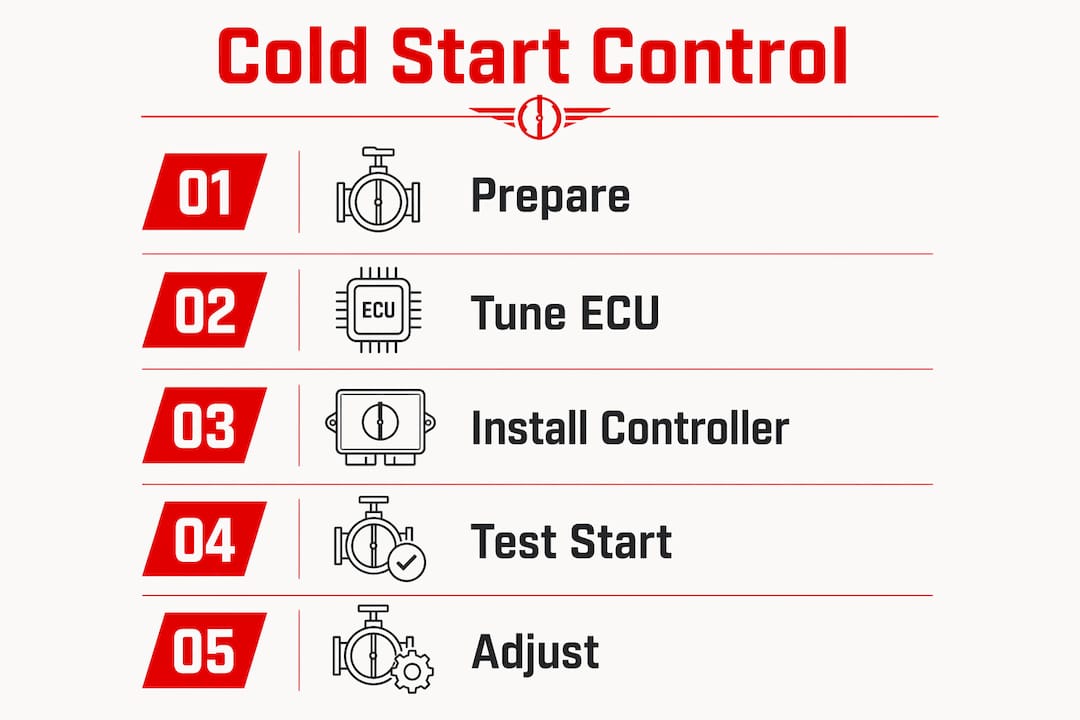
Follow these steps in order:
- Scan and document baseline. Connect your OBD-II scanner and log cold start idle RPM, coolant temperature ramp rate, and any stored codes. This gives you a before snapshot to compare against.
- Service oil and filter first. Use the manufacturer-specified viscosity. Oil and filter changes with correct viscosity resolve a significant share of cold-start cam timing codes and rough idle symptoms. Skipping this step before tuning masks the real problem.
- Remap cold start idle RPM. Work with a tuner to bring the cold idle target down from the factory 1,200–1,600 RPM range. Adjust fuel enrichment and ignition timing together. Improper tuning of these parameters causes oil dilution and rough idle, especially in cold climates.
- Install and configure the valve controller. Mount the module, connect to the OEM valve wiring, and set your preferred cold start valve position. Closed valves at startup produce the quietest result. Open valves give you the full exhaust note immediately.
- Use accessory mode to pre-set valve position. Placing the car in accessory mode and toggling the exhaust valve setting before cranking the engine lets you control sound presentation before the ECU takes over. This technique works on many Audi and BMW platforms, though ECU programming varies by model.
- Validate with a post-start data log. After the first cold start with the new settings, log RPM, coolant temp, and exhaust temp. Confirm the catalyst reaches operating temperature within an acceptable window.
- Road test across temperature conditions. A tune that works at 70°F may behave differently at 20°F. Test in the coldest conditions you regularly drive in before calling the setup final.
Pro Tip: Never lower cold idle RPM below 800 RPM on a turbocharged engine. Oil pressure builds slowly at cold start, and a very low idle starves the turbo bearings of lubrication before the engine is warm.
How do you troubleshoot cold start exhaust control issues?
The most common mistake enthusiasts make is modifying hardware when the real problem is a sensor or a maintenance item. Differentiating between factory-intended loud cold start and sensor-related rough idle is the first diagnostic step.
Start with these checks before touching any hardware or tune:
- P054B code (Cold Start Camshaft Timing Over-Retarded): This almost always points to a VVT solenoid clogged with old oil. Clean or replace the solenoid and change the oil before assuming the ECU map is wrong.
- P050E code (Cold Start Exhaust Temp Too Low): This code flags a slow-warming catalyst. Codes P054B and P050E relate directly to cold start exhaust temperature and cam timing, and sensor fouling is the most common cause.
- Exhaust valve stuck open or closed: Check the valve actuator wiring harness for corrosion. On BMW M-series and Audi RS models, the actuator connector sits in a heat-exposed location and degrades over time.
- Rough idle that disappears after warm-up: This is almost always a fueling or timing issue in the cold start map, not an exhaust hardware problem. Log AFR (air-fuel ratio) data during the cold start phase to confirm.
- Valve controller not holding position at startup: Some OEM ECUs override aftermarket modules during the first few seconds of cold start. Check your module’s firmware for a startup delay setting.
Pro Tip: If your car throws a cold start code within the first three starts after a tune, ask your tuner to check the exhaust gas temperature sensor reading at idle. A faulty EGT sensor will trigger codes regardless of how well the map is written.
How do you balance sound and emissions compliance at cold start?
Manufacturers design cold start loudness specifically to meet emissions regulations. The high idle RPM, extra fuel, and open exhaust valves all serve one purpose: heating the catalytic converter to operating temperature as fast as possible. Reducing that noise has a direct cost in emissions performance during warm-up.
The trade-off breaks down into three practical positions:
- Street legal, quieter cold start: Lower idle RPM via ECU remap, keep valves closed at startup, and accept a slightly slower catalyst heat-up. This works in most jurisdictions for daily driving but may not pass a strict emissions test in states with enhanced inspection programs.
- Track and off-road use: Full valve control, aggressive idle reduction, and no emissions constraints. Tuning to reduce exhaust flap opening slows catalyst heat-up but gives complete sound control. This setup is not legal for public road use in most US states.
- Factory mode management: BMW M-series factory Comfort mode closes exhaust valves by default, while Sport and Sport Plus modes open them. Enthusiasts who want closed valves in Sport mode need an aftermarket valve controller to override that factory logic.
The practical advice for street-driven sports cars is to use a valve controller for sound management and leave the ECU cold start map as close to stock as possible. That combination gives you meaningful noise reduction without triggering emissions faults. Reserve full ECU cold start remaps for dedicated track cars or vehicles that do not face roadside emissions testing.
Key Takeaways
Effective sports car cold start exhaust control requires ECU tuning, valve controller hardware, and proper maintenance working together, not any single modification alone.
| Point | Details |
|---|---|
| ECU tuning targets idle RPM | Reducing cold idle from 1,200–1,600 RPM to 800–1,100 RPM cuts startup noise significantly. |
| Valve controllers override factory logic | Plug-and-play modules let you keep valves closed or open at cold start regardless of drive mode. |
| Maintenance comes before modification | Oil changes with correct viscosity resolve a large share of cold start cam timing codes before any tuning is needed. |
| Accessory mode pre-sets valve position | Toggling valve mode before cranking gives you sound control from the first second of startup. |
| Street use requires emissions awareness | Full cold start remaps are best reserved for track or off-road vehicles due to emissions compliance risks. |
What I’ve learned after years of cold start exhaust work
Most enthusiasts come to cold start exhaust control frustrated by one thing: their car sounds great at speed but embarrassing at 6:00 AM in a residential neighborhood. The instinct is to buy a module and plug it in. That works, but it misses half the picture.
The cars that give owners the most trouble at cold start are almost never suffering from a hardware problem. They have a dirty VVT solenoid, old oil with the wrong viscosity, or a marginal EGT sensor that was never flagged because it only acts up when the engine is cold. I have seen enthusiasts spend $800 on a valve controller when a $60 oil change and solenoid clean would have fixed 80% of their complaint.
My honest recommendation: run a full diagnostic scan, service the oil and filter with OEM-specified viscosity, and then decide what hardware you actually need. If the car still barks at cold start after that, a valve controller from a brand like Valvecontrolexhaust gives you real control without touching the ECU. If you want deeper changes, find a tuner who specializes in your platform and understands the emissions trade-offs before writing a single map.
The accessory mode valve trick is underused. On most Audi and BMW platforms, you can set your preferred valve position before the engine fires. That one habit alone changes the cold start experience more than most people expect.
— Info
Precision exhaust control for your sports car starts here
Valvecontrolexhaust builds valve control systems designed specifically for high-performance vehicles like Audi, BMW, Ferrari, and Lamborghini. Their systems give you real-time control over exhaust sound from cold start through full throttle, without requiring an ECU remap or specialist installation.
If you want to understand exactly how exhaust customization benefits enthusiasts who drive their cars daily, Valvecontrolexhaust has the guides and the hardware to match. Their product range covers plug-and-play valve controllers, app-based sound management, and full system compatibility checks for your specific model. Browse the performance exhaust buyer’s guide to find the right setup for your car and your driving conditions.
FAQ
What is cold start exhaust control in a sports car?
Cold start exhaust control is the management of exhaust valve position, idle RPM, and fueling during the first 30–90 seconds after engine startup. It lets drivers reduce noise or customize sound from the moment the engine fires.
Will a valve controller affect my car’s emissions?
A valve controller that keeps exhaust valves closed at cold start slows catalyst heat-up, which can affect emissions during the warm-up phase. For street-driven cars, pairing a controller with a stock ECU map minimizes that risk.
What do fault codes P054B and P050E mean for cold start?
P054B indicates cold start camshaft timing is over-retarded, usually from a clogged VVT solenoid or old oil. P050E flags exhaust temperature too low at cold start, most often caused by a fouled EGT sensor rather than exhaust hardware.
Can I control exhaust valve position before starting the engine?
Placing the car in accessory mode and toggling the exhaust valve setting before cranking lets you pre-set valve position on many Audi and BMW platforms. Whether the ECU holds that position through startup depends on the specific model’s programming.
Is ECU cold start remapping legal for street use?
ECU cold start remaps that reduce idle RPM and alter fueling are generally intended for off-road or motorsport use. They may not pass enhanced emissions inspections in states with strict testing programs, so check your local regulations before modifying the cold start map.