
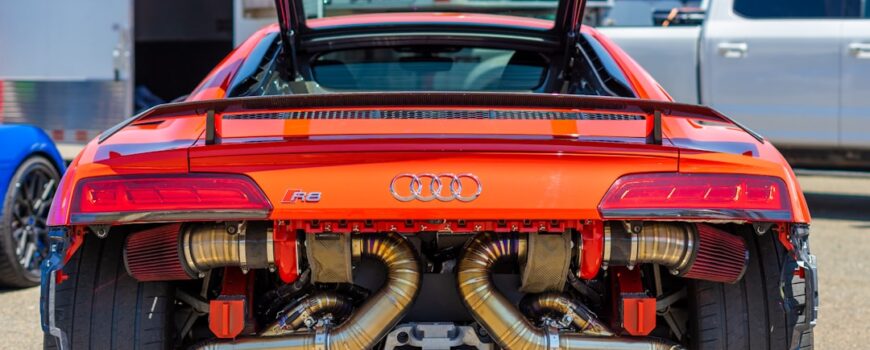
IPE Exhaust choices often define the character of a high-end coupe more than its wheels or suspension; this article opens with that provocation to hook readers who care about sound and engineering. If you look for tone, build quality, and flow, the differences between branded systems are rarely subtle. The critical questions are: how does each system shape power delivery, what compromises are made for sound, and which valved technologies actually deliver usable versatility?
Comparing IPE Exhaust and FI Exhaust: materials, tone, and delivery
IPE and FI Exhaust systems occupy adjacent niches: luxury OEM-derived tone versus race-oriented projection. IPE typically prioritizes polished stainless and a deep, cinematic growl, while FI leans toward raw metallic resonance and reduced weight.
From a performance perspective, examine backpressure curves and internal diameter rather than marketing claims. Moreover, heat treatment, weld quality, and hanger design determine longevity; these factors frequently explain perceived differences in midrange response.
Armytrix Exhaust: design philosophies and street presence
Armytrix Exhaust products sell a promise: aggressive, attention-grabbing sound with electronically controlled valves. Their systems are engineered for maximum acoustic impact, often at the expense of subtlety.
However, valve tuning matters. In practice, Armytrix can be too loud for daily driving unless properly calibrated. Consequently, buyers should insist on demonstration drives to evaluate drone at cruising speeds.
Akrapovic Exhaust: engineering rigor and track credibility
Akrapovic Exhaust earns credibility through materials science—titanium constructs, precision mandrel bends, and weight reduction. Their systems are engineered to find power gains across the rev range while maintaining coherent tonal characteristics.
Conversely, Akrapovic’s neutrality means less flamboyance in sound compared to Armytrix. Therefore, drivers seeking a balance of lap-time performance and civilized street manners often prefer Akrapovic for track-focused applications.
Valvetronic Exhaust and Ryft Exhaust: valved systems under scrutiny
Valvetronic Exhaust and Ryft Exhaust present different answers to the same question: how to reconcile daily drivability with performance theater. Valvetronic emphasizes seamless transitions and OEM-like refinement, whereas Ryft tends toward aggressive timbre and simplified hardware.
Transitioning between modes exposes the tech differences. Valvetronic’s actuation is often quieter and more linear, reducing cabin intrusions. Conversely, Ryft may prioritize valve openness and exhaust flow, which boosts sound but can increase cabin drone.
Installation, compatibility, and software tuning
Fitment and ECU integration are decisive. Some systems, particularly electronic valved exhausts, require bespoke harnesses or ECU maps to achieve promised performance. Additionally, aftermarket tune strategies differ: some vendors recommend remaps for peak gains, others claim bolt-on improvements are sufficient.
Therefore, budget for calibration and speak with installers who have documented results on your chassis. Reliability hinges on electrical connectors, sensor placement, and proper heat shielding.
Noise, regulation, and ownership experience
Noise regulations and real-world usability will shape satisfaction more than peak horsepower numbers. Even the best Akrapovic or IPE setup can become a liability in noise-sensitive areas if not managed intelligently.
Furthermore, owner expectations matter. If you want theatrical sound at weekends and civility on commutes, prioritize systems with proven valvetronic control and credible remote tuning options.
Cost versus benefit: an analytical checklist
Assess exhausts against a concise checklist: material grade, weight savings, dyno-verified gains, drone at 2,000–2,500 rpm, valve reliability, and resale value. Use empirical measures rather than brand prestige alone.
Additionally, verify warranty coverage and aftermarket support. A marginally cheaper system can cost more in the long run if it lacks robust customer service or replacement parts.
Choosing the right exhaust for your driving profile
Make the decision through a pragmatic lens: prioritize Akrapovic for track-focused efficiency, choose Armytrix for maximal auditory drama, select IPE for cinematic tone with a luxury bias, consider FI for rawness and weight savings, and evaluate Valvetronic or Ryft when you need valved flexibility.
Finally, arrange comparisons: test multiple cars equipped with the systems you’re considering, review independent dyno data, and insist on demonstrable on-road samples. This method reduces buyer’s remorse and aligns expectations with reality.
Choosing among IPE Exhaust, FI Exhaust, Armytrix Exhaust, Akrapovic Exhaust, Valvetronic Exhaust, and Ryft Exhaust ultimately comes down to measurable trade-offs between sound, engineering, and usability; armed with the checklist above, you can select an exhaust that meets your driving priorities and minimize unwelcome surprises once it’s installed.