If your aftermarket exhaust valve is stuck closed, start by cycling it from the remote or controller, then watch and listen for movement and check the fuses, wiring and vacuum lines you can see. No movement means the fault is electrical, vacuum or mechanical, so work through the checklist below before you disassemble anything. We supply parts if you need them.
TL;DR:
- Replace remote batteries and confirm pairing before testing; then inspect fuses, connectors, visible wiring, and vacuum hoses, and listen for movement when commanded.
- A diaphragm that loses vacuum is leaking; vacuum at a solenoid without movement when powered points to failure, while no vacuum signals a supply or hose problem.
- Vacuum valves may stop working under boost as manifold vacuum drops; test at idle or closed throttle, when a healthy valve changes state within seconds.
- After electrical and vacuum checks pass, cool the exhaust, lubricate the shaft seals, and gently work the linkage by hand; never force a stuck shaft.
- Repair hoses, connectors, or a freed shaft; replace an actuator that will not hold vacuum, damaged wiring, or a valve that binds again after lubrication.
Table of Contents
- What should you check first when the valve will not open?
- How do you test the vacuum and electrical actuators?
- How do you free a mechanically bound butterfly valve?
- When should you repair it and when should you replace parts?
- What do installers most often get wrong?
- Where can you get parts and help for a stuck exhaust valve?
- FAQ
- Sources
What should you check first when the valve will not open?
Run these steps in order. Each one rules out a cause so you stop spending time on the unlikely ones.
- Confirm your input. Command open and close from the remote or controller. Replace the batteries and recheck any pairing or programming notes, since some systems need the remote paired before they respond, as the installation instructions for one valved system describe.
- Look and listen. Get under the car safely and watch the valve while someone commands it. A working system should cycle audibly and visibly. Note whether the exhaust tone changes at all.
- Check the electrical side. Inspect fuses, connectors and wiring for damage or corrosion, then confirm you have power at the solenoid connector.
- Check the vacuum side. Look for kinked, cracked or heat-softened hoses, confirm every check valve points the right way, and listen for leaks.
- Isolate the actuator. Clamp a hose to block one actuator, or move the actuator by hand, to see which component fails to respond. Community troubleshooting on a Porsche forum thread shows this approach can pinpoint a leaking actuator, and owners there report that valves should change state in seconds, so a delay of minutes points to a fault.
Pro Tip: Photograph the hose routing and connector positions before you unplug anything, so you can rebuild it exactly.
Safety comes first. If reaching the valve means dropping the exhaust or forcing a stubborn part, stop and use a lift or call a professional. For a broader look at how these valves behave, see our explainer on exhaust valve customization.
How do you test the vacuum and electrical actuators?
Once the quick checks point to the actuator or its control, use proper test steps. A vacuum gauge, hand pump and multimeter cover almost everything, and our page on exhaust diagnostic tools lists what to have on the bench.
- Vacuum supply: Use a gauge to confirm the solenoid actually receives vacuum from the factory hose or boost tap.
- Solenoid actuation: Trigger the solenoid with a scan tool, or apply power to it directly, and see whether the actuator moves.
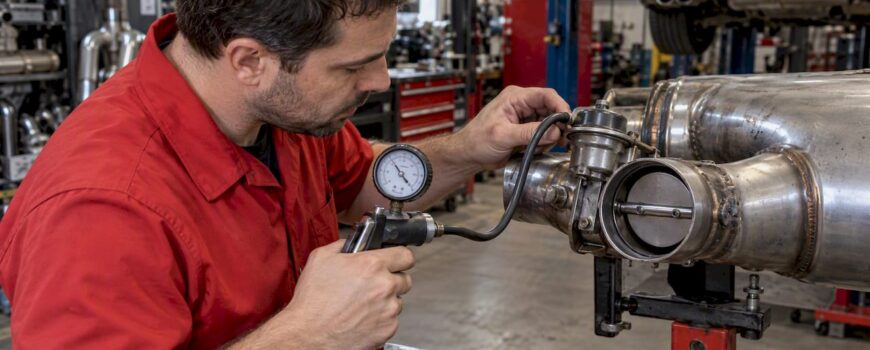
- Diaphragm hold test: Attach a hand pump to the actuator. A healthy diaphragm should hold vacuum. If it bleeds down, the diaphragm is leaking.
- Electrical actuators: Confirm programming and batteries, then check voltage and continuity at the solenoid or motor connector. Bench-test the unit or swap in a known-good one if you have it. Our technician’s guide to motor testing walks through this in more detail.
Vacuum systems may not work under boost. Installers of one valved system note that manifold vacuum drops under boost and the valves work best off throttle, so test at idle or on a closed throttle for a reliable result.
How to read the results: no vacuum at the solenoid means a supply or hose problem. Vacuum present but no movement when powered points to the solenoid. A diaphragm that will not hold vacuum means a bad actuator. If every test passes and the valve still will not move, the problem is mechanical.
How do you free a mechanically bound butterfly valve?
When electrical and vacuum parts test fine, suspect binding. Heat, moisture and exhaust deposits can contribute to buildup or corrosion around the shaft and plate, which may stop the plate from turning.
Work in this order:
- Let everything cool. Exhaust parts hold heat long after you shut the engine off.
- Reach the valve linkage. Find the shaft and actuator arm without bending hoses or pulling wiring.
- Apply penetrating lubricant at the shaft seals and give it time to soak in.
- Work the linkage by hand. Move it gently back and forth, reapply, and repeat. Retest cycling with the actuator after each pass.
- Do not lever the shaft. Excess force bends the shaft or cracks the plate, which turns a cleaning job into a replacement.
Shield vacuum lines and wiring from lubricant and heat while you work, and keep hands clear of hot muffler surfaces.
Pro Tip: If the valve frees up, cycle it a dozen times by hand before reconnecting the actuator, so you know the plate moves without sticking.

If it stays bound after repeated lubrication, the muffler may need further inspection or disassembly. Expect to replace shaft seals, the butterfly plate or the actuator. That is the point to hand the job to a shop, especially when the muffler is hard to reach.
When should you repair it and when should you replace parts?
Repair when the fix is a hose, a connector or a freed shaft. Replace when the part itself has failed. These signs mean replacement:
- A diaphragm that will not hold vacuum
- A cracked actuator housing
- Burnt or shorted solenoid wiring
- Binding that returns after lubrication
Match these parts before ordering:
- Solenoid vacuum valve
- Actuator and diaphragm assemblies
- Vacuum hose
- Inline check valves
- Wiring harness connectors
We carry exhaust parts and accessories, and our troubleshooting page covers product-specific steps. Call a professional for warranty work, a muffler that is hard to access, or an electrical fault you cannot trace. If you want a maintenance routine to pair with the repair, this performance car maintenance checklist is a useful companion.
What do installers most often get wrong?
Installation issues can contribute to a stuck valve. Vacuum lines get routed beside hot exhaust metal, where they soften, kink or melt. Hoses go unsecured, check valves get left out, and remotes get paired incorrectly. Use heat-resistant ties and keep lines away from moving parts. The remote controller instructions cover correct fitting orientation and a start-up check with lock and unlock. Finish every install by confirming the valve opens and closes both audibly and visibly. And before contacting support, write down which tests you already ran, because it saves everyone time.
— Info
Where can you get parts and help for a stuck exhaust valve?

We stock the categories a stuck valve repair draws on: Exhaust Parts, Down Pipe and Accessories, backed by our troubleshooting guides. Before you order, have your vehicle make, model and year ready, the type of valved system you run, and photos of the actuator and its connector. Check our documentation first, then order the exact actuator, solenoid or hose you need.
FAQ
How quickly should an exhaust valve open or close?
A working valve changes state within seconds of the command. Owners in a community troubleshooting thread report that a delay of several minutes is abnormal and usually signals a leaking or failed actuator.
Why does my valve work at idle but not under boost?
Vacuum-actuated valves rely on engine vacuum, which drops under boost. Installers note that these systems operate best off throttle, so test at idle or on a closed throttle before you assume a part has failed.
Can I just spray lubricant on a stuck valve?
Lubricant at the shaft seals often frees a bound butterfly plate, but only after you confirm the electrical and vacuum parts work. Work the linkage gently by hand. If it keeps binding, replace the worn parts rather than forcing it.
How do I know the actuator is bad?
Clamp or block the vacuum hose to isolate it, then use a hand pump on the actuator. If the diaphragm will not hold vacuum, the actuator is leaking and needs replacing.
Sources
- Problem with Aftermarket Exhaust / Valve Always Open – 6SpeedOnline – Porsche Forum and Luxury Car Resource
- Volkswagen MK5 R32 ECS Valved Exhaust System Installation Instructions – ES4414027
- BMW E9x 335i Valved Exhaust System Installation Guide