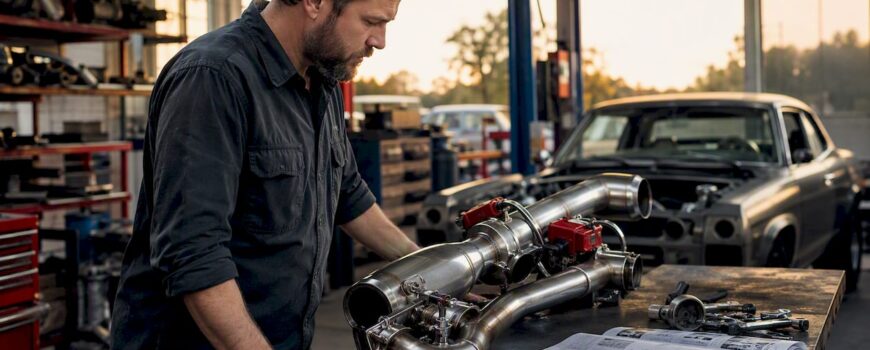
If you want real valve control on a performance or luxury vehicle in the United States, the short answer is: skip the generic replicas and go with a vehicle-specific, engineered valved system. Valvecontrolexhaust is the recommended starting point for U.S. buyers who need documented fitment, electronic remote control, and post-sale support. Beyond these, here are the seven realistic alternative categories worth evaluating:
- Premium branded valved systems (Valvecontrolexhaust): vehicle-specific, electronic valve control, U.S. support
- Dealer-approved performance valved systems (Borla, Corsa Performance): stainless construction, limited valve options, broad dealer networks
- Engineered titanium valved kits (Akrapovič, Armytrix): exotic materials, high price, track-focused
- Stainless valved cat-back systems (Flowmaster, MagnaFlow): wide fitment, moderate price, passive or basic valve options
- Midpipe plus valve-controller combos: pairs an aftermarket midpipe with a standalone valve actuator kit
- Universal valved muffler kits: reversible, lower cost, actuator quality varies significantly
- Professional custom-fabricated valved solutions: shop-built, maximum flexibility, highest labor cost
One legal note upfront: catless downpipes are restricted to off-road use in most U.S. jurisdictions under EPA and CARB rules. Valved systems can help manage sound compliance on street-driven cars when properly configured, but emissions legality depends on your specific state and configuration.
Table of Contents
- How do these valved exhaust alternatives compare side by side?
- What does each alternative category actually deliver?
- How do valved exhaust systems actually work?
- How do you choose the right valved exhaust alternative?
- Which alternative fits your specific situation?
- Key Takeaways
- The honest case for being selective about valved exhausts
- Valvecontrolexhaust: built for the vehicles most alternatives skip
- Useful sources and next-step reading
How do these valved exhaust alternatives compare side by side?
| Category | Best for | Valve control / actuator | Typical U.S. price range | Materials | Fitment | Warranty & support | Install complexity | Emissions notes | Sound character |
|---|---|---|---|---|---|---|---|---|---|
| Premium branded valved (Valvecontrolexhaust) | Luxury/performance: Audi, BMW, Ferrari, Lamborghini | Electronic servo, remote app/switch | $1,800 and up | T304 stainless, titanium options | Model-specific | U.S.-based, documented | Professional recommended | Catted options available | Deep, controllable; quiet closed, aggressive open |
| Dealer-approved performance valved (Borla, Corsa) | Domestic muscle, trucks, some imports | Electronic or passive valve | under $500 | T304 stainless | Model-specific, broad catalog | U.S. dealer network | Bolt-on for most fitments | CARB-compliant options exist | Aggressive to mild; varies by line |
| Engineered titanium valved (Akrapovič, Armytrix) | Track-focused exotics, lightweight builds | Electronic servo | $8,000–$12,000 or more | Titanium, Inconel | Model-specific, limited catalog | International; U.S. dealers vary | Professional required | Often catless; check state rules | Loud, exotic, high-pitched |
| Stainless valved cat-back (Flowmaster, MagnaFlow) | Budget-minded enthusiasts, daily drivers | Passive or no valve | $150–$600 | Aluminized stainless | Broad, model-specific | U.S. dealer network | Bolt-on | Catted standard | Moderate; limited sound control |
| Midpipe + valve-controller combo | Custom builds, existing cat-back upgrades | Electronic or vacuum | $150–$600 | Varies | Semi-universal | Varies by brand | Professional required | Depends on midpipe spec | Highly variable |
| Universal valved muffler kit | Budget builds, reversible installs | Vacuum or electronic | $150–$600 | Varies; often mild steel | Universal (adapter needed) | Limited; online only | DIY possible; fitment varies | Depends on host system | Unpredictable without full system match |
| Custom-fabricated valved | One-off builds, rare chassis | Any actuator type | $2,000–$8,000+ (labor + parts) | Shop’s choice | Any vehicle | Shop warranty only | Professional only | Configurable | Fully custom |
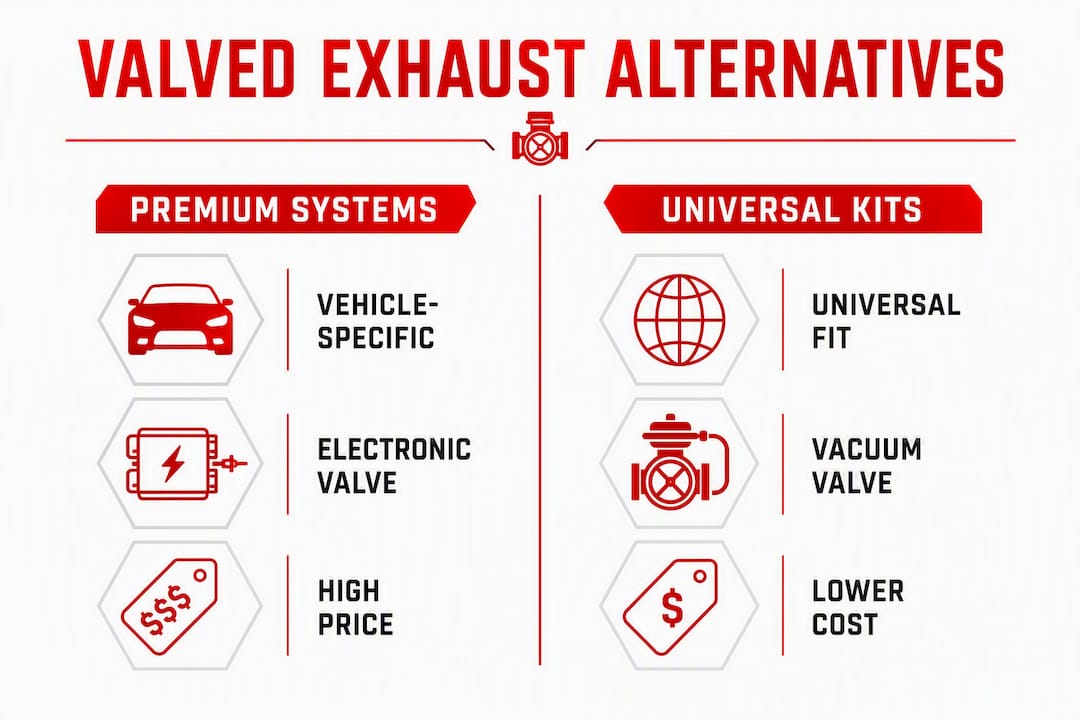
Valvecontrolexhaust is the recommended pick for U.S. buyers who want serialized products, documented vehicle-specific fitment, and a domestic support contact — particularly for European and luxury platforms where catalog coverage from domestic brands is thinner.
What does each alternative category actually deliver?
Premium branded valved systems
This is the category Valvecontrolexhaust occupies, and it sets the standard the others are measured against. Systems are engineered for specific chassis, which means hangers, flanges, and valve clearances are designed around your car rather than adapted from a universal template. Electronic servo actuators respond to a remote or app, giving you a genuine quiet mode for early-morning drives and a full-open configuration when you want the car to sound like itself. Expect to pay $1,800 and up for a cat-back on a BMW or Audi platform, more for Ferrari or Lamborghini fitments. Warranty documentation and U.S.-based support are part of what you are paying for, and that support matters when a weld seam needs attention six months in.
Dealer-approved performance valved systems
Borla and Corsa Performance have deep roots in the U.S. market, with broad dealer networks and CARB-compliant options across domestic muscle cars, trucks, and select imports. Borla’s ATAK and S-Type lines use T304 stainless and carry a million-mile warranty, which is a genuine differentiator. Corsa’s Reflective Sound Cancellation technology targets drone reduction specifically. Neither brand covers the full range of European luxury platforms the way a specialist does, and valve control on these systems tends to be passive or limited compared to full electronic servo setups. For a Mustang GT or Silverado, they are strong choices. For an M3 or a Panamera, fitment gaps appear quickly.

Engineered titanium valved kits
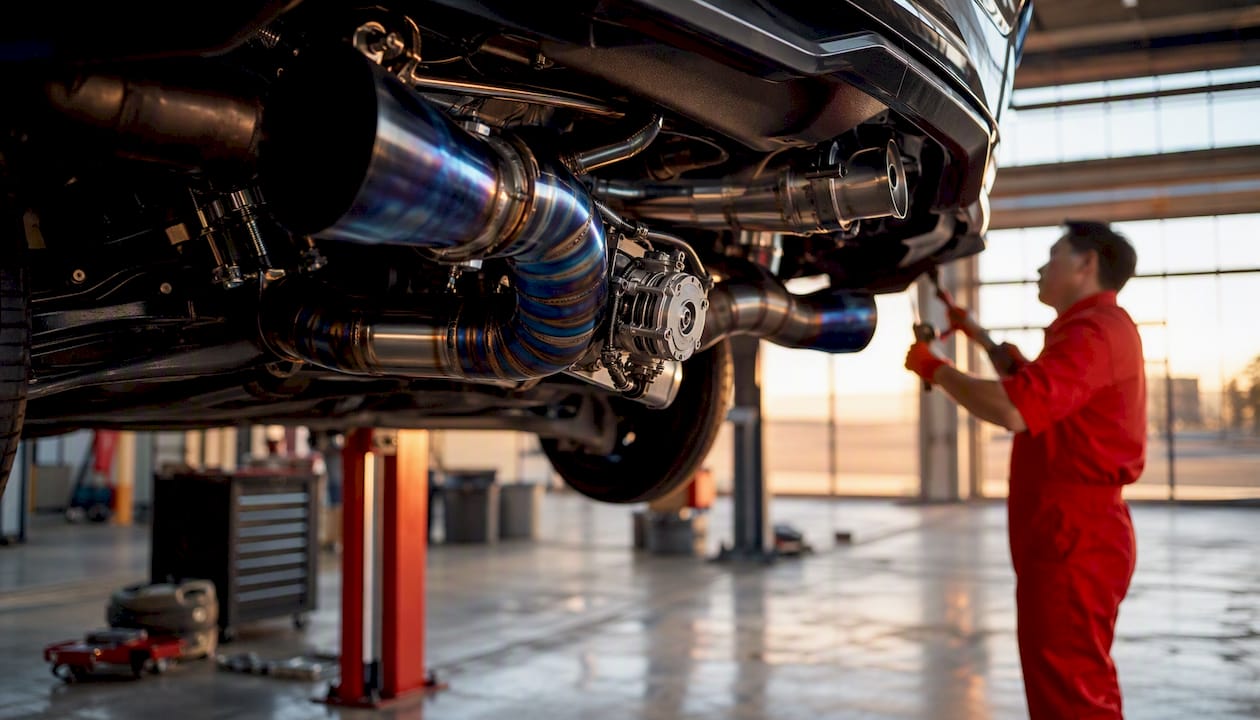
Akrapovič and Armytrix sit at the top of the price range for a reason: titanium construction, Inconel hardware, and servo actuators engineered for track thermal cycles. An Akrapovič Evolution system on an exotic can run $8,000–$12,000 or more. The sound profile is loud, high-pitched, and unmistakably exotic. The trade-off is that many configurations are catless, which puts them in off-road-use territory under EPA rules in most states. U.S. dealer availability for these brands exists but is uneven; lead times for specialty fitments can stretch to several weeks. For a weekend track car that never sees emissions testing, the engineering is exceptional. For a daily driver in California, the legal math rarely works out.
Stainless valved cat-back systems
Flowmaster and MagnaFlow are the workhorses of the U.S. aftermarket. Both offer broad fitment catalogs, domestic dealer networks, and price points that start under $500. The limitation is sound control: most systems in this tier use passive valves or no valve at all, meaning you get a fixed sound profile rather than a switchable one. MagnaFlow’s stainless construction and lifetime warranty are genuine selling points. Flowmaster’s chambered muffler designs produce a distinct American muscle tone. If controllable sound is your primary goal, these brands deliver it only at the upper end of their product lines, and even then the actuator sophistication lags behind servo-based systems.
Midpipe plus valve-controller combos
This approach pairs an aftermarket midpipe with a standalone electronic valve actuator kit, letting you add valve control to an existing cat-back or build a custom configuration. The appeal is flexibility; the risk is integration. Sound character depends on the whole system, and a valve dropped into a mismatched midpipe often produces drone at highway RPMs rather than the tone you wanted. Professional installation is effectively required here, and the total cost of parts plus labor frequently approaches what a purpose-built valved cat-back would cost.
Universal valved muffler kits
Universal kits advertise reversible installs and claim easy fitment, but actuator quality and valve-seat design vary widely across the market. Some use vacuum actuators that are adequate for occasional use; others use electronic actuators of uncertain thermal rating. The lower price point is real, typically $150–$600 for the kit itself, but adapter costs, welding, and the risk of a poor fit add up. These make sense for a budget build where reversibility matters more than long-term reliability. For a $90,000 BMW M5 or a Lamborghini Huracán, the risk-to-reward ratio is poor.
Custom-fabricated valved solutions
A skilled fabricator can build a valved system for virtually any vehicle, integrating whatever actuator type you specify. This is the right answer for rare chassis, one-off builds, or owners who want a configuration no catalog covers. The cost is high, lead times are long, and the warranty is only as strong as your relationship with the shop. For most buyers, a purpose-built branded system is faster, cheaper, and better documented. Custom fab earns its place when nothing else fits.
How do valved exhaust systems actually work?
A valved exhaust system adds a butterfly valve inside the exhaust path. When closed, exhaust gas routes through a bypass or a baffled section, reducing volume and backpressure. When open, gas flows through the full pipe diameter, increasing sound and flow. That simple mechanism is where the engineering complexity lives.
Actuator type is the primary reliability variable. Electronic servo actuators use a small motor to position the valve precisely; they respond to a remote, app, or ECU signal and hold position reliably across thermal cycles. Vacuum actuators use engine vacuum or a separate pump to move the valve; they are simpler but slower to respond and more prone to failure as vacuum lines age. Boost-referenced or ECU-controlled valves open automatically above a set RPM or boost threshold, which is convenient but removes manual control.
Material choices matter beyond the obvious stainless-versus-titanium comparison; for example, premium Brake Rotors – SC Type offer optimized thermal performance crucial for high-end vehicle systems. Wall thickness, valve-seat design, and the actuator’s thermal rating all affect how long the system performs without rattle or seizure. A T304 stainless system with a properly rated servo actuator will outlast a titanium shell fitted with a bargain actuator. The variable valve exhaust advantage over fixed systems comes from engineering the whole assembly together, not from bolting a valve onto an otherwise generic muffler.
Installation matters more than most buyers expect. Proper valve clearance, correct controller wiring, thermal isolation of the harness, and precise hanger placement all affect longevity. Poor installs are a leading cause of premature actuator failure, and many installers who are comfortable with bolt-on exhausts are not experienced with servo wiring or ECU integration. Budget for a professional shop with documented valved-system experience.
Valved exhaust systems are not just a sound switch. The valve changes the exhaust’s effective backpressure curve, which affects torque delivery at different RPMs. A well-engineered system is tuned so that the closed position does not create excessive restriction at high load, and the open position does not kill low-end torque. That balance is what separates a purpose-built valved system from a valve welded into a generic pipe.
Pro Tip: When evaluating actuator quality from photos or a parts list, look for a metal housing with visible thermal shielding and a documented part number. Plastic-bodied actuators with no part number listed are a strong indicator of commodity hardware that will seize under repeated heat cycling.
How do you choose the right valved exhaust alternative?
Work through this decision in order, and you will eliminate most of the weak options before you spend a dollar.
- Define your use case. Street-only, track-only, or dual-use? A daily driver in a noise-regulated city needs a system that closes quietly. A track car that never sees emissions testing has more options.
- Confirm vehicle-specific fitment. Universal kits require adapter work and rarely hang correctly without custom fabrication. Model-specific systems bolt to existing hangers and flanges. Ask the seller for a chassis-specific fitment diagram, not just a compatibility list.
- Verify actuator type and spare-parts availability. Ask for the actuator’s part number and confirm you can source a replacement in the U.S. Actuator reliability is the primary differentiator between a system that lasts and one that leaves a valve stuck open at 2 AM.
- Check warranty and U.S. dealer support. A warranty that requires shipping to an overseas address is not a practical warranty for most buyers. Confirm the seller has a U.S. contact and a documented return or replacement process.
- Ask about resonance and drone mitigation. Request a sound clip at highway RPM in the closed position. Drone at 70 mph is the most common complaint in valved exhaust forums, and it is almost always a midpipe or resonator mismatch rather than a muffler problem.
- Confirm emissions configuration and local legality. Catless downpipes are off-road-use only in most U.S. states. Catted systems with high-flow cats are the street-legal path. Check your state’s rules, and review the sports car exhaust legal checklist before ordering.
Red flags to walk away from: no U.S. dealer or serial number on the product, remote hardware that looks identical to listings on global discount marketplaces, no vehicle-specific fitment data, and no documented spare-actuator availability. Forum investigations have documented near-identical hardware sold under multiple brand names at very different price points; the differentiator is QA, fitment engineering, and post-sale support, not the hardware itself.
Rough U.S. retail price bands to calibrate expectations: axle-back valved systems generally cost a few hundred to around a couple thousand dollars; full cat-back valved systems range from low thousands to over ten thousand dollars depending on materials; universal valved kits are the lowest cost option, often under a thousand dollars before adapter and install costs.
Which alternative fits your specific situation?
Daily-driven luxury sedan (BMW 5 Series, Audi A7, Mercedes E63): A premium branded valved system with electronic servo control is the right answer. You need a quiet closed position for residential streets and a full-open option for the weekend. Fitment precision matters because these platforms have tight underfloor clearances. Valvecontrolexhaust covers this segment with documented chassis-specific fitment.
Track-focused coupe (BMW M3/M4, Porsche 911 GT3, Audi RS5): An engineered titanium valved kit from a brand with track-proven actuators is the performance choice, provided the configuration is catted for any street use. Expect professional installation and a higher budget. Confirm U.S. dealer support before ordering.
Lightweight exotic (Ferrari, Lamborghini, McLaren): Fitment and weld quality are critical on these platforms; a misaligned hanger or a poor weld causes rattle that is expensive to diagnose and fix. Stick with brands that publish chassis-specific fitment data and carry a real warranty. Valvecontrolexhaust’s coverage of Ferrari and Lamborghini platforms makes it a practical starting point for this buyer.
Budget-minded enthusiast who still wants valve control: A universal valved muffler kit paired with a resonated midpipe is the lowest-cost entry point. Manage expectations: actuator quality at this price is variable, and the sound outcome depends heavily on the rest of the system. For a more reliable path at a modest step up in cost, a stainless cat-back from a brand with a U.S. dealer network is worth the extra spend.
Custom or rare chassis: Professional fabrication is the only realistic path. Budget accordingly and choose a shop with documented valved-system experience, not just general exhaust work.
For buyers who want U.S.-based support, serialized products, and fitment coverage across European and luxury platforms, Valvecontrolexhaust is the practical first call. The alternative categories above are real options, but most of them require trade-offs in support, fitment precision, or legal compliance that a purpose-built system from a domestic-supported brand avoids.
Key Takeaways
Vehicle-specific, electronically actuated valved exhaust systems consistently outperform universal kits on fitment precision, actuator longevity, and sound control, making them the right choice for most U.S. performance and luxury vehicle owners.
| Point | Details |
|---|---|
| Actuator type decides reliability | Electronic servo actuators outlast vacuum units under thermal cycling; always verify the part number before buying. |
| Fitment specificity reduces risk | Model-specific systems eliminate adapter work and hanger misalignment that cause rattle and warranty claims. |
| Catless configs carry legal risk | Catless downpipes are off-road-use only in most U.S. states; confirm emissions compliance before ordering. |
| Cheap hardware is often shared | Near-identical actuator hardware appears across multiple brand names; QA, fitment engineering, and support are the real differentiators. |
| Valvecontrolexhaust for U.S. buyers | Covers European and luxury platforms with serialized products, electronic valve control, and domestic support. |
The honest case for being selective about valved exhausts
The valved exhaust market has a problem that most buying guides skip over: the gap between what a system looks like in a product photo and what it actually delivers under a car is enormous. A servo actuator in a polished housing can be a $12 commodity part or a properly rated component engineered for 800°F exhaust temps. You cannot tell from the listing.
What experienced builders actually do is ask for part numbers, cross-reference them, and look for evidence of chassis-specific R&D: fitment diagrams, install photos on the exact model, and a warranty that names a U.S. contact. The brands that invest in that work charge more for it, and they should. The ones that do not are selling you the same hardware with a different sticker.
The other thing worth saying plainly: sound tuning is iterative. The best builds in enthusiast communities involve test drives with multiple midpipe and resonator combinations before settling on a final configuration. A valved muffler alone rarely delivers the sound you heard in a YouTube clip, because that clip was shot with a full system tuned over multiple sessions. Budget for the whole system, not just the loudest-looking piece of it.
Valvecontrolexhaust’s approach, vehicle-specific engineering with electronic control and documented U.S. support, is the right framework regardless of which brand you ultimately choose. The categories that cut corners on any of those three things are the ones that generate the forum threads about stuck valves and misaligned flanges.
Valvecontrolexhaust: built for the vehicles most alternatives skip
Most of the brands in this comparison do their best work on domestic platforms. Valvecontrolexhaust was built specifically for the vehicles they leave out: Audi, BMW, Ferrari, Lamborghini, Mercedes-AMG, and Porsche, with chassis-specific fitment data, serialized products, and electronic remote valve control that works the way the factory system was supposed to.

The practical difference for a U.S. buyer is support you can actually reach. Valvecontrolexhaust provides U.S.-based documentation, compatibility resources, and installation guidance for the platforms it covers. If you want to understand what a full valved system does to your specific car before you order, the performance exhaust buyer’s guide walks through system architecture, sound outcomes, and fitment notes by platform. For buyers ready to compare configurations, the critical analysis of leading valved systems covers the engineering trade-offs in detail. Check your vehicle’s compatibility and request fitment information directly through the site.
Useful sources and next-step reading
- Valvecontrolexhaust — site landing page and compatibility resources
- Performance Exhaust Buyer’s Guide: IPE, FI, Armytrix, Akrapovic, Valvetronic & Ryft
- Exhaust noise regulation explained for U.S. drivers
- Sports Car Exhaust Legal Checklist: 2026 Guide
- Armytrix vs. iPE valvetronic exhaust systems — Nissan GT-R Forum
- Valvetronic or IRL Exhaust — Bimmerpost G80 forum thread
- Exposing Valvetronic Designs — Bimmerpost G80/G82 forum thread
- Valvetronic double X-pipe exhaust reviews — McLaren Life forum
- U.S. Environmental Protection Agency — vehicle emissions regulations
This article provides general information for educational purposes. Emissions and noise regulations vary by state and vehicle configuration. Confirm current rules with the EPA, CARB, or a qualified professional before purchasing or installing any exhaust modification.