Pops and bangs are not illegal on their own anywhere in the United States, but the setup that produces them often is. There’s no federal statute that names “pops and bangs” or exhaust crackle as a banned sound. Legality instead hinges on two separate questions: does your setup still meet emissions requirements, and does it stay under your state or city’s noise limits?
Get either one wrong and you’re exposed. Strip a catalytic converter to get louder backfire on decel, and you’ve triggered a federal Clean Air Act problem. Run a valveless straight-through exhaust that hits 100+ decibels at idle in a city with an 85 dB cap, and you’re looking at a local noise citation, regardless of what’s bolted to your downpipe.
Here’s what typically happens when either line gets crossed:
- Fix-it ticket: you get cited and given a window to remove the offending part or revert the tune, often with a fine attached.
- Escalating fines: repeat citations in the same jurisdiction tend to cost more each time.
- Impoundment: rare, but it happens in severe or repeat cases, particularly where local police have made loud exhausts a visible enforcement priority.
- Federal exposure: only kicks in when emissions hardware has been removed, defeated, or bypassed, which is a different and more serious category of risk than a noise ticket.
Key Takeaways
Pops and bangs are legal in the US only when the setup keeps emissions hardware intact and stays under the noise limits of the specific state and city where the car is driven.
| Point | Details |
|---|---|
| Two axes control legality | Emissions compliance (federal) and noise/decibel limits (state and local) both have to check out. |
| Cat deletes carry federal risk | Removing catalytic converters or particulate filters can violate the Clean Air Act regardless of volume. |
| Enforcement is local and complaint driven | Fix-it tickets, fines, and rare impoundment cases typically follow noise complaints, not random inspections. |
| Software tunes are lower risk than hardware changes | Ignition timing and fuel cut mapping don’t touch emissions equipment the way a cat delete does. |
| Valved exhausts offer a practical compliance path | A system with a genuine street mode lets you meet local noise rules without giving up track day sound. |
Table of Contents
- Is Pops and Bangs Legal? How the Sound Actually Gets Made
- Which Laws Actually Govern Exhaust Noise and Emissions
- What Triggers Federal EPA Enforcement Against Pop-and-Bang Tunes
- How Enforcement and Penalties Actually Play Out
- Do Pops and Bangs Damage Your Engine?
- How to Get Pops and Bangs Without Breaking the Law
- Valvecontrolexhaust’s Approach to Lawful Sound Control
- The Real Lesson Behind the Pops-and-Bangs Legal Question
- Sources
Is Pops and Bangs Legal? How the Sound Actually Gets Made
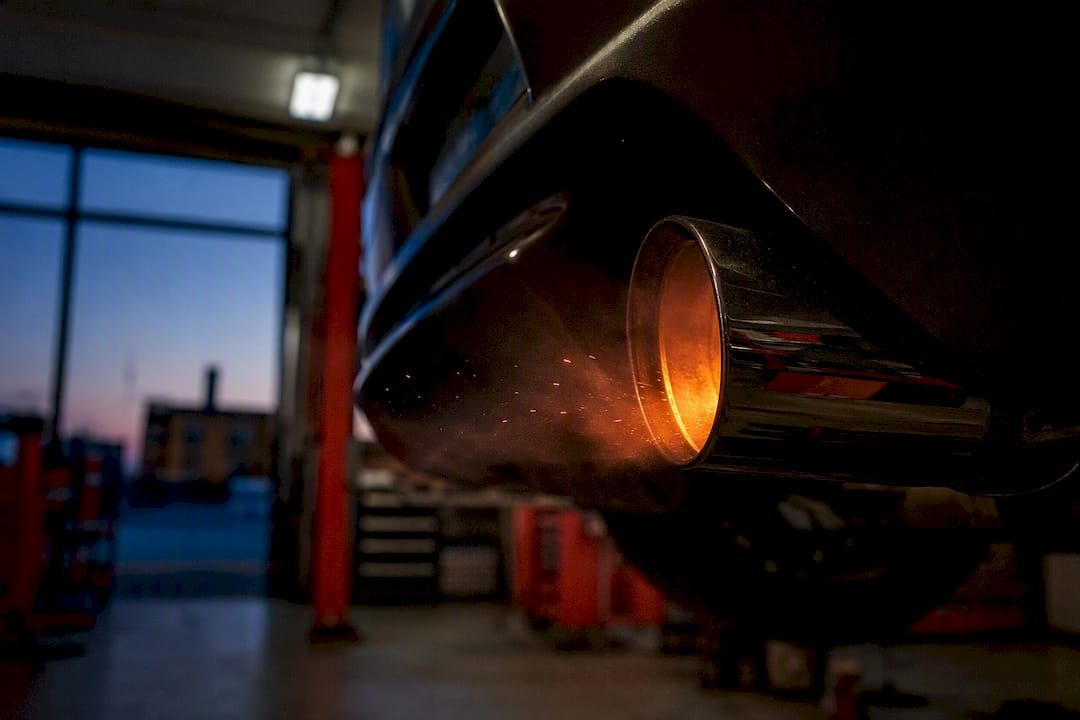
Whether pops and bangs are legal starts with understanding what’s actually happening mechanically when your car cracks and pops on a downshift. The sound comes from unburned fuel igniting somewhere in the exhaust tract after the combustion event, usually on deceleration, during a gear shift, or on throttle overrun. It’s a byproduct of deliberately mistimed combustion, not a natural side effect of a fast car.
Two separate systems create it, and they carry very different legal weight.
Software causes. Tuners manipulate ignition timing (retarding it so combustion happens later), fuel cut strategies (briefly cutting fuel on lift off, then reintroducing it), and enrichment maps (dumping extra fuel into the exhaust stream). None of that touches your emissions hardware. It’s a mapping choice, and it’s the lower-risk half of the equation.
Hardware causes. Open valve exhaust systems, straight-through mufflers with less baffling, and downpipes or full systems with catalytic converters removed (“cat deletes”) all amplify or enable the sound mechanically. This is where the risk splits sharply:
- A valved exhaust left open just changes volume and resonance. That’s a noise ordinance question.
- A cat delete or DPF removal changes what leaves your tailpipe chemically. That’s an EPA question, and a much bigger one.
- A straight-through muffler with no baffling is almost purely a decibel problem, not an emissions problem.
Pro Tip: If you’re comparing tunes or systems, ask specifically whether the shop’s setup is software-only or requires hardware changes. A crackle tune with intact cats behaves completely differently under the law than a cat-back system with the converters gone, even if they sound similar in a parking lot.
Which Laws Actually Govern Exhaust Noise and Emissions
There is no single rulebook. Exhaust legality in the US runs through three separate and sometimes overlapping layers, and a mod has to clear all of them to be genuinely street legal.
Federal: the Clean Air Act. This is emissions-focused, not noise-focused. It governs catalytic converters, particulate filters, and onboard emissions monitoring, and it applies uniformly across all 50 states. There is no state that gets to opt out of federal emissions rules, which is why a cat delete carries the same underlying federal exposure whether you’re in Texas or Vermont.
State vehicle codes. Most states set their own exhaust equipment standards, sometimes specifying that a vehicle must have a functioning muffler, sometimes setting decibel ceilings tied to engine size or vehicle class. These vary widely, and a setup that passes inspection in one state can fail in the next.
Local noise and nuisance ordinances. Cities and counties layer their own decibel limits and nuisance rules on top of state code, often with lower thresholds than the state minimum and much more aggressive local enforcement.
The practical result: there’s no such thing as a single “pops and bangs legal” answer for the whole country. There’s no federal law that names the sound itself, which means the real controlling rules sit at the state and city level, and they can differ by a few miles.
- A tune legal in unincorporated county land can become illegal the moment you cross into city limits.
- Track only exhaust configurations are frequently sold with a disclaimer that they’re not street legal, and driving on public roads with them installed can violate local nuisance statutes even without an emissions issue.
- Some states require exhaust systems to be OEM style or CARB-certified for street use, which rules out plenty of aftermarket straight pipes regardless of decibel output.
Because enforcement is decentralized down to the city level, checking your specific municipality’s noise ordinance before you drive a tuned car on public roads isn’t optional homework. It’s the only way to know your actual exposure.
What Triggers Federal EPA Enforcement Against Pop-and-Bang Tunes
The federal risk isn’t about volume. It’s about what’s missing from your exhaust system. An emissions “defeat” happens when a modification removes or disables equipment the EPA requires: catalytic converters, diesel particulate filters, or software that suppresses the check engine light and onboard diagnostics tied to those systems.
The greatest federal exposure for a pop-and-bang setup comes from bypassing or removing catalytic converters or particulate filters. Disabling emissions controls this way is a direct Clean Air Act violation, and shop liability can extend to the installer, not just the owner.
The EPA has pursued enforcement against companies that manufacture and sell defeat devices, and that liability doesn’t stop at the manufacturer. Shops that install cat deletes or emissions-defeating tunes, especially products marketed as “off-road use only” but installed on street cars, carry real exposure of their own.
Signs your setup may already be out of compliance:
- Your vehicle fails a state or local emissions inspection after the tune or hardware change.
- A dealer or independent shop flags a missing or non-functional catalytic converter during routine service.
- Your check engine light behavior changes in a way that suggests emissions monitoring has been suppressed rather than fixed.
None of that requires a loud exhaust. A quiet car with a defeated cat still carries full federal risk. Loudness and emissions compliance are two different scoreboards, and it’s easy to pass one while failing the other.
How Enforcement and Penalties Actually Play Out
Most exhaust enforcement in the US is complaint driven or visibility driven, not the result of random inspections. A car that pops loudly at 11 PM in a residential neighborhood generates noise complaints; a car that’s quiet at idle but has an obvious cat delete rarely gets flagged unless it’s pulled over for something else first.
- Roadside stop or fix-it ticket. An officer cites the vehicle for excessive noise or a missing/altered exhaust component and issues a notice requiring the owner to correct it, often within a set window.
- Reinspection requirement. Many jurisdictions require proof the fix was made, sometimes tied to registration renewal, before the citation clears.
- Escalating fines for repeat violations. A second or third citation for the same vehicle typically costs more than the first and can trigger closer scrutiny going forward.
- Impoundment in severe or repeat cases. This is uncommon but real, particularly in jurisdictions running targeted enforcement pushes. California has run visible crackdowns specifically citing cars for exhaust pops and excessive sound, with local news coverage amplifying the enforcement push.
Enforcement intensity tracks population density more than anything else. Dense urban areas with active noise ordinances and frequent resident complaints see far more citations than rural counties, where a loud exhaust might draw a look but rarely a ticket. Neighborhood complaints, not statutory changes, are usually what triggers a local crackdown, which means the safest move isn’t just knowing the law. It’s reading the room.
Do Pops and Bangs Damage Your Engine?
The mechanical risk is real but usually modest, and it depends heavily on how aggressive the tune is. Pop-and-bang sound comes from unburned fuel igniting in the exhaust after combustion, and that process runs hotter than a normal exhaust cycle. Over time, that added heat stresses mufflers, exhaust welds, and anything downstream of the point where ignition happens.
- Mild street tunes that produce occasional crackle on lift off create minimal extra stress. This is closer to cosmetic than mechanical.
- Aggressive tunes with heavy fuel enrichment on deceleration push exhaust temperatures noticeably higher and can accelerate wear on heat affected components, especially cheaper aftermarket mufflers not built for sustained high temps.
- Repeated hard use of an aggressive tune, especially on track days, compounds the stress in a way occasional street use doesn’t.
Pro Tip: Ask your tuner or fabricator what material and wall thickness the exhaust uses before adding an aggressive pop-and-bang map. A thin-wall stainless system built for a mild tune can develop stress cracks faster under a tune designed for maximum crackle.
There’s a paperwork risk that matters as much as the mechanical one. ECU modifications and hardware changes can affect both your warranty and your insurance coverage, and failing to disclose modifications to your insurer can complicate a claim after an accident, even one that has nothing to do with your exhaust. Manufacturers can also deny warranty coverage on related components if they trace a failure back to an aftermarket tune.
How to Get Pops and Bangs Without Breaking the Law
Staying compliant isn’t complicated, but it does require sequencing your decisions correctly instead of bolting on the loudest system first and asking questions later.
- Keep your catalytic converters and particulate filters intact. This is the single decision that keeps you out of federal territory. Everything else is a local noise question you can manage.
- Choose a valved exhaust or a retunable ECU with a genuine street mode. A system that closes valves for daily driving and opens for track days gives you both the sound and the flexibility to stay under local decibel caps when it matters. Our exhaust system anatomy breakdown covers how valve placement affects both sound and compliance.
- Measure your actual decibel output, not just your gut sense of “loud.” A cheap sound meter app plus a known measuring distance tells you whether you’re under your local threshold before a cop does. Our decibel management guide walks through how to measure this correctly.
- Keep receipts and tune logs. Documentation showing what was installed, when, and by whom becomes your best evidence if you’re ever cited and need to prove your setup is street legal or revert it quickly.
- Ask your tuner three direct questions before you buy: Does this map require removing any emissions hardware? Is there a documented street/legal mode versus a track only mode? Can you provide a spec sheet showing measured decibel output?
If you do get cited, the response is straightforward: keep the fix-it order, get proof of the correction (a receipt from a certified shop showing the system was reverted or the tune was adjusted), and submit it within the window given. Trying to argue the citation without documentation rarely goes well; showing up with a paper trail usually resolves it fast.
For a broader look at what shops should be asked before any install, our sports car exhaust legal checklist breaks down the full set of questions worth running through before you sign off on a build. And if you’re dealing with a fix-it order tied to an emissions failure rather than a noise citation, a shop like Alternative Car Care that specializes in emissions and mechanical repair can get the hardware back to compliant spec.
Valvecontrolexhaust’s Approach to Lawful Sound Control
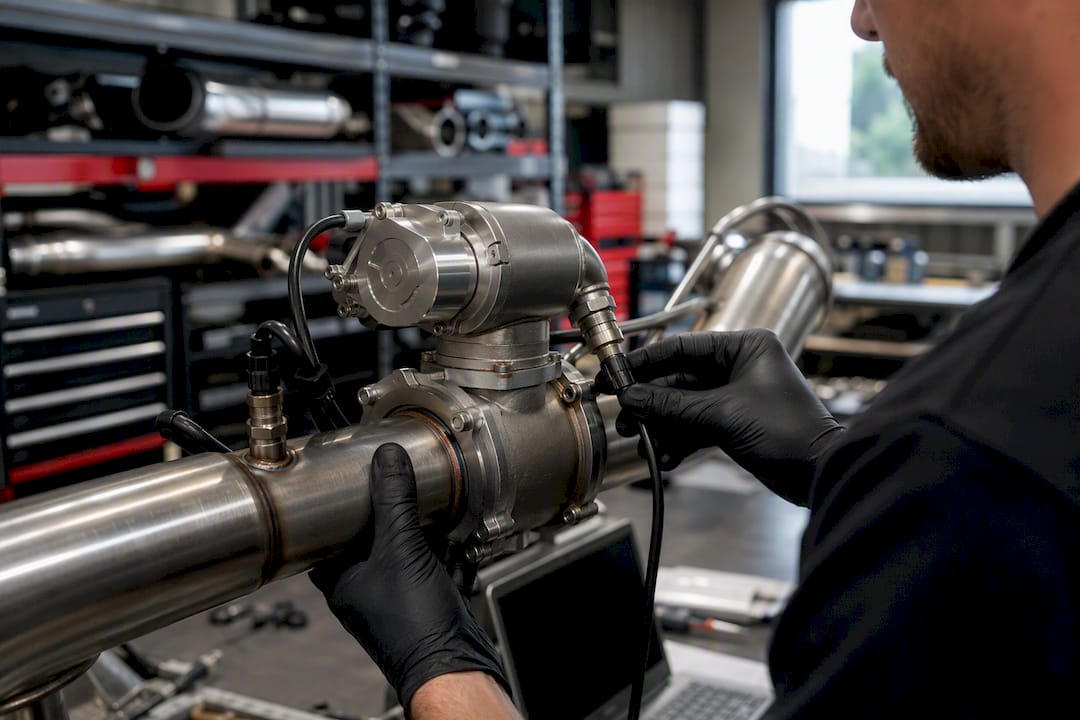
Valvecontrolexhaust builds around a simple premise: the crackle and pop enthusiasts want doesn’t require gambling with federal emissions rules or local noise tickets. Every valved system we design keeps catalytic converters and particulate filters in place, and the electronic valve control lets a driver switch between a quiet street mode and a louder, more aggressive mode without swapping hardware.
That matters because the most defensible compliance strategy is a combination of intact emissions equipment and a verifiable street mode, not just a quiet muffler. A valve that closes in residential areas and opens on a back road or track gives you a system that adapts to wherever you’re actually driving, rather than forcing a single, permanent, all or nothing sound profile.
- Valved systems retain full emissions hardware, which keeps you out of Clean Air Act territory entirely.
- Remote or app based valve control lets you drop volume instantly in a noise sensitive area without tools or a shop visit.
- Compatibility spans Audi, BMW, Porsche, Mercedes-AMG, Ferrari, and Lamborghini platforms, so the same compliance logic applies whether you’re driving a daily or a weekend car.
Our 2026 legal checklist for sports car exhausts and decibel management guide are built specifically around US state and local rules, not generic advice pulled from other markets. If you’re deciding between valved systems, our critical analysis of leading performance exhaust systems breaks down how different valved and performance options handle exactly this tradeoff between sound and compliance. For drivers who want the crackle without rebuilding their exhaust twice a year to match wherever they happen to be parked, installing a valve controlled system solves the problem at the hardware level instead of leaving it to guesswork.
The Real Lesson Behind the Pops-and-Bangs Legal Question
The conventional advice treats “is it legal” as a single yes or no question, and that’s exactly where most enthusiasts get burned. The research points somewhere more useful: emissions compliance and noise compliance are two entirely separate risk categories, and most owners only think about the one that’s easier to notice, the sound.
What gets underestimated is how quiet a federal problem can be. A cat delete on a well muffled system might pass every noise ordinance in town and still expose the owner to Clean Air Act liability. Meanwhile, a fully emissions compliant valved system can still draw a noise ticket if the driver forgets to switch out of track mode on a residential street.
If you take one thing from this, prioritize the emissions question first. It’s the harder one to reverse and the one with actual federal teeth behind it. Noise tickets are inconvenient. Federal emissions violations are a different category of problem entirely.
Sources
- Thinking about modifying your car’s exhaust system? Read this. — Malloy Law
- EPA regulatory record on emissions and defeat devices — regs.gov
- Are Pop-and-Bang Tunes Legal? — AP Tuning