For most AMG C63 owners the fastest way to noticeably change the car’s sound is a valved cat-back or axle-back system, while measurable power gains typically require a downpipe swap paired with a tune. Legality and the right parts depend heavily on which C63 you own: the V8 generations and the newer hybrid model do not respond to upgrades the same way, and federal rules limit how far you can go with the catalytic converters. Some companies build valved systems and downpipe options that fit into this decision without forcing an all-or-nothing choice.
TL;DR:
- Upgrading to a valved cat-back system enhances sound flexibility without significant power gains, especially suited for daily drivers seeking switchable noise levels.
- Power increases mainly come from replacing downpipes and midpipes with freer-flowing options, which require a tune to unlock actual horsepower improvements.
- Compatibility depends heavily on the C63 model year and chassis, with V8 and hybrid versions needing different parts and adapters for proper fitment.
- Federal and state emissions rules restrict removal or defeat of catalytic converters, making catted downpipes and documented compliance essential.
- Installing full exhaust systems can take from one to six hours, and verified dyno gains from exhaust upgrades alone are typically modest without additional tuning.
Table of Contents
- Exhaust upgrade types explained: what each one does
- What upgrades actually change performance and measured power
- Fitment, compatibility and installation checklist for C63 owners
- Legal and emissions considerations owners must check before modifying
- Publisher expertise: how Valve Control Exhaust approaches C63 upgrades
- Author perspective: choosing upgrades for long-term ownership
- How Valve Control Exhaust can help with your next step
- Sources
- FAQ
Exhaust upgrade types explained: what each one does
Every C63 exhaust upgrade falls into a handful of categories, and picking the right one starts with knowing what you actually want to change. An axle-back system replaces only the section behind the rear axle, mainly swapping mufflers and tips, so it reshapes tone without touching backpressure much. A cat-back system starts further forward, right after the catalytic converters, and generally opens up more volume and a deeper resonance because it replaces more piping and often the resonators too.
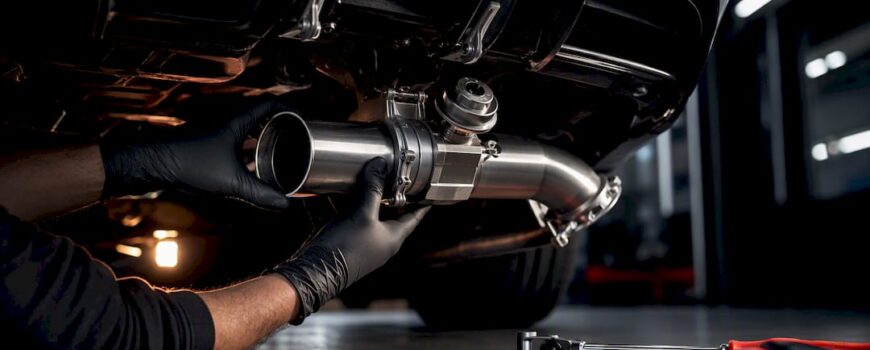
Valved, or flap-controlled, systems add electronically operated valves inside the piping that open or close depending on drive mode, throttle input, or a remote control. This is the approach that lets a car stay quiet at a 6 AM cold start and turn aggressive on a weekend drive, without the compromise of a fixed straight-through design. Downpipes and link pipes sit closer to the engine, right where the factory catalytic converters live, and are the piece most tied to power rather than pure sound. Resonator or mid-pipe choices, including H-pipe and X-pipe configurations, change how the two exhaust banks interact: X-pipes tend to produce a higher-pitched, more blended tone, while H-pipes keep more separation between cylinder banks and a deeper idle.
- Daily drivers usually get the most value from a valved cat-back, since it preserves a quiet commute and adds a switchable aggressive mode.
- Track-focused builds lean toward downpipes and resonator deletes because the priority shifts to flow and weight over cabin comfort.
- Show cars often stick with axle-back changes or factory-style valved setups since appearance and moderate sound gains matter more than outright flow.
What upgrades actually change performance and measured power
Mufflers and resonators are sound parts first. They can smooth or roughen tone, but they rarely move the needle on horsepower because the factory piping ahead of them is already sized to handle stock exhaust volume. The components that actually affect output are the downpipes and any restrictive midpipe sections, since they sit closest to the turbos or engine and where backpressure has the most influence on scavenging.
- Downpipes and freer-flowing midpipes are the power-relevant components; mufflers and axle-back changes mainly affect tone.
- A tune is usually necessary to unlock any real gain from a downpipe swap, since the factory ECU maps around stock exhaust flow.
- Gains without a tune are typically small, and any number should be treated with skepticism unless it comes from a documented dyno run.
Dyno-verified gains from exhaust-only swaps are typically modest, with real horsepower increases usually coming from downpipes combined with a tune rather than muffler changes alone, according to Car and Driver’s testing of a 2017 C63 S. That pattern holds across most turbocharged AMG builds: the exhaust alone rarely rewrites the power curve, it mostly changes what the car sounds like while doing the same work.
Fitment, compatibility and installation checklist for C63 owners
The V8 generations, including the W204 and W205 chassis, use a different bolt pattern and catalytic converter layout than the newer hybrid and four-cylinder platforms, and that difference cascades into everything from link pipe length to valve wiring harnesses. A cat-back designed for a V8 C63 will not bolt onto a four-cylinder hybrid model, and even within the V8 generation, older cars often need a matched link pipe or adapter because the secondary catalytic converter geometry shifts from year to year.
- Confirm your exact chassis code and model year before ordering, since AMG changed exhaust geometry more than once across generations.
- Check whether your car needs a link pipe or adapter piece, a common gap that causes fitment problems on older V8 models.
- Verify the aftermarket valve control system includes a simulator or plug-and-play wiring so the ECU does not throw faults.
- Ask the installer to confirm labor hours before the job starts, since valve-equipped systems take longer than a basic bolt-on.
A straightforward axle-back swap on a lift usually takes one to two hours, while a full cat-back with valve control and downpipe work can run four to six hours depending on how much needs to come apart. Parts-only budgets vary widely by brand and completeness of the kit, and shop labor adds a separate line item on top of that.
Pro Tip: Ask your installer to log a pre-install scan of your ECU so you have a clean baseline to compare against if any fault codes appear after the valve controller goes in.
Legal and emissions considerations owners must check before modifying
Federal rules draw a clear line around the catalytic converters. EPA guidance on exhaust system repair states that removing or replacing catalytic converters with parts that lack them, or installing components whose main effect is defeating emissions controls, can violate the Clean Air Act. That guidance is the main federal reference point for where a sound upgrade crosses into tampering.
- Choose catted downpipes rather than catless ones if you want to stay clearly inside federal guidance.
- Look for CARB Executive Order coverage if you live in a state that enforces CARB rules, since an EO ties a specific part to a specific vehicle as compliant.
- Keep receipts and installation documentation in case emissions testing or a future sale requires proof of compliant parts.
Our sports car exhaust legal checklist walks through how to verify EO coverage state by state before you buy.
Publisher expertise: how Valve Control Exhaust approaches C63 upgrades
Valve Control Exhaust focuses on customizable, valved exhaust systems and downpipes built for high-performance European cars, with exhaust parts and down pipe categories that cover the upgrade paths discussed above. The company sells genuine components direct from authorized manufacturers and builds its systems around remote valve control, so a daily-driven C63 can stay quiet in traffic and switch to a louder mode without swapping hardware.

Author perspective: choosing upgrades for long-term ownership
Valved systems are the pragmatic choice for anyone who drives their C63 daily and wants sound flexibility without a permanent trade-off. Downpipe and tune work only pays off if track days are a real part of your plan, not an occasional idea. Keep every modification reversible and documented, since resale value and emissions compliance both depend on being able to prove what changed.
— Info
How Valve Control Exhaust can help with your next step
Turning research into a working exhaust setup comes down to matching your goals to the right category. Valve Control Exhaust’s exhaust parts cover valved cat-back and axle-back systems, while the down pipe category includes catted options built for compliance-minded builds, and accessories round out valve controllers and fitment hardware.

- Browse the fitment pages for your specific C63 generation before ordering.
- Read the performance exhaust buyer’s guide for a side-by-side look at valve-control approaches.
- Contact support with your chassis code for vehicle-specific advice before you buy.
Check the exhaust parts category to see what fits your car today.
FAQ
Does an AMG performance exhaust add horsepower?
A factory or aftermarket exhaust upgrade alone typically adds little measurable horsepower, since mufflers and resonators mainly shape sound rather than flow. Meaningful gains usually require a downpipe swap paired with an ECU tune, and any claimed number should come from a documented dyno run rather than a marketing figure.
What is the best exhaust system for a W204 C63?
The right choice depends on whether you want sound flexibility or maximum flow: a valved cat-back suits daily drivers who want a quiet commute and a louder weekend mode, while a catted downpipe fits owners chasing more track-focused performance. Confirm your car’s link pipe requirements first, since W204 models often need a matched adapter for aftermarket systems to bolt up correctly.
Is the C63 AMG loud?
Older V8 C63 models are known for a deep, aggressive exhaust note, but the newer hybrid C63 has a different, less throaty sound because of its electrified powertrain, as Car and Driver has reported. That shift is part of why valved aftermarket systems, which can electronically shape and amplify tone, have become more relevant on the newest generation.
What are some performance upgrades I can make to my Mercedes-AMG C63?
Common upgrade paths include valved cat-back or axle-back exhausts for sound, catted downpipes for flow, and an ECU tune to translate that flow into real power. Any downpipe work should stay paired with catalytic converters or CARB-backed parts to stay within EPA emissions guidance.