
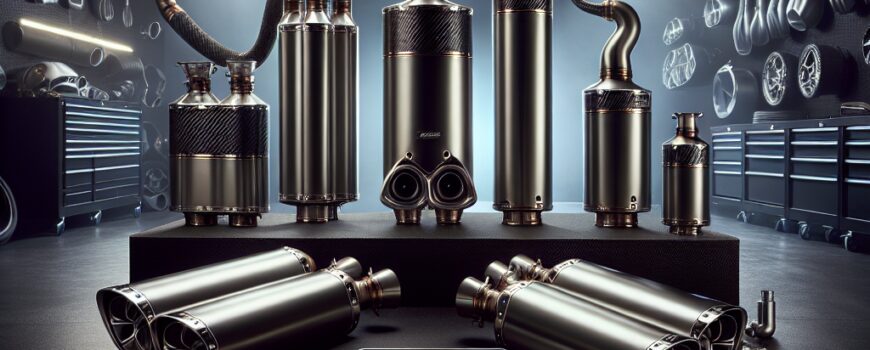
Choosing between IPE Exhaust, FI Exhaust, Armytrix Exhaust, Akrapovic Exhaust, Valvetronic Exhaust, and Ryft Exhaust often comes down to trade-offs between sound, weight, and real-world usability. This analysis cuts past marketing rhetoric to assess how each system performs where it matters: acoustic personality, engineering, and everyday compatibility.
IPE Exhaust and FI Exhaust: engineering priorities and sound signatures
IPE and FI position themselves differently despite both targeting performance-oriented drivers. IPE Exhaust leans into a visceral, often bass-forward note with an emphasis on cinematic tone, while FI Exhaust typically tunes for aggressive mid-range character and more overt rasp under load.
From an engineering perspective, consider materials and valve architecture. IPE systems favor tailored resonation chambers to shape low-frequency energy; FI commonly employs straight-through cores with selective baffling to preserve flow. Consequently, throttle response and perceived loudness at cruising speeds differ significantly.
Driveability and noise management
If you prioritize daily usability, FI Exhaust systems often offer a closer balance between track-level sound and tolerable cabin noise. Conversely, IPE is less forgiving at low speeds. Moreover, sound modulation via valve control matters: systems that integrate precise valvetronic actuators deliver smoother transitions between closed and open modes.
Who should pick which
Choose IPE if you want a theatrical exhaust personality for weekend driving and events. Select FI if you need a more controlled, performance-focused note that still sounds aggressive under load.
Armytrix Exhaust and Akrapovic Exhaust: electronics, materials, and craftsmanship
Moving on, Armytrix and Akrapovic represent two distinct philosophies. Armytrix Exhaust emphasizes electronic integration and loudness control via active valves and smartphone apps. Akrapovic Exhaust prioritizes metallurgy, lightweight construction, and race-proven flow geometry.
Akrapovic’s titanium and Inconel offerings reduce mass and often improve power-to-weight ratios. By contrast, Armytrix invests in servo and ECU integration to alter sound profiles dynamically, which appeals to buyers wanting on-demand variability without swapping components.
Reliability and software
Consider long-term reliability: Akrapovic’s passive approach minimizes electronics-based failure points. However, Armytrix’s software-driven control gives granular sound control but adds complexity. For some, the trade-off of electronics is worth the functional flexibility; for others, simplicity and material quality trump app features.
Valvetronic Exhaust and Ryft Exhaust: modularity, cost, and customization
Valvetronic Exhaust and Ryft Exhaust aim for accessible performance with modular architecture. Valvetronic systems generally emphasize precise valve calibration and OEM-style fitment, while Ryft leans toward bolt-on, modular kits designed for easier swapping and aftermarket customization.
Moreover, both brands cater to users who want to tune sound without reinventing the entire system. Valvetronic’s tighter integration can yield a more refined closed-valve quietness, whereas Ryft prioritizes configurability and aftermarket compatibility.
Value proposition and aftermarket support
For budget-conscious buyers, Ryft can be compelling—especially when paired with incremental upgrades. Valvetronic tends to target buyers seeking a more refined transition between modes and better OEM fitment, which can justify higher prices for that segment.
Choosing by performance metrics: weight, flow, and compliance
Ultimately, measurable factors should drive the decision. Look at delta-weight over stock, backpressure figures where available, and documented power or torque gains from independent dyno tests. These metrics reveal true performance differences beyond subjective sound impressions.
Additionally, check noise compliance and local regulations. Some of these valved systems can be tuned to meet legal limits, but that often requires additional hardware or remapping. Therefore, factor in potential costs for sound-level adjustments or legal compliance when budgeting.
Installation, tuning, and real-world testing
Installation complexity varies. Systems with active electronics—Armytrix and some Valvetronic kits—typically require calibration and occasional firmware updates. Conversely, Akrapovic and FI systems offer more plug-and-play reliability. Before purchase, arrange a test drive or listen to representative recordings in multiple driving conditions.
Practical next steps: prioritize the metric that matters most—noise control, mass savings, or modularity—then shortlist two brands and verify fitment, warranty, and installation support through forums and professional installers.
Choosing among IPE Exhaust, FI Exhaust, Armytrix Exhaust, Akrapovic Exhaust, Valvetronic Exhaust, and Ryft Exhaust is an exercise in prioritization: do you want theatrical sound, precise engineering, electronics-filled flexibility, or modular value? Use empirical metrics—weight, flow, and verified dyno numbers—paired with a real-world listening session. From there, make a decision that aligns with your driving habits, legal environment, and long-term ownership expectations, and arrange professional installation and tuning to realize the system’s potential.