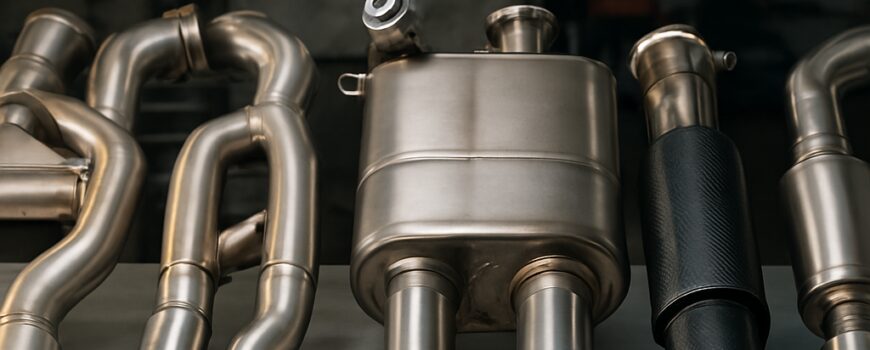
Tag: exhaust comparison

on

When you install an IPE Exhaust, you are making a loud, deliberate statement about sound and engineering; the same decision tree applies to FI Exhaust and the other top-tier systems. The real question is not which brand is the loudest, but which system resolves trade-offs between tone, weight, emissions compliance, and drivability. This piece dissects six leading valved and performance exhausts with a terse, technical lens to help informed buyers prioritize.

IPE Exhaust: Sound profile, materials, and use case

IPE (Innotech Performance Exhaust) traditionally markets a theatrical, aggressive tone favored by owners seeking attention. Build quality often uses stainless steel with hand-crafted welds, which supports longevity but can add weight. On the track, the system frees exhaust flow and can slightly improve peak horsepower; however, gains are vehicle-specific and demand dyno validation.

Moreover, consider NVH (noise, vibration, harshness). IPE’s tuning can introduce cabin resonance at certain RPMs, and aftermarket resonator options may be necessary for comfortable daily driving. Therefore, match the hardware to your tolerance for drone versus throatiness.

FI Exhaust: Performance characteristics and tuning flexibility

FI Exhaust emphasizes balance between refinement and performance. Their systems commonly use mandrel-bent piping with tuned muffler chambers to reduce unwanted frequencies. As a result, FI units often provide a more controlled sound without sacrificing midrange torque.

However, FI’s strength is its tuning flexibility: modular components and valve control allow for multiple profiles. For owners who split time between street and circuit, FI can be an ideal compromise.

Armytrix Exhaust: Valvetronic control and app integration

Armytrix stands out for electronic valve actuation and smartphone integration, which deliver on-demand sound variation. The valvetronic architecture reduces the need for permanent modifications while giving dynamic control over backpressure and tone.

On the other hand, the reliance on electronics increases complexity and potential failure points. Maintainability and software updates become part of ownership, so factor in dealer support when evaluating total cost of ownership.

Akrapovic Exhaust: Weight savings and race-derived engineering

Akrapovic leverages titanium and advanced composites to cut mass aggressively, improving handling and transient throttle response. Their race-derived muffler designs also optimize flow paths, which can yield tangible lap-time benefits for track-focused drivers.

Nevertheless, the premium materials and meticulous engineering come at a premium price. For many owners, the marginal gains versus high-quality stainless options are only justifiable in performance-first builds.

Valvetronic Exhaust: Valve mechanics and real-world usability

Valvetronic systems are designed around customizable valve timing and mechanical robustness. The focus on simple, reliable actuation often results in fewer electrical issues compared to app-driven systems. This pragmatic engineering reduces downtime and simplifies troubleshooting.

Conversely, Valvetronic may lack the cosmetic flash of brands with polished carbon tips or aggressive marketing. If you prioritize longevity and predictable maintenance, however, the conservative approach pays dividends.

Ryft Exhaust: Cost-to-performance and aftermarket fitment

Ryft positions itself as a value-driven contender offering competitive sound at lower price points. The brand often compromises on exotic materials in favor of cost-effective stainless steel while still delivering respectable flow characteristics.

Therefore, Ryft is suitable for enthusiasts seeking a pronounced sound without breaking the bank. Do note that fitment and finish can vary by model, so verify vehicle-specific options and warranty coverage before purchase.

Comparative metrics: sound, weight, and measurable gains

Across these brands, three metrics matter most: decibel signature, mass reduction, and on-wheel gains. Decibel readings alone are insufficient; spectral content and drone signature define comfort. Weight reductions improve rotation inertia and handling, while dyno-proven horsepower increases validate claims.

Next, durability and emissions compliance influence legal usability and resale. Stainless systems excel at longevity; titanium favors weight. Only certified catalytic solutions maintain street legality in regulated markets.

Decision framework: matching exhaust choice to priorities

Start with your primary objective: sound, lap time, daily comfort, or budget. If sound is paramount, IPE or Armytrix deliver theatrical profiles. For lightweight performance, Akrapovic is the technical optimum. Valvetronic and FI favor balance and reliability, while Ryft targets cost-conscious buyers.

Additionally, confirm installation complexity, warranty terms, and aftercare logistics. A seemingly inexpensive system can cost more over time if replacement parts or dealer servicing are frequent.

Ultimately, selecting between IPE, FI, Armytrix, Akrapovic, Valvetronic, and Ryft requires mapping technical trade-offs to real use cases. Armed with targeted priorities—tone, weight, legality, and maintenance—you can narrow choices quickly and validate via dyno runs and in-cabin listening sessions before committing to purchase.

on

The first thing you notice when swapping stock plumbing for an IPE Exhaust is how deliberately engineered the sound is — not merely louder, but curated. This opening observation matters because buyers often conflate decibels with quality. A measured assessment should consider tone, build quality, drivability, and real-world trade-offs.

IPE Exhaust: Sound Character, Materials, and Real-World Use

IPE typically delivers a polished, aggressive tone tuned for late-model performance cars. The brand favors multi-chamber designs and large-diameter piping that emphasize mid-range growl without excessive rasp.

Structurally, IPE uses stainless and occasionally titanium components; weld quality and valving mechanics are generally consistent. However, fitment varies by model — verify cat-back vs. axle-back differences and emissions compatibility before purchase.

Sound Profile and Driveability

In practice, IPE balances showroom refinement with track presence. Under acceleration the response is authoritative; at idle the valved system can remain civilized if properly mapped. Yet, expect resonance at certain RPM bands on some models.

FI Exhaust: Value, Flow Dynamics, and Practical Considerations

FI Exhaust often positions itself as a cost-effective alternative with solid performance gains. Their systems focus on flow efficiency: fewer obstructions, larger piping, and less emphasis on active valving in budget lines.

That approach yields measurable power and reduced backpressure, but it can sacrifice selectable tone. For buyers prioritizing outright flow improvements over nuanced sound control, FI is worth considering.

Installation and Compatibility

Installation is typically straightforward; flange and clamp quality matter more than advertised. Moreover, FI’s lighter price point can mean compromises in finish or fit that require minor adjustments during installation.

Armytrix Exhaust: Valve Technology and Acoustic Flexibility

Armytrix built its reputation on precise valvetronic systems with smartphone-controlled settings. Where Armytrix stands out is in the breadth of acoustic customization users can achieve.

Materials run the gamut from stainless to titanium, and their multi-valve logic provides clean transitions between modes. Nevertheless, the complexity adds potential failure points and raises the stakes for proper wiring and ECU interaction.

Tuning and Reliability

For performance-oriented drivers, Armytrix offers immediate rewards in both sound staging and weight reduction. Conversely, DIY installations sometimes introduce fitment quirks, and warranty claims can be more complex due to electronic components.

Akrapovic Exhaust: Engineering, Weight Savings, and Sonic Identity

Akrapovic remains synonymous with race-derived engineering and meticulous material selection. Titanium constructions and laser-welded joints translate to significant weight savings and long-term durability.

Sonically, an Akrapovic Exhaust tends to be crisp and high-fidelity; it accentuates upper-register notes and harmonics. This precision appeals to enthusiasts who value a refined, performance-centric sound over brute volume.

Performance Metrics and Cost Justification

Expect measurable power-to-weight improvements and a premium price tag. The premium is justified when lightweight construction and long-term corrosion resistance are priorities, especially on track-focused builds.

Valvetronic Exhaust and Ryft Exhaust: Modular Options and Emerging Players

Valvetronic Exhaust systems emphasize modular valving and often broader model coverage for European platforms. Their tuning philosophy centers on a balanced daily-driver mode and an aggressive open-valve profile for spirited runs.

Ryft Exhaust is an emerging contender focusing on distinctive tip designs and cost-conscious valved systems. Ryft delivers compelling tone for entry-level buyers but sometimes lags in stainless grade and finish compared to established names.

Who Benefits from These Options?

Choose Valvetronic if you need flexible modes and OEM-like integration; opt for Ryft if budget and aggressive styling are top priorities. Both are practical choices when you want valving without spending at the top end of the market.

How to Choose Between IPE, FI, Armytrix, Akrapovic, Valvetronic, and Ryft Exhaust

Begin by defining priorities: sound profile, weight reduction, emissions compliance, or cost. Moreover, consider long-term ownership issues like warranty, service network, and part availability.

Next, gather objective data — decibel readings, backpressure measurements, and dyno results — and compare them against subjective listening sessions. This combined approach minimizes buyer’s remorse.

Practical Buying Checklist

1) Confirm legal compliance and inspect whether the system is cat-back, axle-back, or full downpipe. 2) Evaluate valving electronics and potential failure points. 3) Inspect materials — titanium vs. T304 stainless — for expected lifetime and weight. 4) Factor in required ECU tuning or remapping.

Ultimately, the right exhaust is a function of your objectives and tolerance for compromise. Prioritize measurable performance and reliable fitment over marketing hyperbole, test systems where possible, and plan for professional installation and tuning to unlock promised gains and protect your investment. With that discipline, the ideal pick among IPE, FI, Armytrix, Akrapovic, Valvetronic, and Ryft becomes a rational, defensible choice rather than an emotional impulse.

on

IPE Exhaust systems set a high bar for dramatic tone, but how do they stack against FI Exhaust, Armytrix Exhaust, Akrapovic Exhaust, Valvetronic Exhaust and Ryft Exhaust when measured by build quality, sound control, and real-world performance? This analysis cuts through marketing claims to give direct, actionable comparisons for buyers who value measurable outcomes and auditory character.

IPE Exhaust: Sound Signature and Engineering

IPE Exhaust delivers an intentionally aggressive mid-to-high frequency note that favors presence over subtlety. The architecture often emphasizes resonant chambers and tuned piping to amplify displacement, so expect a pronounced roar under load.

From a materials standpoint, many IPE systems use high-grade stainless steel and carbon tips. That yields durable construction, though weight savings are modest compared with titanium designs.

FI Exhaust: Practical Performance and Tuning Flexibility

FI Exhaust tends to offer a balanced approach: louder than stock but engineered to minimize unwanted drone at cruising speeds. This is achieved through selective baffling and calibrated backpressure, which preserves mid-range torque.

Furthermore, FI systems are often modular, making them easier to tune with aftermarket engine management. As a result, they are a solid option when you want measurable gains without compromising daily drivability.

Armytrix Exhaust: Valve Control and Acoustic Drama

Armytrix Exhaust is synonymous with electronically controlled valves that deliver dramatic on-demand volume. The hardware and control logic are usually robust, enabling a wide dynamic range from whisper-quiet to track-level intensity.

However, the complexity of valve systems introduces more potential failure points. Buyers should weigh the convenience of app or remote control against long-term reliability and maintenance costs.

Akrapovic Exhaust: Materials, Weight, and Sophistication

Akrapovic Exhaust systems stand out for lightweight construction—often using titanium and advanced composites—and a refined tonal profile. Their sound philosophy emphasizes harmonic richness rather than sheer loudness.

Performance gains are typically well-documented on dyno charts, and the brand’s engineering focus reduces drone while extracting power and weight benefits. Expect premium pricing, but also excellent long-term durability.

Valvetronic Exhaust: Modulation and Customization

Valvetronic Exhaust systems prioritize customizable valve mapping and user control. These systems are designed for enthusiasts who want to fine-tune sound envelopes based on driving scenarios.

That said, the effectiveness of Valvetronic systems depends on integration quality with the car’s ECU and fitment tolerances. When implemented correctly, they offer the best of both worlds: civility and performance on demand.

Ryft Exhaust: Value-Oriented Performance

Ryft Exhaust targets budget-conscious buyers seeking a performance uplift with an aggressive sound. The construction is often robust, focusing on stainless assemblies and economically efficient manufacturing methods.

While Ryft systems can deliver notable audible improvements, they may lack the refinement of higher-tier brands in terms of drone control and finish details. Still, they represent a high-value proposition for many street-driven builds.

Comparative Considerations: Sound, Weight, and Reliability

When comparing IPE, FI, Armytrix, Akrapovic, Valvetronic and Ryft Exhausts, prioritize three variables: acoustic intent, material technology, and valve complexity. Each brand targets different trade-offs between presence and refinement.

For example, choose Akrapovic for lightweight performance and harmonic tone, Armytrix or Valvetronic for versatile valve control, and IPE or Ryft if a bold, aggressive sound is the primary goal. FI sits in the middle as a pragmatic compromise.

Tactical Buying Checklist

First, clarify priorities: maximum sound, minimal drone, weight savings, or electronic control. Second, confirm fitment and warranty provisions—valved systems need better support. Third, ask for real-world sound clips and measured dyno data to avoid surprises.

Finally, consider installation and long-term serviceability. Electronic valves and titanium assemblies can incur higher service costs; stainless systems are cheaper to repair but heavier.

Deciding among IPE Exhaust, FI Exhaust, Armytrix Exhaust, Akrapovic Exhaust, Valvetronic Exhaust and Ryft Exhaust ultimately comes down to your tolerance for trade-offs between raw character, engineering sophistication, and cost. Use the buying checklist above to align your goals with the system that delivers the sound and performance you actually need, and request sound samples and dyno proof before committing to an install.

on

IPE Exhaust systems often headline conversations about sound and build quality, but which setup actually matches your priorities? This article cuts through marketing gloss to evaluate how IPE, FI, Armytrix, Akrapovic, Valvetronic and Ryft Exhaust options perform across sound, materials, and daily usability.

IPE Exhaust: Sound Character and Practical Trade-offs

IPE is synonymous with a loud, theatrical soundtrack. Its valved architecture biases aggressive tone at open throttle while retaining a closed setting for civility. In practice, this yields a strong on-demand effect, though at the cost of weight and sometimes intrusive cabin resonance.

Build, Materials, and Fitment

Manufacturers often use stainless steel with complex muffler internals; however, you should inspect weld quality and flange fitment. Consequently, expect vehicle-specific adapters or minor adjustments during install.

FI Exhaust: Performance Tuning and Real-World Use

FI Exhaust systems frequently emphasize measurable gains and a tunable sound profile. They balance backpressure reduction with scavenging efficiency to extract power in the mid-range. That said, gains are engine- and ECU-dependent, and realistic results require complementary tuning.

Tuning Requirements and Reliability

Because FI systems chase consistent power delivery, professional mapping is often recommended. Moreover, monitor long-term durability—some setups favor thin-wall piping that reduces weight but can compromise longevity.

Armytrix Exhaust: Valvetronic Control Versus Regulatory Practicalities

Armytrix specializes in electronically actuated valves, offering fine-grained control over volume and tone. This makes them attractive for drivers wanting a wide dynamic range—from stealthy commuting to track aggression. Yet, the added electronics increase installation complexity and potential failure points.

Sound Control and User Experience

Users value the mobile-app integration for quick adjustments. However, in some jurisdictions valve-equipped systems may draw regulatory scrutiny; therefore, verify local sound limits and emissions rules before committing.

Akrapovic Exhaust: Materials, Weight, and Track Credibility

Akrapovic is often the reference for material science—titanium, carbon fiber, and precise flow engineering. Their systems typically deliver measurable weight reduction and a refined, race-bred tone. Expect a premium price that reflects superior metallurgy and development pedigree.

Performance Returns and Fitment Fidelity

Akrapovic’s tight tolerances generally mean plug-and-play installations with minimal adjustment. Consequently, they are a strong choice for buyers prioritizing durability and track performance over theatrics.

Valvetronic Exhaust: Integration and Electronic Modulation

Valvetronic-style systems focus on intelligent valve actuation, often integrating with the vehicle’s electronics. That enables contextual sound modes tied to driving maps, which improves usability. Still, complexity rises and servicing can be dealer-dependent.

Diagnostics and Long-Term Ownership

Expect to maintain both mechanical and electronic components. Therefore, factor in potential repair costs and ensure access to diagnostic tools or authorized service centers.

Ryft Exhaust: Value, Customization, and Market Position

Ryft positions itself as a value-conscious alternative, offering modular options and customizable tips. The trade-off is sometimes less refinement in welds or finish compared with top-tier brands. Yet, Ryft often delivers competitive sound for the price point.

When Ryft Makes Sense

Choose Ryft if you prioritize cost-effective tonal upgrades and plan to iterate with future mods. Conversely, if you demand race-grade materials and absolute longevity, step up to higher-priced alternatives.

Comparative Considerations: Matching Brand Strengths to Your Goals

First, define your hierarchy: sound, weight, durability, or electronics. Next, examine real-world metrics—weight savings, measured horsepower, and subjective cabin drone. Finally, consider non-technical factors like warranty, dealer support, and resale perception.

For example, select Akrapovic for minimum weight and top-tier materials; pick Armytrix or Valvetronic systems for maximum sound control; choose IPE or FI if you want an aggressive aural signature; and opt for Ryft when budget-conscious customization is primary. Importantly, always verify legal compliance and anticipate tuning needs.

To make an informed purchase, audition systems in cars with comparable cabins, request dyno data from reputable installers, and confirm fitment with your chassis code. By aligning choice with concrete priorities and buying data, you reduce regret and maximize value from whichever system you install.