
If you’ve ever pressed a button in your Audi or BMW and suddenly heard your exhaust transform from a subdued hum into something that sounds track-ready, you’ve already experienced what is sportback exhaust mode in practice. The industry term for this technology is an active valve exhaust system, and it’s one of the most misunderstood features on performance vehicles today. Many drivers assume it’s just a novelty sound trick. It isn’t. Understanding how these systems actually work, and how to use them well, changes the way you drive.
Table of Contents
- Key Takeaways
- What is sportback exhaust mode and how valves control it
- Sound control and the driver experience across modes
- Performance impacts beyond just the sound
- Common issues, maintenance, and tuning considerations
- How to use sportback exhaust mode effectively
- My take on active exhaust modes after years with these systems
- Upgrade your sportback exhaust control
- FAQ
Key Takeaways
| Point | Details |
|---|---|
| Active valve technology | Sportback exhaust mode uses electronically controlled valves to adjust both sound and exhaust flow in real time. |
| Mode differences matter | Normal, sport, and track modes open valves to different degrees, producing distinct sound and performance characteristics. |
| Factory limits exist | Most factory systems cap valve opening at around 80%, which aftermarket solutions are designed to exceed. |
| Valve failures are real | Active exhaust valves can fail over time, causing rattling and check engine lights without proper maintenance or delete kits. |
| Integrated upgrades win | Performance gains require coordinated exhaust, intake, and ECU tuning rather than swapping a single component. |
What is sportback exhaust mode and how valves control it
“Sportback exhaust mode” is the driver-facing label manufacturers use for a feature built on active valve exhaust technology. At its core, the system places one or more butterfly valves inside the exhaust pipework. Those valves are linked to an electronic control unit that reads your selected driving mode, throttle position, and sometimes engine RPM, then opens or closes the valves accordingly.
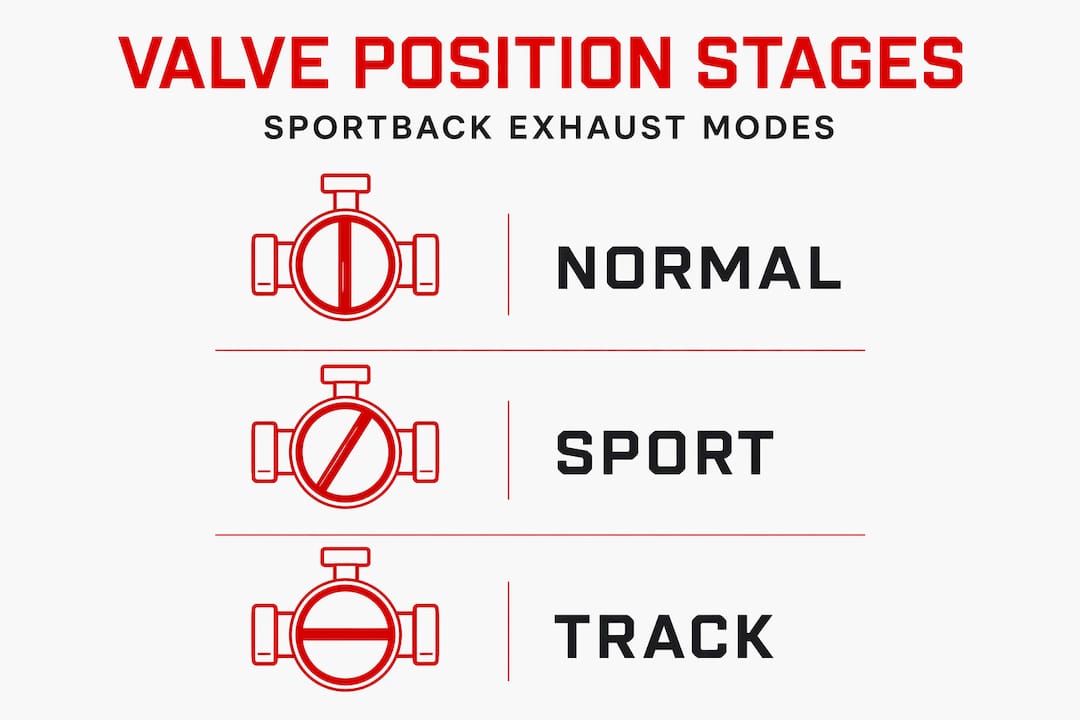
Here’s what that looks like inside the pipe. In normal or comfort mode, the valves stay mostly closed. Exhaust gases travel through a bypass route that includes additional resonators and damping chambers, keeping the cabin quiet on your morning commute. When you select sport mode, the ECU sends a signal to open those valves, valves open in sport mode and exhaust gases travel the shortest, least restricted path to the tips. The result is a louder, more textured exhaust note and a measurable change in backpressure.
The key components in a sportback exhaust system include:
- Actuator motors that physically rotate the butterfly valves on command
- Position sensors that confirm the valve has reached its target angle
- Body Control Module (BCM) or exhaust-specific ECU logic that maps valve behavior to each driving mode
- Resonator routing that determines the default quiet path when valves are closed
Pro Tip: If you switch modes while driving, most active systems take one to three seconds to actuate the valve. You’ll hear the shift in tone rather than feel it, so listen for the change before assessing whether it worked.
Track mode on vehicles like the Corvette or Audi RS models pushes valve opening further, producing an even more aggressive note suited to wide-open throttle runs. The difference between sport and track in these systems is largely a matter of how far the valve rotates and how quickly the ECU responds to throttle inputs.
Sound control and the driver experience across modes
This is where the sportback exhaust sound differences become genuinely fascinating. Manufacturers don’t just flip a switch from quiet to loud. They engineer specific acoustic personalities for each mode, sometimes producing results that surprise even experienced drivers.
The 2026 Audi SQ5 Sportback is a perfect example. Its exhaust suppresses engine noise internally but sounds raucous outside the car. Stand next to it at full throttle in sport mode and you’d swear it has a modified exhaust. Sit in the driver’s seat and the cabin isolation makes it feel almost calm. That gap between exterior aggression and interior refinement is a deliberate engineering choice, not a flaw.
Here’s how the mode transitions typically play out on a sportback-equipped vehicle:
- Normal mode keeps valves closed, routing gases through resonators. Interior and exterior sound are both subdued. Fuel consumption is at its lowest point for the driving session.
- Sport mode opens valves partially, reducing restriction and adding volume. The exhaust note gains definition and crackle on overrun. The 2025 GMC Sierra’s sport mode delivers a noticeably louder dual exhaust sound compared to its default setting, which is a clear real-world demonstration of how much mode selection shapes the acoustic experience.
- Track mode (where available) opens valves to near maximum, removing nearly all internal dampening from the exhaust path. Volume increases significantly, and the character of the sound shifts toward raw mechanical intensity.
“Driver perception of exhaust sound inside the cabin may not match the aggressive exterior note, a quirk in sportback sound design that catches first-time owners off guard.” 2026 Audi SQ5 Sportback review
Understanding this disconnect helps you set realistic expectations. If you want the aggressive exterior note to match what you hear inside, aftermarket solutions that eliminate the bypass resonator routing are the answer. Stock systems are tuned for regulatory compliance and comfort, not raw theater.
Performance impacts beyond just the sound
Most drivers focus on sound when discussing sportback exhaust mode benefits, and understandably so. But the mechanical story is just as interesting.
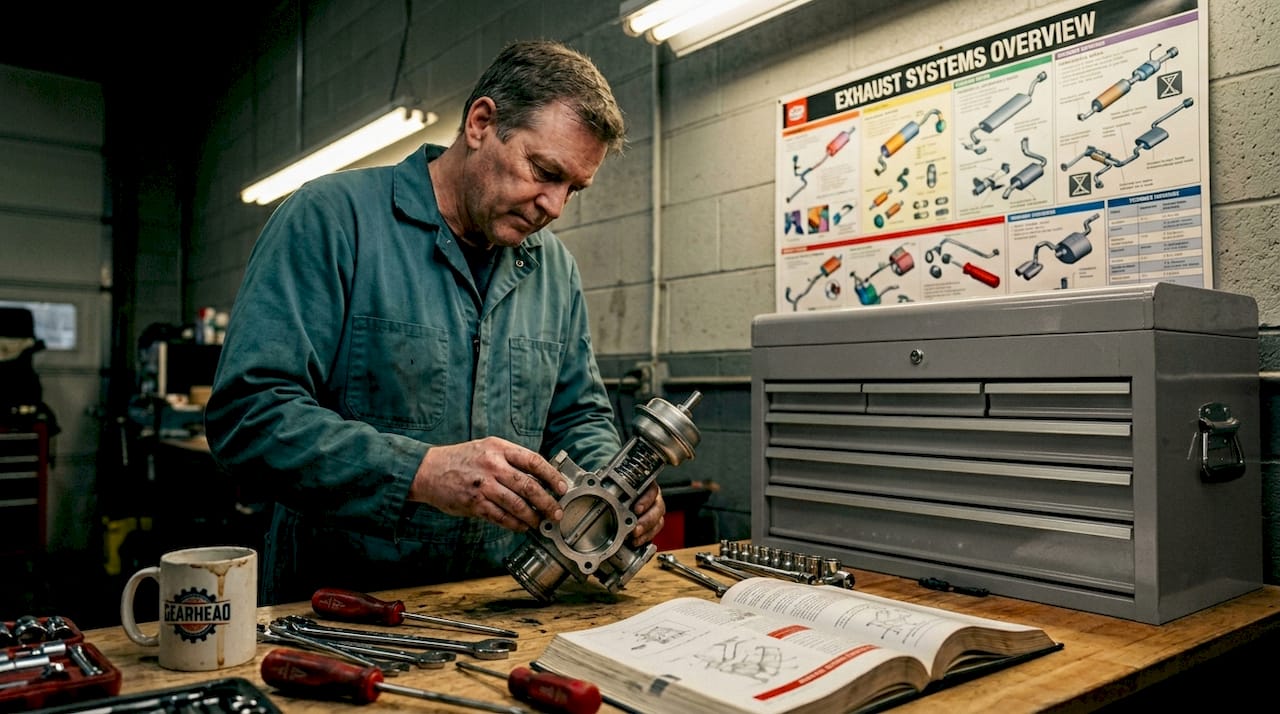
Exhaust flow dynamics center on something called the scavenging effect. When exhaust gases exit a cylinder at high velocity, they create a pressure wave that, if timed correctly, helps pull the next exhaust charge out of the combustion chamber. Headers paired with cat-back systems and coordinated ECU tuning exploit this principle to improve engine efficiency and power delivery.
Here’s where valve position becomes critical. A partially open valve still creates some backpressure. That’s not always bad: a small amount of backpressure at low RPM can actually improve torque. But at higher RPM and wide-open throttle, restriction costs you power. The least restrictive exhaust path determines how much of the scavenging effect you can actually exploit.
| Mode | Valve position | Backpressure level | Performance effect |
|---|---|---|---|
| Normal | Mostly closed | High | Quieter, slightly reduced peak power |
| Sport | Partially open | Moderate | Improved throttle response, better midrange |
| Track | Near fully open | Low | Maximum flow, best high-RPM power output |
| Aftermarket full open | Fully open | Minimal | Optimized scavenging, maximum performance gain |
Factory systems introduce another constraint that most buyers don’t know about. Most valve systems cap opening at about 80%, a limit set to keep noise output within regulatory thresholds. That 20% gap is exactly what aftermarket valve controllers target when they advertise full valve opening. For street driving, the difference is modest. On a track day with supporting modifications, it becomes meaningful.
Pro Tip: Upgrading the sportback exhaust system without addressing intake and ECU tuning produces diminishing returns. The backpressure and exhaust flow dynamics are interconnected. Treat the entire air-to-exhaust path as one system, not individual parts.
Common issues, maintenance, and tuning considerations
Active exhaust systems are mechanical components operating in extreme heat cycles, and they fail. Knowing the failure modes in advance puts you ahead of most owners.
The most common problems with sportback exhaust systems include:
- Actuator motor failure, typically presenting as a valve that stays in one position regardless of mode selection. The exhaust sounds the same in every mode because the valve isn’t moving.
- Rattling at idle or low RPM, caused by a valve that has lost tension in its return spring and vibrates against the pipe bore. This is often mistaken for a loose heat shield.
- Check engine lights tied to position sensor faults, which appear when the ECU expects valve confirmation but receives no signal.
- Carbon buildup on valve seats, more common on direct-injection engines where blow-by deposits can accumulate in the exhaust path over time.
When factory valves fail, you have two options. Replace with OEM components, which is expensive and leaves the same failure point in place, or install an active exhaust delete kit that removes the valve entirely while sending a simulated signal back to the ECU. Quality delete kits prevent check engine lights by maintaining ECU communication through a valve simulator, preserving system integrity without the original mechanical component.
The trade-off with a delete is that you lose mode-based sound variation. Your exhaust will sound the same in every mode, locked at whatever state the replaced pipe provides. For some drivers, that’s acceptable. For enthusiasts who want variable sound control back, an aftermarket valve controller is the correct solution.
How to use sportback exhaust mode effectively
Understanding the theory is one thing. Using sportback driving modes well in real life requires a few habits that most owners never develop.
- Start in normal mode on cold starts. Valve position affects exhaust velocity and heat cycling. Running sport or track mode from a cold start forces the system through aggressive thermal changes before oil circulation is optimal. Let the engine reach operating temperature first.
- Use sport mode for open-road spirited driving, not traffic. The acoustic experience of a full exhaust note in stop-and-go traffic is fatiguing and draws unwanted attention. Sport mode earns its place on a clear B-road or highway on-ramp.
- Check local noise ordinances before using track mode on public roads. In many jurisdictions, noise-regulated exhaust levels are codified in law. Track mode on some vehicles exceeds those limits at certain RPM ranges.
- Switch modes before entering residential areas, not during. Mode transitions take a few seconds, and the changeover itself can produce a brief burst of sound louder than either mode alone. Plan ahead.
- Monitor fuel consumption across modes. Normal mode consistently produces better economy. If you’re running sport mode as your default for daily driving, you’re paying for it at the pump without gaining much on public roads.
My take on active exhaust modes after years with these systems
I’ve spent years working with valve-controlled exhaust systems across Audi, BMW, Ferrari, and Lamborghini platforms, and the single biggest misconception I encounter is that sport mode equals maximum performance. It doesn’t. It equals maximum sound with a modest performance uptick. Those are different things.
What genuinely moves the needle is coordinated tuning. A sportback exhaust system that works in isolation, without matching intake, ECU calibration, and proper valve control, delivers maybe 30% of its theoretical potential. The drivers who get the most from these systems treat valve position as one variable in a complete powertrain setup, not a standalone upgrade.
I’ve also seen too many enthusiasts choose cheap valve bypass solutions to save money, then spend more fixing the resulting ECU faults and sensor errors than a quality delete kit or aftermarket controller would have cost upfront. The electronics in these systems are unforgiving of poor signals. Quality matters more here than in almost any other exhaust modification.
The future of active exhaust technology is moving toward fully software-defined valve behavior, where a tune can assign completely custom valve profiles to each drive mode. That’s already available on some platforms. For any enthusiast serious about getting the most from their vehicle’s exhaust, the window to adopt this kind of control is right now.
— Info
Upgrade your sportback exhaust control
If this article has made you want to go further than your factory settings allow, Valvecontrolexhaust has done the research for you. Their coverage of performance exhaust systems for Audi, BMW, Ferrari, and Lamborghini goes well beyond surface-level comparisons.
Start with the 2026 exhaust buyer’s guide to compare the leading valve-controlled exhaust brands side by side, with real-world sound and performance data. For a deeper look at how each system actually performs across popular sportback models, the critical exhaust evaluations on Valvecontrolexhaust cover IPE, Armytrix, Akrapovic, Valvetronic, and Ryft in detail. These are the resources that turn curiosity into a confident buying decision.
FAQ
What does sportback exhaust mode actually do?
Sportback exhaust mode activates electronically controlled valves inside the exhaust system, opening them to increase exhaust flow and sound volume. The result is a louder, more aggressive tone and a modest improvement in high-RPM power delivery.
Is sport mode exhaust louder inside or outside the car?
The exterior sound increase is typically much more pronounced than the interior change. Manufacturers like Audi deliberately suppress cabin noise while allowing an aggressive external exhaust note, which can surprise first-time owners.
Do factory sportback exhaust valves fully open?
Most factory active exhaust systems cap valve opening at around 80% to stay within noise and emissions regulations. Aftermarket valve controllers are designed to achieve full 100% opening for maximum sound and flow.
Can active exhaust valves fail?
Yes. Actuator motor failure, rattling from loose valve springs, and check engine lights from position sensor faults are all documented failure modes on high-performance sportback vehicles. Delete kits with ECU simulators are a common fix.
Does exhaust mode affect fuel economy?
Normal mode keeps valves closed and routes exhaust through resonators, which slightly improves fuel efficiency at steady speeds. Sport and track modes open the valves and increase engine responsiveness, which tends to encourage more aggressive throttle use and higher fuel consumption.