Most performance vehicle owners assume a sport exhaust setting works like a volume dial. You flip it on, the car gets louder, done. That’s not how it works. The sport exhaust setting, more precisely called an active exhaust valve mode, is an ECU-programmed sound profile that controls when and how far your exhaust valves open based on your drive mode, RPM, and engine load. Understanding this distinction changes how you use the system, how you tune it, and how much enjoyment you actually get from it. This guide breaks down everything you need to know.
Table of Contents
- Key takeaways
- What is sport exhaust setting and how active valve systems work
- Mode variations and how they affect sound
- The real limits of driver control
- How to optimize your sport exhaust settings
- Factory sport exhaust vs. aftermarket valve systems
- My honest take on sport exhaust settings
- Upgrade your exhaust experience with Valvecontrolexhaust
- FAQ
Key takeaways
| Point | Details |
|---|---|
| Not a volume knob | Sport exhaust settings are ECU-driven valve strategies, not simple loudness controls. |
| Mode defines behavior | Drive modes like Sport and Track open exhaust valves earlier and wider for aggressive sound. |
| Drone is a real risk | Poorly tuned valve tables cause cruise-speed drone that ruins daily drivability. |
| Confirm your equipment | Not all vehicles have dual-mode exhaust hardware, so verify before modifying anything. |
| Aftermarket expands options | Valve-controlled aftermarket systems offer more flexibility than most factory calibrations. |
What is sport exhaust setting and how active valve systems work
The industry term for what most people call a sport exhaust setting is an active exhaust system, sometimes called a valved exhaust or dual-mode exhaust. The “setting” itself refers to the valve behavior profile your ECU runs in a given drive mode.
Here is what’s physically happening: your exhaust system contains one or more bypass valves positioned in the piping. In their default closed position, exhaust gases travel the full, muffled path through the resonators. When the ECU commands those valves open, gases take a shorter, less restricted route. That’s where the deeper, more aggressive sound comes from.
What makes this more sophisticated than it sounds is how the ECU decides to open those valves. Sport and Track modes command wider valve openings, while quieter modes keep valves more restricted based on RPM and load tables. Think of those tables as a map: at 2,000 RPM under light throttle, valves stay partially closed; at 5,000 RPM under full load in Sport mode, they open fully.
Sport exhaust valve opening is mapped via RPM and load tables within the ECU, which means the sound transitions gradually and dynamically rather than snapping between two fixed states.
Key things happening inside an active exhaust system:
- Bypass valves reroute exhaust flow to change tone and volume
- ECU valve maps determine opening position at every RPM and load point
- Drive mode selection switches between different valve table sets
- Startup behavior often runs a special valve strategy for the cold-start sound
- Throttle inputs can trigger real-time valve position adjustments mid-drive
Pro Tip: If your car sounds noticeably different during a cold start compared to a warm idle in the same mode, that’s your ECU running a separate startup valve strategy. It’s normal and intentional.
Valve-controlled systems can also change perceived throttle response through faster valve openings in sport modes. The sound feeds back into how hard the car feels to drive, which is part of why sport exhaust upgrades feel like performance upgrades even when peak power numbers don’t change.
Mode variations and how they affect sound
Every manufacturer implements sport exhaust modes differently, but the general hierarchy is consistent. Normal mode keeps valves conservative. Sport mode opens them more aggressively. Track mode goes further, often keeping valves open from lower RPMs and at lighter throttle loads.
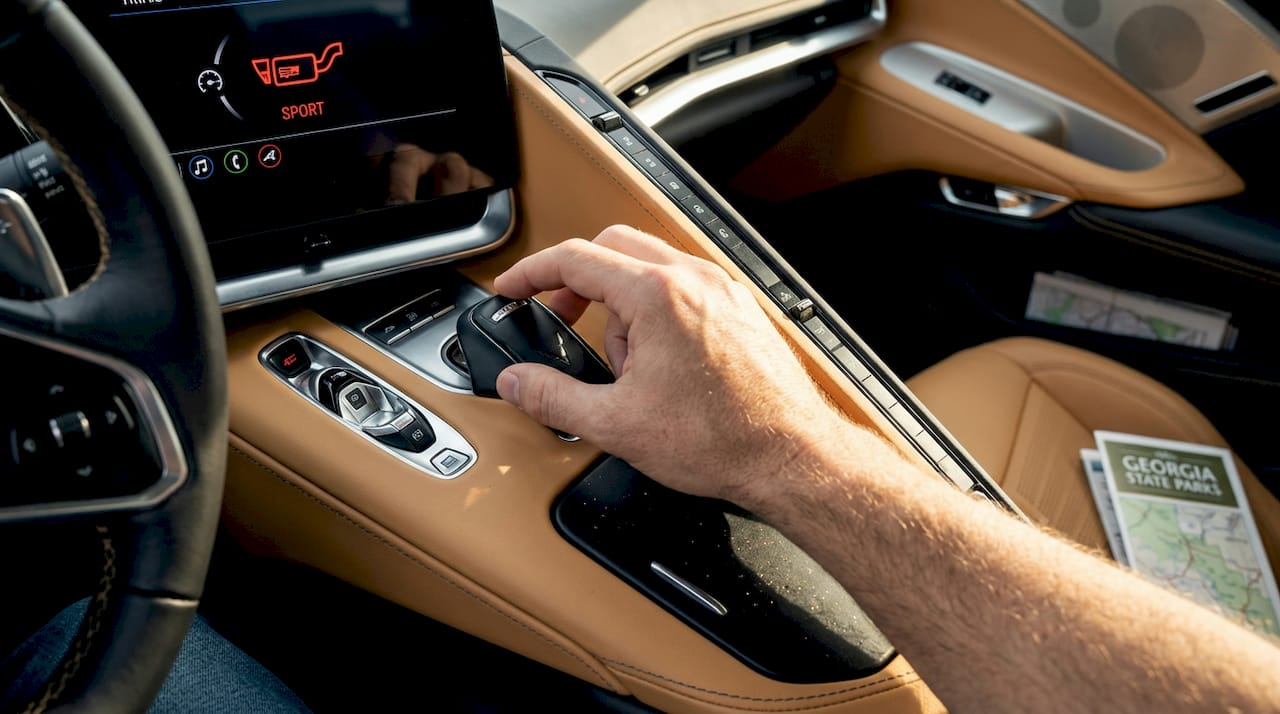
A concrete example: the Chevrolet Silverado’s 2026 Sport Exhaust Calibration is a factory software update that opens exhaust valves sooner and wider in Sport mode, including at startup, without any hardware changes. You can switch between Normal and Sport while driving. That’s a pure ECU story. No new pipes, no new mufflers.
Dodge’s approach on their high-output platforms works similarly. The ECU uses preset valve opening tables tied to modes like Sport and Track to adjust loudness and tone. Owners who try to get creative by forcing the exhaust louder in normal driving conditions often hit a wall because continuous manual tone changes simply aren’t part of the factory design.
| Mode | Valve behavior | Sound character |
|---|---|---|
| Normal/Tour | Valves mostly closed, conservative maps | Quiet, subdued, daily-driver friendly |
| Sport | Valves open wider at mid-to-high RPM | Noticeably louder, deeper tone |
| Track | Valves open early and stay wide | Maximum volume, raw exhaust note |
| Stealth/Quiet | Valves remain closed regardless of RPM | Near-silent, neighborhood friendly |
Corvette owners get an interesting version of this through customizable modes like Z Mode and My Mode, which let drivers blend parameters from different presets. You might run Sport suspension with Tour exhaust, or Track exhaust with a softer throttle map. That level of granularity is still relatively rare outside of flagship performance cars.
The real limits of driver control
Here’s where a lot of enthusiasts get frustrated. You switch to Sport mode, love the sound, then realize you can’t get that exact tone in Normal mode at lower speeds, or can’t make the car louder than Sport without going full Track mode and killing your ride quality. That friction is by design.
Sport exhaust control is mainly ECU-managed, meaning drivers operate within preset drive mode parameters rather than adjusting tone freely. Manufacturers program it this way for several reasons: sound regulation compliance, protecting the exhaust hardware from thermal stress, and preventing the kind of continuous valve cycling that leads to premature wear.
ECU remapping is one path toward expanded control. A tune can modify the valve opening tables to be more aggressive in Normal mode, lower the RPM threshold where valves open in Sport mode, or create a more dramatic difference between modes. But this is where tuning gets risky if done carelessly.
Tuning exhaust valve tables incorrectly can cause drone, a resonant hum at cruise speed that becomes unbearable on highway drives. Keeping Normal mode conservative while separately broadening Sport and Track strategies is the correct approach, not forcing valves universally open across all modes.
Pro Tip: If you’re exploring an ECU remap that touches exhaust valve maps, ask specifically how the tuner handles Normal mode. If they apply the same open-valve strategy across all modes to maximize volume, that’s a sign they don’t understand the stage-specific tuning considerations involved.
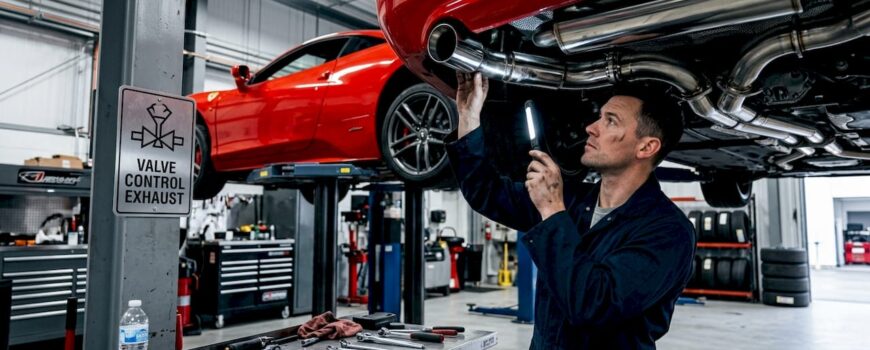
The other major limit is hardware. You cannot software-tune a sport exhaust mode into a car that doesn’t have bypass valves in the exhaust system. Confirming your vehicle has dual-mode exhaust hardware (sometimes called NPP or an equivalent system) is step one before any modification conversation begins.
How to optimize your sport exhaust settings
Getting the most from your active exhaust setup requires knowing what you have, using it intentionally, and upgrading strategically when factory limits frustrate you.
-
Confirm your exact exhaust configuration. Check whether your vehicle has a dual-mode valve system or a fixed exhaust. Your owner’s manual, build sheet, or a call to the dealer will confirm this. Don’t assume sport package equals sport exhaust hardware.
-
Learn your mode differences by driving, not guessing. Spend time in each available mode across different conditions: cold start, highway cruise, aggressive acceleration. The differences in valve behavior will become obvious when you pay attention rather than casually toggling modes.
-
Use customizable drive profiles if your car supports them. Blending Sport exhaust behavior with a softer suspension or throttle map gives you an aggressive sound without the corresponding stiffness. This is genuinely useful for cars you drive daily.
-
Watch your noise exposure in Track mode. Track and off-road calibrations run open-valve strategies that are loud by design. Many track days and residential areas have noise limits. Using Track mode on street drives habitually is how enthusiasts attract attention from neighbors and local authorities.
-
Consider an aftermarket valved system if factory modes feel limiting. When your factory Sport mode sounds great but you want a quieter Normal mode, or a louder Track mode, aftermarket valve exhaust systems let you recalibrate those boundaries properly.
Pro Tip: Many modern cars let you save a custom drive profile. Set your preferred exhaust mode there so every startup defaults to your preferred sound without you manually selecting it each time.
Factory sport exhaust vs. aftermarket valve systems
Factory sport exhaust calibrations are tuned for mass-market appeal. They balance regulatory compliance, warranty protection, and broad customer satisfaction. That means the Sport mode is rarely as aggressive as it could be, and the quiet mode is sometimes not quiet enough.
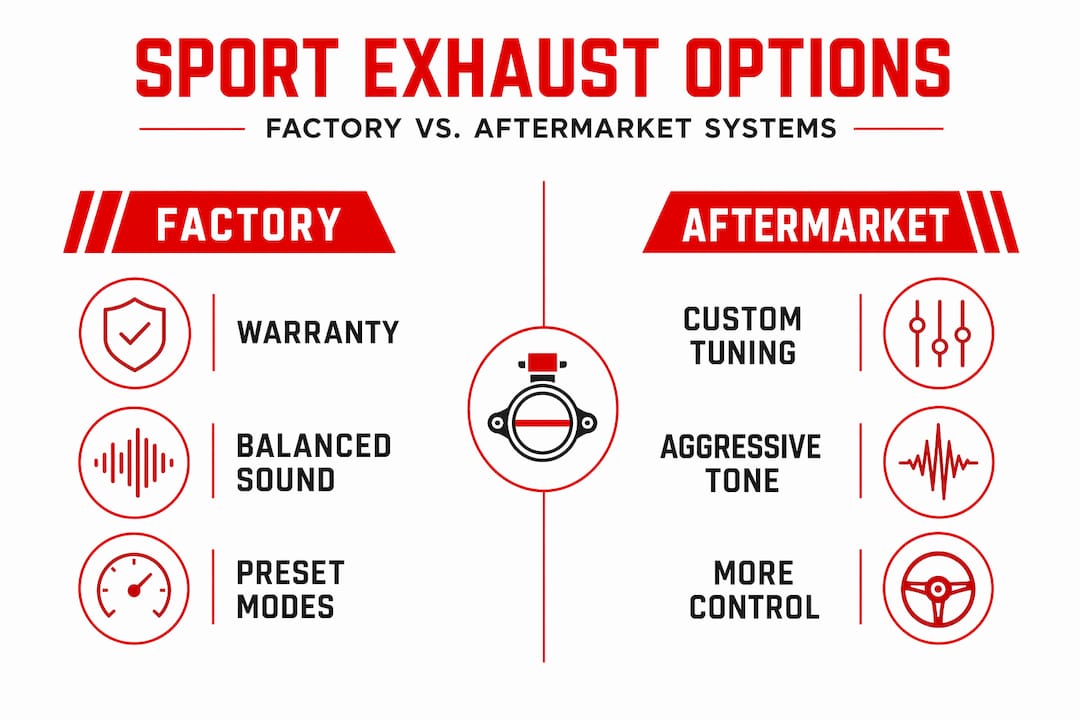
Aftermarket valve exhaust systems flip that logic. Brands like Armytrix, IPE, FI Exhaust, Valvetronic, and Ryft build systems where sound customization is the core purpose, not a secondary feature. You get broader valve control, more aggressive sound profiles, and often smartphone app integration that factory systems don’t offer.
CORSA’s exhaust families illustrate the difference well. Their Sport line delivers a refined, performance-tuned tone that reduces drone and works for daily driving. Their Xtreme line maximizes volume and aggression at the cost of quiet-mode flexibility. Neither is better universally. The right choice depends on how the car gets used.
When comparing options, the performance and sound differences between brands run deeper than decibel ratings. Tone quality, harmonic character, and how the sound changes at different RPMs all matter to enthusiasts who care about the driving experience rather than just raw volume.
| Feature | Factory sport exhaust | Aftermarket valved exhaust |
|---|---|---|
| Sound customization | Limited to preset modes | Often app-controlled, highly adjustable |
| Quiet mode effectiveness | Generally good | Varies by brand, often very quiet |
| Aggressive mode volume | Moderate by design | Can be significantly louder |
| Drone management | Tuned at factory | Depends on brand and installation quality |
| Warranty impact | None | Potential impact depending on jurisdiction |
| Cost | Included or OEM option | $1,500 to $6,000+ depending on vehicle |
The key trade-off comes down to this: factory systems protect your warranty and require no installation. Aftermarket systems give you real control but require research, proper fitment confirmation, and sometimes a supporting ECU tune to integrate correctly.
For owners of vehicles like Audi, BMW, Ferrari, and Lamborghini, the gap between factory and aftermarket sound customization is often significant enough to justify the upgrade.
My honest take on sport exhaust settings
I’ve talked to dozens of enthusiasts who bought into a sport exhaust feature expecting full sonic control, only to feel underwhelmed when they realized the loudest the car gets is still dictated by a factory algorithm designed to appease noise regulators and average buyers. That disappointment is real, and it’s worth addressing directly.
In my experience, the most satisfying sport exhaust setups are the ones where the owner actually understood what the system was doing before they modified it. When you know that your ECU is running separate valve maps per mode, you stop chasing a “louder car” and start thinking about which mode to use when, and whether a specific aftermarket system would serve your actual driving habits better.
The tuning pitfall I see most often is enthusiasm without patience. Someone gets an ECU remap, asks for maximum valve opening everywhere, then complains about drone at 70 mph. That outcome is predictable and avoidable. Per-mode valve tuning is the only way to get an aggressive sound profile that doesn’t compromise how the car feels on a long drive.
My honest recommendation: if your factory Sport mode sounds good, use it intentionally and learn its behavior across conditions. If it feels limiting, do the homework on a properly engineered aftermarket valve system before touching the ECU.
— Info
Upgrade your exhaust experience with Valvecontrolexhaust
If reading this has made you realize your factory sport exhaust is leaving performance on the table, that’s exactly where Valvecontrolexhaust comes in. They specialize in valve-controlled exhaust systems built specifically for high-performance and luxury vehicles, giving you the real-time sound and performance control that most factory systems don’t offer.

Their performance exhaust buyer’s guide covers the leading valve exhaust brands in detail, including IPE, FI Exhaust, Armytrix, Akrapovic, Valvetronic, and Ryft, so you can make an informed decision based on your vehicle and sound goals. Whether you’re looking to add genuine quiet-mode capability, unlock a more aggressive track tone, or simply get control over a sound profile that actually reflects how you drive, Valvecontrolexhaust has the systems and the knowledge to help you get there.
You can also explore the full benefits of valve control exhaust systems on their site to see how the technology compares to what your factory setup is doing right now.
FAQ
What does a sport exhaust setting actually do?
A sport exhaust setting commands your ECU to open exhaust bypass valves wider and at lower RPM thresholds, producing a louder and more aggressive exhaust tone compared to Normal or Tour modes.
Can I manually control my exhaust tone in real time?
Generally, no. Most sport exhaust systems are ECU-managed and tied to preset drive modes. You select the mode, and the ECU handles valve behavior based on RPM and load.
Will sport exhaust mode affect my car’s performance?
Sport exhaust settings primarily affect sound, but faster valve openings in sport modes can enhance perceived throttle response and driving engagement without meaningfully changing peak output numbers.
What causes exhaust drone and how do I avoid it?
Drone happens when exhaust valves are tuned to stay open at cruise RPMs where resonance builds up. Per-mode valve table tuning that keeps Normal mode conservative is the most reliable way to prevent it.
Do all performance vehicles have sport exhaust settings?
No. Sport exhaust settings require physical bypass valves in the exhaust system. Not every vehicle has dual-mode exhaust hardware, so confirm your vehicle’s configuration before planning any modifications.