
Exhaust valve customization is the process of modifying the valves that regulate exhaust gas flow and backpressure to control your vehicle’s sound output and engine performance. The industry term for this practice is active exhaust valve tuning, and it covers everything from swapping butterfly valve hardware to installing app-controlled electronic actuator systems. For owners of performance vehicles like BMW M3s, Ferrari 488s, and Lamborghini Huracáns, this modification delivers one thing no static exhaust can: real-time control over how your car sounds and performs at any RPM. This guide covers the mechanics, materials, custom exhaust valve options, and practical selection advice you need to make a smart upgrade decision.
What is exhaust valve customization explained in mechanical terms?
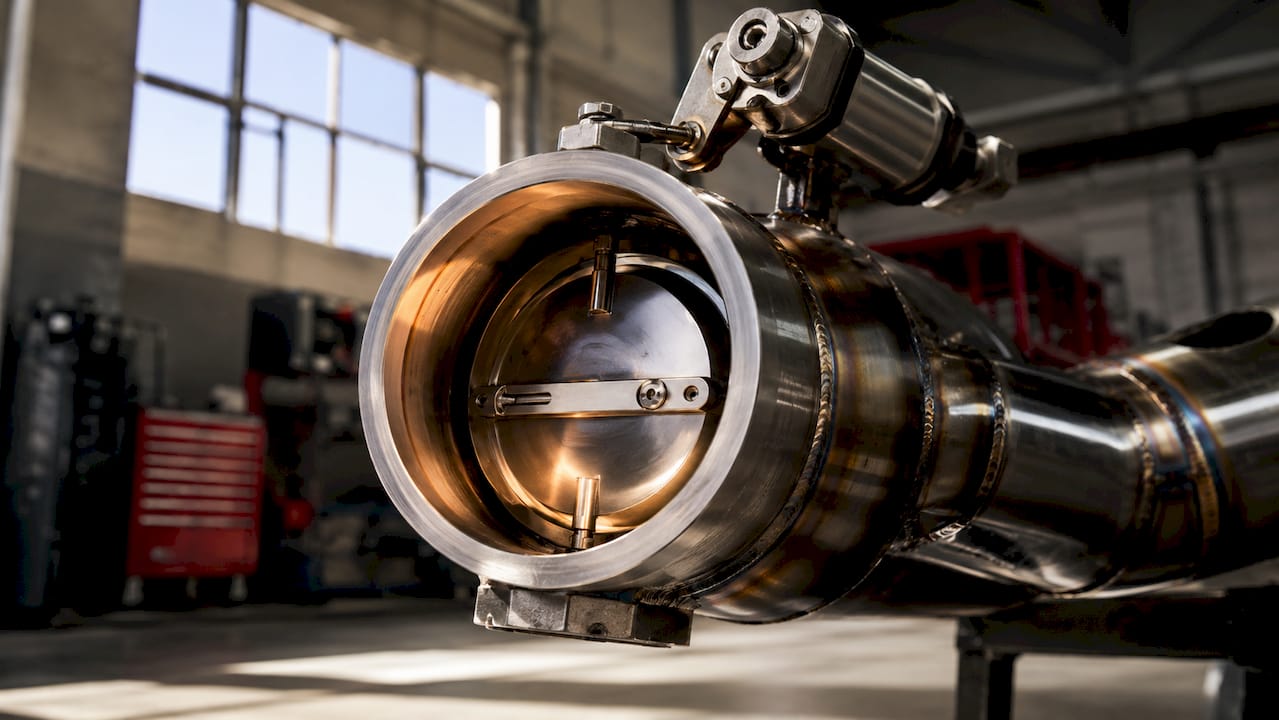
Exhaust valve customization centers on the butterfly valve, a metal disc mounted inside the exhaust pipe that rotates 90 degrees to change backpressure and sound. In the closed position, the disc restricts exhaust flow, muffles sound, and increases backpressure. In the open position, it removes restriction, reduces drone, and supports peak horsepower. That single mechanical movement is what gives you a quiet commute in the morning and a full-throated exhaust note on a canyon run in the afternoon.
The valve does not operate alone. A modern active exhaust system ties the valve actuator to the vehicle’s ECU, which reads RPM, throttle position, and driving mode to decide when to open or close the valve. ECU integration with actuators is what separates a properly functioning system from one that throws error codes and behaves erratically under load. When calibrated correctly, the transition between valve states is smooth and imperceptible to the driver.
Temperature is the other critical factor. Internal exhaust valves operate at 600–800°C (1,112–1,472°F) under normal engine conditions. That thermal load determines every material and engineering decision downstream. Understanding this constraint is the starting point for any serious exhaust valve modification guide.
Pro Tip: Before purchasing any aftermarket valve kit, confirm whether the system uses a standalone controller or requires ECU integration. Standalone controllers are easier to install but offer less precision under varying engine loads.
The sound and driving experience delivered by a valve system depends heavily on pipe diameter, valve placement, and actuator response speed. Larger diameter pipes with faster actuators produce more dramatic sound transitions. Smaller setups offer subtler tuning. Neither is universally better. The right choice depends on your vehicle and your goals.
What materials make high-performance exhaust valves reliable?
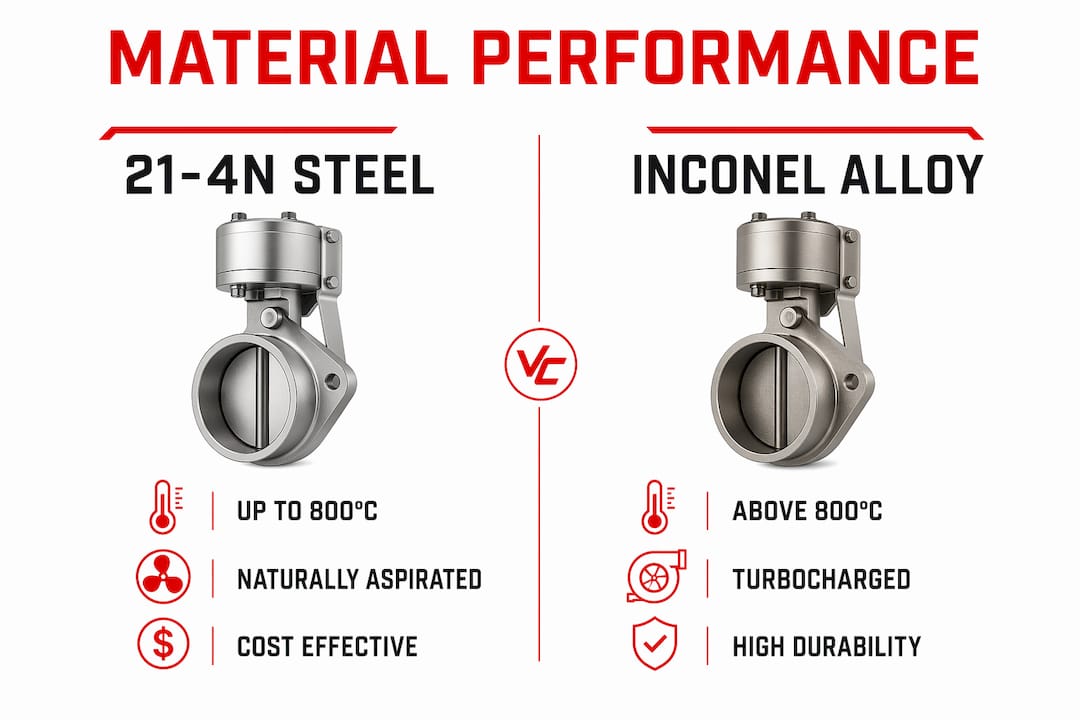
Material selection is the single most important engineering decision in custom exhaust valve construction. The gold standard for exhaust valve heads is 21-4N austenitic steel, which contains approximately 21% chromium and 4% nickel. That composition provides strong resistance to heat oxidation and corrosion at sustained high temperatures. Most factory and quality aftermarket valves use this alloy as a baseline.
For turbocharged applications where exhaust temperatures exceed 800°C, 21-4N is not enough. Inconel superalloys maintain structural integrity above that threshold. Inconel is a nickel-chromium alloy used in jet engine components, and its presence in a performance exhaust valve signals serious engineering intent. If you drive a turbocharged Audi RS or BMW M car hard on track, Inconel is not optional. It is the correct material for the job.
Construction method matters as much as alloy choice. Bimetallic friction welding fuses a heat-resistant 21-4N valve head to a hardened Martensitic steel stem. The result combines the head’s thermal endurance with the stem’s wear resistance under high-RPM stress. This two-material approach is standard in quality aftermarket valves and explains why they outperform single-alloy alternatives over time.
| Material | Temperature limit | Best application |
|---|---|---|
| 21-4N austenitic steel | Up to 800°C | Naturally aspirated engines |
| Inconel superalloy | Above 800°C | Turbocharged and high-boost engines |
| Bimetallic (friction welded) | Varies by alloy | High-RPM performance builds |
| Martensitic steel stem | Moderate heat | Valve stem wear resistance |
Exhaust valves are smaller than intake valves and face harsher operating environments. Intake valves benefit from fuel cooling. Exhaust valves do not. That asymmetry makes exhaust valve failure modes more severe, typically burning or warping, which is why material and construction quality directly determine reliability.
Pro Tip: When evaluating aftermarket valve kits, ask the supplier specifically whether the valve head is 21-4N or Inconel. Vague answers like “high-grade steel” are a red flag for lower-quality components.
Pricing reflects the engineering. Aftermarket Inconel valves cost approximately $34.29 each or $205 for a set of six. That price point reflects specialized alloy sourcing and precision machining. Budget valve sets at a fraction of that cost are almost always made from inferior materials that degrade faster under sustained heat.
What are the main custom exhaust valve options available?
The aftermarket offers four primary categories of exhaust valve upgrades, each with distinct trade-offs in cost, control, and installation complexity.
- Mechanical butterfly valve kits. These are the most straightforward option. A metal disc replaces or supplements the factory valve, operated by a cable or vacuum actuator. They are durable, relatively affordable, and do not require ECU reprogramming. The trade-off is less precise control and no electronic integration.
- Electronic valve systems with OEM-style integration. These systems wire directly into the vehicle’s ECU and respond to driving modes, RPM thresholds, and throttle input. Porsche’s PSE (Sport Exhaust System) is the factory benchmark for this approach. Aftermarket equivalents from brands like Armytrix and Akrapovic replicate this behavior with broader sound range options.
- Wireless and app-controlled systems. Aftermarket upgrades increasingly feature Bluetooth or smartphone app control, letting you switch valve states without touching the car’s electronics. This bypasses factory integration entirely and is the easiest path to sound customization on vehicles without a factory active exhaust option. Valvecontrolexhaust specializes in exactly this category, with systems designed for Audi, BMW, Ferrari, and Lamborghini.
- Manual toggle switch controllers. A simple hardwired switch mounted in the cabin opens or closes the valve on demand. No app, no ECU involvement. This is the most reliable option for track use where electronic complexity is a liability.
For OEM versus aftermarket trade-offs in detail, the comparison of valve control systems at Valvecontrolexhaust covers pricing, fitment, and sound output differences across popular platforms.
Valve diameter and pipe sizing are often overlooked in the customization process. A valve that is undersized for the pipe creates turbulence and reduces flow efficiency even in the open position. Match valve diameter to your pipe’s internal diameter precisely. Most quality kits specify this clearly. If they do not, that is another warning sign.
Pro Tip: If your vehicle already has a factory active exhaust, an app-controlled aftermarket system is often the better upgrade path. It adds sound range without risking ECU conflicts that can trigger fault codes.
What performance and acoustic benefits does valve customization deliver?
The core benefit of a valved exhaust system is the ability to separate daily driving behavior from performance driving behavior without any hardware change. Closed valves reduce drone at highway cruising speeds and produce a sound level close to a stock exhaust. Open valves increase sound output and reduce backpressure for peak power. You get both in one system.
The performance gains from open valves come from two mechanisms:
- Reduced backpressure. Less restriction in the exhaust path means the engine expels spent gases more efficiently. This directly supports higher peak horsepower at wide-open throttle.
- Improved scavenging. At high RPM, exhaust gas velocity creates a low-pressure pulse that helps draw fresh intake charge into the cylinder. Lower backpressure amplifies this effect, improving volumetric efficiency.
The acoustic benefits are equally significant for enthusiasts. A valved system lets you switch exhaust tone based on driving mode, time of day, or local noise regulations. A Ferrari 488 with a quality active exhaust can sound nearly stock at idle and produce a full race-level note above 4,000 RPM. That range is impossible with a fixed exhaust.
“Choosing a valved exhaust system is primarily about balancing daily drivability and aggressive performance sound control.” — Valved vs Non-Valved Exhaust Systems
Valve rattle is the most common acoustic problem in poorly engineered systems. Precision-tuned valve actuation is the solution. Systems that control opening and closing behavior through ECU logic rather than mechanical spring tension alone eliminate the metallic chatter that plagues budget valve kits at idle and low RPM. This is one area where spending more on a quality system pays off immediately in daily use.
How to choose the right exhaust valve upgrade for your vehicle
The right exhaust valve modification depends on four factors: your vehicle platform, your primary use case, your sound goals, and your budget.
- Vehicle platform. Not all systems fit all cars. Valvecontrolexhaust publishes fitment guides for popular car models including Audi, BMW, Ferrari, and Lamborghini. Start there before evaluating any specific kit.
- Primary use case. Track-focused builds benefit from simpler mechanical or toggle-switch systems. Street builds benefit from app-controlled or ECU-integrated systems that handle the valve transitions automatically.
- Sound goals. If you want subtle improvement over stock, a mechanical butterfly kit is sufficient. If you want a full range from quiet to aggressive, an electronic or app-controlled system is the correct choice.
- Budget. Quality Inconel valve sets start around $205 for a six-valve set. Full active exhaust systems from brands like IPE, Armytrix, or Akrapovic run significantly higher. The performance exhaust buyer’s guide at Valvecontrolexhaust breaks down pricing and performance trade-offs across these brands in detail.
The most common mistake enthusiasts make is skipping ECU calibration after installation. Proper actuator integration with the ECU is critical for correct operation under different engine loads. A valve that opens at the wrong RPM threshold or fails to close during cold starts will trigger fault codes and degrade the driving experience. Always verify calibration with a scan tool after installation.
Key Takeaways
Exhaust valve customization delivers precise, real-time control over sound and performance by adjusting exhaust flow through butterfly valves tied to ECU logic or standalone controllers.
| Point | Details |
|---|---|
| Butterfly valves control everything | A 90-degree disc rotation changes backpressure, sound level, and peak power output. |
| Material choice determines reliability | 21-4N steel handles naturally aspirated engines; Inconel is required above 800°C in turbo applications. |
| ECU calibration is non-negotiable | Improper actuator integration causes fault codes and inconsistent valve behavior under load. |
| App-controlled systems offer the most flexibility | Wireless valve control bypasses factory limitations and works on vehicles without OEM active exhaust. |
| Budget reflects engineering quality | Inconel valve sets start around $205; full active systems from premium brands cost significantly more. |
Why I think most enthusiasts underestimate the engineering side
Most of the exhaust valve conversations I see in enthusiast forums focus almost entirely on sound. Which system is louder? Which one pops and crackles? That framing misses the point. The sound is a byproduct of the engineering. Get the engineering right and the sound follows. Get it wrong and you end up with valve rattle, fault codes, and a system you disable because it annoys you.
The material question is the most underestimated factor. I have seen enthusiasts spend serious money on a full catback system and then spec the cheapest valve kit available because “it’s just a valve.” That logic fails at track temperatures. A valve head that warps at 850°C does not just stop working. It can cause backpressure spikes that affect engine behavior in ways that are difficult to diagnose.
App-controlled systems are genuinely the best development in this space over the past few years. The ability to switch valve state from your phone without touching the ECU removes the biggest installation risk for most enthusiasts. Valvecontrolexhaust has built their entire product line around this approach, and the compatibility breadth across Audi, BMW, Ferrari, and Lamborghini platforms is the clearest sign that the market has validated it.
My honest advice: treat the valve system as a precision component, not an accessory. Match the material to your engine’s thermal output, calibrate the actuation properly, and choose a control method that fits how you actually drive. The sound reward is real. But it only stays rewarding when the engineering underneath it holds up.
— Info
Upgrade your exhaust valve system with Valvecontrolexhaust

Valvecontrolexhaust designs active exhaust valve systems built specifically for high-performance vehicles including Audi, BMW, Ferrari, and Lamborghini. Their systems deliver real-time sound and performance control through wireless and app-based valve operation, with no ECU reprogramming required on most platforms. If you want to understand exactly how leading brands like IPE, Armytrix, Akrapovic, Valvetronic, and Ryft compare before you buy, the detailed system comparison at Valvecontrolexhaust gives you the technical breakdown and pricing context to make a confident decision. Explore the full range of valve control systems and find the right fit for your vehicle today.
FAQ
What does exhaust valve customization actually do?
Exhaust valve customization modifies the valves that control exhaust flow and backpressure, giving you real-time control over your vehicle’s sound output and engine performance. Closed valves muffle sound and increase backpressure; open valves reduce restriction and support peak horsepower.
What is the best material for a high-performance exhaust valve?
21-4N austenitic steel is the standard for naturally aspirated engines, while Inconel superalloys are required for turbocharged applications where temperatures exceed 800°C. Bimetallic friction-welded valves combine both materials for optimal durability.
Do aftermarket exhaust valves require ECU reprogramming?
Electronic valve systems that integrate with the OEM ECU require calibration to avoid fault codes, but app-controlled and wireless systems typically bypass ECU integration entirely. Always verify compatibility with your specific vehicle platform before purchasing.
How much do aftermarket exhaust valves cost?
Quality Inconel aftermarket valves cost approximately $34.29 each or $205 for a set of six. Full active exhaust systems from premium brands like Armytrix or Akrapovic run significantly higher depending on vehicle fitment and features.
What causes exhaust valve rattle and how is it fixed?
Valve rattle results from imprecise actuator calibration that allows the valve disc to vibrate at certain RPM ranges. Precision-tuned actuation systems that control opening and closing behavior through ECU logic rather than mechanical springs alone eliminate this problem.