
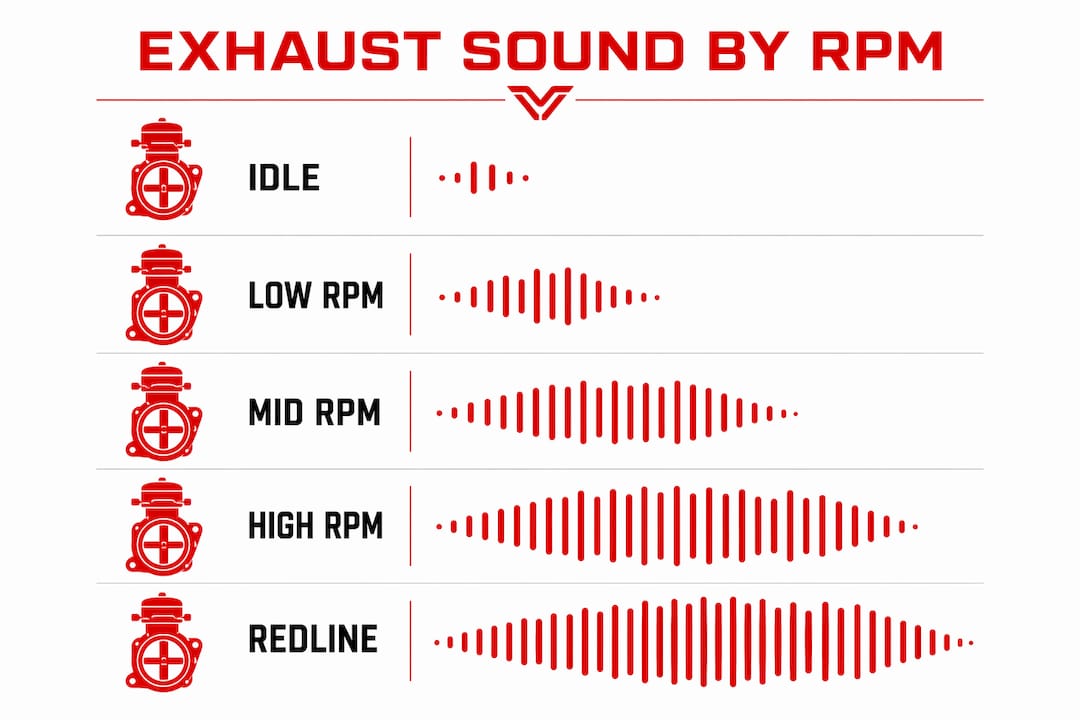
As engine RPM climbs, exhaust sound gets louder, sharper, and more complex. The reason is straightforward: higher RPM means more combustion events per second, which forces exhaust gases through the system at greater velocity. That increased velocity amplifies sound wave intensity and raises the pitch of the exhaust note. Here is what drives those changes:
- Gas velocity rises with RPM, intensifying sound wave amplitude
- Pulse frequency increases, producing a sharper, more aggressive tone
- Harmonic content shifts, adding tonal complexity at higher engine speeds
- Volume and pitch both climb, but the character of the sound depends heavily on exhaust system design
Table of Contents
- How exhaust sound changes with RPM: the physics behind it
- Why tuning exhaust sound across RPM ranges is harder than it looks
- How valve-controlled exhausts give you real-time sound control
- What this means for your exhaust customization decisions
- Valvecontrolexhaust: real-time sound control for your luxury performance car
- Key Takeaways
How exhaust sound changes with RPM: the physics behind it
Exhaust gas velocity rises directly with RPM, and that relationship drives everything else. At low RPM, gases move slowly, producing a low-frequency rumble with modest amplitude. Push the engine toward redline and those same gases accelerate dramatically, compressing and expanding the air column inside the exhaust at a much higher rate. The result is a louder, higher-pitched note with richer harmonic overtones.
Engine design shapes the character of that note before the exhaust system touches it. A cross-plane V8 fires with uneven intervals, which creates overlapping pulses that blend into the deep, burbling rumble associated with American muscle. A flat-plane V8, the kind found in Ferrari’s V8 lineup, fires in a more evenly spaced sequence and produces a sharp, screaming tone at high RPM that sounds closer to a racing engine. Inline-four engines fire at perfectly even intervals, which tends to produce a raspy, high-pitched note that gets more aggressive as RPM builds.
Pipe length and diameter add another layer. Unequal-length headers create a burble or rumble at higher RPM because exhaust pulses arrive at the collector at slightly different times, producing a staggered wave interaction. Wider pipes reduce backpressure and deepen the tone, but they can introduce unwanted resonance if the diameter is not matched to the engine’s harmonic requirements. Resonators and mufflers then filter specific frequencies. A chambered muffler cancels certain frequencies through wave interference, while a straight-through design lets the full harmonic spectrum pass.
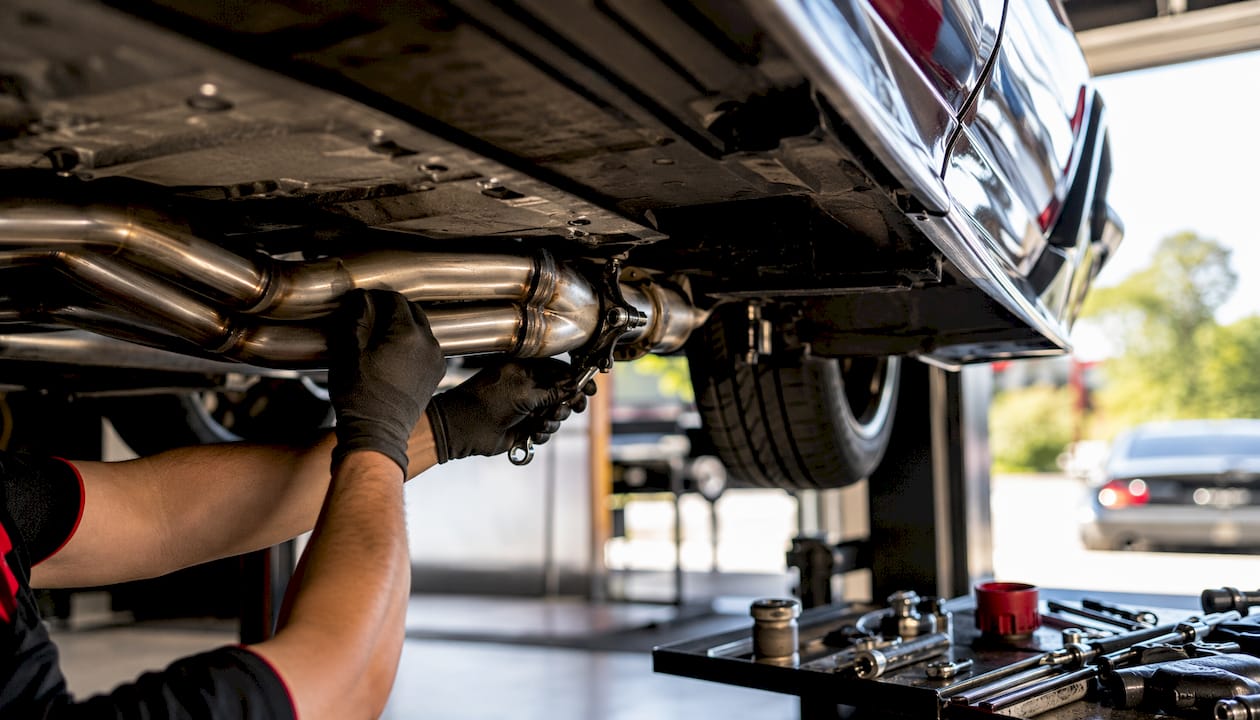
Research confirms that engine load raises noise level significantly, with measurements showing increases from 114 dB to 133 dB at constant RPM, but the frequency zone of maximum intensity is governed primarily by RPM and exhaust geometry, not load alone.
Pro Tip: If you want to understand your car’s exhaust character before modifying it, record the exhaust note at idle, 2,500 RPM, and 5,000 RPM separately. The shift in pitch and texture across those three points tells you exactly where your current system’s harmonic strengths and weaknesses lie.
| RPM Range | Gas Velocity | Dominant Sound Character | Key Influencing Factor |
|---|---|---|---|
| Idle | Low | Deep rumble, low volume | Muffler type, pipe diameter |
| 2,500 | Moderate | Mid-tone, potential drone | Resonator tuning, pipe length |
| 5,000–6,000 | High | Sharp, aggressive, loud | Header design, valve position |
| 6,000+ | Very high | Screaming, complex harmonics | Engine type, straight-through flow |
Why tuning exhaust sound across RPM ranges is harder than it looks
The core tension in exhaust tuning is this: the setup that sounds best at 6,000 RPM often sounds worst at 2,500 RPM. Wide pipes and free-flowing mufflers that deliver an aggressive high-RPM roar tend to produce a low-frequency drone at highway cruising speeds. That drone is not just annoying. On a long drive, it causes genuine fatigue.
Mismatched pipe diameters create their own problems. Owners who upsize to larger-diameter tubing expecting a deeper, more authoritative tone sometimes end up with a boomy, hollow resonance at idle and a harsh rasp under partial throttle. The harmonic interactions between pipe diameter, muffler design, and engine firing frequency are specific enough that a change which works perfectly on one engine can sound terrible on a different one with similar displacement.
“High-performance exhaust tuning requires balancing aggressive, high-RPM sound with minimizing cruise drone. That balance is only achievable with active noise cancellation or valve-controlled routing.”
— SAE Mobilus automotive acoustics research
Active noise cancellation systems can attenuate unwanted exhaust noise orders down to 1,000 RPM while preserving preferred sounds at high RPM, but they add electronic complexity and cost. Passive systems, by contrast, are a fixed compromise. You tune them for one RPM range and accept the trade-off everywhere else.
Key tuning challenges every enthusiast should understand:
- Drone at typical highway cruising speeds is a common complaint after aftermarket exhaust installation
- Raspy, harsh tones under partial throttle usually indicate mismatched pipe geometry or an undersized resonator
- Larger pipes require careful resonator pairing to avoid low-end boom
- Passive mufflers cannot adapt to changing driving conditions
How valve-controlled exhausts give you real-time sound control
Valve-controlled exhaust systems solve the passive tuning dilemma by switching exhaust flow paths in real time. At cruising speeds, the valve routes gases through chambered passages that filter low-frequency drone. Open the throttle and push past 4,000 RPM, and the valve opens a straight-through path that unleashes the full harmonic spectrum. The result is a system that sounds refined on the highway and aggressive on track, without any mechanical compromise between the two.
The harmonic manipulation this enables goes beyond simple volume control. By changing which acoustic wave interactions occur inside the exhaust at a given RPM, the valve effectively reshapes the tonal character of the note. You are not just making it louder or quieter. You are changing what the engine actually sounds like.
Valvecontrolexhaust builds systems specifically for Audi, BMW, Ferrari, and Lamborghini, where the exhaust valve technology is engineered to match each engine’s firing characteristics and harmonic profile. A BMW M5’s S63 V8 has different pulse timing than a Lamborghini Huracán’s V10, and the valve geometry and actuation speed are calibrated accordingly. That specificity is what separates a purpose-built valve system from a generic aftermarket solution.
Pro Tip: On a valve-controlled system, try switching between open and closed valve modes at the same RPM in a controlled environment. The difference in harmonic texture, not just volume, demonstrates exactly how the valve reshapes the acoustic wave interactions inside the exhaust.
Benefits that set valve-controlled systems apart from traditional passive exhausts:
- Real-time switching between quiet cruise and aggressive performance modes
- Drone elimination at highway RPM without sacrificing high-RPM sound quality
- Harmonic richness preserved across the full RPM range
- Driver-selectable sound profiles via OEM integration or remote control
What this means for your exhaust customization decisions
Exhaust sound grows louder and sharper as RPM rises because higher engine speed forces gases through the system faster, raising both amplitude and pitch. The specific character of that sound, whether it is a burble, a roar, or a scream, depends on engine design, exhaust geometry, and how the system manages harmonic interactions across the RPM range.
Passive systems force a compromise. Valve-controlled systems do not. For owners of high-performance luxury vehicles who want an exhaust that sounds right at every RPM, not just at wide-open throttle, the valve-controlled approach is the only one that delivers without trade-offs.
Key points for enthusiasts making customization decisions:
- Match pipe diameter to your engine’s harmonic requirements, not just flow targets
- Prioritize resonator tuning to address drone before it becomes a problem
- Understand that exhaust sound matters for both performance feel and daily usability
- Valve-controlled systems are the only passive-free solution for full-RPM sound management
Valvecontrolexhaust: real-time sound control for your luxury performance car
The sharpest exhaust note at redline means nothing if the same system drones at 70 mph. Valvecontrolexhaust builds valve-controlled exhaust systems for Audi, BMW, Ferrari, and Lamborghini that eliminate that trade-off entirely, giving you an aggressive, harmonically rich sound at high RPM and a quiet, refined cabin at cruise, controlled in real time.

Every system is engineered to the specific firing characteristics and harmonic profile of your engine, not adapted from a generic platform. The benefits of a valve-controlled system go beyond sound: improved engine response, driver-selectable modes, and OEM-quality fitment that does not compromise your vehicle’s electronics or warranty. Check Valvecontrolexhaust’s vehicle compatibility to find the system built for your car and get the exhaust note your engine was always capable of producing.
Key Takeaways
Valve-controlled exhaust systems are the only solution that delivers aggressive high-RPM sound and quiet cruising without mechanical compromise on high-performance luxury vehicles.
| Point | Details |
|---|---|
| RPM drives sound intensity | Higher RPM raises exhaust gas velocity, amplifying both volume and pitch across the rev range. |
| Engine design shapes character | Cross-plane V8s rumble; flat-plane V8s scream. Firing order and crank design set the tonal foundation. |
| Passive tuning forces trade-offs | A setup optimized for high-RPM aggression typically produces drone at typical highway cruising speeds. |
| Valves solve the drone problem | Valve-controlled systems switch flow paths in real time, filtering drone at cruise and opening up at high RPM. |
| Valvecontrolexhaust | Purpose-built valve exhaust systems for Audi, BMW, Ferrari, and Lamborghini, calibrated to each engine’s harmonic profile. |