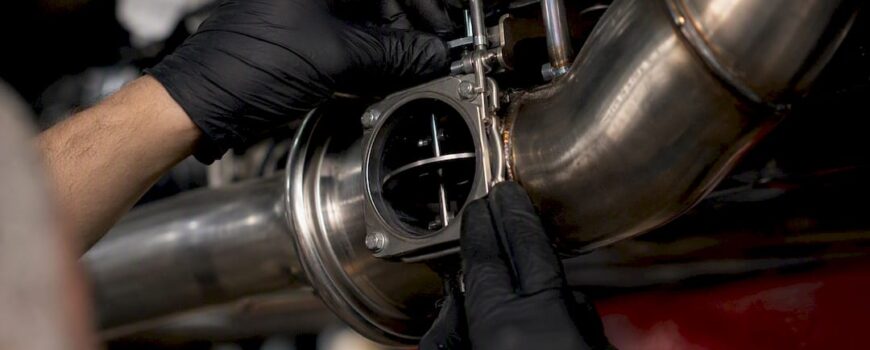
Exhaust burble is the crackle and pop you hear when a valved exhaust opens an unrestricted flow path and lets raw pressure pulses reflect off a tuned muffler chamber instead of getting smoothed out. The core tradeoff is simple: open the valve and you get a louder, more textured note with less backpressure; close it and you get a quieter cabin with more restriction. A well-engineered Helmholtz resonator and precise actuator, the kind Valve Control Exhaust builds around, is what separates a satisfying burble from an annoying drone.
Key Takeaways
Exhaust burble comes from a valve changing the flow path and pressure pulse timing inside the muffler, and getting it right depends on resonator tuning as much as the valve itself.
| Point | Details |
|---|---|
| Burble is mechanical, not tuned | Valve-driven burble comes from flow-path changes, distinct from ECU pop-and-bang software tunes. |
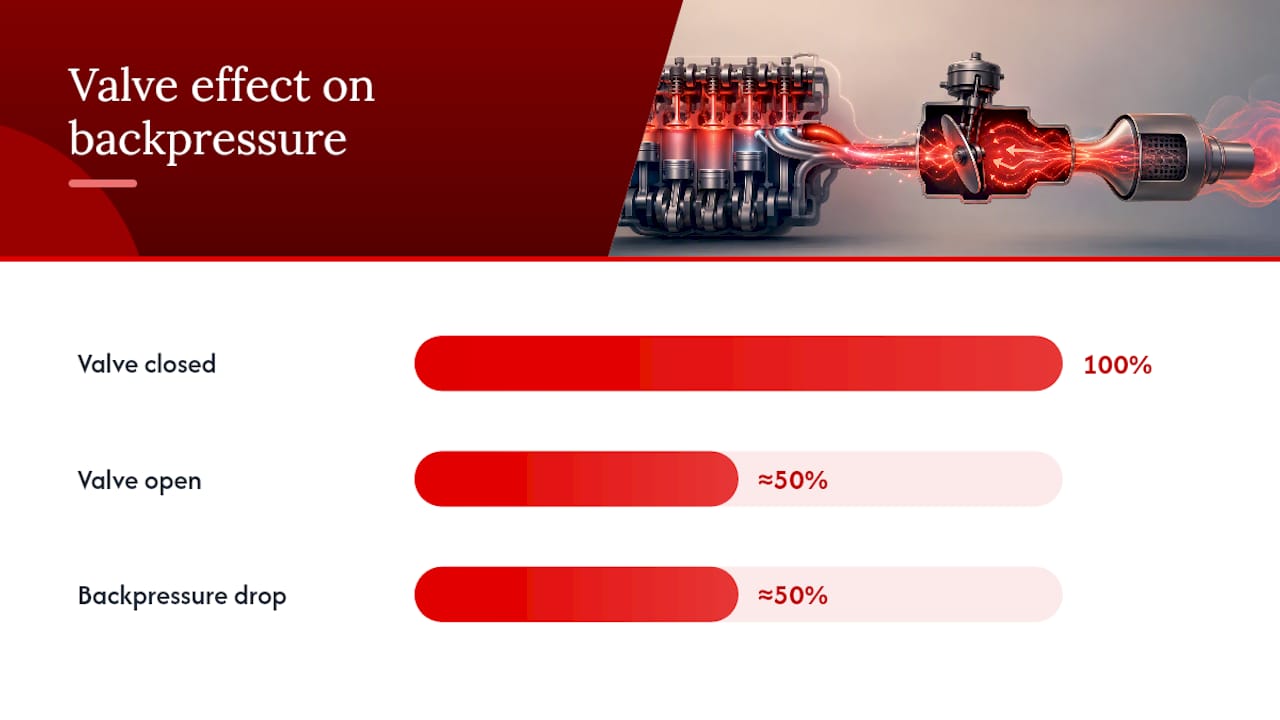
| Opening the valve cuts backpressure | Tested muffler designs show about a half drop in backpressure when the internal valve opens. |
| Resonator design prevents drone | Helmholtz-style tuning kills unwanted resonance frequencies while preserving desirable harmonic content. |
| Power gains are modest | Expect roughly 5 to 15 horsepower depending on vehicle, downpipe, and catalyst configuration. |
| Valve Control Exhaust builds for fitment | Systems are engineered around actuator quality and resonator tuning for luxury and performance platforms. |
Table of Contents
- What Causes Exhaust Burble: The Flow Path Explanation
- Valve Types and How They’re Actuated
- How Valve Timing Shapes Sound and Power
- Noise Limits, Drone, and Ownership Tradeoffs
- Choosing and Fitting a Valved System for Your Car
- What Exhaust Burble Actually Sounds Like
- Ignition Timing, Fuel Maps, and Non‑Valve Burble
- Temperature, Altitude, and Fuel Effects on Burble
- Get a Valved Exhaust Built for Your Car
- Frequently Asked Questions
- Sources
What Causes Exhaust Burble: The Flow Path Explanation
Here’s the mechanical chain: a valve changes which flow path the exhaust gas travels, that shift changes the pressure pulses hitting the muffler, and the altered pulses change what you hear at the tailpipe. It’s not magic. It’s fluid dynamics colliding with acoustics inside a metal tube.
When the valve is closed, gas is forced through a longer, baffled path. Chambers and perforated tubes absorb and dissipate pulse energy before it exits, which is why a closed valve sounds subdued. Open the valve and gas takes a shorter, less restricted route, often bypassing a chamber entirely. Pressure pulses that would have been dampened now reflect off open chamber walls and reinforce each other at specific frequencies, producing that crackling, popping texture on lift-off and light throttle.
A few mechanical variables decide whether that texture reads as a satisfying burble or an ugly drone:
- Pulse timing: how closely the pressure waves from each cylinder firing arrive at the tailpipe.
- Reflection points: where the exhaust gas bounces inside the muffler or resonator before exiting.
- Resonance frequency: which engine speed range causes chamber walls to reinforce specific harmonics.
- Partial valve position: opening the flap only part way creates turbulence that produces uneven, stuttering pops rather than a clean crackle.
The numbers back this up. Testing on a valve-equipped muffler design documented in a conference paper on valve-driven muffler design found backpressure dropped by roughly 50% when the internal valve opened compared to the closed position. That’s a massive swing in restriction from a single mechanical action, and it explains why the sound character changes so dramatically between drive modes rather than shifting gradually.
One clarification matters here: this is entirely different from ECU-based “pop and bang” tunes, which manipulate ignition timing and fuel maps to create backfire-style crackles independent of any physical valve. Valve-driven burble is a mechanical, flow-path phenomenon. ECU burble tunes are a software calibration trick. They sound similar but come from opposite ends of the car.
Valve Types and How They’re Actuated
Not all valves open the same way, and the actuation method affects reliability, response speed, and how much custom installation work your car needs.
Externally driven valves are controlled by something outside the exhaust flow itself. Vacuum-actuated valves pull engine vacuum through a line to move the flap and were common on early OEM systems, but they lag under load when vacuum drops. Solenoid and stepper-motor valves use an electric signal instead, giving near-instant, repeatable positioning and letting drivers switch modes from a button or app, which is why enthusiast installers increasingly prefer electric actuators over vacuum setups.
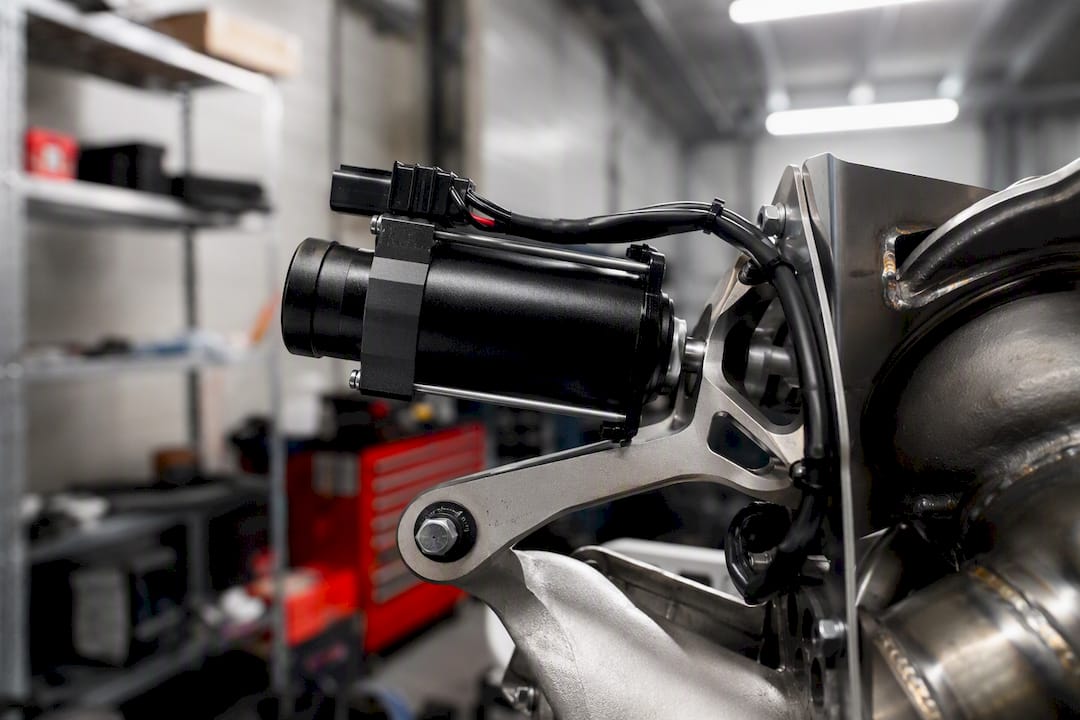
Autonomous valves need no external signal at all. Backpressure-triggered designs use a spring that yields once exhaust pressure crosses a threshold, opening the flap automatically under load. Mass-flow impulse valves react to the physical push of exhaust gas rather than a pressure differential, which gives more repeatable behavior across a range of conditions, though it demands tighter mechanical tolerances to avoid fatigue.
Pro Tip: Ask any installer about valve chatter before you buy. A poorly damped flap can ring or buzz at certain rpm as it hovers near its trigger point, and that’s a durability issue, not just an annoyance. Electric actuators with defined open/closed states avoid this far better than spring-loaded autonomous designs.
Vacuum and solenoid valves are usually easier to retrofit into cars with existing OEM valve wiring. Autonomous backpressure valves route around electronics entirely, which appeals to buyers who want simplicity but often means less precise mode switching.
How Valve Timing Shapes Sound and Power
Opening the valve drops backpressure and lets more high-frequency harmonic content escape, which is why the exhaust note gets louder and sharper the moment the flap swings open, not gradually. The relationship between rpm and backpressure isn’t linear. That drop matters most in the mid-to-upper rpm band, where a restricted system would otherwise choke flow right when the engine wants it most.
Most valved systems don’t run wide open all the time. They are tuned to context:
- RPM threshold: valves often stay closed below 3,000 to 3,500 rpm to avoid cabin drone.
- Throttle position or engine load: heavy throttle opens the valve even at moderate rpm.
- Drive mode selection: Sport or Track modes bias toward open, Comfort biases toward closed.
- Deceleration events: many systems intentionally allow burble on lift-off in aggressive modes, which is where the crackling pop most people associate with the sound actually happens.
As for power, don’t expect miracles. Reduced restriction at high load typically nets modest gains, commonly in the 5 to 15 horsepower range depending on the vehicle, downpipe diameter, and catalyst configuration. A twin-turbo V8 with a restrictive factory downpipe will see more benefit than a naturally aspirated engine with an already-efficient exhaust. The bigger, more consistent change owners notice is throttle response, since a freer-flowing exhaust reduces the pumping losses the engine has to overcome on the way out.
Noise Limits, Drone, and Ownership Tradeoffs
The regulatory reality is straightforward: quiet mode exists partly to pass drive-by noise testing, and running a system permanently wide open risks failing local noise ordinances or inspection standards in some jurisdictions. Manufacturers use the closed valve state specifically to hit pass-by limits while still offering an aggressive setting for track days or open roads, and engineering data shows valves can target specific resonance orders, with one tested configuration cutting about 15 dB(A) at a third-order resonance frequency.
That targeting matters because drone, that droning, resonant boom at highway cruising speed, comes from the wrong chamber geometry reinforcing the wrong frequency. A tuned resonator kills the offending frequency band while letting the harmonics that create a pleasant burble through untouched. Cheap systems skip this tuning step, which is why some aftermarket exhausts sound aggressive in a parking lot and unbearable on a two-hour highway drive.
There are ownership costs beyond the purchase price too. Active exhaust valves can shift fuel economy slightly, with closed modes trending marginally more efficient than wide-open driving. Valve actuators live in one of the hottest, most vibration-heavy parts of the car, so seal and motor failures happen over time.
Pro Tip: Before buying, ask the vendor for measured pass-by or SPL data, not just a marketing video. Also ask what’s covered under warranty for the actuator and valve seals specifically, since those are the parts most likely to need service down the road.
Choosing and Fitting a Valved System for Your Car
Buying the right system means matching hardware to your car and your goals, not just picking the loudest option online.
What to check before you buy:
- Confirmed compatibility with your exact model, engine, and trim, not just the general platform.
- Actuator type (electric versus vacuum versus autonomous) and how it integrates with your factory drive-mode settings.
- Control method: OEM-style integration through existing buttons, or an aftermarket remote/app controller.
- Material: stainless steel for durability and cost, titanium for weight savings at a premium.
- Whether supporting mods like a downpipe upgrade are needed to unlock the full character change.
Quick installation dos and don’ts:
- Do have heat shields and wiring routed by someone who has fitted your specific model before.
- Don’t force a generic universal kit onto a luxury chassis without measuring clearances first, tight underbody packaging on cars like Porsche or Audi models leaves little margin for error.
- Do ask whether the valve housing is serviceable in place or requires full removal for repairs.
- Don’t ignore hanger and bushing hardware, mismatched isolators transmit vibration straight into the cabin.
Preserving factory drive-mode integration matters most for luxury owners. A system that hijacks your Sport button logic instead of working with it creates a worse daily experience than the stock exhaust ever did.
What Exhaust Burble Actually Sounds Like
Burble isn’t one uniform sound, it’s a layered acoustic signature with a few distinct characteristics. The crackling pop most people picture happens in a lower-to-mid frequency band, generally where unburned exhaust gas and pressure pulses interact right at the tailpipe exit. Overlaid on that is a higher-frequency snap, sharper and shorter, that gives the burble its percussive texture rather than a dull thud.
Timing and pattern matter as much as pitch. A clean burble arrives in distinct, separated pops on throttle lift-off, spaced out enough that a listener can count them. A poorly tuned system produces a continuous stuttering crackle that blurs together, which reads as harsh rather than exciting. That difference comes down to how cleanly the valve seats and how the resonator handles the pulse train, not just how loud the system is overall.
Listener perception is subjective but predictable. Most enthusiasts describe a good burble as “percussive” or “crisp” rather than “buzzy,” and cars with V8 or V10 layouts tend to produce a fuller, more layered pop than four-cylinder platforms because of how their firing order stacks pressure pulses. Distance and surroundings change perception too. A burble that sounds sharp against a parking garage wall reads as much softer and more diffuse on an open highway, which is part of why in-person demos matter more than online sound clips when evaluating a system.
Ignition Timing, Fuel Maps, and Non‑Valve Burble
Not every crackle you hear on deceleration comes from a valve. Ignition timing and fuel mapping can produce a similar-sounding pop independent of any mechanical hardware. When ignition timing is retarded on throttle lift-off, or when a rich fuel map dumps extra fuel into the exhaust stream during deceleration, unburned fuel can ignite in the hot exhaust piping itself. That combustion event outside the cylinder is what creates the pop, and it’s a chemistry and timing phenomenon, not a flow-path one.
This is the ECU-tune territory that gets confused with valve-driven burble constantly, and it’s worth separating clearly since the mechanisms and risks are different. A rich fuel map causing backfire through unburned fuel igniting downstream can happen on a completely stock, non-valved exhaust. It’s also harder on the hardware, repeated unburned fuel combustion inside piping and catalysts causes heat cycling stress that a mechanical valve opening never creates.
The practical takeaway for owners: if your car pops and crackles with no valve controller installed, that behavior is coming from the engine’s calibration, not from any exhaust hardware. Diagnosing which cause you’re dealing with matters because the fixes are completely different, one is a tune adjustment, the other is a component choice.
Temperature, Altitude, and Fuel Effects on Burble
Environmental conditions shift how burble sounds and how often valves trigger it, even with identical hardware. Cold engine startups run richer fuel mixtures and often trigger more aggressive pops on cold mornings before the engine reaches operating temperature, since incomplete combustion is more common when everything is still cold. As the exhaust system itself heats up over a drive, metal expansion changes chamber dimensions slightly, which can shift resonance behavior by a small but audible margin between a cold start and a fully warmed system.
Altitude matters more than most owners expect. Thinner air at elevation means less oxygen entering the combustion chamber, which changes the air-fuel ratio the ECU targets and can alter exhaust pulse characteristics measurably. Drivers who take valved cars from sea level to mountain roads sometimes notice the burble sounds slightly different, often crisper, at elevation purely from that combustion change.
Fuel type plays a role too, though a smaller one for valve-driven burble specifically. Higher-octane fuel supports more aggressive ignition timing without knock, which can make ECU-influenced pops more pronounced on cars tuned to take advantage of it, though this interacts with the fuel-map causes covered above rather than the valve mechanism itself. Ambient humidity and outside temperature also affect how sound propagates and how loud a burble reads to bystanders, which is worth remembering the next time a sound clip online doesn’t match what you hear in person.
Why Owners Keep Choosing Valved Systems
Most owners we hear from don’t want to choose between a refined commute and an exciting drive, they want both from the same car. A valved system is often the honest compromise: quiet leaving the garage, loud when the road opens up. That’s the entire premise Valve Control Exhaust is built around.
Get a Valved Exhaust Built for Your Car
Valve Control Exhaust gives you direct control over that tradeoff instead of forcing you to pick one exhaust character and live with it. Every system is built around actuator quality and resonator tuning that targets drone frequencies specifically, the same engineering principle behind the pass-by compliance data covered earlier, so you get pass-by-friendly quiet mode and a genuine crackling burble on demand, not a compromise between the two.

Fitment isn’t guesswork either. Specialist installers familiar with luxury platforms like Audi, BMW, Porsche, Mercedes-AMG, Ferrari, and Lamborghini handle the heat shielding, wiring, and clearance work that generic kits skip. If you’re ready to see what your car is compatible with, check the full breakdown of why variable valve systems outperform fixed exhausts and get a compatibility quote for your model today.
Frequently Asked Questions
What is exhaust burble, exactly?
Exhaust burble is the crackling, popping sound produced when a valved exhaust opens an unrestricted flow path, letting pressure pulses reflect and interact inside the muffler rather than getting fully dampened.
What causes exhaust burble on deceleration?
On lift-off, many valved systems are tuned to stay open or partially open, letting pressure pulses from a closing throttle reflect through the resonator and produce distinct pops, separate from any ECU fuel-map effect.
How do I create exhaust burble without an ECU tune?
Install a valved exhaust system with an electric or autonomous valve and a tuned resonator. Opening the valve mechanically produces the crackle without touching ignition timing or fuel maps.
Does exhaust burble hurt engine performance?
No. Opening the valve reduces backpressure, which typically helps throttle response and can add modest horsepower, generally in the 5 to 15 hp range depending on the vehicle and supporting components.
Is a valved exhaust legal for daily driving?
Closed or quiet mode is designed to meet pass-by noise limits in most markets, which is why manufacturers build valve logic around drive modes rather than running open all the time. Check your local noise regulations before running wide open on public roads.
Sources
- Conference paper on valve-driven muffler design (DEGA proceedings)
- Purdue engineering paper on muffler/resonator design and NVH considerations
- Engineerskill
- Valved Exhaust Systems Explained: Quiet on Demand, Loud When You Want – AP Tuning