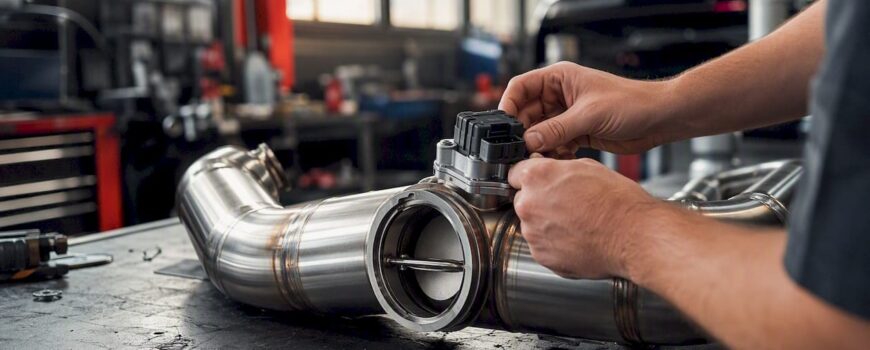
Your exhaust system directly shapes driving feel by controlling engine breathing, sound character, vibration, and perceived speed. The condition and design of every component from the manifold to the tailpipe influence how much power reaches the wheels, how quickly the throttle responds, and how your brain interprets what the car is doing beneath you.
The five mechanisms that matter most:
- Backpressure and scavenging: Exhaust flow resistance affects how completely each cylinder evacuates combustion gases, which changes torque delivery and throttle response across the RPM range.
- Pipe diameter, headers, and routing: Tube length and collector design shift the torque curve up or down the RPM band; diameter controls exhaust velocity and scavenging efficiency.
- Muffler, resonator, and NVH: These components shape cabin noise, drone, and vibration, which directly influence how fast you perceive yourself to be going and how comfortable the drive feels.
- Leaks, clogged catalysts, and O2-sensor faults: Degraded components cause power loss, rough idle, vibration, and poor fuel economy, all of which you feel before a check-engine light appears.
- Weight, materials, and valved control: Lighter systems improve weight distribution and acceleration feel; valved exhausts let you switch between quiet comfort and full-feedback sport modes in real time.
If you’re diagnosing a problem, jump to the road-test checklist. If you’re planning an upgrade, the aftermarket section and the valved-exhaust breakdown cover realistic expectations.
Key Takeaways
Exhaust condition and design change driving feel through five distinct mechanisms: backpressure, sound character, NVH, component health, and weight.
| Point | Details |
|---|---|
| Backpressure shapes the torque curve | Too much restriction hurts high-RPM power; too little kills low-end scavenging and street torque. |
| Sound directly affects speed perception | Simulation studies show quieter exhaust feedback leads drivers to choose faster speeds and commit more violations. |
| Failing components degrade feel before codes appear | Soot at joints, vibration, and flat throttle response are earlier signals than a check-engine light. |
| Street power gains are often modest | Cat-back changes typically produce small single-digit whp on most platforms; turbo-back plus tune delivers larger gains. |
| Valved systems offer the widest range of feel | Remote valve control lets you switch between quiet comfort and full acoustic feedback without hardware changes. |
Table of Contents
- How does exhaust hardware change engine breathing and throttle response?
- How exhaust sound shapes perceived speed and driver behavior
- What does a failing exhaust feel like? A road-test checklist
- What can an aftermarket exhaust realistically change?
- How valved exhaust systems let you tune driving feel precisely
- What to do next if your exhaust is affecting how your car drives
- The Valvecontrolexhaust perspective on tuning for driving feel
- Sources
How does exhaust hardware change engine breathing and throttle response?
The exhaust system’s primary job is gas removal. After combustion, spent gases must leave the cylinder fast enough that the next intake charge can fill it completely. Any restriction that slows that evacuation raises what engineers call pumping losses, and you feel those losses as sluggishness off the throttle and a flat torque curve.
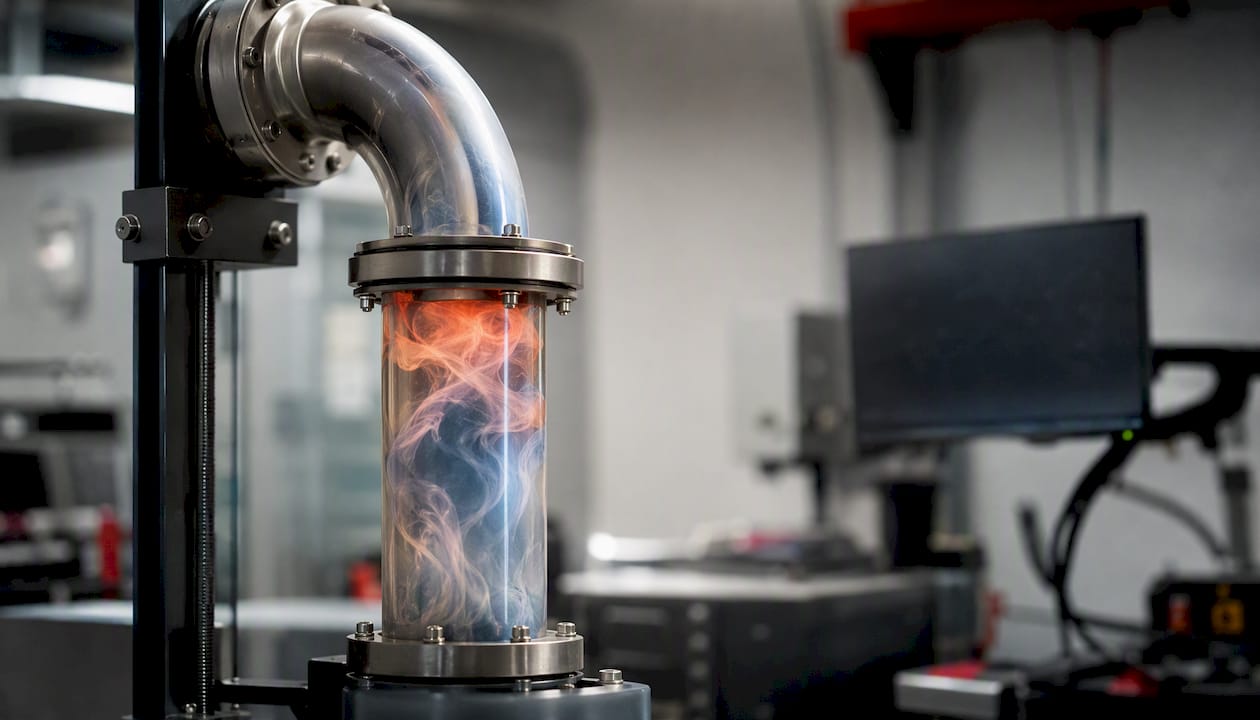
Backpressure vs. exhaust velocity is the core tension. A small amount of backpressure at low RPM can actually help low-end torque by keeping exhaust velocity high enough to create a scavenging pulse, a pressure wave that pulls the next exhaust charge out of the cylinder. At high RPM, that same backpressure becomes a wall. The engine is trying to push gases out faster than the pipe can carry them, and power drops. This is why a straight-pipe setup that feels strong at 6,000 RPM can feel gutless below 3,000 RPM on a street car.
The flow path from combustion to atmosphere runs: exhaust manifold or header primaries → collector → downpipe → catalytic converter → mid-pipe → resonator → muffler → tailpipe. Each junction is a potential restriction or a tuning opportunity, depending on how it’s designed.
Component-by-component, here’s what each one does to driving feel:
- Headers/manifold: Primary tube length determines where the scavenging pulse arrives. Longer primaries build low-RPM torque; shorter primaries push power higher in the rev range. Equal-length headers maximize scavenging consistency across all cylinders.
- Downpipe: The first large-diameter pipe after the turbo or manifold. On turbocharged cars, a high-flow downpipe reduces turbine backpressure, which shortens spool time and sharpens throttle response. See exhaust packaging and tuner fitment for routing trade-offs.
- Catalytic converter: Stock cats are often the single biggest restriction in the exhaust path. High-flow cats reduce that restriction while maintaining emissions compliance; catless setups remove it entirely at the cost of legality and smell.
- Mid-pipe: Connects the downpipe to the muffler section. Diameter and length affect mid-range torque and resonance frequency, which determines whether you get drone at highway cruise.
- Muffler: Controls sound level and character. Straight-through designs (perforated core, packed with sound-absorbing material) restrict flow less than chambered designs but tend to be louder. Chambered mufflers use internal baffles to cancel specific frequencies.
- Resonator: A secondary tuning chamber that targets specific frequency ranges, usually the drone band around 100–200 Hz. Removing a resonator often increases rasp and drone without adding measurable power.
- O2 sensors: Wideband and narrowband sensors feed the ECU the data it needs to maintain the correct air-fuel ratio. A failing O2 sensor causes the ECU to run rich or lean, producing hesitation, rough idle, and reduced fuel economy, all of which you feel as a degraded driving experience.
How exhaust sound shapes perceived speed and driver behavior
Exhaust sound is not just aesthetic. It functions as a real-time feedback channel that your brain uses to estimate speed, judge effort, and calibrate throttle input. Research on this is more rigorous than most enthusiasts realize.
Driving simulation studies found that lower levels of engine auditory feedback, specifically no noise or low engine noise levels were associated with faster chosen speeds, more driving violations, and reduced subjective comfort compared with higher engine noise feedback. Participants drove faster and committed more violations when engine noise was absent or very quiet, according to observed study trends. That’s not a minor effect. It means a car that sounds quieter than it’s moving is actively working against your speed perception.
“Converging evidence across studies shows that attenuation or absence of engine sound leads to underestimation of speed, with implications for EV artificial sound design.” A 2024 review in Frontiers in Psychology calls for more systematic study and highlights electric vehicles and artificial engine sounds as the next testing ground for these findings.
A 2025 experimental study added a useful nuance: engine sound modulation that simulates higher RPMs tends to reduce throttle input and speed, but abrupt or poorly timed sound changes caused discomfort and were sometimes misinterpreted as actual speed changes. The takeaway for exhaust tuning is that smooth, progressive sound changes across the RPM range feel natural and informative, while jarring transitions feel wrong and erode driver confidence.
Beyond decibels, psychoacoustic research identifies loudness and sharpness as the two primary parameters driving emotional response to exhaust sound. High sharpness, the harsh, metallic edge you hear from a poorly designed straight-pipe, degrades acoustic comfort even when the overall volume is acceptable. A refined, powerful-sounding exhaust note, one with strong fundamental orders and controlled harmonics, increases driver satisfaction and the sense that the car is performing well. This connects directly to why exhaust sound matters for performance vehicles: the goal isn’t maximum volume, it’s the right spectral character.
Research on affective dimensions of engine sound links specific acoustic parameters at different RPM ranges to impressions like “refined” and “powerful,” and shows that acceleration sound influences perceived brand personality and owner satisfaction. For performance car owners, this means the exhaust note is part of the product experience, not an afterthought.
What does a failing exhaust feel like? A road-test checklist
Most exhaust problems announce themselves through feel before they show up as a code. Here’s a structured way to reproduce and identify symptoms.
Road-test sequence:
- Cold idle check: Let the car idle from cold. Listen for ticking, popping, or hissing near the manifold or downpipe area. A ticking that fades as the engine warms often points to a cracked manifold or loose flange that seals as metal expands.
- Warm idle vibration check: With the car warm and in park, feel the steering wheel, seat, and floor. Exhaust-frequency vibration (typically 20–100 Hz) that you feel but don’t hear usually means a broken hanger, a loose clamp, or a section of pipe contacting the chassis.
- Light-throttle cruise (2,000–3,000 RPM): This is the drone zone. A resonant boom at a specific RPM that disappears above or below it is almost always a mid-pipe or resonator frequency issue, not an engine problem.
- Hard acceleration pull: A noticeable flat spot or hesitation under full throttle, especially on a turbocharged car, often indicates a clogged cat or a cracked downpipe reducing flow before the turbo can build boost.
- Highway cruise check: At 65–75 mph, steady throttle. Persistent drone here points to a resonator or muffler frequency mismatch. A sulfur smell at cruise speed suggests a failing catalytic converter.
What to listen and feel for:
- Rasp or metallic buzz at specific RPMs: resonator removed or muffler packing degraded
- Cabin vibration in the seat or pedals: broken exhaust hanger or pipe contact with the body
- Exhaust smell inside the cabin: leak upstream of the firewall, potentially dangerous; ventilate immediately and get it inspected
- Reduced acceleration with no other symptoms: restricted cat or collapsed pipe
Under-car visual checks:
- Soot streaks at clamps, flanges, or welds indicate a leak at that joint
- Heat discoloration (blue or black) around the catalytic converter or downpipe can signal excessive heat from a rich-running condition
- Collapsed or kinked pipe sections, often visible near the rear axle
- Damaged or missing rubber hangers, which allow the system to contact the body
Scan tool codes to watch for:
- P0420 / P0430: Catalyst efficiency below threshold (Bank 1 / Bank 2). These appear when the downstream O2 sensor sees a pattern that suggests the cat is no longer converting efficiently.
- P0136 / P0156 and related O2 sensor codes: Downstream sensor faults that can mask cat efficiency problems or indicate wiring damage from exhaust heat.
Safety note: If you smell exhaust fumes inside the cabin while driving, open windows immediately, reduce time in the vehicle, and have the system inspected before driving again. Carbon monoxide is odorless; the sulfur and hydrocarbon smell you detect is a warning sign of a larger leak.
For vibration sources that aren’t clearly exhaust-related, transmission mount symptoms can produce similar sensations and are worth ruling out during the same inspection.
What can an aftermarket exhaust realistically change?
Most street power gains from exhaust changes are modest unless the stock system is a genuine restriction on a high-flow engine, or the change is paired with an ECU tune. Setting expectations correctly before spending money matters.
Practical data shows cat-back changes typically produce small single-digit wheel-horsepower gains on many platforms, with more significant results on naturally aspirated engines that were genuinely flow-limited. Turbo-back changes combined with a tune can deliver substantially larger measured gains, because the tune recalibrates fueling, boost targets, and ignition timing to take advantage of the reduced restriction.
| Upgrade type | Typical benefit | Main drawbacks | Tune required? |
|---|---|---|---|
| Axle-back | Sound change, slight weight reduction | Minimal power effect | No |
| Cat-back | Sound, modest flow improvement | Small whp gain on most platforms | Rarely |
| Mid-pipe swap | Drone reduction or increase, flow | Can increase rasp without resonator | Sometimes |
| High-flow catted downpipe | Turbo response, measurable whp gain | Cost, possible CEL without tune | Yes, recommended |
| Catless downpipe | Maximum flow, large gain with tune | Illegal for street use in most U.S. states, smell, CEL | Yes, required |
A few outcomes that surprise owners:
- An exhaust can make a car slower if the pipe diameter is too large for the engine’s displacement and RPM range, killing exhaust velocity and scavenging efficiency at the RPM you actually use on the street.
- Weight savings are real but modest. Replacing a heavy stock cat-back with a titanium system can save 15–25 lbs on many platforms, which you feel more in corner entry and braking than in straight-line acceleration.
- Throttle feel changes even when power doesn’t. A freer-flowing mid-pipe reduces the slight hesitation caused by backpressure spikes at tip-in, making the car feel more immediate without a measurable whp change.
Downpipe and mid-pipe changes reduce restriction on turbocharged cars but bring real trade-offs in heat management, emissions compliance, and noise. Heat wraps and ceramic coatings on downpipes and headers reduce underhood temperatures and protect nearby components, but they also change the thermal behavior of the exhaust gas itself, which can affect catalyst light-off time. For daily-driven cars, a supercar exhaust decibel management approach that balances sound with livability is often more satisfying long-term than chasing maximum flow.
U.S. legal note: California Air Resources Board (CARB) regulations require any aftermarket exhaust component to carry an Executive Order (EO) number to be street-legal in California. The remaining 49 states follow federal EPA standards, which are less restrictive but still prohibit removing catalytic converters on vehicles operated on public roads. Catless setups are track-only in practice across the U.S.
How valved exhaust systems let you tune driving feel precisely
Valved and variable exhaust systems give you something a fixed system never can: the ability to change the car’s acoustic and flow character in real time, without tools, without compromise. That’s the core claim, and the research on auditory feedback makes it more than a marketing position.
Because reduced engine sound leads to speed underestimation, a system that lets you increase feedback volume when you want it and reduce it for comfort driving addresses both the safety and the livability problem simultaneously. A valved system in quiet mode keeps cabin NVH low enough for comfortable highway cruising. Open the valve, and the spectral character shifts, the engine sounds more present, throttle response feels sharper, and the feedback loop between your right foot and the car tightens.
The mechanism is straightforward. An electronically controlled butterfly valve in the mid-pipe or muffler section opens or closes to change the exhaust’s effective flow path. Closed, exhaust routes through the muffler’s full baffling, reducing volume and sharpness. Open, it bypasses part of that baffling, increasing flow and changing the harmonic content of the note. On a turbocharged platform, opening the valve at high RPM also reduces backpressure slightly, which can sharpen throttle response at the top of the rev range.
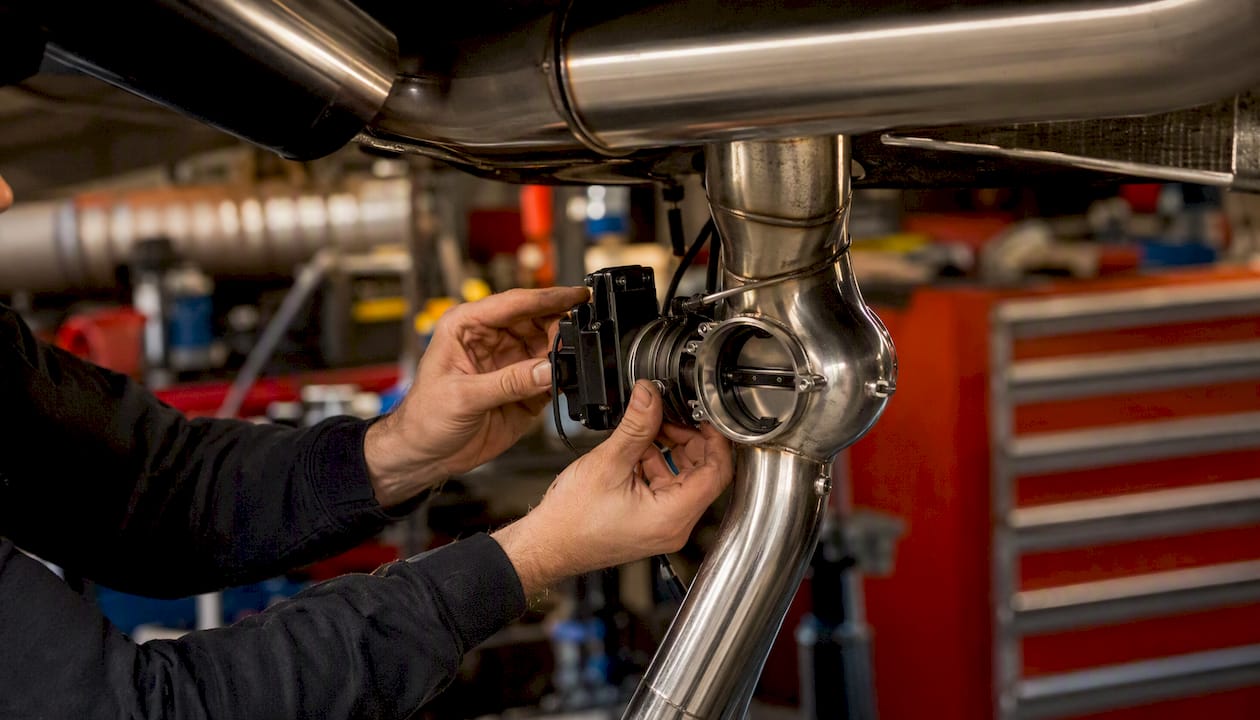
How valve control systems shape your drive covers the technical detail of valve placement and mode mapping. The practical owner experience on platforms like BMW M-series, Audi RS-series, and Ferrari V8 applications is consistent: quiet mode is genuinely quiet enough for early-morning neighborhood driving, while sport or open mode delivers the full acoustic character the engine was designed to produce.
The psychoacoustic research on loudness and sharpness supports a specific design goal for valved systems: the open-valve mode should increase loudness and fundamental order strength without increasing sharpness to the point of harshness. That’s a spectral tuning problem, not just a volume problem, and it’s why the resonator strategy matters. Keeping a well-tuned resonator in the system while using a valved mid-pipe or muffler gives you control over both the volume and the tonal character.
Pro Tip: If you’re adding a valved system to a turbocharged car, keep a high-flow catted mid-pipe rather than going catless. You get the flow benefit, avoid the CEL and smell issues, and the valve gives you the sound range you want without the ownership headaches of a catless setup.
Key considerations for owners evaluating valved systems:
- Confirm OBD2 compatibility and whether the valve controller integrates with the factory drive mode selector on your platform
- On cars with active exhaust from the factory (AMG Performance Exhaust, BMW M Sport exhaust), aftermarket valved systems need to be mapped to avoid conflicts with the factory ECU’s exhaust valve logic
- Installation torque specs at flanges and hangers matter; an improperly mounted valved system can develop leaks at the valve housing under thermal cycling
- A tune is not always required for a valved cat-back, but it is strongly recommended when pairing a valved system with a high-flow downpipe on a turbocharged platform
What to do next if your exhaust is affecting how your car drives
Whether you’re diagnosing a problem or planning an upgrade, the sequence below keeps you from spending money in the wrong order.
Immediate action list:
- If you smell exhaust in the cabin, stop driving and get the system inspected. This is a safety issue, not a performance issue.
- Pull codes with an OBD2 scanner. P0420/P0430 and O2 sensor faults tell you whether the cat or sensors are the source of any performance degradation.
- Do a cold-start visual inspection under the car. Look for soot at joints, damaged hangers, and any pipe contact with the chassis or body.
Repair vs. upgrade decision sequence:
- Fix leaks at clamps and flanges first. A leaking joint upstream of the O2 sensor will skew fuel trim data and make the car run poorly regardless of what else you change.
- Replace damaged hangers and any collapsed pipe sections before evaluating sound or performance.
- If the cat is confirmed bad (P0420/P0430 with confirmed sensor function), replace with a high-flow catted unit rather than going catless for street use.
- Once the system is mechanically sound, evaluate mid-pipe or muffler changes for sound and feel goals.
- Consider a valved system if you want adjustable sound and feel without committing to a single fixed character.
Questions to ask your installer or vendor:
- Will this part trigger a check-engine light on my specific ECU calibration?
- Is a tune required, and if so, what’s the estimated cost and turnaround?
- Does this part carry a CARB EO number, or is it 49-state only?
- What heat shielding is included or recommended for the downpipe and surrounding components?
- What are the estimated labor hours and total installed cost for this job in the U.S.?
- What’s the warranty coverage, and does it cover the valve actuator separately from the pipe?
- Are there known fitment issues with my specific model year and trim?
Red flags that mean stop and consult a professional:
- A check-engine light that returns within a few drive cycles after an exhaust change
- Any exhaust smell inside the cabin after installation
- Unusual exhaust gas temperature readings or heat damage to nearby wiring or fuel lines
- Mounting points that contact the chassis under load or during thermal expansion
For customizable exhaust options on luxury and performance platforms, matching the system to the car’s specific ECU logic and thermal envelope is what separates a satisfying upgrade from a frustrating one.
The Valvecontrolexhaust perspective on tuning for driving feel
The exhaust systems that produce the best driving experience aren’t the loudest ones. They’re the ones that give the driver the right information at the right moment. At Valvecontrolexhaust, the work we do on platforms like Audi RS, BMW M, Ferrari, and Lamborghini consistently shows that controllable sound, not maximum sound, is what enthusiasts actually want once they’ve lived with a system for more than a week.
Remote electronic valve control is the capability that makes this possible. A driver can run quiet mode through a residential neighborhood at 7 AM and open the valve fully on a canyon road an hour later. That range of character, from refined to visceral, is what exhaust customization for luxury cars should deliver. Fixed systems force a compromise. Valved systems don’t.
Sources
- Auditory feedback and driver speed choice (driving simulation experiments)
- Review: The role of in-car sound and artificial engine sounds on speed perception and control