For most Mercedes-AMG GT owners, the smartest exhaust upgrade is a valved performance catback paired with a legally compliant catted downpipe, a combination brands build specifically for this platform. That pairing delivers on-demand sound control without the tampering risk that comes from removing or gutting catalytic converters, a distinction that matters more than most buyers realize before they shop.
TL;DR:
- Most exhaust upgrades for the AMG GT should focus on a valved catback paired with a legally compliant catted downpipe to maintain emissions legality.
- Installing a valved system provides on-demand sound control, with the ability to switch between quiet and loud modes, improving daily comfort and driving experience.
- Power gains from exhaust modifications are generally modest and depend heavily on supporting tuning and turbo matching, not just hardware alone.
- Federal and state laws strictly regulate catalytic converter removal, making documentation and certified parts essential to avoid tampering violations.
- Choosing stainless steel or titanium materials impacts budget, weight, and durability, and installation complexity varies based on the exhaust part and model year.
Table of Contents
- Which exhaust parts should AMG GT owners actually consider?
- How valved systems change the way your AMG GT sounds and drives
- U.S. legal and emissions rules for AMG GT exhaust upgrades
- Choosing, budgeting, and installing an exhaust for your AMG GT
- What owners get wrong about exhaust upgrades
- Valve Control Exhaust: a compliant, valve-controlled option for your AMG GT
- Where to verify the rules and dig deeper
- Sources
- FAQ
Which exhaust parts should AMG GT owners actually consider?
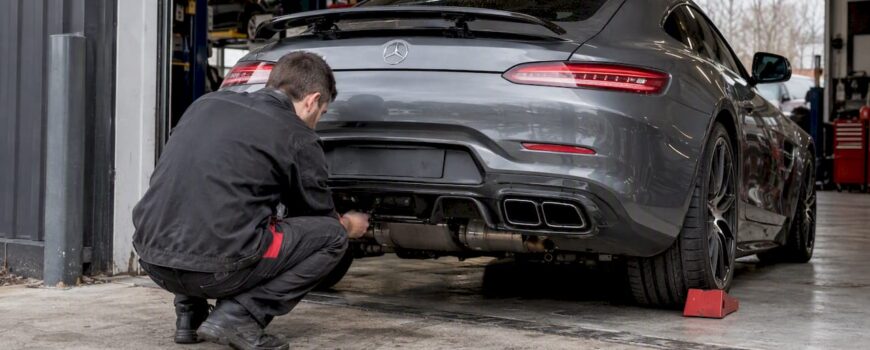
Shopping for an AMG GT exhaust means choosing among several distinct parts, and each one solves a different problem. A catback replaces everything from the catalytic converters back, and it is the most common starting point because it changes tone and weight without touching emissions equipment. A valved catback adds electronically controlled flaps that open or close the exhaust path, letting the driver switch between a quiet cruise mode and a louder, more aggressive setting. A center or midpipe sits between the downpipe and the rear muffler section, often carrying resonators that shape midrange tone. A downpipe replaces the section right after the turbo, and this is where legal complexity enters: catted downpipes keep converters in place, while catless versions remove them entirely and are not street legal in most cases. Exhaust tips are purely cosmetic and change sound only in minor ways.
Fitment depends on which AMG GT you own. The original C190 coupe, the R190 roadster, and the newer C192 generation each use different flange spacing and hanger points, so a system built for one will rarely bolt to another without adapters.
- Catback systems typically install as a direct bolt-on with no cutting required.
- Valved variants add wiring for the electronic actuators, which increases install time.
- Downpipes require more labor because they sit closer to the turbo and heat shielding.
The trade-offs come down to sound versus legality versus budget, and almost every AMG GT owner ends up weighing all three before ordering.
How valved systems change the way your AMG GT sounds and drives
A valved exhaust uses electronically actuated flaps inside the piping that either route exhaust gas through a straighter, louder path or force it through a quieter, more restrictive route. Closing the valves increases backpressure slightly and quiets the car for neighborhood driving; opening them frees flow and sharpens the exhaust note, particularly under load. Divided exhaust and valve-timing research shows that valve placement and timing meaningfully affect backpressure and transient engine response, which is part of why valve position matters more than people expect.
- Quiet mode suits daily commuting and keeps the AMG GT tolerable at idle in residential areas.
- Loud mode opens up midrange and top-end sound for weekend drives or track days.
- Drone at highway cruising speeds is the most common complaint with poorly tuned systems.
Performance gains from a catback or valved system alone tend to be modest. Most of the benefit comes from reduced weight and slightly freer flow rather than a dramatic horsepower jump, and turbocharged engines like the AMG GT’s respond more to backpressure changes than naturally aspirated engines do. Large power gains from an exhaust alone, without supporting tuning, are generally unlikely.
Pro Tip: Ask any valved-system seller for a sound clip in both modes before buying. Tone varies more between brands than spec sheets suggest.
U.S. legal and emissions rules for AMG GT exhaust upgrades
Before ordering anything that touches the downpipe or converters, understand the federal rules. EPA’s exhaust system repair guidance states that removing or replacing catalytic converters with plain pipe is generally illegal, and that repair shops are expected to restore the original catalyst configuration rather than delete it. Many states enforce their own versions of this rule on top of federal law.
There are a few situations where converter replacement is treated differently:
- The original converter is missing or was stolen, requiring a certified replacement.
- The vehicle’s converter has failed and needs a certified replacement suited to the vehicle’s age and mileage.
- A certified aftermarket converter is installed that meets EPA or CARB certification for that specific application.
The EPA’s tampering enforcement policy does allow a limited defense when a certified replacement after-treatment system is used and properly documented, but that protection depends entirely on paperwork and OBD compatibility. California adds its own CARB approval layer on top of federal rules, so a part that is fine in one state may not pass inspection in another.
One consistent risk shows up across EPA’s archived guidance on aftermarket catalytic converters: converter swaps without documentation or certification are the most common source of tampering violations.
Keep the invoice, the certification sticker, and confirmation that the ECU still reads OBD data correctly after installation.
Choosing, budgeting, and installing an exhaust for your AMG GT
Start with how you actually use the car. A daily-driven AMG GT benefits from a valved system that stays quiet most of the time, while a track-focused build might prioritize weight savings and flow over neighborhood civility. Material matters too: stainless steel is durable and affordable, while titanium cuts weight further at a higher price point.
- Decide whether emissions compliance is a hard requirement in your state or just good practice everywhere.
- Compare stainless and titanium construction against your budget and weight priorities.
- Check whether the system carries any warranty coverage on the valve actuators, since electronic components fail more often than pipe sections.
Entry-level catback systems sit at the low end of the aftermarket price range, valved systems cost meaningfully more due to the actuators and control module, and full setups that include a catted downpipe push costs higher still. Labor follows a similar pattern: a catback swap often takes a few hours, while adding a downpipe or coordinating a tune can stretch a shop visit into a full day.
Before buying, ask the seller directly whether the downpipe is catted, whether documentation ships with the converter, and whether they have dyno data for any horsepower claims. Backpressure and performance-sensitivity research notes that gains from exhaust changes depend heavily on turbo matching, so a claim of large horsepower increases without dyno backing is a red flag, not a selling point.
Pro Tip: If you’re planning a tune alongside the exhaust, confirm with the tuner first whether the map accounts for OBD readiness, since some aggressive tunes can trigger emissions warning lights.
A tune is worth considering only after the exhaust and downpipe choice is settled, since tuning against the wrong hardware can create driveability issues rather than fix them.

What owners get wrong about exhaust upgrades
The industry oversells horsepower and undersells sound quality, and that gets the priorities backward. Most AMG GT owners upgrading their exhaust are chasing tone and daily flexibility, not a dyno chart, yet most marketing still leans on power claims that a catback alone rarely delivers.
The bigger blind spot is legal risk. Owners fixate on brand names and sound clips while treating the downpipe’s catalytic converter as an afterthought, which is exactly backward given how strictly EPA tampering enforcement treats converter removal. A loud exhaust that fails inspection or draws a tampering citation is not an upgrade, it is a liability.
Prioritize a valved system that gives you sound control without forcing a catless downpipe. That single decision solves the daily-versus-weekend tension most owners are actually trying to fix, and it keeps the car legal everywhere you drive it.
— Info
Valve Control Exhaust: a compliant, valve-controlled option for your AMG GT
Valved exhaust systems and compatible components are available for the AMG GT and other performance platforms, with product lines covering exhaust parts, downpipes, and accessories. 
The core advantage is straightforward: on-demand sound control through electronic valves, without pushing you toward a catless downpipe just to get a louder note. Catted and high-flow catted options in the downpipe category, including fitments like the catted downpipe built for Mercedes-AMG applications, let you keep emissions equipment intact while still improving flow. The catalog spans compatibility across AMG and other European performance brands and includes products sourced directly from authorized manufacturers.
If you’re ready to compare parts for your specific AMG GT model year, browse the exhaust parts category or check downpipe options for a catted fitment that matches your car, and reach out with your model code for a fitment check before ordering.

Where to verify the rules and dig deeper
For the legal side, read EPA’s exhaust system repair guidelines and the EPA tampering enforcement policy directly rather than relying on forum summaries. Owners weighing catted downpipe swaps should also check the archived EPA guidance on aftermarket converters for the specific replacement conditions it allows.
For a broader parts catalog and comparison shopping, Supercars is a useful marketplace to cross-reference availability and pricing across the aftermarket.
Sources
- Exhaust system repair guidelines (EPA)
- Divided Exhaust Period: Scavenge valve optimization (1-D simulation study)
- What you should know about using, installing or buying aftermarket catalytic converters (EPA archive)
FAQ
Does an AMG performance exhaust add horsepower?
A catback or valved exhaust alone typically produces modest gains, mostly from reduced weight and freer flow rather than a large power jump. Backpressure research notes that meaningful gains depend on turbo matching and system design, so dyno data matters more than advertised claims.
What is the best exhaust system for an AMG car?
For most AMG GT owners, a valved catback paired with a catted downpipe offers the best balance of sound control, legality, and daily usability. Compatible valved systems and catted downpipe options are available specifically for AMG platforms.
Does upgrading your exhaust increase horsepower?
It can, but the increase is usually small unless paired with supporting changes like a tune or a higher-flow downpipe. Removing catalytic converters is not a legitimate way to chase power, since EPA guidance treats that as tampering in most cases.
Is it legal to remove my catalytic converter for a louder exhaust?
No, removing a catalytic converter without a certified replacement is generally considered tampering under federal rules. EPA’s tampering policy outlines the narrow exceptions, all of which require certified parts and documentation.