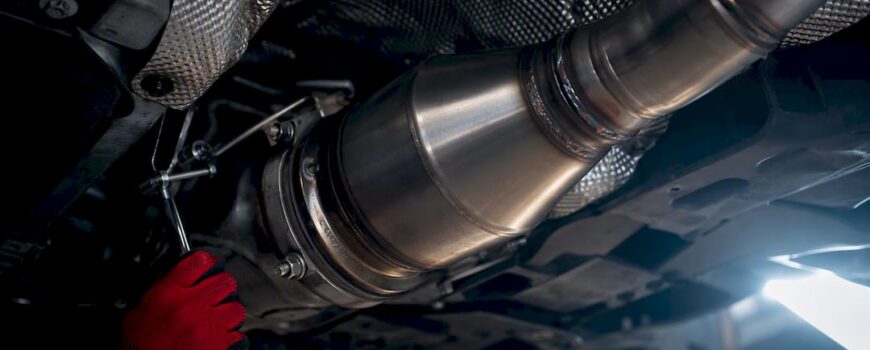
Yes, a properly engineered high-flow catted downpipe typically improves turbo response and exhaust flow while keeping your car legally street-drivable. Expect modest but real horsepower and torque gains, faster spool, and a cleaner emissions profile than a catless setup. The trade-off is cost and a possible check-engine light, both manageable with the right install and tune.
TL;DR:
- High-flow catted downpipes can improve exhaust flow by up to 20%, resulting in quicker turbo spool and modest horsepower gains, especially on larger turbos.
- Maintaining legality requires verifying the downpipe has a genuine catalytic substrate with CARB EO approval and CPSI ratings; otherwise, inspection failure is likely.
- The turbo size, tuning quality, and downstream exhaust restrictions significantly influence the actual performance gains from a catted downpipe.
- A catted downpipe reduces raw exhaust smell and harshness at idle and low RPM, improving comfort and highway noise levels compared to catless setups.
- Installing a high-flow catted downpipe may trigger check-engine lights, which typically require ECU reflash and heat management during installation to prevent issues.
Table of Contents
- Catted Downpipe Benefits for Real-World Performance
- Emissions, Legality, and Inspection: What “Catted” Really Means
- Sound, Odor, and Everyday Drivability
- Installation, Common Pitfalls, and Tuning Requirements
- Cost, Value, and What Kind of Return to Expect
- Technical Notes From Valvecontrolexhaust’s Fitment Experience
- When I’d Choose a Catted Downpipe Over Catless
- Get the Right Catted Downpipe Fitted the First Time
- Sources
Catted Downpipe Benefits for Real-World Performance
The downpipe sits directly after the turbo, and it’s the single most restrictive section of most turbocharged exhaust systems. Stock downpipes are built for durability and noise compliance, not flow, so they tend to trap backpressure right where the turbo needs to spin freely. A catted downpipe swap addresses that bottleneck without stripping out the emissions hardware that keeps the car legal.
Well-engineered high-flow catted downpipes can improve overall exhaust flow by up to 20%, and that improvement shows up as reduced backpressure at the turbine outlet. Less backpressure means the turbo doesn’t have to fight its own exhaust gas to spin up, which is why spool feels noticeably quicker on most applications. Drivers report modest fuel-efficiency gains in daily driving once the system is properly tuned, a side benefit most people don’t expect from a performance part.
How much you actually gain depends heavily on the rest of the system:
- Turbo size matters most. A car with a large, laggy turbo benefits more from reduced backpressure than one with a small, quick-spooling unit that was never flow-limited to begin with.
- Tune quality determines whether the ECU actually uses the extra airflow. An unmodified factory tune may barely notice the change.
- Downstream restrictions like a stock cat-back exhaust or a tight resonator can cap the gains a downpipe alone can deliver.
- Catalyst design plays a bigger role than most buyers assume. High-flow catted downpipes use substrates with lower cell density (CPSI) and larger-diameter piping paired with mandrel bends, which reduce backpressure while still processing exhaust gases.
On the road, that usually translates to quicker throttle response, a shorter wait for boost to build, and a car that feels noticeably more alive in the 2,500 to 4,500 RPM range where most daily driving happens. Dyno numbers will show the story in peak figures, but the seat-of-the-pants difference often shows up earlier in the rev range than the chart suggests. The role exhaust flow plays in turbo performance goes well beyond a single horsepower number, since spool behavior and drivability shift together.
Emissions, Legality, and Inspection: What “Catted” Really Means
A catalytic converter converts harmful exhaust compounds into less harmful gases before they leave the tailpipe, and it’s the reason “catted” and “catless” aren’t interchangeable words. Removing the catalyst outright is typically a violation of both federal law and most state inspection rules for vehicles driven on public roads, regardless of how much power it might free up on paper. A catted downpipe keeps that hardware in place, just in a lower-restriction form, which is why it stays compliant where a catless setup usually doesn’t.
Here’s the practical path to staying on the right side of both the law and your state’s inspection station:
- Confirm the downpipe carries real catalytic substrate, not a decorative shell. Ask the manufacturer for the CPSI rating and substrate material, since a genuinely high-flow catted part will disclose both.
- Check for CARB Executive Order (E.O.) documentation if you’re in a state that enforces CARB standards. Products without an E.O. number can fail inspection even with a working catalyst installed.
- Verify your state’s specific emissions testing requirements before buying, since visual inspections, tailpipe sniffer tests, and OBD-II checks vary by state and can each flag different issues.
- Keep your factory or aftermarket catalytic converter’s paperwork in the glovebox. Inspectors sometimes ask for proof when a part looks non-stock.
Pro Tip: If you’re shopping for a high-flow catted downpipe and the listing doesn’t mention CPSI or E.O. status anywhere, that’s usually a sign the seller either doesn’t know or doesn’t want you asking.
For a state-by-state rundown of what inspectors actually look for, this sports car exhaust legal checklist breaks down the federal baseline and where individual states add stricter rules on top of it.
Sound, Odor, and Everyday Drivability
A catted downpipe mellows out the sharp, raspy edge that catless setups are known for, and it noticeably cuts the raw-fuel smell that comes with an unfiltered exhaust stream. That difference matters most at idle and low RPM, where a catless car tends to sound harsh and smell noticeably richer inside the cabin with the windows down.
- At idle, expect a smoother, deeper tone rather than a buzzy rasp.
- Under load, the catalyst still lets enough flow through that you keep most of the aggressive turbo and exhaust note people want.
- In the cabin, odor complaints drop significantly compared to catless pipes, especially in stop-and-go traffic.
- Pairing choice matters: a resonated cat-back tames drone on the highway, while a straight-through cat-back leans into a louder, more aggressive character.
Installation, Common Pitfalls, and Tuning Requirements
Swapping in a catted downpipe is straightforward on paper and occasionally miserable in practice, mostly because of what’s already on the car. Here’s what tends to trip people up:
- Rusted factory hardware. Older cars often have corroded bolts at the turbo flange or midpipe connection, which can turn a two-hour job into an afternoon with a torch and a set of new studs.
- Flange alignment issues. Aftermarket flanges don’t always match factory tolerances perfectly, so budget extra time for adapters or minor fabrication on some platforms.
- A check-engine light after install. This is common, not a defect. The secondary oxygen sensor sees a different flow and temperature pattern with a smaller catalyst, which can trip a code even on a functioning part.
- Thermal stress over time. Downpipes run hot, and skipping heat management can warp flanges or shorten the life of nearby components.
The CEL issue almost always traces back to O2 sensor monitoring, and the fix is usually an ECU reflash that adjusts the sensor thresholds while keeping the diagnostics that matter for legality intact. A CEL troubleshooting checklist walks through the most common codes and what to check before assuming the worst.
Pro Tip: Wrap the downpipe or install a heat shield near sensitive components before the first drive, not after you notice a problem. Retrofitting heat management is always more annoying than doing it during install.
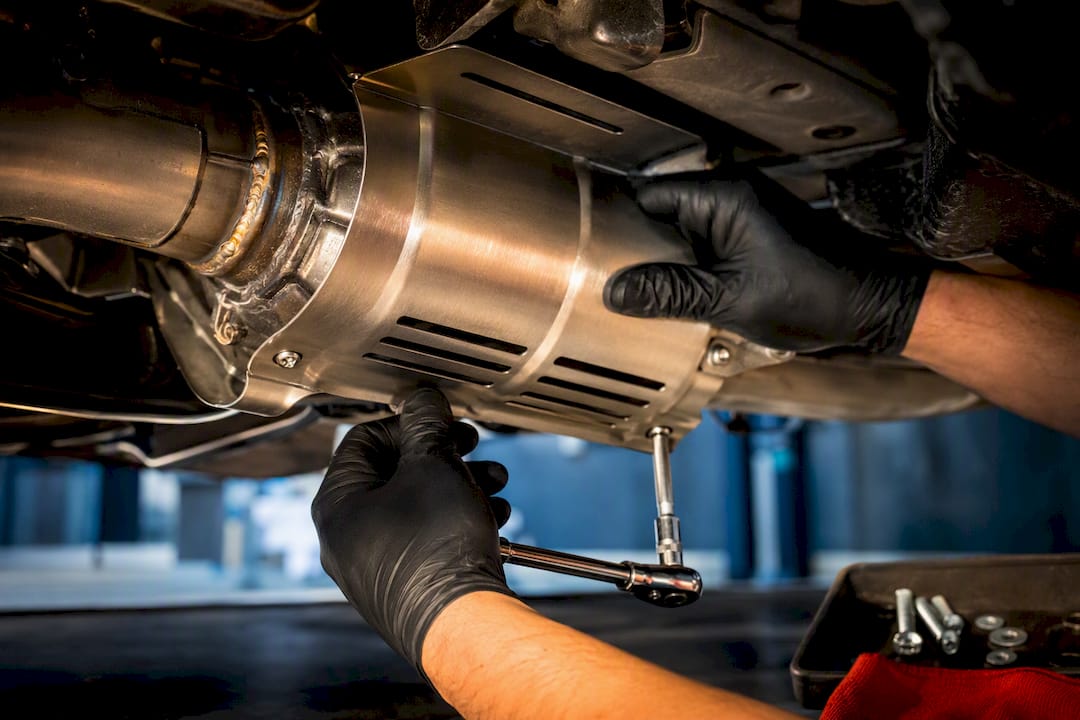
Once the downpipe is in and the CEL is sorted, a dyno tune is where you actually collect the gains the hardware made possible. A generic tune leaves flow potential on the table; a proper dyno session tailored to the new exhaust characteristics is what turns a hardware upgrade into a measurable power increase. Partner resources like TuningBot’s guide to SCR and AdBlue checks are useful reference points for shops handling the tuning side of emissions-related calibration work.
Cost, Value, and What Kind of Return to Expect
Budget for four categories: the downpipe itself, gaskets and hardware, installation labor, and a proper tune. Skipping the tune is the most common way people leave gains on the table after spending real money on parts.
- Parts and labor run higher than a basic cat-back swap, since downpipe work involves more heat-soaked hardware and tighter clearances.
- High ROI scenario: a lightly modified turbo car on a stock or near-stock tune, where the factory downpipe is genuinely the biggest restriction in the system.
- Lower ROI scenario: a car already running a large aftermarket turbo and aggressive tune, where the downpipe was likely upgraded earlier and isn’t the limiting factor anymore.
- Non-monetary returns matter too. Faster spool, less cabin odor, and staying inspection-ready are real benefits even on a build where the horsepower number doesn’t move dramatically.
A full breakdown of typical parts and labor costs for downpipe installs is worth reviewing before you commit to a shop quote.
Technical Notes From Valvecontrolexhaust’s Fitment Experience
Some suppliers build and fit exhaust components for European and luxury performance platforms, including Audi, BMW, Porsche, Ferrari, Lamborghini, and Mercedes-AMG, and that model-specific experience shapes a few practical notes worth knowing before you buy:
- Substrate CPSI and pipe diameter vary significantly between “high-flow catted” products marketed for the same car, so two parts with identical descriptions can flow very differently.
- Heat management around the downpipe flange is a recurring theme across nearly every platform similar suppliers fit, particularly on cars with tight engine bays.
- Model-specific fitment notes, including flange tolerances and known problem areas, are often covered in more depth on individual product pages, which list substrate details alongside compatibility.
When I’d Choose a Catted Downpipe Over Catless
For a daily-driven car, catted wins almost every time. The legal certainty and lower odor complaints outweigh a power difference that’s often smaller than people expect, especially since some tests show near-zero horsepower gains between catless and a well-built high-flow catted setup. Catless only starts making sense on a car that never sees a public road. For fitment specifics on your platform, Valvecontrolexhaust’s technical resources are the better starting point than guesswork.
— Info
Get the Right Catted Downpipe Fitted the First Time
Some manufacturers offer compatible downpipes and valve-controlled exhaust systems for Audi, BMW, Porsche, Ferrari, Lamborghini, and Mercedes-AMG platforms, so you’re not stuck matching generic parts to a car that needs precise flange tolerances and heat clearance. That specificity is the real advantage here: instead of hunting through universal-fit listings and hoping the CPSI numbers check out, you get a part engineered for your exact chassis and turbo setup from the start.

If you’re ready to move forward, start by checking compatibility for your model and requesting fitment guidance directly. Readers comparing premium options across brands can review how IPE, FI, Armytrix, Akrapovic, Valvetronic, and Ryft systems stack up before choosing a downpipe and valve-controlled setup that fits both your car and your driving style.
Sources
- EPA – Working catalysts required on imported cars (excerpted guidance)
- Jalopnik — Catted vs. Catless downpipes differences