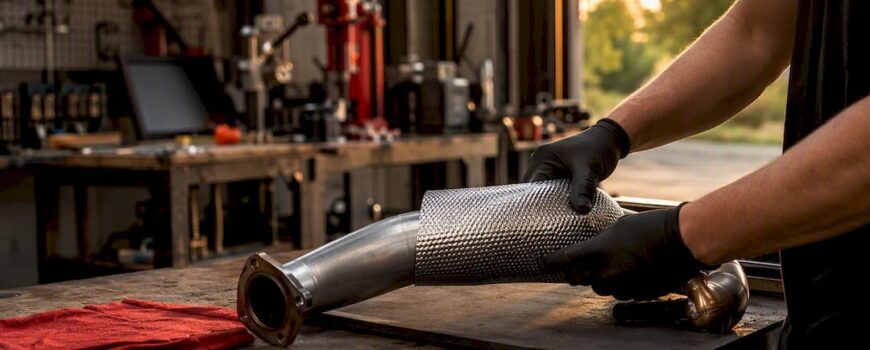
For a daily-driven or mixed-use car, a professional downpipe blanket or a properly cured ceramic coating handles radiant heat better than anything else on the market. For track-only or sustained high-load setups, combine a high-temp blanket with ceramic coating on the pipe itself. Skip loose exhaust wrap as your only long-term answer. It works in a pinch, but it ages fast and hides corrosion until it’s a real problem.
Before you insulate anything, fix what’s actually wrong first:
- Repair exhaust leaks and correct routing or clearance issues. Insulating a leaking joint just traps the problem closer to your wiring harness.
- Inspect nearby hoses, sensors, and wiring runs for existing heat damage before you commit to a product.
- Decide your goal (daily comfort, mixed street/track, or dedicated racing) before you buy, because that decision drives every material and installation choice below.
Key Takeaways
Effective downpipe heat management pairs the right material to your actual use case: blankets or coating for daily and mixed use, blanket-plus-coating for sustained high-load track builds, and wrap only as a lower-cost, higher-maintenance stopgap.
| Point | Details |
|---|---|
| Fix problems before insulating | Repair exhaust leaks and correct routing issues before adding any heat management product. |
| Blankets lead for turbo downpipes | Engineered blankets can drop nearby temperatures from over 450°C to roughly 140 to 170°C at 30mm. |
| Coating protects and retains heat | Properly cured ceramic coating helps keep exhaust energy in the flow and lowers surface temperature. |
| Wrap needs active maintenance | Basalt wrap cuts radiant heat effectively but risks trapped moisture and corrosion over time. |
| Revalidate tunes after hardware changes | Any insulation or coating near O2 sensors can shift readings enough to warrant a tuner recheck. |
| Valve Control Exhaust builds for heat and fitment | Their valved downpipes and systems are engineered around platform-specific thermal loads and clearance. |
Table of Contents
- What Downpipe Heat Management Actually Solves
- Downpipe Blanket vs Ceramic Coating vs Exhaust Wrap
- How to Pick the Right Heat Management Approach
- Installing and Maintaining Your Heat Management System
- Combining Methods Without Breaking Your Tune
- What Fifteen Years Of Exhaust Builds Taught Us About Heat
- How Valve Control Exhaust Handles Heat and Fitment Together
- Sources
What Downpipe Heat Management Actually Solves
A downpipe running at 600°C doesn’t just heat the metal it touches. It radiates outward, convects into surrounding air, and slowly cooks anything sitting in the engine bay that isn’t rated for it. That’s the core problem downpipe heat management exists to solve, and it’s bigger than most owners realize until they’ve replaced a melted coolant line or chased a phantom sensor fault.
Radiant heat is the sneaky one. A downpipe doesn’t need to touch a wiring harness to damage it; it just needs proximity and time. Testing on a 600°C downpipe without insulation shows temperatures of 450 to 550°C measured just 30 millimeters away, which is well past the failure point for most rubber hoses, plastic connectors, and standard automotive wiring insulation.
On a hard-tuned turbo car under sustained load, surface temperatures and EGTs can spike even higher in short bursts, sometimes exceeding 1000°C in extreme cases. That’s the environment your fasteners, stitching, and insulation materials actually need to survive, not the mild numbers you see quoted for a stock daily driver.
The performance side matters just as much as the durability side. Heat soak raises intake air temperature, which drops density and cuts power on repeated pulls. It’s why a car that pulls strong on lap one falls off by lap three, and why dyno numbers on a hot day rarely match a cool morning run. Three consequences show up again and again:
- Reduced repeatability. Consistent lap times or consistent dyno pulls require consistent under-hood temps, not a one-time peak number.
- Sensor drift. O2 sensors and IAT sensors both read differently when they’re baking next to an uninsulated downpipe.
- Component fatigue. Coolant lines, boost lines, and wiring insulation degrade faster with repeated thermal cycling, even if they never fail outright.
Tuners who work on these cars regularly tend to agree on one point: heat control, not marginal exhaust flow gains, is usually what limits real-world performance on a modified turbo car, according to Drivurs Academy’s guidance on downpipe modifications.
Downpipe Blanket vs Ceramic Coating vs Exhaust Wrap
Four approaches dominate this category, and each one solves a slightly different version of the heat problem. None of them is universally “best.” The right pick depends on how hard you drive the car and how much maintenance you’re willing to do.
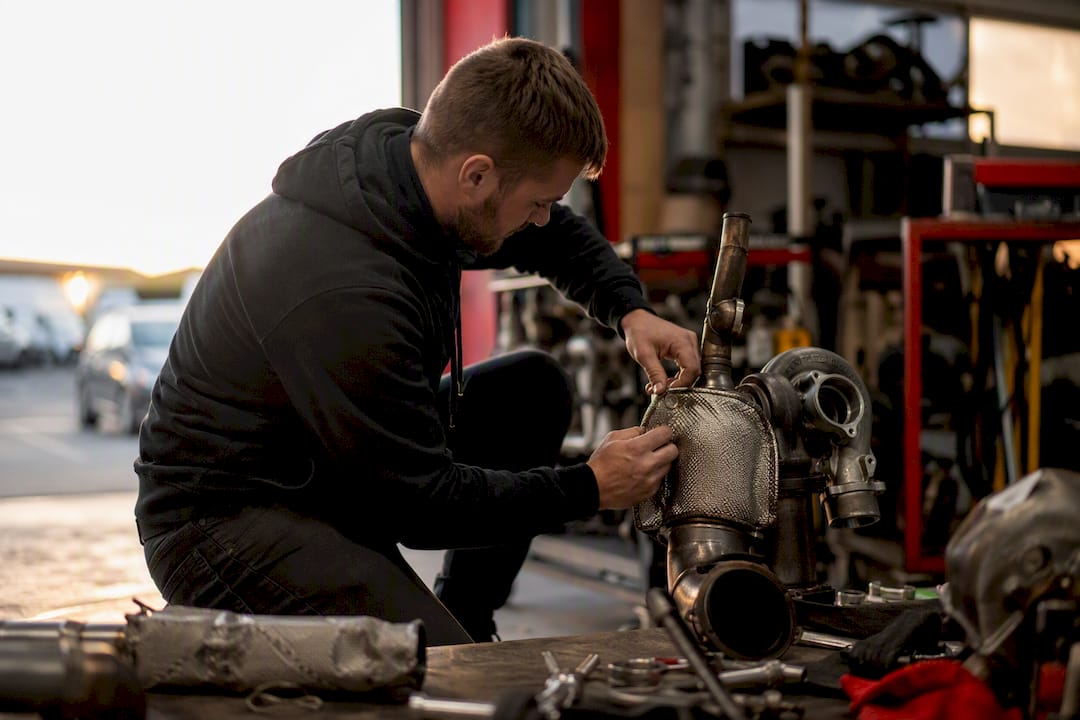
Downpipe blankets are purpose-built, multi-layer thermal jackets designed specifically for the geometry and heat load of a turbo downpipe. They’re not repurposed pipe wrap. Engineered blanket systems use reinforced outer layers and secure fastening designed for repeated thermal cycling and road exposure, and the containment numbers back that up. A properly fitted 10mm engineered blanket can bring that 450 to 550°C reading at 30 millimeters down to roughly 140 to 170°C, depending on construction. For turbo applications specifically, a dedicated blanket tends to outperform loose wrap because it resists oil and moisture exposure far better over time.
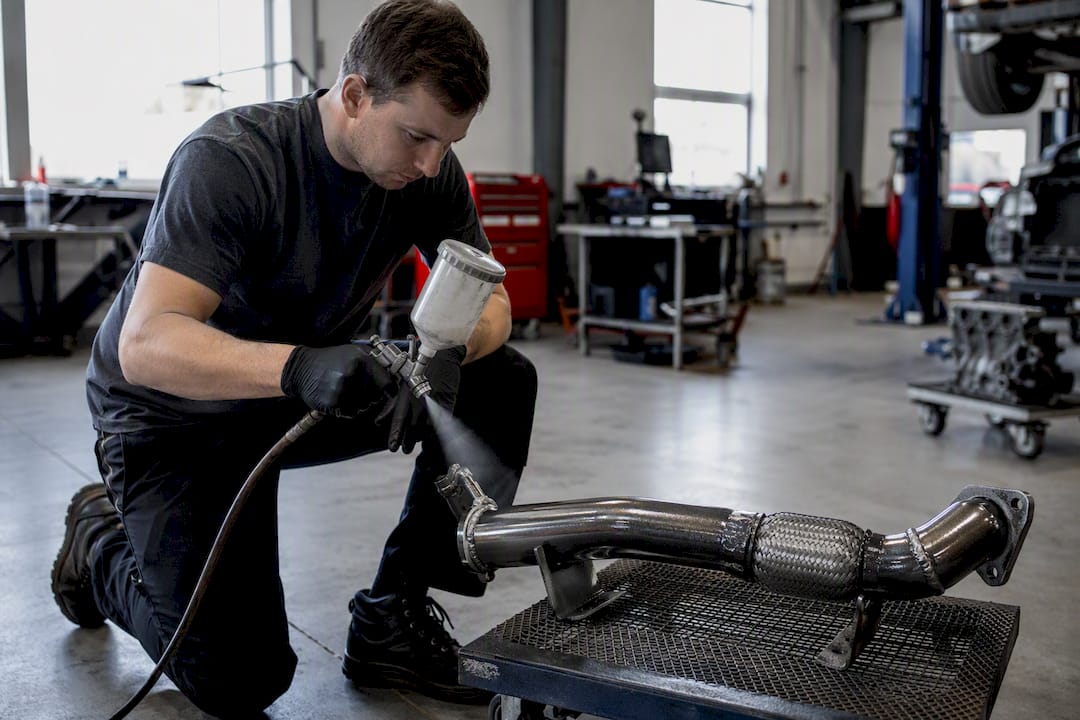
Ceramic coating takes a different approach entirely. Instead of wrapping the pipe, it bonds an insulating ceramic layer directly to the metal surface. Done correctly, ceramic coatings help keep exhaust heat inside the flow rather than radiating it outward, which lowers external surface temperature and helps the turbo retain more usable exhaust energy. The tradeoff is prep work. Coatings need professional application and a proper cure cycle, and a rushed job flakes or fails early. Once it’s done right, though, it’s essentially maintenance free and holds up to road grime and debris better than any wrap.
Exhaust wrap is the budget option, and it’s not without merit. Basalt wraps in particular reduce radiant heat effectively and last longer than older fiberglass wraps, with manufacturer testing showing up to a 50% reduction in exhaust-related heat and continuous-use ratings around 1200°F. The catch is moisture. Wrap traps water against the pipe if it isn’t installed and maintained carefully, and trapped moisture accelerates corrosion from the inside out. Expect a shorter service life than a blanket or coating, and expect to inspect it more often.
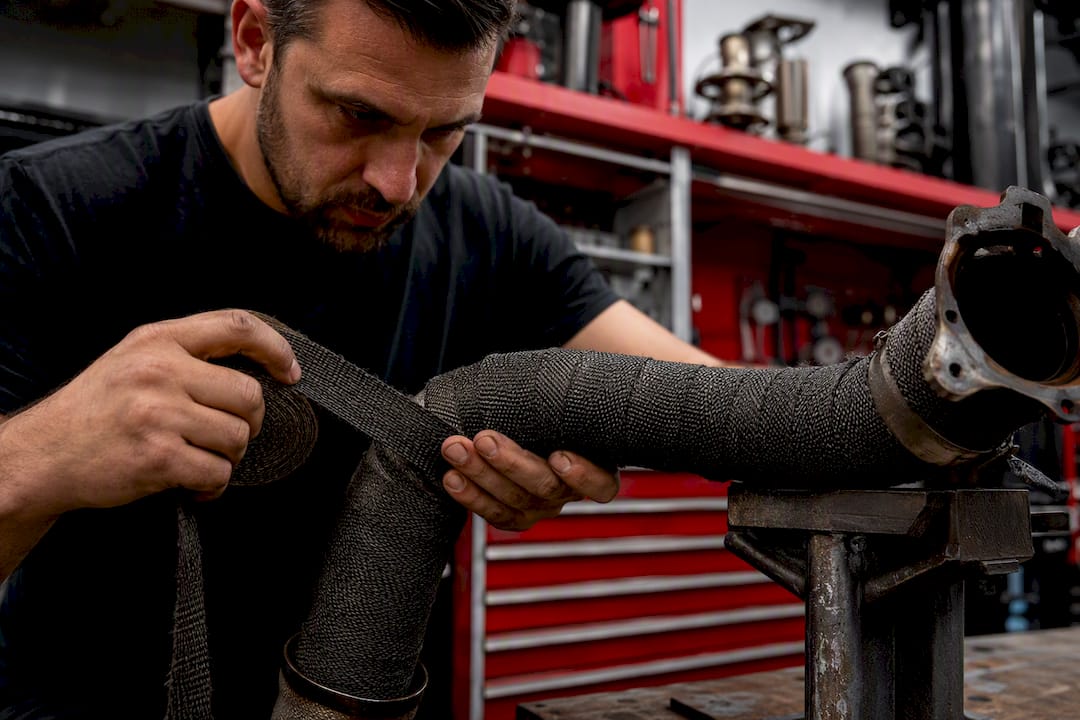
Heat shields and sleeves aren’t downpipe solutions at all. They’re targeted protection for the vulnerable stuff nearby: a heat sleeve on a coolant line, a shield over a wiring loom, reflective tape on a panel that sits too close to the pipe. Matching the product to the actual heat source rather than treating them as interchangeable is the single biggest mistake DIY installers make, according to Exoracing’s breakdown of heat shield versus wrap versus tape.
Pro Tip: Check any product’s continuous versus intermittent temperature rating before buying. A wrap rated for 1200°F continuous might tolerate spikes well past that, but if your downpipe sits near that number under sustained load rather than in short bursts, you need a material rated for continuous exposure, not peak exposure.
How to Pick the Right Heat Management Approach
Match the method to how you actually drive the car, not to what looks impressive on a parts list. Work through these factors in order:
- Define your use case. A daily driver that sees occasional highway pulls has a completely different heat profile than a car doing 20-minute track sessions.
- Estimate your real temperatures. A stock-turbo car making modest power runs cooler than a built engine on a stage 3 tune. Higher boost and leaner tunes mean higher EGTs, which changes the material you need.
- Check clearance and packaging. Tight engine bays, especially on European performance platforms, limit how much blanket bulk you can fit without contacting other components.
- Identify what’s actually at risk nearby. Coolant lines, oil lines, and wiring harnesses within a few inches of the downpipe need direct protection, not just a hope that the main insulation handles it.
- Be honest about maintenance tolerance. If you’re not going to inspect wrap every few months for moisture and fraying, don’t install wrap.
- Factor in emissions and sensor placement. Anything upstream of your O2 sensors needs insulation that doesn’t shift position or trap moisture against sensor wiring.
For a daily street car, a downpipe blanket or ceramic coating covers most needs with minimal upkeep. For a mixed street and track car, the combination approach earns its cost: coating on the pipe, blanket over vulnerable sections, sleeves on anything within a few inches of the heat source. For a dedicated race car, prioritize the highest-rated materials you can fit and inspect them after every session, since race environments push components harder than any street tune will.
Look for specific material callouts when comparing products, not marketing language:
- Silica-based blankets for high-temp radiant protection
- Ceramic fiber cores for sustained high-load applications
- Aerogel-lined products in rare, extreme-heat scenarios where weight and thickness both matter
- Stainless mounting hardware and heat-rated stitching, since standard fasteners loosen and fray faster than the insulation itself
Installing and Maintaining Your Heat Management System
Get the prep work right and the install goes smoothly. Skip it, and you’ll be troubleshooting a mystery problem three months later.
- Repair leaks first. An exhaust leak upstream of your insulation point creates a hot spot that no blanket or coating is designed to handle. Fix it before you insulate around it.
- Reroute vulnerable lines where you can. If a coolant line or wiring loom sits inches from the downpipe, moving it two or three inches away often does more good than any amount of shielding.
- Clean and inspect the mating surface. Rust, oil residue, and old gasket material all interfere with blanket adhesion and coating bond quality.
- Fit blankets with the manufacturer’s recommended fastening hardware, not generic hose clamps, and leave clearance around sensor bosses so you’re not compressing wiring against hot metal.
- For coatings, confirm proper cure time before first startup. A rushed cure is the number one reason coatings flake early.
- For wrap, wrap snugly but avoid overlapping too tightly, which traps moisture, and never wrap a pipe that’s still wet or oily.
- Run a short first heat cycle and recheck everything. Materials shift slightly as they heat and cool for the first time; a five-minute drive followed by a cold inspection catches loose clamps before they become a bigger issue.
Build a simple maintenance cadence after that: check for movement and abrasion every few thousand miles, and inspect wrap specifically for moisture intrusion since that’s the failure mode that sneaks up fastest.
Pro Tip: Take photos of hose and wiring routing before you start. When you’re three hours into an install and can’t remember which clip went where, that fifteen-second photo saves you another hour.
Combining Methods Without Breaking Your Tune
For a heavily loaded turbo setup, running a downpipe blanket over a ceramic-coated pipe is often the strongest combination available. The coating protects the metal and helps the turbo retain exhaust energy, while the blanket stops radiant heat from cooking everything else in the bay. Used together, they address both sides of the heat problem instead of just one.
Ceramic coatings plus selective blankets combine benefits: coatings protect pipe metal and help retain exhaust energy, while blankets prevent radiant heat into the bay, together balancing durability and containment for heavy-use engines.
That combination isn’t free of consequences, though. Any hardware change downstream of the turbo can shift exhaust gas dynamics enough to affect how your O2 sensors read, particularly if insulation changes airflow around the sensor bosses themselves. That’s the point where tuning interactions matter:
- Confirm sensor placement hasn’t changed relative to the insulation, since even small shifts can trigger a check engine light.
- Revalidate your tune after any exhaust hardware change, not just after a downpipe swap. Heat retention changes exhaust gas temperature readings, and a tune calibrated before insulation may run slightly different than expected after.
- Budget for a tuner session, not just a parts installation, if you’re combining a new downpipe with heat management changes. Our guide on turbo exhaust efficiency improvement covers how these hardware changes interact with mapping in more detail.
If you’re working with a calibration shop, resources like TuningBot’s technical guides are a solid reference point for understanding what a tuner will actually be checking during revalidation. And if packaging constraints are driving your product choice, our piece on why exhaust packaging affects your tuner choice walks through that tradeoff directly.
What Fifteen Years Of Exhaust Builds Taught Us About Heat
The biggest mistake we see isn’t a bad product choice. It’s chasing peak dyno numbers while ignoring repeatability. A car that makes great power once on a cool morning and falls apart by lap three of a track day hasn’t actually gained anything real. We routinely steer daily-driven customers toward the blanket-or-coating route specifically because it holds up under repeated cycles, not because it’s the flashiest option on a spec sheet.
The second most common mistake is treating insulation as a fix for a problem that’s actually mechanical. Wrapping a leaking joint, or shielding a sensor that’s failing for unrelated reasons, just delays the real diagnosis. Fix leaks and routing first. Insulate second.
We’ve also noticed that owners underestimate how much packaging constraints matter on European performance platforms specifically. Tight engine bays mean blanket bulk and coating clearance both need real measurement, not a guess based on what worked on someone else’s forum build.
— Info
How Valve Control Exhaust Handles Heat and Fitment Together
Valve Control Exhaust builds valved exhaust systems and downpipes engineered around real thermal loads, not generic fitment. Every component is designed with the clearance and heat exposure of specific platforms in mind, which matters more than most catalog exhaust shops ever account for.

For Audi, BMW, Porsche, Mercedes-AMG, and other performance platforms, that means downpipes and valved systems built to handle sustained heat without the guesswork of retrofitting generic insulation onto a mismatched pipe. Our team also supports fitment and calibration questions directly, so you’re not left guessing whether a hardware change needs a revalidated tune. If you want to see how the components fit together on your platform before you commit to a heat management plan, our exhaust system anatomy guide breaks down component function and compatibility in plain terms. Browse compatible builds and start planning your setup today.
Sources
- Thermal Downpipe Blanket technical overview (BST)
- Ceramic coating exhaust systems (Torque Detail)
- Lava Exhaust Wrap (Heatshield Products)