
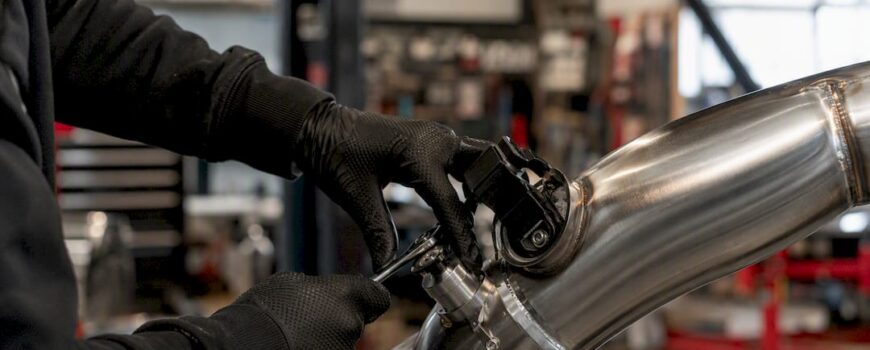
Most complete exhaust systems don’t need a formal break-in, but that answer hides some nuance you should know before you drive off. A full cat-back or axle-back system with mandrel-bent tubing and welded joints is ready to run the moment it’s bolted up. What actually needs curing are specific components: cast-iron manifolds and catalytic converters benefit from a controlled heat cycle, while muffler packing simply wears and changes tone on its own over time, no special procedure required.
Here’s what to do in the first few miles:
- Check for exhaust leaks, rattles, or a check-engine light right after you drive off
- If you installed a cast manifold or aftermarket catalytic converter, follow the manufacturer’s heat-cycle instructions before subjecting it to hard driving
- If nothing was cured or replaced beyond the exhaust itself, just drive normally and expect the tone to shift slightly over the first several hundred miles as packing settles
Key Takeaways
Most exhaust systems don’t require a break-in, but cast manifolds and catalytic converters need a controlled heat cycle while muffler packing simply wears and changes tone naturally.
| Point | Details |
|---|---|
| Full systems need no break-in | Complete cat-back or axle-back systems are ready to drive immediately after a leak check. |
| Manifolds and cats are different | Cast-iron manifolds and catalytic converters benefit from a stepwise heat-cycle to seat gaskets and avoid cracking. |
| Expect changes over 500 to 1,000 miles | Owners commonly report tonal shifts settling in within that mileage window as packing compresses. |
| Watch for real problems, not just tone | Hissing, soot, drone, or a stuck valve actuator signal a repair need, not normal aging. |
| Valved systems skip the guesswork | Valve Control Exhaust lets owners set tone electronically instead of waiting on packing to settle. |
Table of Contents
- Why Exhaust Sound Changes: Packing, Resonators, Valves, and Your Ears
- How Long Exhaust Break-In Takes
- How to Break In a Manifold or Catalytic Converter Safely
- Is That Sound Normal, or Do You Have a Problem?
- Maintenance That Preserves Your Exhaust’s Intended Sound
- Where Valved Systems Change the Break-In Conversation
- What Owners Get Wrong About Exhaust Break-In
- Skip the Wait: Tune Your Exhaust Tone Instead of Waiting on It
- Frequently Asked Questions
- Sources
Why Exhaust Sound Changes: Packing, Resonators, Valves, and Your Ears
The tone you hear on day one is rarely the tone you’ll hear at 1,000 miles, and four separate things are usually responsible.
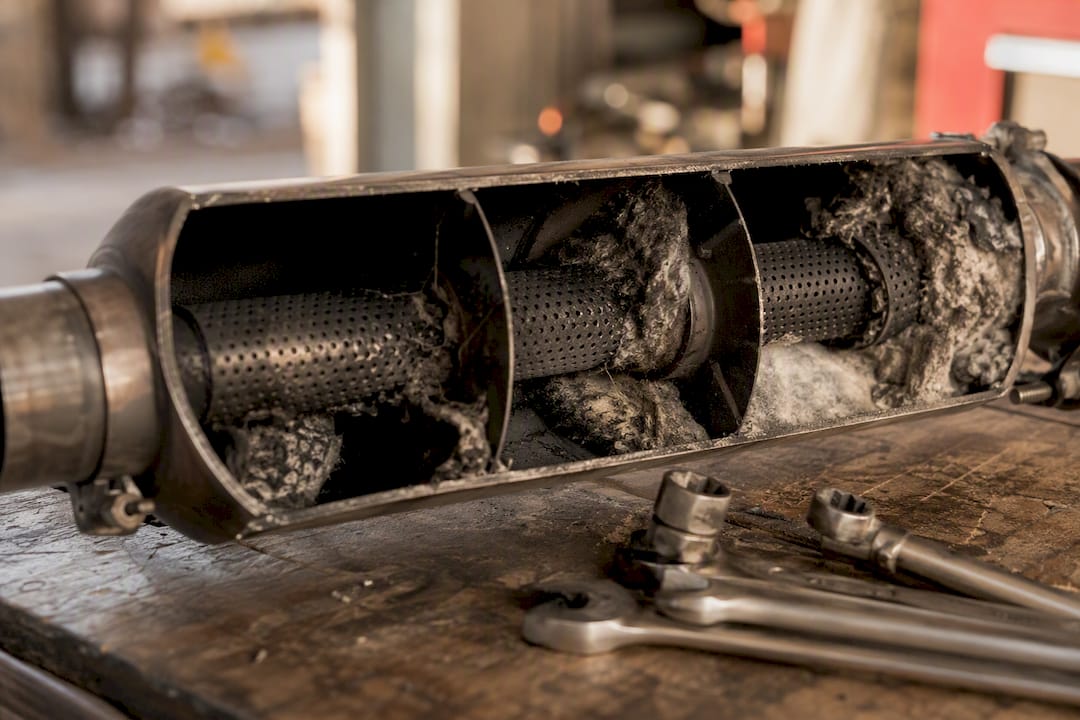
Packing breakdown is the biggest one. Many mufflers and resonators use fiberglass or steel-wool packing to absorb high-frequency noise. That packing compresses and sometimes partially burns out under heat and vibration, which is a known wear pattern on some aftermarket muffler designs. As the packing thins, the exhaust typically gets louder and takes on a rougher, more low-frequency growl instead of the smoother note it had when new. This isn’t a defect. Muffler packing degradation is an expected wear item, and it’s a fundamentally different process from the controlled curing that catalytic converters or manifolds go through.
Resonators change too, for similar reasons. Internal baffles and packing settle into their final position over the first few hundred miles, and that shift alters the chamber’s resonance. Trapped water is a separate issue entirely: if a system lacks a weep hole, or the weep hole gets clogged, moisture pools inside and temporarily muffles the sound until it evaporates or drains.
Valved systems introduce a mechanical variable. Active exhausts change tone by physically opening or closing a valve, so what sounds like “the exhaust settling in” might actually be carbon buildup slowing an actuator, or a wiring issue keeping the valve from cycling correctly.
Then there’s your own hearing. Owners regularly report that a system feels quieter after a couple of weeks, and in a lot of cases the exhaust hasn’t changed at all. Your ears adapt to a new baseline. Park the car for a week, then drive it again. If it sounds loud again, you’ve confirmed acclimation rather than any physical change.
Pro Tip: Record a short video of your exhaust at idle and at 3,000 RPM the day you install it. It’s the easiest way to tell later whether the sound actually changed or you just got used to it.
How Long Exhaust Break-In Takes
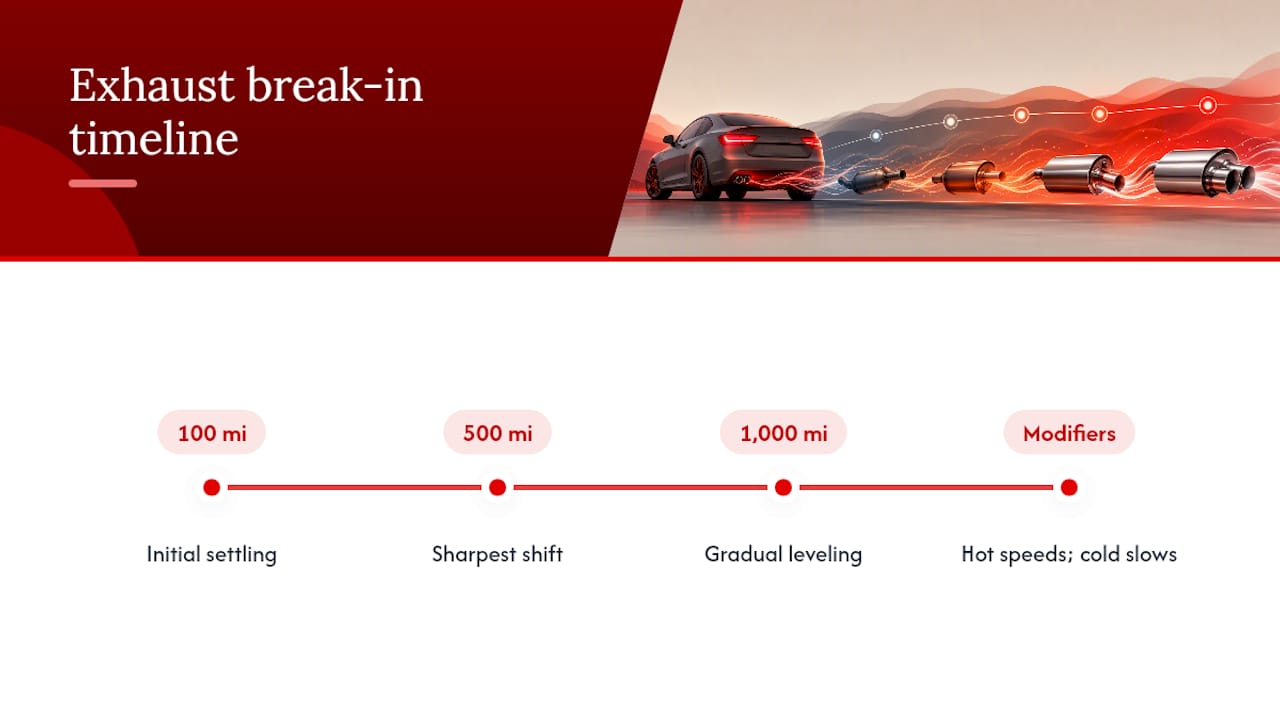
Owner reports converge on a fairly consistent window: noticeable tonal shifts show up somewhere between a few hundred miles and roughly 1,000 miles, with 500 to 1,000 miles cited most often across forum discussions.
That range isn’t universal, though. Packing material, driving style, and climate all push the timeline in different directions. A car driven hard and hot will compress fiberglass packing faster than one used for gentle commuting. Cold, wet climates slow the process because moisture in the system takes longer to burn off between drives.
Break it into two windows. In the first week or so, roughly 100 to 500 miles, expect the sharpest, most noticeable shift as packing settles and any trapped moisture clears. Past 1,000 miles, changes level off into gradual, slower aging that tracks with normal wear rather than a “new part” effect.
How to Break In a Manifold or Catalytic Converter Safely
Not every part gets a pass on break-in. Cast-iron manifolds and catalytic converters are the two components where a controlled procedure genuinely matters, mainly to prevent thermal shock and let gaskets seat correctly rather than to shape the sound.
Before you do anything, run through a short pre-check. Confirm there are no active misfire codes in the P0300 to P030x range, verify your O2 sensors are wired correctly and reading normally, and make sure you used new gaskets with the correct torque sequence on every flange. Skipping this step is how people cook a brand-new converter in the first week.
- Idle and short drives. Let the engine idle for several minutes, then take it on a short, gentle drive. This lets the manifold or converter reach operating temperature gradually instead of shocking cold metal with a hard launch.
- Medium-load driving with a cool-down. After the first short cycle, park and let everything cool completely. Then drive at moderate RPM for 15 to 20 minutes, avoiding hard acceleration or sustained high load.
- Full normal driving. Once you’ve completed a couple of heat-cool cycles without any warning signs, resume normal driving. The cast metal has expanded and contracted enough times to seat the gaskets properly and resist cracking.
Stop immediately if you notice a check-engine light, a strong fuel smell, or unusual ticking or hissing. A rich-running condition under hard load can destroy a fresh catalytic converter within minutes, so this isn’t a step to rush through on your first highway on-ramp.
Pro Tip: Do your heat cycles on a route with stop signs, not a straight highway. The repeated idle-to-drive transitions matter more than total distance covered.
Is That Sound Normal, or Do You Have a Problem?
A change in tone is expected. A leak, rattle, or actuator fault is not, and telling them apart usually takes less than five minutes with the engine running.
- Listen for a hissing or ticking sound near joints and flanges. That’s almost always an exhaust leak, not normal aging.
- Check for soot streaks around clamps, flanges, and welds. Soot means gas is escaping somewhere it shouldn’t.
- Inspect gaskets and flange bolts for looseness, especially in the first month after install when everything is still settling.
- Look at hangers and mounts for cracked rubber or contact points where the pipe touches the chassis. That’s the source of most new rattles, not the muffler itself.
- On valved systems, confirm the valve actually opens and closes when it should. A stuck or sluggish actuator often points to carbon buildup or a wiring problem, not a tone issue.
- Get it looked at if the exhaust gets progressively louder with a droning quality (broken packing), if you suspect trapped water from a blocked weep hole, or if you hear an obvious leak. None of those resolve on their own.
Maintenance That Preserves Your Exhaust’s Intended Sound
Keeping an exhaust sounding the way it did on install day takes a little upkeep, not much.
- Repacking replaces worn fiberglass or steel-wool material inside a muffler or resonator. Watch for increasing raspiness, high-frequency noise, or drone. Those are the signs packing is failing, and repacking is far cheaper than replacing the whole component.
- Weep holes exist to drain condensation. If yours gets clogged with road grime, water pools inside and dampens tone until it works its way out. Aftermarket installs sometimes need someone to drill or verify a weep hole exists in the first place.
- Fastener torque and hangers deserve a check every few thousand miles, especially through a first winter, since temperature swings loosen clamps faster than most owners expect.
- On valved setups, actuator lubrication and periodic valve cleaning matter more than repacking ever will.
Pro Tip: Check flange bolt torque again around the 500 mile mark. Cast and stainless parts both experience some initial settling, and a quick retorque now prevents a leak that shows up later.
Where Valved Systems Change the Break-In Conversation
Everything above assumes a fixed exhaust that changes tone passively, through packing wear, resonance shifts, and gasket seating. A valved exhaust system removes a chunk of that uncertainty by letting you set the tone mechanically instead of waiting on materials to age into it.
Valve Control Exhaust builds systems where the valve position controls sound and backpressure in real time, so a quiet setting for a morning commute and an aggressive setting for a track day come from the same hardware, not from the exhaust breaking in one way or another.
- Real-time valve control means owners adjust tone directly rather than relying on packing settling into a “final” sound
- Maintenance shifts toward actuator checks and periodic valve cleaning rather than repacking
- Readers weighing a performance exhaust checklist or checking legal noise requirements can find both covered in Valve Control Exhaust’s resources
What Owners Get Wrong About Exhaust Break-In
The conventional advice treats “exhaust break-in” as one procedure, and that’s the first mistake. Curing a catalytic converter and letting muffler packing settle are not the same event, and lumping them together is why so many owners either over-baby a fixed muffler that never needed a heat cycle or under-prepare a fresh converter that absolutely does.
The bigger miss, though, is how much weight gets put on mileage numbers. The 500 to 1,000 mile window is a reasonable average, not a countdown timer. Two identical systems on two different cars, one driven hard on back roads and one driven gently to the office, will settle at noticeably different rates. Watch the actual signs, soot, looseness, drone, rather than the odometer.
If there’s one thing worth prioritizing first, it’s the pre-install check before worrying about break-in at all. A misfire code or a bad O2 sensor connection will do more damage in the first 50 miles than any amount of “improper” break-in technique. Get that right, and the rest is mostly patience.
Skip the Wait: Tune Your Exhaust Tone Instead of Waiting on It
If you’re tired of guessing whether a sound change is normal aging or an actual problem, a valved system sidesteps the entire question. Valve Control Exhaust builds systems for Audi, BMW, Porsche, Ferrari, Lamborghini, and Mercedes-AMG platforms that let you set the tone electronically instead of waiting hundreds of miles for packing to settle into whatever sound it lands on.

That control matters most for owners who want one exhaust to be quiet for the commute and aggressive for a weekend drive, without gambling on how a passive system ages. It also matters for anyone who’s dealt with drone from failing packing or a leak that showed up out of nowhere. A valved system’s maintenance is predictable: actuator checks and occasional cleaning, not a repack every year or two.
Start by reviewing how the components fit together in this exhaust system anatomy guide, then look at Valve Control Exhaust’s valved performance systems to see which setup matches your car and get a quote.
Frequently Asked Questions
Does a brand-new exhaust system need a break-in period?
A complete cat-back or axle-back system generally does not. The tubing and welds are ready to perform from the first drive. Specific components like cast manifolds or aftermarket catalytic converters are the exception and benefit from a controlled heat cycle.
Why does my new exhaust sound different after a few hundred miles?
Fiberglass or steel-wool packing inside the muffler or resonator compresses and sometimes partially burns out with heat and vibration, which usually makes the tone slightly louder and lower-pitched than it was on day one.
How many miles does it take for exhaust sound to stabilize?
Most owners report the biggest changes happening between roughly 500 and 1,000 miles, though driving style, climate, and packing material shift that window in either direction.
Can I damage a new catalytic converter by skipping the break-in?
Yes. Running a fresh converter under hard load while the engine has a rich-running condition or a misfire can destroy it quickly, which is why the pre-install checks matter as much as the heat cycle itself.
Is a louder exhaust after a few months always a sign of a problem?
Not always. Gradual loudness from packing wear is normal aging. A sudden increase, hissing, or a droning note usually means a leak, failing packing, or a valve actuator issue that needs attention.
Sources
- Exhaust break in? – FT86CLUB
- Exhaust break-in – BobIsTheOilGuy
- Proper Break-In Procedure for a New Aftermarket Catalytic Converter – The Exhaust Warehouse