
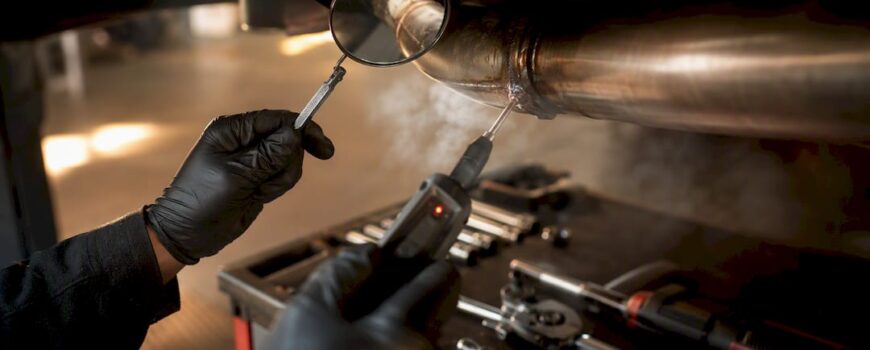
A loud tick that fades as the engine warms up, an exhaust smell drifting into the cabin, or a sudden dip in acceleration are the three clearest exhaust leak symptoms you’ll notice from the driver’s seat. If you smell fumes inside the car or anyone feels dizzy or nauseated, pull over, open the windows, and get the vehicle inspected before driving further. The rest of this guide breaks down what each symptom means and how to check it safely.
TL;DR:
- Exhaust leaks near the manifold cause rhythmic ticking that fades as the engine warms, while leaks further back often produce hissing sounds under acceleration.
- Smelling exhaust fumes inside the cabin, especially with a sulfur smell, indicates gases entering through the firewall or floor seams, posing a health risk.
- Visible soot, rust holes, or broken hangers around joints are reliable signs of leaks, with visual inspection often confirming the location without tools.
- Using soapy water on cooled, parked exhaust components can safely identify leak spots through bubbling, avoiding burns or damage.
- Relying solely on patches or clamps is temporary; long-term fixes like replacing worn parts prevent ongoing rust, leaks, and emission system interference.
Table of Contents
- Exhaust Leak Symptoms You Can Hear, Smell, and Feel
- Where the Leak Usually Lives
- How to Check for a Leak Without Guessing
- Why Exhaust Fumes Inside the Car Are a Real Emergency
- What Exhaust Leak Repairs Actually Cost
- Simple Habits That Keep Leaks From Starting
- Valved and Performance Exhausts Come With Their Own Rules
- Considering an Upgrade Instead of Another Patch
- Sources
Exhaust Leak Symptoms You Can Hear, Smell, and Feel
Your senses catch a leak long before a mechanic does. Sound is usually first. A rhythmic tick or click at cold start that quiets down as the engine warms points toward the manifold or gasket area, since metal expands and momentarily seals small gaps once it heats up. A sharper hiss or popping sound under acceleration usually means the leak sits further back, at a pipe joint under real exhaust pressure. A low drone or rumble that gets louder with speed is a different animal entirely, often tracing back to the muffler or a rusted section of tailpipe.
Smell tells its own story. Exhaust odor inside the cabin, especially with the windows up, means gases are finding a path in through the firewall or a floor seam. A rotten-egg or sulfur smell is more specific. It usually signals a struggling catalytic converter rather than a simple pipe leak.
You’ll also feel it. Watch for these physical cues:
- Vibration through the gas pedal, steering wheel, or seat that wasn’t there before
- A rough or uneven idle, sometimes paired with a misfire
- Noticeably slower acceleration or a flat spot when you press the gas
- A Check Engine Light, often paired with codes like P0171, P0174, or P0420
Those codes matter. P0171 and P0174 mean the engine computer is reading a lean fuel mixture, a classic sign of unmetered air sneaking in through an upstream leak. P0420 points to catalytic converter efficiency problems, which can stem from age, damage, or a leak that’s letting the converter run too cool to work properly.
Where the Leak Usually Lives
Matching your symptom to a location saves you from crawling under the whole car. Each spot in the exhaust system tends to fail in a recognizable way, and the acoustic signature changes depending on where the break is.
- Manifold or header gasket: Rhythmic ticking, loudest at cold start, with a higher chance of fumes reaching the cabin since it sits close to the firewall.
- Flex pipe or mid-pipe: Hissing or popping under load, often with visible soot or gray streaks around the joint.
- Catalytic converter area: A rattle (loose internal components), a sulfur smell, and the P0420 code mentioned above.
- Muffler or tailpipe: Mostly a loud, unfiltered rumble or drone, with less risk of cabin fumes since it’s far from the passenger compartment.
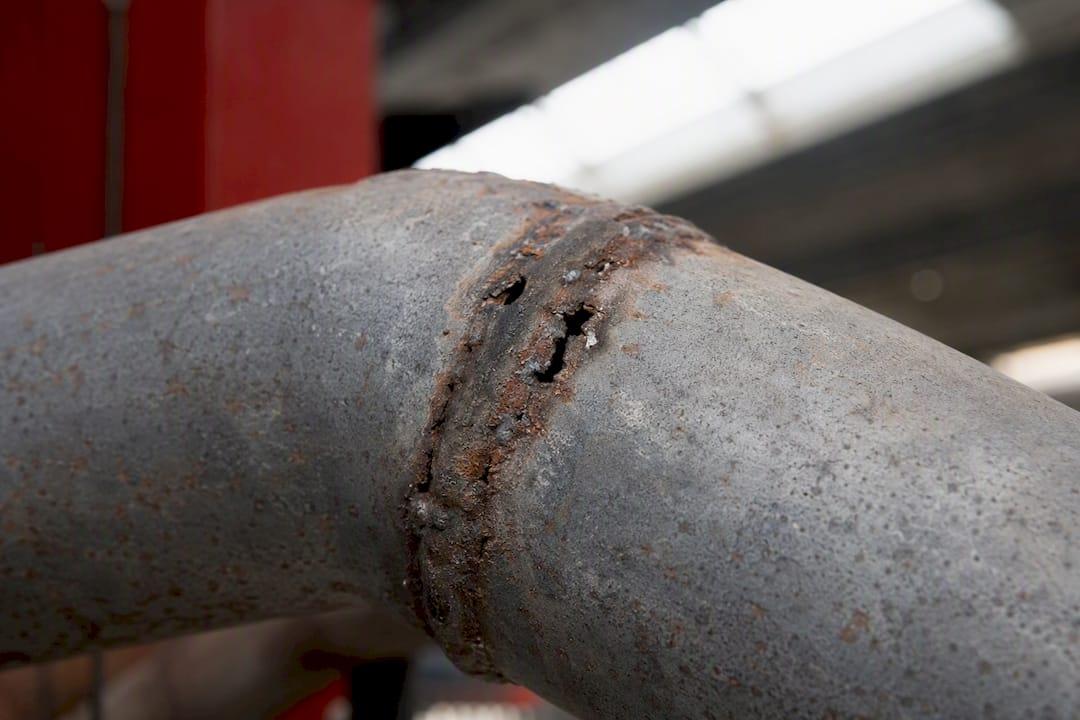
Black soot or gray staining around any flange is one of the most reliable visual markers you’ll find, since escaping exhaust carries carbon particulate that marks the metal it touches. If you see rust holes, cracked welds, or a hanger that’s snapped and letting the pipe sag, you’ve found your leak without needing a single tool.
How to Check for a Leak Without Guessing
You don’t need a lift or a scan tool subscription to narrow this down. Start simple and work up.
- Listen at cold start. Let the engine idle from cold and note whether the tick fades as it warms. A fading tick is a strong signal of a manifold or gasket leak.
- Run the soapy-water test. With the engine idling (never revving) and completely cool to the touch first, spray a mix of dish soap and water along suspected joints. Bubbles forming means exhaust is escaping right there. This is a low-risk way to visually confirm a leak without crawling underneath a hot exhaust system.
- Try the hose or stethoscope trick. Hold one end of a length of rubber hose near your ear and move the other end along the exhaust path, without ever touching hot metal, to pinpoint hissing.
- Pull codes with an OBD2 scanner. Look for P0171, P0174, or P0420, and check short and long-term fuel trims. Trims running consistently positive on one bank often point to an upstream leak feeding extra air into that side of the engine.
Pro Tip: Do all of this with the vehicle parked on level ground, the parking brake set, and the exhaust system given at least 30 minutes to cool before you touch anything near it.
If you smell fumes in the cabin, see glowing metal, or the noise gets dramatically worse in a single drive, stop the DIY checks and get it to a shop.
Why Exhaust Fumes Inside the Car Are a Real Emergency
Carbon monoxide has no smell, no color, and no warning of its own, which is exactly why an exhaust leak near the cabin floor or firewall is more dangerous than a noisy one further back. Headache, dizziness, nausea, and confusion are the classic early symptoms of exposure, and they can hit a driver before they realize anything is wrong.
If you or a passenger notices any of those symptoms, or you smell exhaust with the windows up, don’t wait to see if it passes. Roll the windows down, get to fresh air, and pull over as soon as it’s safe. A brief drive with the windows cracked is a stopgap, not a fix. Anyone feeling genuinely unwell after exposure should get medical attention, and the vehicle shouldn’t go back on the road until it’s inspected.
What Exhaust Leak Repairs Actually Cost
Repair difficulty ranges from a ten-minute fix to a full afternoon in a lift, and the price tag follows the same curve.
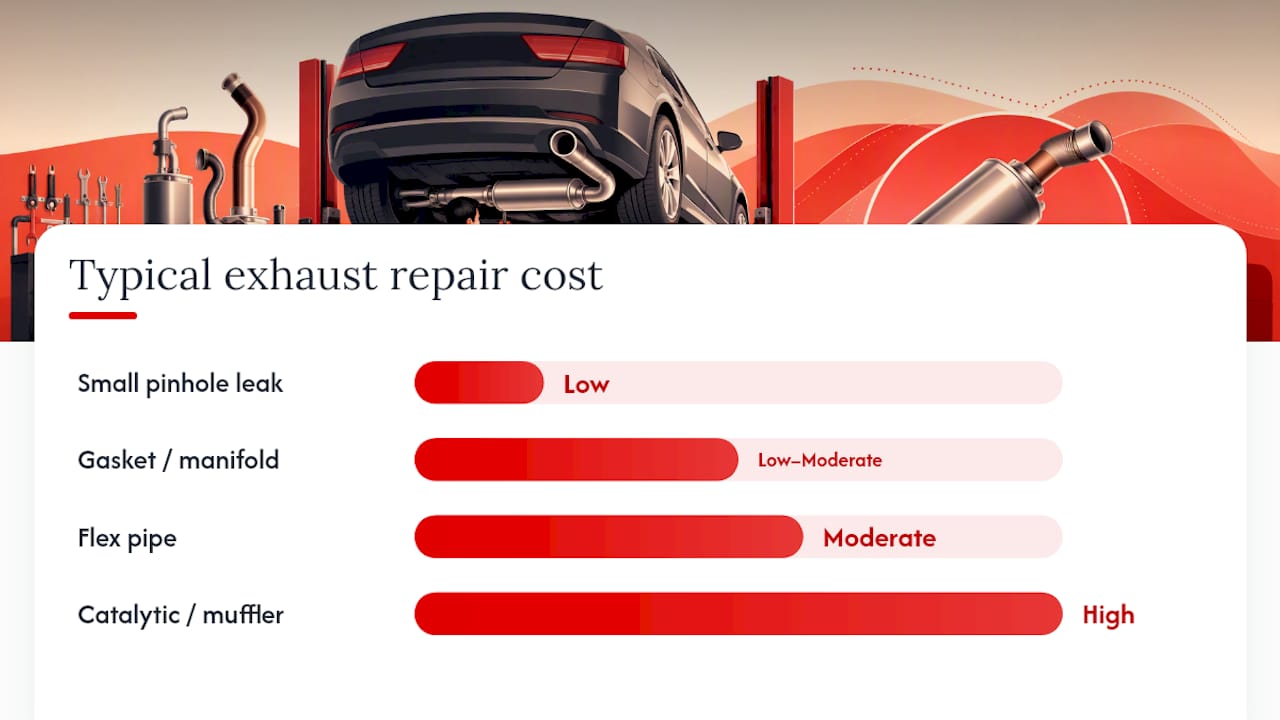
- Small pinhole leaks: A high-temperature sealer or a repair clamp can handle these for relatively little money, though it’s often a temporary patch rather than a permanent solution.
- Gasket or manifold repairs: Parts are cheap, but labor climbs fast if the mounting bolts or studs have rusted and seized, which is common on older vehicles that see winter road salt.
- Catalytic converter or muffler replacement: These carry the highest parts costs in the exhaust system and usually call for a specialist, especially if the converter needs matching to your emissions system.
- Flex pipe replacement: Moderate cost, moderate labor, but often necessary once the pipe has visible cracking rather than just a pinhole.
Location matters as much as the part itself. A leak buried under a catalytic converter shield or wedged near a subframe crossmember takes longer to access, and that labor time adds up regardless of how small the actual hole is.
An exhaust leak isn’t just noise and expense. It also throws off the emissions system, since unmetered air confuses the oxygen sensors that regulate the air fuel mixture, which can push a vehicle out of compliance with state emissions testing and increase real tailpipe pollution regardless of what the sticker says.
Simple Habits That Keep Leaks From Starting
Most exhaust leaks trace back to rust, and rust is largely preventable with a few habits worked into maintenance you’re already doing.
- Check hangers and rubber mounts during an oil change or a wash, since a cracked hanger lets the system sag and stress joints that were never designed to flex.
- Clear off road salt and standing moisture whenever you can, particularly after winter driving, since that’s what accelerates corrosion at flanges and welds.
- Replace a corroded clamp or a torn hanger the moment you spot it rather than waiting for it to fail completely.
- Avoid stacking up short trips back to back, since the engine never gets hot enough to burn off condensation inside the pipes, and that trapped moisture rusts the system from the inside out.
- Schedule a professional inspection as soon as you notice surface rust or flaking on any exhaust component, before it becomes a hole.
Valved and Performance Exhausts Come With Their Own Rules
Valved systems change the equation. Adjustable valves alter airflow and heat cycling in ways a stock exhaust never sees, which means mounting hardware and valve linkages take on stress a factory system wasn’t built for. A valved exhaust that’s slightly off on fitment can develop hanger fatigue faster than most owners expect, and the acoustic cues you’d normally rely on to spot a leak get muddier when a valve is already changing the sound on purpose.
Owners of modified or performance vehicles should build in a shorter inspection cadence and lean on a specialist who understands how these diagnostic quirks differ from a standard exhaust. Fitment precision isn’t optional here. It’s the difference between a system that lasts and one that’s back on the lift within a year.
— Info
Considering an Upgrade Instead of Another Patch
Repeated pinhole patches and clamp fixes buy you time, but they’re a losing game on a system that’s already rusting from the inside. At some point, replacing worn sections with a properly engineered setup costs less over the long run than chasing the next leak every few months.

Valvecontrolexhaust builds valved exhaust systems and components engineered for correct fitment on European and luxury performance vehicles, including Audi, BMW, Porsche, Ferrari, Lamborghini, and Mercedes-AMG. Precise fitment matters more here than on a stock system, since a poorly matched hanger or flange is exactly what starts the leak cycle in the first place. Explore the exhaust system anatomy breakdown to understand what you’re replacing, then check the benefits of a valve control exhaust system if you’re weighing a full upgrade. Professional installation is strongly recommended for any valved system, given how much the fitment affects both sound and long-term reliability.
Sources
- Exhaust Leak Symptoms and How To Fix It – AutoZone
- Car exhaust leak symptoms include hissing or ticking noises, exhaust smell, poor power, and soot. – Motor Advises
- How to Inspect & Repair Exhaust System Leaks Step-by-Step – Fleetio
- Exhaust Leak Symptoms and Sounds: How to Recognize a Possible Leak – Visbella