
Aftermarket exhaust sound testing is the process of measuring and evaluating your vehicle’s exhaust noise and tone to optimize audio performance and driving enjoyment. Done right, it transforms vague dissatisfaction with your exhaust note into a clear, data-driven path toward the sound you actually want. This guide covers the tools, procedures, and customization strategies that serious enthusiasts use to get repeatable, meaningful results. Whether you drive an Audi, BMW, Ferrari, or Lamborghini, the same core principles apply.
What tools do you need for aftermarket exhaust sound testing?
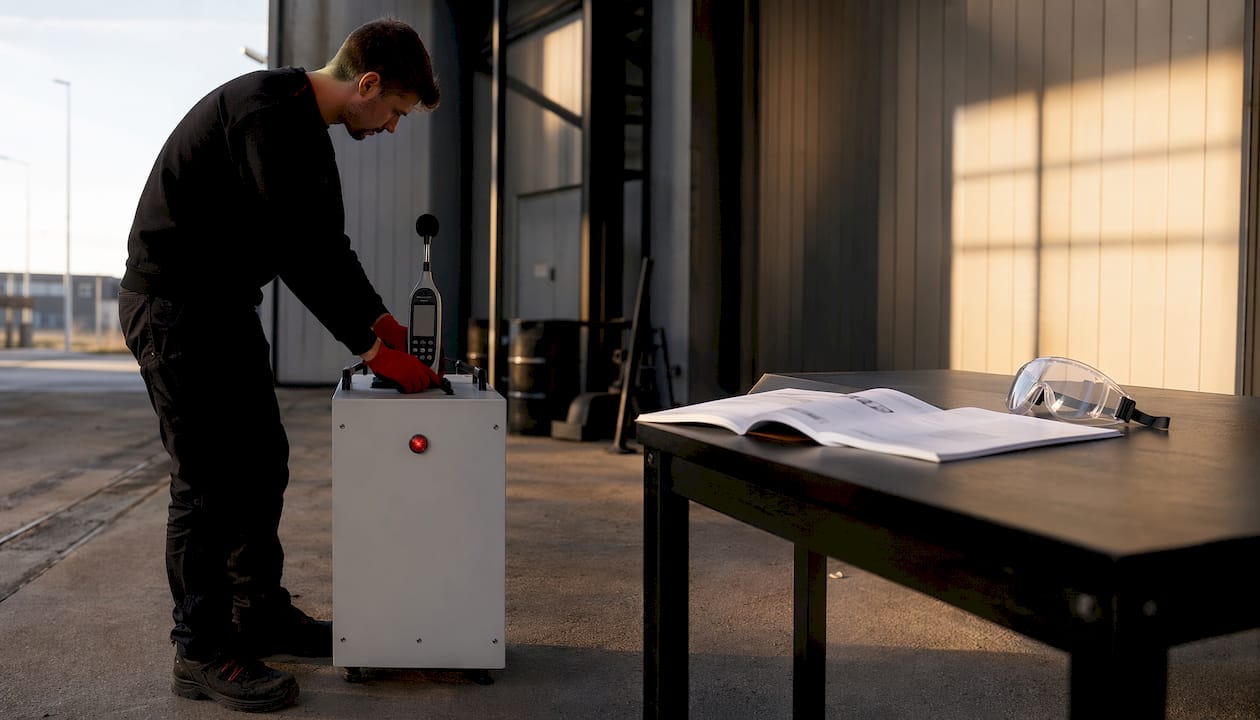
The right equipment separates useful data from guesswork. A calibrated sound pressure level (SPL) meter is the starting point for any exhaust system sound evaluation. Consumer-grade SPL meters measure in decibels (dB) and give you a reliable baseline, but they tell only part of the story.
Advanced audio analyzers and spectrum analysis software go further. Tools like real-time frequency analyzers capture the full frequency response of your exhaust, showing you where energy concentrates across the audible range. This matters because psychoacoustic parameters like Zwicker loudness, sharpness, and roughness reflect human perception of exhaust tone far better than a single dB number. A reading of 88 dB tells you how loud the exhaust is. Zwicker loudness tells you how your ears actually experience it.
Essential equipment checklist
- Calibrated SPL meter: Use an IEC 61672 Class 1 or Class 2 meter for consistent, standards-aligned readings.
- Measurement microphone and audio interface: A flat-response measurement mic paired with an audio interface feeds accurate data into analysis software.
- Tripod or mic stand: Mount the microphone at a fixed height aligned with the exhaust outlet, typically 0.5 meters from the tailpipe at a 45-degree angle.
- Spectrum analysis software: Programs like Room EQ Wizard (REW) or similar audio analysis tools display frequency response in real time.
- Smartphone SPL apps: Apps like Decibel X or NIOSH SLM provide a quick field check, though they lack the accuracy of dedicated hardware.
| Equipment | Primary use | Accuracy level |
|---|---|---|
| IEC 61672 Class 1 SPL meter | Decibel measurement | High |
| Measurement microphone + interface | Frequency spectrum capture | High |
| Smartphone SPL app | Quick field reference | Moderate |
| Real-time analyzer software | Psychoacoustic analysis | High |
Pro Tip: Always calibrate your SPL meter before each session using a 94 dB calibration source. A 1–2 dB drift in your meter produces misleading before-and-after comparisons.
How do you conduct exhaust sound testing for accurate results?
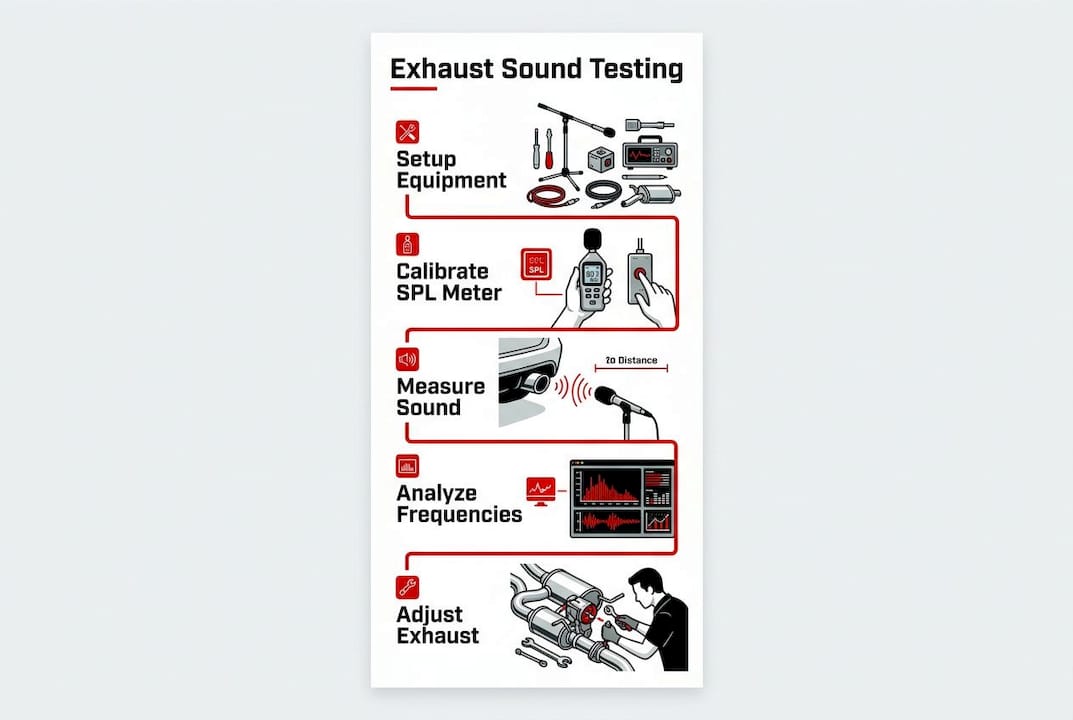
Consistent procedure is the foundation of reliable exhaust noise measurement. Systematic testing under multiple operating conditions, combined with subjective driver feedback, captures both technical quality and real-world enjoyment. Follow these steps every time.
-
Warm the engine to operating temperature. Cold starts produce higher readings. A chambered muffler on a 5.3L V8 truck, for example, registered 92 dB cold and settled to 84 dB at idle once warm. That 8 dB gap shows why engine state consistency is non-negotiable.
-
Record ambient noise. Measure background noise before starting the vehicle. Ambient levels above 65 dB contaminate your readings. Choose a quiet location away from traffic, wind, and reflective surfaces.
-
Set microphone position and lock it. Place the mic at the SAE J1169 standard position: 0.5 meters from the tailpipe exit, at a 45-degree angle to the exhaust flow axis. Mark the spot with tape so every run uses the same placement.
-
Test at defined throttle states. Run measurements at idle, steady-state cruising (2,500–3,500 RPM), and wide-open throttle (WOT). Each state reveals different acoustic characteristics. Drone typically appears at steady-state RPM ranges, not at WOT.
-
Capture frequency spectrum data. Record at least 30 seconds per test condition. Export the frequency response curve alongside the peak dB reading.
-
Run a minimum of three passes per condition. Average the results. A single pass can be skewed by a passing vehicle, wind gust, or throttle variation.
-
Log psychoacoustic parameters. If your software supports it, record Zwicker loudness and roughness values. These numbers explain why two exhausts at the same dB level can feel completely different to drive.
Pro Tip: Test at the same time of day across sessions. Air temperature and humidity affect sound propagation. Morning sessions in similar weather conditions produce the most comparable data sets.
What are common mistakes in aftermarket muffler sound tests?
The biggest mistake in vehicle exhaust sound analysis is treating a single dB reading as the full picture. SPL measurements alone are insufficient. Frequency content and psychoacoustic parameters determine whether an exhaust sounds great or grating, regardless of its volume.
-
Skipping environmental controls. Variables like ambient temperature and throttle position affect measured sound significantly. Two tests run on different days without logging conditions produce data you cannot compare.
-
Relying on subjective impressions alone. The “butt-dyno” method feels convincing but controlled dyno testing is the only way to isolate the true effect of an exhaust change. Your perception shifts based on expectation, road noise, and fatigue.
-
Ignoring drone frequencies. Cabin drone and overall exhaust loudness are separate problems. Frequency spectrum analysis identifies drone-causing frequencies, which typically cluster around 300–400 Hz. Reducing overall volume does not fix drone if those specific frequencies remain.
-
Moving the microphone between runs. Even a 5 cm shift in mic position changes the reading. Use a fixed mount and mark the exact placement.
-
Comparing exhausts across different engine types. Exhaust sound depends heavily on engine configuration. A setup that sounds deep and authoritative on a V8 may sound thin on an inline-4. Always evaluate sound samples recorded on your specific engine layout.
-
Testing only at idle. Idle tone rarely predicts how an exhaust sounds under load. WOT and steady-state cruising reveal the character that matters most during actual driving.
How do you customize exhaust sound based on testing outcomes?
Test data becomes valuable only when you act on it. The goal is to use what you measured to make targeted changes, then retest to confirm the result.
Targeting drone with resonators. A quality resonator addresses specific frequency bands without killing overall volume. A high-quality resonator can reduce peak interior noise by up to 12 dB during highway cruising, effectively eliminating cabin drone between 2,800 and 3,500 RPM. That is a surgical fix, not a compromise.
Adjusting muffler design for tone. Chambered mufflers produce a more aggressive, lower-frequency note. Straight-through or perforated-core designs favor higher-frequency rasp and volume. Your frequency spectrum data tells you which direction to move.
Pipe diameter and its effect on tone. Larger diameter piping shifts the exhaust note toward lower frequencies and increases volume. Smaller diameter piping raises pitch and can improve low-end torque. Match pipe sizing to your engine’s displacement and target sound profile.
Balancing sound with performance. Performance exhausts deliver real driving benefits through improved throttle response and faster turbo spool, not just peak horsepower numbers. When you test for turbo exhaust efficiency, you see how reduced backpressure changes both sound and performance simultaneously.
Using valve control systems for adjustable profiles. Valve control exhaust systems let you switch between a quiet mode for daily driving and an open, full-volume mode for track days or spirited runs. Valvecontrolexhaust builds systems for Audi, BMW, Ferrari, and Lamborghini that give you real-time control over sound character without swapping components. You test both modes separately, confirm the results, and dial in the exact profile you want for each driving condition.
- Test each valve position as a separate configuration.
- Document dB levels and frequency curves for each mode.
- Compare psychoacoustic roughness scores between open and closed valve states.
Pro Tip: Make one change at a time and retest before moving on. Changing the muffler and resonator simultaneously makes it impossible to know which component produced the improvement.
Key Takeaways
Effective aftermarket exhaust sound testing combines calibrated SPL measurement, frequency spectrum analysis, and psychoacoustic evaluation to produce results you can act on.
| Point | Details |
|---|---|
| SPL alone is not enough | Add psychoacoustic metrics like Zwicker loudness and roughness for a complete picture. |
| Control your environment | Log ambient temperature, engine state, and mic position before every test run. |
| Drone is a frequency problem | Target 300–400 Hz with a resonator rather than reducing overall volume. |
| Test multiple conditions | Idle, steady-state, and WOT each reveal different acoustic characteristics. |
| Valve control adds flexibility | Adjustable valve systems let you test and set distinct sound profiles for different driving modes. |
Why I think most enthusiasts test exhaust sound backwards
Most enthusiasts listen first and measure second. They install a new muffler, drive it for a week, and then decide whether they like it. By that point, expectation bias has already shaped their opinion. The sound they hear on day seven is not the same sound they heard on day one, because their brain has adjusted.
The fix is simple: measure before you buy. Record a baseline frequency curve of your stock exhaust. Note the drone frequencies, the idle tone, and the WOT character. Then compare any candidate system against those specific numbers, not against a vague memory of how your car used to sound.
The other thing most guides skip is the cabin experience. A system that measures 88 dB outside can produce unbearable 300 Hz drone inside the cabin at 70 mph. I have seen enthusiasts chase louder and louder setups only to end up with a car they cannot hold a conversation in. Frequency spectrum analysis solves this before you spend money. The supercar decibel management approach used on high-end builds applies equally well to any performance vehicle.
The best results come from combining hard data with honest driving impressions. Measure everything, but also drive the car on your actual roads at your actual speeds. If the numbers look right but the sound feels wrong, trust the feeling and dig deeper into the psychoacoustic data.
— Info
What Valvecontrolexhaust offers for sound-focused enthusiasts
Valvecontrolexhaust builds exhaust systems specifically for performance vehicles where sound control matters as much as power output. Their valve-based systems give you a measurable, repeatable way to switch between quiet daily driving and full-volume performance mode.
For enthusiasts who have done the testing and know exactly what they want, Valvecontrolexhaust provides the hardware to get there. Their systems are engineered for Audi, BMW, Ferrari, and Lamborghini, with adjustable valves that let you confirm your target sound profile through testing rather than guessing. The performance exhaust buyer’s guide covers the full range of options with technical detail suited to enthusiasts who take their sound evaluation seriously. You can also read the valve control system benefits breakdown to see how adjustable valve technology changes what is possible in exhaust customization.
FAQ
What is aftermarket exhaust sound testing?
Aftermarket exhaust sound testing is the measurement and evaluation of exhaust noise, tone, and frequency characteristics using calibrated SPL meters and spectrum analysis tools. The goal is to produce repeatable data that guides sound customization decisions.
How do I measure exhaust noise levels accurately?
Place a calibrated SPL meter 0.5 meters from the tailpipe at a 45-degree angle, test at idle, steady-state RPM, and wide-open throttle, and average at least three runs per condition. Log ambient temperature and engine temperature to keep results comparable across sessions.
What causes cabin drone and how do I fix it?
Cabin drone is caused by specific exhaust frequencies, typically in the 300–400 Hz range, resonating inside the vehicle interior. A targeted resonator addresses those frequencies directly without reducing overall exhaust volume.
Does a louder exhaust mean better performance?
Not necessarily. Real performance gains from aftermarket exhausts come from improved throttle response and faster turbo spool due to reduced backpressure, not from increased volume. A well-designed quiet system can outperform a loud one.
How does engine type affect exhaust sound?
Engine firing order and exhaust pulse frequency determine sound character. A system that sounds deep and full on a V8 may sound thin or high-pitched on an inline-4 or V6, so always evaluate exhaust options using sound samples recorded on your specific engine configuration.