
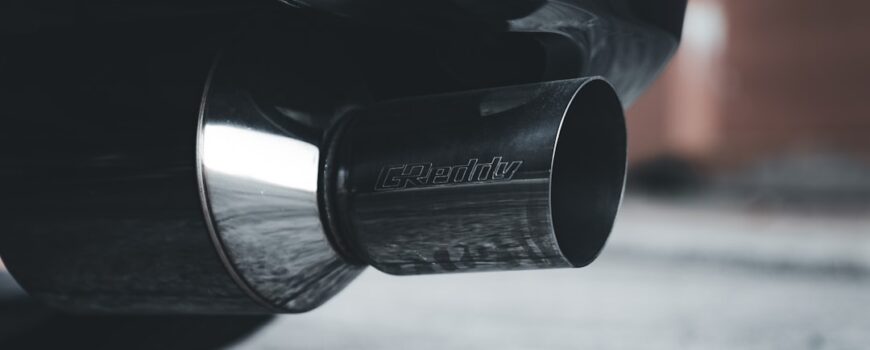
IPE Exhaust systems often lead conversations among performance enthusiasts for their unique blend of aggressive tone and precision engineering. This piece opens with a direct assessment of the technologies and trade-offs across leading brands, so you can quickly separate marketing from measurable benefit. The hook is simple: the exhaust you choose alters sound, weight, power delivery and driving character in ways that matter perceptibly.
IPE Exhaust and FI Exhaust: engineering, sound, and measurable gains
IPE and FI exhausts represent distinct philosophies. IPE Exhaust emphasizes high-fidelity acoustics and resonance control, while FI Exhaust focuses on modularity and affordability without extreme weight savings.
From an analytical viewpoint, look at backpressure charts and transient response instead of brochure horsepower numbers. Moreover, spectrograms and decibel measurements at a fixed rpm provide objective sound profiles that correlate with subjective satisfaction.
Performance metrics and sound characteristics
Compare weight reduction in kilograms, flow rates in CFM, and dyno-proven torque curves at 3,000–6,000 rpm. FI systems may deliver modest mass savings but often fall short in harmonic refinement compared to IPE.
Consequently, if you prioritize a sculpted midband punch and engineered drone mitigation, IPE shows clearer returns on investment.
Armytrix Exhaust: valvetronic control and driver interaction
Armytrix Exhaust is synonymous with valvetronic sophistication. Their electronically actuated valves enable multiple sound maps and rapid toggling between stealth and aggression.
Technically speaking, effective valvetronic systems reduce compromise by offering variable backpressure profiles. However, they introduce complexity: additional actuators, controllers, and potential failure modes.
Practical trade-offs and integration
On the one hand, valvetronic Armytrix setups yield on-the-fly adaptability that suits daily drivers and track users alike. On the other hand, evaluate ECU integration, warranty implications, and latency of valve actuation before committing.
Therefore, insist on documentation for CAN bus behavior and a clear service pathway in case of electrical faults.
Akrapovic Exhaust: materials, R&D, and track-proven gains
Akrapovic Exhaust commands respect for material engineering and motorsport pedigree. The brand deploys titanium and advanced stainless alloys to maximize strength-to-weight ratios.
From a critic’s perspective, Akrapovic systems are grounded in rigorous testing. They typically show consistent lap-time improvements and temperature management advantages over mass-market alternatives.
Cost versus laboratory performance
Nonetheless, the premium pricing reflects research, materials, and exhaust manifold optimization. If objective lap-time reduction and thermal resilience are priorities, Akrapovic is often justifiable.
Conversely, if budget is the dominant constraint, evaluate whether the marginal gains translate into your real-world use case.
Valvetronic Exhaust technology: mechanics and user experience
Valvetronic Exhaust systems—across brands—depend on precise actuator control to balance sound and emissions. They are not equal; response time, sealing quality, and control algorithms diverge significantly.
For a direct assessment, test valve hysteresis, listen for mechanical clatter, and measure the system both cold and at operating temperature. These factors determine perceived quality and longevity.
Ryft Exhaust: aftermarket adaptability and practical tuning
Ryft Exhaust appeals to tuners seeking modular designs and accessible pricing. Their systems often prioritize fitment flexibility and straightforward ECU compatibility.
From an analytical view, Ryft provides a pragmatic bridge between entry-level and high-end performance systems. It can be an effective upgrade when paired with professional tuning and proper flow matching.
Where Ryft fits in the ecosystem
Ryft lacks some of the refinement of Akrapovic or the acoustic engineering of IPE, yet offers strong value for targeted upgrades. In other words, it is a sensible step for owners who prioritize customization over brand cachet.
Moreover, verify available mid-pipes and emissions hardware before purchase to avoid costly retrofits.
How to choose: testing, metrics, and purchase checklist
Start by defining priorities: sound character, lap time, weight, or reliability. Then, request dyno sheets, decibel readings, and thermal data from vendors to make an evidence-based comparison.
Next, perform a short checklist: confirm fitment, verify warranty coverage, require sound samples at idle and wide-open throttle, and ask about serviceability of valvetronic components.
Actionable steps before installation
Arrange a test drive or listen to car-specific recordings. If possible, measure pre-install baseline performance on a dyno to quantify gains. Finally, plan for ECU or fueling adjustments post-install to extract real-world benefit.
Choosing an exhaust is an exercise in trade-offs: acoustic identity, engineering quality, and practical reliability. By prioritizing objective measurements—weight, flow, dyno results—and validating valvetronic behavior and warranty support, you convert subjective appeal into repeatable performance. Take those steps now: compare bench metrics, listen critically, and commit to an installation pathway that includes tuning and verified service options.