What makes a mandrel-bent exhaust different from the rest?
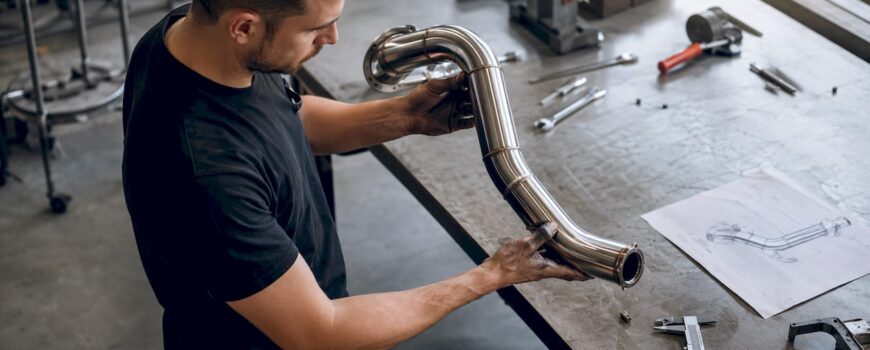
Mandrel bending preserves the full internal diameter of an exhaust pipe through every curve. A solid rod, the mandrel, sits inside the pipe as it bends, preventing the walls from collapsing or wrinkling. The result is a smooth, round cross-section at every angle, from a gentle 45-degree sweep to a tight 90-degree turn.
Traditional press bending, often called crush bending, compresses the pipe from the outside. Press bending reduces pipe volume significantly at each bend. A traditional press bend can reduce pipe flow capacity by up to 25% at the bends due to the restriction created. That restriction adds backpressure, robs throttle response, and creates the raspy, turbulent exhaust note that most enthusiasts are trying to get away from.
Mandrel bending prevents pipe collapse and keeps wall thickness uniform throughout the bend. Consistent walls mean fewer stress points, which translates directly to longer service life under heat cycling and vibration.
- Smooth inner walls reduce turbulence and backpressure
- Uniform wall thickness resists cracking at bend points
- Full diameter maintained through 45-degree, 90-degree, and custom-radius bends
- Deeper, cleaner exhaust tone compared to crush-bent alternatives
10 real-world examples of mandrel-bent exhausts across vehicle types
Mandrel-bent exhaust designs appear across a wide range of vehicles and build styles. Here are ten concrete applications that show how the technology performs in practice.
1. Stainless steel catback for a sports coupe
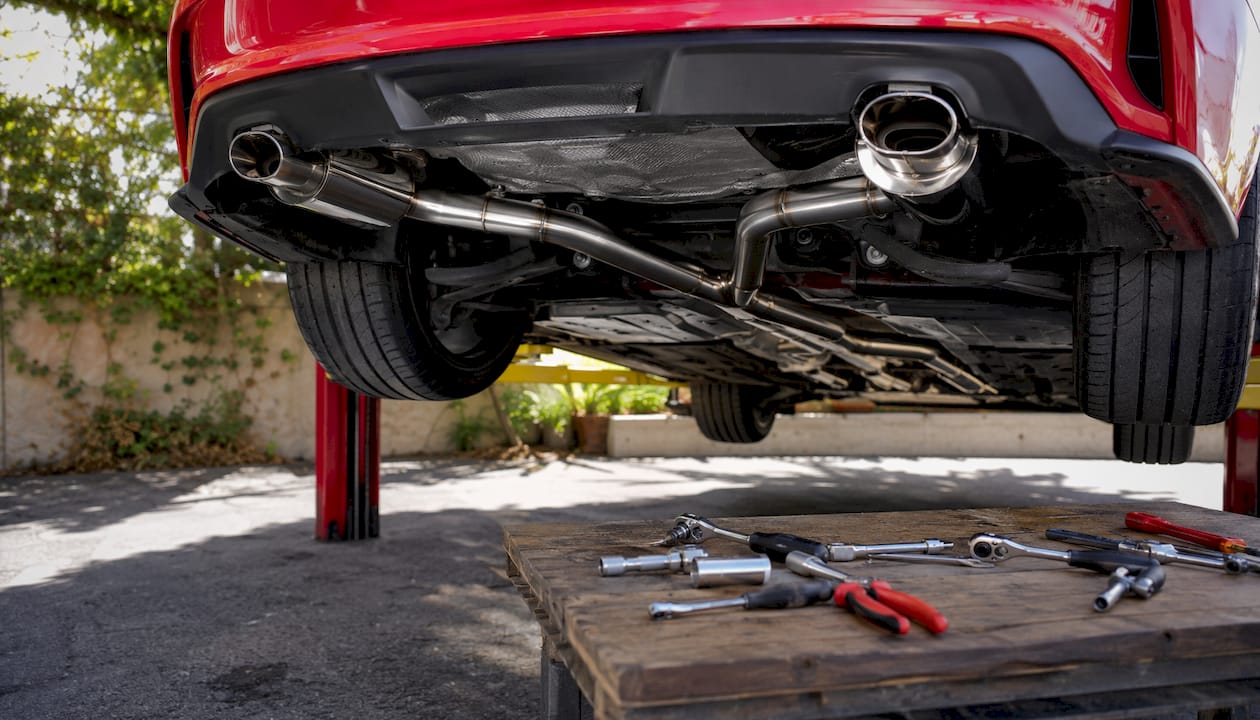
The catback is the most common mandrel-bent exhaust application for street cars. It runs from the catalytic converter back to the tips, replacing the factory piping with larger-diameter, free-flowing tubing. T-304 stainless steel at 3 inches is a standard choice for four-cylinder and V6 sports coupes, offering corrosion resistance and a noticeable gain in mid-range pull.
2. Front-pipe-back system for a turbocharged sedan
Turbocharged engines benefit most from unrestricted exhaust flow because backpressure directly fights boost pressure. A front-pipe-back mandrel system replaces everything from the turbo outlet rearward, keeping the pipe diameter consistent through tight bends around the subframe. Throttle response sharpens noticeably, especially in the mid-range where turbo lag is most felt.
3. Mid-pipe replacement for a V8 muscle car
Mid-pipe systems address the section between the headers and the muffler, often the most compromised stretch on factory builds. On a V8 platform, a mandrel-bent X-pipe or H-pipe mid-section balances exhaust pulses between cylinder banks, producing a fuller tone and smoothing power delivery across the RPM range.
4. Custom single-exit build for a Honda/Acura FWD platform
Front-wheel-drive platforms route exhaust through tight chassis tunnels, making mandrel bending especially useful. Kits like the SpeedFactory Racing 3-inch T-304 stainless catback for Honda and Acura applications use 5-inch slip joints to allow precise fitment adjustments during installation, eliminating the stress points that cause cracking over time.
5. Oval-profile mandrel kit for lowered vehicles
Ground clearance is a real constraint on slammed builds and pro-touring muscle cars. The Pypes SVV43 oval builder’s kit uses mandrel-bent oval tubing with a 3.5-inch by 2.25-inch cross-section that delivers the flow capacity of 3-inch round pipe while tucking tighter against the floorpan. It is one of the cleaner solutions for builds where round tubing simply will not clear the chassis.
6. Performance exhaust for a BMW inline-four
On a platform like the BMW 120i, the exhaust must navigate suspension components and a tight engine bay. A mandrel-bent catback keeps airflow smooth through those sharp chassis bends, producing quicker throttle response and a more refined tone without making the car antisocial on a daily commute. Pairing the system with an ECU remap extracts the full benefit of the improved flow.
7. Diesel truck exhaust system
Mandrel bending is not just a sports car technology. Diesel trucks running towing or hauling duty generate sustained exhaust heat and vibration that crush-bent systems handle poorly. A mandrel-built system for a diesel application suits towing and daily use because the uniform wall thickness resists fatigue cracking far better than compressed bends under load.
8. Motorcycle exhaust headers
Motorcycle headers run in extremely tight quarters around the engine cases and frame rails. Mandrel bending allows fabricators to hit precise bend radii without pinching the pipe, which matters on a platform where every millimeter of clearance counts. Equal-length mandrel-bent headers on a four-cylinder sportbike balance exhaust scavenging across all cylinders, contributing to a smoother power curve.
9. Universal 3-inch builder’s kit for custom fabrication
For enthusiasts building a one-off system, a universal mandrel kit like the Pypes SVV13 provides 45-degree, 90-degree, and 180-degree 304 stainless bends alongside straight sections, flanges, and hangers. The kit format lets a fabricator route the exhaust exactly where the build demands rather than compromising with pre-bent sections that almost fit.
10. Off-road and 4×4 systems
Off-road vehicles face ground strikes, mud packing, and constant flex that stress exhaust systems hard. Mandrel-bent systems for 4×4 applications hold up because the consistent wall thickness leaves no thin spots at bends where cracks typically start. The longevity under off-road conditions makes mandrel construction the standard for quality aftermarket 4×4 exhausts.
How mandrel bending and crush bending actually compare
The mechanical difference is straightforward. Mandrel bending uses an internal support to hold the pipe’s shape as it curves around a die. Crush bending uses external dies alone, compressing the pipe wall inward at the bend.
That compression creates an oval or pinched cross-section. Crush-bent pipes restrict airflow and generate turbulence as exhaust gases hit the narrowed section, producing the hissing, raspy tone that a mandrel system eliminates. Wall thickness also becomes uneven: the outer wall thins under tension while the inner wall bunches, creating stress points that crack under repeated heat cycling.
Mandrel bending costs more because the tooling is expensive and the process demands precision. Every bend must be correct the first time since a mandrel bender does not allow re-bends the way a press bender does. That fabrication discipline is exactly why the finished product performs better and lasts longer.
| Feature | Mandrel bending | Crush bending |
|---|---|---|
| Internal diameter | Consistent throughout | Reduced at bends |
| Wall thickness | Uniform | Uneven, prone to thinning |
| Exhaust flow | Unrestricted | Restricted, turbulent |
| Durability | High, fewer stress points | Lower, cracks at bends |
| Cost | Higher | More affordable |
| Best application | Performance and custom builds | Standard or budget builds |
Common misconceptions about mandrel-bent exhaust systems
The biggest myth is that mandrel bending is only for race cars. It is just as practical for a daily driver or a tow rig. The durability benefits apply anywhere heat cycling and vibration wear on an exhaust, which describes every vehicle on the road.
A second misconception is that any “performance” or “custom” aftermarket exhaust uses mandrel bending. Many shops use crush bending despite marketing language that implies otherwise, because the tooling required for true mandrel bending is expensive. Ask the fabricator directly, or look for a specification that confirms mandrel-bent construction before buying.
Pro Tip: When buying a mandrel-bent kit, look for extended slip joints of around 5 inches. That extra adjustability lets you dial in the fit without forcing the pipe into position, which is the most common cause of stress cracking at joints after installation.
Valvecontrolexhaust builds on mandrel bending with real-time valve control
Mandrel bending solves the flow problem. Valvecontrolexhaust takes the next step by adding adjustable valve technology to that foundation, letting you tune exhaust sound and performance in real time from the driver’s seat.

Valvecontrolexhaust engineers custom exhaust systems for Audi, BMW, Ferrari, Lamborghini, and other high-performance platforms, combining mandrel-bent construction with electronically controlled valves that open or close on demand. Quiet enough for a morning commute, aggressive when you want it. Their performance exhaust buyer’s guide walks through the full range of options and helps you match the right system to your specific vehicle and driving style.
Key Takeaways
Mandrel bending preserves full pipe diameter through every bend, making it the most effective method for performance exhaust construction across vehicle types from sports cars to diesel trucks.
| Point | Details |
|---|---|
| Diameter preservation | Mandrel bending maintains full internal diameter, avoiding the significant volume loss of press bending. |
| Sound quality | Eliminating internal wrinkles removes turbulent hissing, producing a deeper and more refined exhaust note. |
| Durability advantage | Uniform wall thickness at every bend reduces stress points and resists cracking under heat and vibration. |
| Not just for race cars | Daily drivers, tow vehicles, and off-road builds all benefit from mandrel construction’s structural consistency. |
| Valvecontrolexhaust | Combines mandrel-bent construction with adjustable valve technology for real-time sound and performance tuning on luxury performance vehicles. |