What makes an exhaust street legal in the US?
A street legal exhaust is one that complies with the Clean Air Act provisions, preserves factory emission controls like catalytic converters, and stays within federally and locally mandated noise limits. It carries official certification marks and requires no tampering with your bike’s emissions hardware. Two of the most recognized examples in the US market are the Yoshimura Street Series slip-ons and S&S Cycle 50-state legal systems, both of which bolt on without touching emission controls.
Quick reference: what defines a compliant exhaust in the US:
- Preserves catalytic converters and oxygen sensors
- Carries EPA or CARB certification documentation
- Does not exceed the noise output of the original system
- Requires no structural modifications to install
- Displays an official approval mark (EPA, CARB, or E-mark for imported systems)
- Sold with a dB killer or noise restrictor installed for road use
Pro Tip: Before you buy, ask the seller for the specific certification document that matches your bike’s make, model, and year. A certification for a 2022 model does not automatically cover a 2024 version of the same bike.
What criteria must a street legal exhaust meet in the US?
The bar for street legality in the US is set by two overlapping frameworks: federal EPA standards under the Clean Air Act and state-level rules, with California’s CARB requirements being the strictest. Any exhaust that passes CARB scrutiny is generally accepted everywhere else, but the reverse is not always true. GPR, for example, notes that an EPA declaration alone may be rejected by California authorities without an accompanying CARB certificate.
Core criteria for a compliant exhaust system:
- EPA or CARB compliance: The system must meet federal and, where applicable, state emission standards.
- No emission control tampering: Removing or bypassing catalytic converters or oxygen sensors violates federal law.
- Noise limits: The exhaust must not exceed the noise level of the original equipment manufacturer (OEM) system.
- Certification documentation: Buyers need paperwork, not just a stamp, to prove compliance during inspections.
- Plug-and-play installation: No structural modifications required means the bike’s frame and emission hardware stay intact.
- dB killer installed: Removable noise restrictors must remain in place for road use.
Noise measurement for street legal exhausts typically uses a stationary or drive-by test method, with limits set at the federal level and enforced locally. The US Code of Federal Regulations specifies that certification is vehicle-specific, meaning the approval ties to a particular make, model, and production year.
Common misconceptions about street legal exhausts
The biggest mistake riders make is assuming that a quiet exhaust is automatically a legal one. That logic fails the moment an officer checks for a certification stamp and finds none. Here are the misconceptions that cause the most problems.
- A baffle makes it legal. Installing a baffle reduces noise but does not grant legal status. Certification marks and documentation are what matter at a roadside check, not decibel readings alone.
- A trusted brand name guarantees compliance. Street legal status is product-specific and year-specific. A brand may sell both road-legal and race-only versions of the same silencer shape. Always verify the exact model number.
- Race-only exhausts become legal with a baffle fitted. A system labeled “race use only” is not street legal regardless of how quiet it sounds. The label reflects missing emission certifications, not just noise.
- Removing the dB killer is a minor infraction. GPR states explicitly that removing the dB killer on public roads is illegal and voids the product warranty entirely.
- Emission hardware removal only matters in California. Federal law prohibits tampering with emission controls on any registered road vehicle in all 50 states.
Popular examples of street legal exhaust systems in the US market
These are the systems riders and performance vehicle owners actually buy when they want confirmed compliance alongside a genuine sound upgrade.
Yoshimura Street Series slip-ons
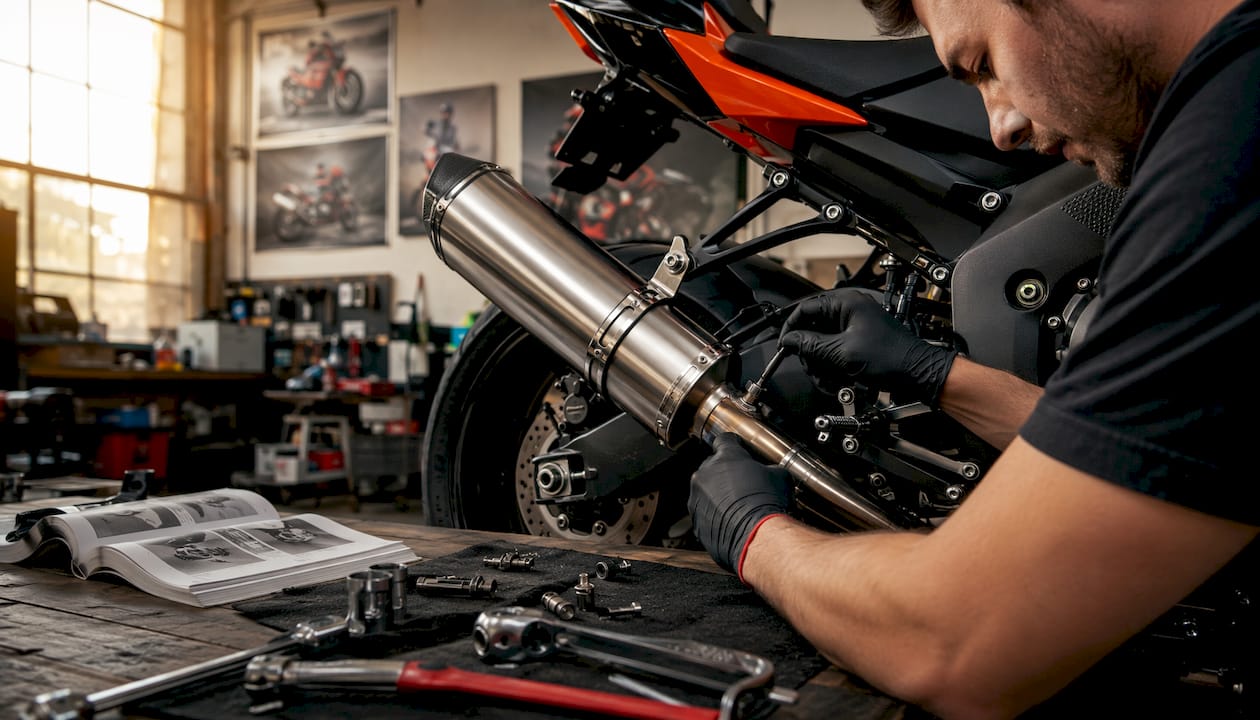
Yoshimura’s Street Series covers a wide range of motorcycle platforms and is built specifically as a bolt-on application that does not require tampering with the vehicle’s emission control system. The lineup includes the tri-oval, ALPHA, and R-55 muffler profiles. Every unit ships ready for road use, preserving factory oxygen sensors and catalytic converters. It’s one of the cleaner examples of a brand that built its reputation on racing but engineered a separate, fully compliant street product line.
S&S Cycle 50-state legal systems
S&S Cycle’s Qualifier 2-1 system for Harley-Davidson Softail models carries explicit 50-state legal certification, includes oxygen sensor ports for stock O2 sensors, and ships with a dB reducer insert. Made in the USA from stainless steel, it fits floorboard, mid, and forward controls on standard chassis models. The fact that it clears California’s rules means it clears every other state’s rules by default.
Akrapovic street legal lines
Akrapovic produces both homologated road systems and race-only systems, and the distinction matters. Their homologated slip-ons ship with certified baffles already installed, making them legal straight from the box. Build quality is premium, and the performance gains are real, but you need to confirm you are buying the homologated version and not the race variant, since both often share the same visual design.
GPR Exhaust slip-ons with EPA compliance
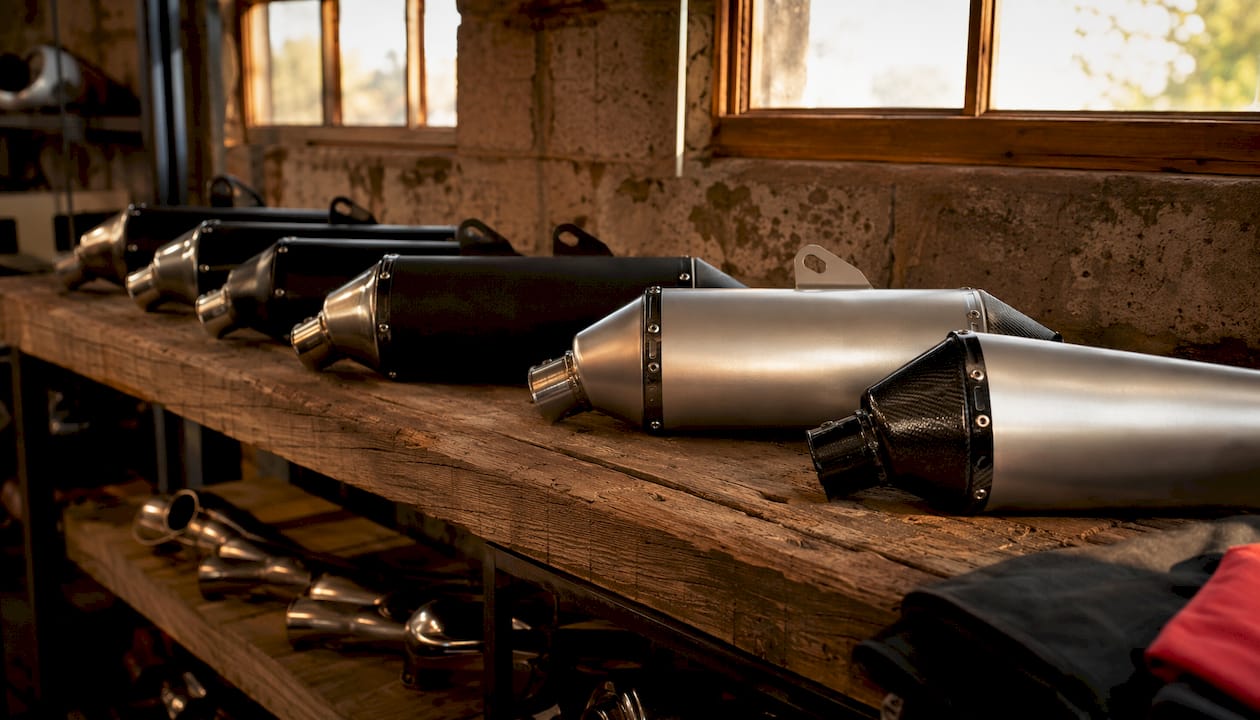
GPR’s Powercone Evo and M3 Black Titanium lines offer EPA-compliant slip-ons across a broad range of motorcycle makes, including Honda, KTM, Husqvarna, and Yamaha. Each unit includes a removable dB killer and a link pipe, and installation requires no structural changes. GPR is direct about the legal boundary: the dB killer stays in for road use, full stop. Their two-year warranty covers the system only when used in its compliant configuration.
How to verify certification and compliance before you buy
Certification is the part most riders skip, and it’s where legal trouble starts. The California ARB issues executive orders for certified exhaust systems, and those orders are vehicle-specific. A system approved for a 2021 Honda CB500F does not automatically cover the 2023 version, even if the part looks identical.
What to look for when verifying compliance:
- EPA or CARB executive order number: This appears on the certification document and ties the approval to a specific vehicle application.
- E-mark stamp on the canister: Relevant for imported European systems sold in the US; the stamp confirms the unit passed noise and emission testing.
- CARB certificate for California riders: An EPA declaration alone is not sufficient in California. You need the CARB certificate as a separate document.
- VIN or model-year match: Certification is vehicle-specific, so confirm the document matches your bike’s exact year and variant.
- dB killer status: Confirm it is present and intact. A missing or modified noise restrictor invalidates road legality regardless of other certifications.
Some advanced systems take compliance a step further. Electronically controlled exhaust valves that interface with the motorcycle’s ECU can automatically adjust sound output based on riding mode, keeping the system within legal parameters at all times. This technology, used in systems like those from Dr. Jekill & Mr. Hyde, communicates via CANBUS signals from the bike’s ECU and intervenes subtly when noise thresholds approach legal limits. Each unit comes with a credit-card-sized certificate stating the system is fully street legal. For riders who want maximum sound flexibility without legal exposure, this approach removes the guesswork entirely.
You can explore how noise limit management works across different performance exhaust categories, including the valve-based systems Valvecontrolexhaust specializes in for luxury performance vehicles.
Maintenance and inspection tips for staying compliant
Street legal status is not permanent. A system that passed inspection last year can fail this year if components have been modified or worn. Regular checks protect both your legal standing and your warranty.
Inspect the dB killer every season. Vibration can loosen the noise restrictor over time. If it rattles or shifts, reseat or replace it before your next ride. A missing restrictor at a roadside check is treated the same as a deliberately removed one.
Check certification documentation annually. Keep a copy of the EPA or CARB certificate in your records, not just the box the exhaust came in. Some states request documentation during registration renewals or emissions inspections.
Watch for exhaust leaks at the header joint. A leak changes the acoustic signature of the system and can push noise output above the legal limit. Leaks also affect backpressure, which can trigger check-engine codes on fuel-injected bikes.
Never modify the canister internals. Drilling out baffles or removing packing material to increase sound output voids certification immediately. The system is approved as manufactured, not as modified.
Verify compliance after any engine tune. Remapping the ECU or changing air intake components can alter exhaust gas temperature and flow, which may affect emission output. If you tune the engine, recheck whether the exhaust still meets the original certification parameters.
For a broader look at how compliant systems compare across performance tiers, Valvecontrolexhaust’s performance exhaust buyer’s guide covers the technical and legal considerations in depth.
Key Takeaways
Street legal exhausts in the US require EPA or CARB certification, preserved emission controls, and a dB killer installed for all road use.
| Point | Details |
|---|---|
| Certification is vehicle-specific | An approval for one model year does not cover another, even on the same platform. |
| dB killer removal is illegal | Removing the noise restrictor on public roads voids the warranty and violates federal law. |
| Baffle alone does not equal legal | Certification marks and documentation are required; a quiet exhaust without stamps fails inspection. |
| CARB beats EPA in California | An EPA declaration alone may be rejected in California without an accompanying CARB certificate. |
| Maintenance preserves compliance | Loose restrictors, exhaust leaks, and ECU tunes can all push a certified system out of legal limits. |