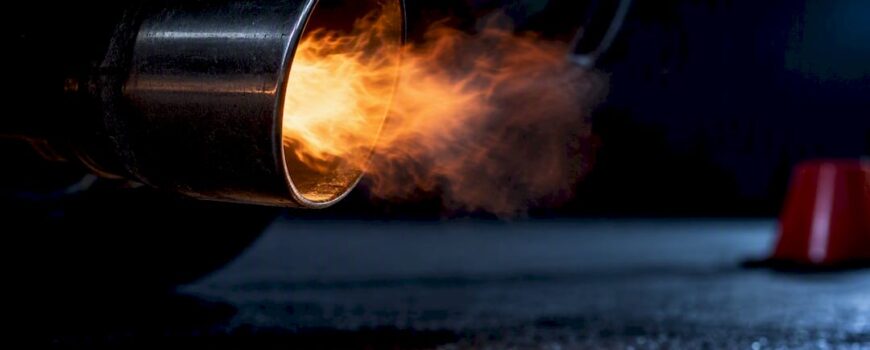
That crackle on deceleration is almost always leftover fuel igniting inside a hot exhaust system after it fails to burn in the cylinder, a process engineers call afterfire. Your car’s ECU triggers it deliberately through overrun fuel cuts and retarded ignition timing, or it happens as a factory-tuned feature on certain performance models. Sometimes, though, it’s the sound of a real problem, not a party trick.
TL;DR:
- Most crackle sounds result from small fuel pulses and retarded ignition timing that cause combustion to ignite in the exhaust, producing pressure waves heard as pops or bangs.
- The intensity depends on how significantly overrun fuel quantity, ignition retardation, and activation windows are pushed, with aggressive maps risking hardware damage.
- Valved exhaust systems and high-performance hardware can amplify or muffle crackle sounds, and hardware choices greatly impact the noise and heat management.
- Diesel crackle effects rely on injection timing adjustments and generally create a lower-frequency burble, with higher risks of soot buildup and component stress.
- Proper tuning involves specific RPM and speed windows, hardware considerations, and safety checks, as unregulated pop signals potential damage to catalysts and manifolds.
Table of Contents
- Exhaust Crackle Explained: The Combustion Mechanics Behind Overrun
- How Tuners Create Crackle: ECU Tables and Parameters That Control Intensity
- How Exhaust Hardware and Valve Control Shape the Sound
- Petrol vs Diesel: Why the Crackle Sounds and Behaves Differently
- Is It a Feature or a Fault? How to Tell Intentional Crackle From a Problem
- The Real Risks: What Aggressive Crackle Tunes Actually Damage
- What to Demand From a Tuner Before They Touch Your Crackle Map
- Tracing Unwanted Popping to Its Root Cause
- Enthusiast Perspective: Why the Sound Matters and When to Chase It
- Sources
- FAQ
Exhaust Crackle Explained: The Combustion Mechanics Behind Overrun
Every crackle starts the same way: you lift off the throttle, and the engine goes from making power to just spinning. This is overrun, and it’s the single condition every pop-and-bang map depends on.
On a stock ECU, lifting off the throttle at speed usually triggers deceleration fuel cut off, better known as DFCO. The engine keeps spinning from momentum, the throttle plate closes, and the computer shuts off fuel injection entirely since there’s no need to burn anything when you’re not asking for power. That’s why a completely stock car coasting down in gear is dead silent on the way down, aside from engine braking.
Crackle happens when a tune interrupts that clean shutdown. Instead of cutting fuel completely, the ECU injects small pulses during overrun, just enough raw fuel to have somewhere to go but not enough to actually drive the car forward. At the same time, the ignition timing table gets pushed dramatically later, sometimes so late that the spark event happens after the exhaust valve has already opened.
That timing shift is the real trick. Under normal combustion, the spark fires before top dead center, the fuel burns inside the cylinder, and the exhaust valve opens on a mostly spent charge. When ignition is retarded far enough, combustion is still happening, or hasn’t even started, as the exhaust valve opens. Partially burned or unburned fuel gets shoved directly into the exhaust manifold, where it meets a wall of residual heat easily north of 800°F.
That heat is enough to finish the job. The fuel mixture ignites downstream of the cylinder, and depending on how much unburnt fuel made it out and how hot the system is, that ignition happens in one of three places:
- In the exhaust manifold or header, close to the cylinder head, producing sharper, higher-pitched cracks
- In or near the catalytic converter, where the ignition point sounds duller and more muffled
- Further down the downpipe or midpipe, generating the deep, echoing bangs most enthusiasts associate with aggressive maps
Each ignition point creates a rapid pressure wave that travels through the exhaust system and out the tailpipe, and that pressure spike, not the fuel burning itself, is what you actually hear as a pop or a bang. Technical breakdowns of pops and bangs maps confirm this is the primary mechanism behind the effect: small overrun fuel injections combined with retarded timing tables that intentionally push combustion out of the cylinder and into the exhaust.
How Tuners Create Crackle: ECU Tables and Parameters That Control Intensity
A tuner building a crackle map isn’t flipping one switch. They’re adjusting a handful of interlocking tables, and how aggressively each one is pushed determines whether you get a subtle burble or something that sounds like a shotgun going off every time you lift.
The core levers a tuner touches are:
- Overrun fuel quantity — how much fuel gets injected during deceleration, usually expressed as a small percentage relative to idle fueling. Mild maps might add just enough to produce an occasional pop; aggressive maps richer this substantially to guarantee a bang on almost every lift.
- Ignition timing retard — how far past top dead center the spark event is pushed. Mild crackle tunes often sit close to normal timing with only a few degrees of adjustment, while aggressive pops-and-bangs maps can retard timing to somewhere around negative 15 to 20 degrees after top dead center, according to tuning-database.co.uk’s technical breakdown, effectively guaranteeing combustion finishes outside the cylinder.
- RPM and vehicle speed windows — the range in which the crackle behavior is even allowed to activate. A well-built map restricts this to a specific band, say 2,500 to 5,000 RPM, so the car doesn’t crackle at idle or crawling through a parking lot.
- Duration and randomization — how long each fuel pulse lasts and whether the ECU varies timing slightly between events. Randomization is what makes some cars sound like a machine gun with irregular rhythm rather than a metronome.
- Rev limiter and cut behavior — some maps layer crackle into the rev limiter itself, so lifting near redline produces a burst of pops as the ECU momentarily cuts and restores fuel.
The gap between a mild crackle map and an aggressive pops-and-bangs map comes down to how far each of those five levers gets pushed, not a fundamentally different mechanism. A daily-driver-friendly map keeps fuel pulses small, timing retard modest, and the activation window narrow, producing a light crackle on hard lifts that most passengers would call pleasant. Push all five levers hard at once, and you get the theatrical, flame-spitting bangs seen at car meets, which come with proportionally more heat dumped into the exhaust every time they fire.
Pro Tip: Ask any tuner you’re considering exactly what RPM and speed window their crackle map uses. If they can’t give you a specific number, they probably copied a generic map rather than building one for your exhaust and turbo setup.
How Exhaust Hardware and Valve Control Shape the Sound
The ECU decides when unburnt fuel gets pushed into the exhaust. What happens to that fuel next depends entirely on the hardware it’s traveling through, and this is where valved exhaust systems earn their keep.
A valve control exhaust setup lets you change backpressure and resonance on demand by opening or closing a valve, usually positioned in the mid or rear section of the system. With the valve closed, exhaust gas is forced through a quieter path with more baffling, which muffles the pressure waves from afterfire into a soft murmur. Open the valve, and that same pressure wave has a straighter, lower-restriction path out, so the same overrun fuel event produces a louder, sharper report. This is why the same ECU map can sound completely different depending on valve position, and it’s the main reason valve control systems appeal to owners who want civilized commuting and theatrical weekend runs from the same car.
Hardware upstream of the valve matters just as much:
- High-flow or straight-through downpipes reduce the restriction between the turbo and the rest of the system, letting more of that unburnt fuel and pressure wave travel further before it dissipates
- Decatted or catless downpipes remove the catalytic converter’s substrate, which otherwise absorbs and dampens a portion of the pressure wave while also catching some of the flame event
- Resonator deletes strip out a chamber specifically designed to cancel certain frequencies, which is often the difference between a mellow crackle and a cabin-rattling bang
None of this is accidental on factory performance cars. Manufacturers building crackle into a Lamborghini or an AMG model engineer the manifold, catalyst, and downpipe materials to survive repeated flash-ignition events without cracking or overheating, something Jalopnik’s breakdown of snap-crackle-pop exhaust systems points out as the real gap between OEM implementations and copycat aftermarket tunes that skip the engineering step entirely.
Petrol vs Diesel: Why the Crackle Sounds and Behaves Differently
Petrol and diesel engines create the pop-and-crackle effect through fundamentally different combustion processes, and that difference shapes both the sound and how far you can safely push a tune.
Petrol engines rely on spark ignition, so afterfire happens because a spark event was deliberately timed to fire late, or not consume the mixture at all before the exhaust valve opens. That gives petrol crackle its characteristic sharp, percussive pop, and under genuinely aggressive maps you can sometimes see visible flame at the tailpipe as unburnt fuel ignites in open air.
Diesel engines don’t use a spark plug in the same way. Combustion happens through compression and auto-ignition, so a diesel crackle tune works by manipulating injection timing rather than an ignition table, pushing fuel delivery later so a portion of it ignites in the exhaust stream instead of the cylinder. The result tends to be a lower-frequency burble rather than a sharp bang, closer to a rumble than a gunshot, as Engineerskill explains.
Diesel owners face constraints petrol tuners don’t:
- Diesel particulate filters can clog faster when extra unburnt fuel and soot pass through during overrun events, sometimes triggering unwanted regeneration cycles
- Excess fuel dumped during overrun raises the risk of fuel diluting engine oil over time, since diesel injection happens at higher pressure and later in the cycle
- Turbo diesel systems often run hotter exhaust gas temperatures under load, which narrows the safety margin for how much extra heat a crackle map can add before something downstream suffers
If your diesel has an active DPF, any tuner suggesting a crackle map should be able to explain exactly how they’re managing soot loading and regeneration behavior. If they can’t, that’s a real warning sign.
Is It a Feature or a Fault? How to Tell Intentional Crackle From a Problem
Not every pop coming from your tailpipe is something to be proud of. Some are a sign your car needs attention, and the difference usually comes down to consistency.
- Check the pattern. Intentional crackle happens reliably in the same conditions: lift off the throttle above a certain RPM, and it fires almost every time, often synced to whether you’re in a sport or dynamic drive mode. Fault-related popping tends to be irregular, showing up randomly at idle, under light acceleration, or at moments that have nothing to do with a deliberate overrun event.
- Watch for warning signs. A check engine light, a rough idle, unusual smoke color, or a smell of raw fuel alongside the popping strongly suggests a misfire or a leak, not a tune doing its job.
- Run an OBD-II scan. Misfire codes, particularly on specific cylinders, point to ignition components, injectors, or a vacuum leak rather than intentional ECU behavior. A clean scan with no stored codes is a good sign the noise is by design.
- Compare cold start to warm running. Genuine faults like exhaust leaks or gasket failures often pop or tick more noticeably on a cold start before things expand and seal properly. A deliberate crackle map generally behaves the same whether the engine’s been running two minutes or twenty.
- Listen for location consistency. A tuned crackle tends to sound like it’s coming from the tailpipe area. A leak at a manifold joint or a cracked flex pipe often sounds louder from underneath the car or closer to the firewall, and it usually doesn’t fluctuate with throttle position the way an intentional pop does.
The Real Risks: What Aggressive Crackle Tunes Actually Damage
Every pop that happens outside the cylinder dumps extra heat and unburned material into parts that weren’t necessarily built to handle it repeatedly, and the damage pattern is fairly predictable once you know where to look.
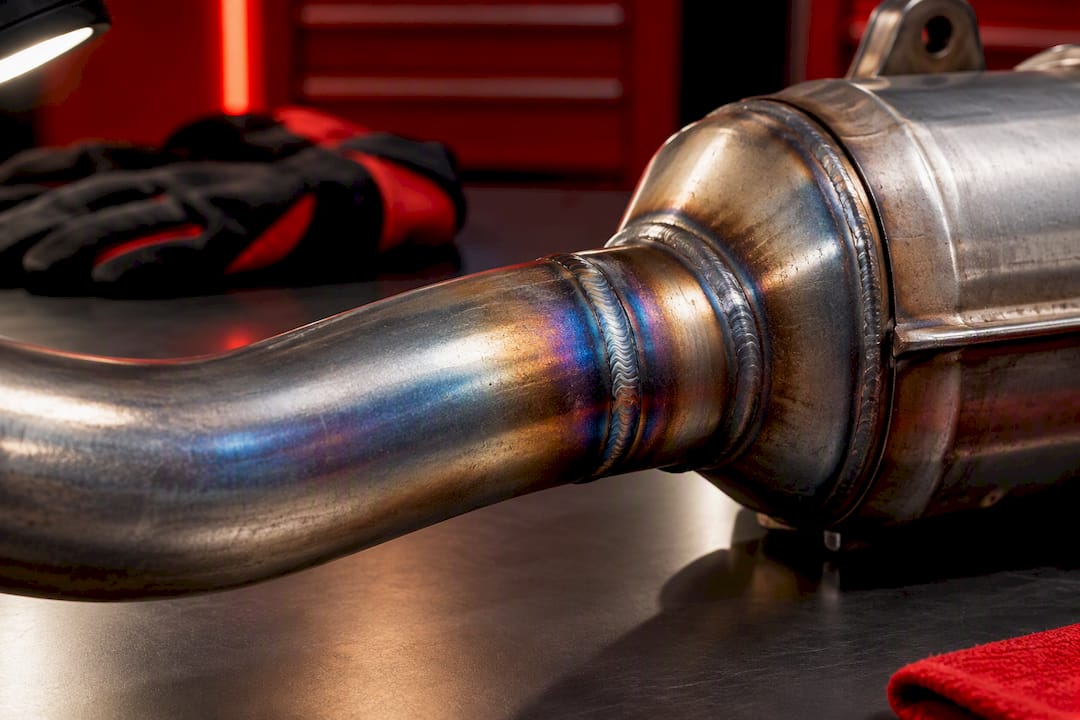
Catalytic converters take the brunt of it. Afterfire igniting near or inside the catalyst substrate can push temperatures well beyond normal operating range, and repeated exposure risks melting or cracking the ceramic honeycomb inside, eventually clogging flow entirely. Leicester Remaps’ technical explainer on pops-and-bangs tuning specifically flags catalyst overheating, along with O2 sensor fouling from richer overrun mixtures, and added stress on turbo bearings from the pressure fluctuations aggressive maps create.
Beyond the cat, common failure points include:
- Exhaust manifold cracking from repeated thermal cycling, especially on cast units not designed for flash-ignition events
- Gasket failure at manifold and downpipe joints as expansion and contraction accelerate wear
- Fuel dilution of engine oil, since overrun fuel pulses that don’t fully combust can work their way past piston rings over time
- Increased fuel consumption, with tuning guides commonly reporting a 3 to 8% penalty on cars running aggressive crackle maps regularly
A crackle map is a controllable spectrum, not an all-or-nothing choice. A conservative setup with tight RPM windows and small fuel pulses adds real character with comparatively low wear, while chasing the loudest possible bang moves you into territory that demands catalyst-safe hardware and regular inspection, a trade-off Tiremeetsroad lays out clearly.
Mitigating the risk isn’t complicated, but it does take discipline: keep the activation window narrow, favor high-temperature hardware where the flame event is likely to occur, consider a catted downpipe rather than going fully decat if you drive the car daily, and get the exhaust and sensors inspected periodically rather than assuming everything’s fine because it still sounds good.
What to Demand From a Tuner Before They Touch Your Crackle Map
A shop that treats crackle tuning seriously will walk you through a process, not just hand you a generic file downloaded from a forum. Here’s what that process should include.
Before any tuning happens, a competent shop checks engine health first: verifying O2 and lambda sensors are reading correctly, confirming the existing exhaust has no leaks or corrosion issues, and checking catalytic converter and DPF condition if applicable. Leicester Remaps outlines these preconditions as standard practice precisely because tuning on top of an already-compromised exhaust multiplies the risk of damage.
Once the baseline checks pass, the actual map deserves scrutiny too:
- A defined RPM and vehicle speed window, not an open-ended trigger that fires under every deceleration
- Warm-engine safeguards that prevent aggressive crackle behavior from activating on a cold start, when clearances and sensor readings are least reliable
- Some form of rollback trigger or safety logic that dials back fueling if exhaust gas temperature or lambda readings drift outside a safe range
- Logging capability so you or the tuner can review AFR and timing data after the fact rather than guessing whether the map is behaving as intended
On the hardware side, ask specifically whether your exhaust, particularly a valved system, is rated for the added thermal load, and whether your current downpipe or resonator setup needs upgrading before the map goes any further than mild.
Pro Tip: If a tuner offers a “one size fits all” pops-and-bangs file with no mention of your specific downpipe, catalyst setup, or RPM window, walk away. The engineering-grade maps that actually protect your hardware are built around your exact configuration, not a generic download.
Tracing Unwanted Popping to Its Root Cause
If the popping you’re hearing doesn’t match the intentional pattern described earlier, a focused set of checks will usually get you to the answer faster than guessing.
- Pull codes with an OBD-II scanner first. Misfire codes tied to specific cylinders point toward ignition or injector problems; generic lean or rich codes during deceleration point toward fueling or sensor issues instead.
- Log air fuel ratio during deceleration if your scanner supports it. An unusually lean reading during overrun often signals a vacuum leak pulling in extra air the ECU didn’t account for.
- Listen and localize the sound. Pops originating right at a manifold joint usually mean a leaking gasket, while a sound clearly coming from further back suggests the issue is downstream, possibly at a loose flex pipe connection.
- Do a visual and physical leak check along manifold bolts, flex sections, and any clamped joints, looking for soot streaking that indicates exhaust gas escaping under pressure.
- Pull and inspect spark plugs if the popping is on the petrol side and codes point to a specific cylinder. Fouled or worn plugs frequently cause the kind of irregular misfire that mimics unwanted crackle.
- Run a compression test as a last step if everything else checks out clean, since a leaking valve or weak cylinder can occasionally produce popping that looks electrical or fuel related at first glance.
Enthusiast Perspective: Why the Sound Matters and When to Chase It
There’s a reason people spend real money chasing this sound: it turns a routine downshift into a moment, and on track days or at car meets, it’s genuinely part of the experience. That context matters. A crackle map that sounds incredible on a closed circuit or during a Saturday morning drive can turn into a liability the second you’re doing it in a residential neighborhood at 11 p.m., and noise complaints and local ordinances don’t care how good your tune sounds to you.
The trade-off is real, and I’d rather be blunt about it than sell you a fantasy: every extra decibel of bang usually costs something, whether that’s fuel economy, catalyst life, or your neighbor’s patience. My honest recommendation is to lean toward engineered solutions, valve control systems that let you have a quiet daily and a loud weekend from the same exhaust, paired with a tuner who can explain exactly what their map does and why, rather than the loudest file you can find on a forum. The sound is worth chasing. It’s just worth chasing carefully.
— Info
Sources
If you want to go deeper before committing to a map or vetting a tuner, a few sources are worth your time. Tuning-database.co.uk’s breakdown of how pops and bangs maps actually work walks through the specific ECU tables involved. Leicester Remaps’ explainer covers safety preconditions and what a responsible shop checks first. For the petrol versus diesel mechanics, engineerskill.blog’s science of overrun piece is a solid technical read, and Jalopnik’s look at snap-crackle-pop exhausts gives useful context on the gap between factory engineering and aftermarket copies.
If you’re shopping for hardware that can actually take the heat, browse Valvecontrolexhaust’s exhaust parts or explore downpipe options built for European and luxury performance platforms, along with valve control accessories for on-demand sound switching between a quiet commute and a loud weekend.
- How Pops & Bangs Maps Actually Work (Technical Breakdown)
- Pops and Bangs Remap Explained: How It Works, Is It Safe?
- What Makes a Car Exhaust Pop and Crackle? The Science of Overrun
- How snap-crackle-pop exhausts actually help (or hurt) a car’s performance
FAQ
Is popping on deceleration lean or rich?
Popping on deceleration is typically caused by a deliberately richer condition during overrun, where the ECU injects small amounts of extra fuel that don’t fully combust in the cylinder. If the popping happens unintentionally and isn’t part of a tune, an unusually lean condition from a vacuum leak can also cause misfire-style popping, so checking logged air fuel ratio during decel helps tell the two apart.
How do I make my exhaust crackle and pop?
Crackle and pop effects come from a tuner adjusting overrun fuel quantity and retarding ignition timing so combustion finishes in the exhaust rather than the cylinder, as explained in technical breakdowns of pops and bangs maps. The intensity also depends on your exhaust hardware, since a valved system, decatted downpipe, or resonator delete will make the same ECU map sound noticeably louder.
Is exhaust popping bad for the engine?
Occasional, well-calibrated popping from a properly built map generally poses low risk when the tune uses tight RPM windows and warm-engine safeguards. Aggressive or poorly built maps raise real risk of catalytic converter overheating, manifold cracking, and O2 sensor fouling, as Leicester Remaps’ technical guide points out, so the answer depends heavily on how the map was built and how your hardware handles the added heat.
Can backfire damage your engine?
Backfire and afterfire happen in the exhaust system, not inside the engine’s cylinders, so they don’t directly damage internal engine components under normal conditions. The real damage risk sits downstream in the catalytic converter, exhaust manifold, and turbo, where repeated flash-ignition events and extra heat can cause cracking, clogging, or sensor failure over time.