Discover the pros and cons of top aftermarket exhaust brands to make an informed choice for enhancing your vehicle’s sound and performance.


Discover the pros and cons of top aftermarket exhaust brands to make an informed choice for enhancing your vehicle’s sound and performance.
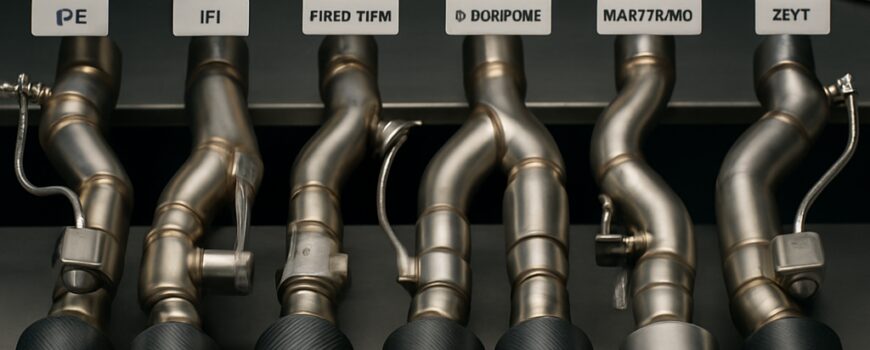
Short, loud, or surgically tuned — the right exhaust changes more than noise. Early on, IPE Exhaust made a name for bold valvetronic tones and immediate presence; this piece dissects IPE alongside FI Exhaust, Armytrix Exhaust, Akrapovic Exhaust, Valvetronic Exhaust, and Ryft Exhaust to identify measurable differences rather than marketing bravado.
Both IPE and FI specialize in valved systems that let drivers switch personalities. IPE leans toward a theatrical, throaty character while FI often balances on-track crispness with street civility.
From a mechanical standpoint, valve actuation, canister packing, and pipe geometry determine decibel spikes and harmonic content, not just the brand badge. Therefore, listen for rasp vs. harmonic richness instead of relying on spec sheets alone.
Practically, IPE Exhaust offers immediate midrange punch but can exacerbate drone at cruising RPMs on some platforms. FI systems typically aim for cleaner transitions and reduced low-end resonance.
As a result, the choice should hinge on how often you drive at steady speeds versus spirited bursts; one produces theater, the other strives for control.
Armytrix Exhaust markets advanced valve electronics and modular installations. Their quick-response servos and app control are attractive for owners wanting frequent mode changes.
However, installation complexity and heat shielding must be scrutinized—electronics in high-temperature zones increase the risk of failure if routing or insulation is substandard.
Armytrix scores highly on features but less consistently on longevity across diverse climates. Conversely, simpler mechanical systems often show fewer field failures.
Therefore, if you prioritize remote control and on-the-fly mode switching, Armytrix is compelling; if you prioritize long-term reliability, prioritize material quality and proven heat management.
Akrapovic Exhaust sits at the engineering end of the spectrum. Its titanium and Inconel offerings deliver measurable weight savings and refined acoustics thanks to precise muffler internals.
That said, premium materials come with premium price tags and often require ECU calibration to extract consistent gains. The cost-per-decibel or cost-per-kg removed becomes a useful metric for buyers.
Akrapovic systems often preserve value better because of brand perception and build fidelity. Dyno-proven gains with minimal drivability trade-offs are common if installed and tuned correctly.
On the flip side, for budget-conscious buyers the incremental performance may not justify the premium compared with alternative brands offering similar sound with heavier materials.
Valvetronic Exhaust emphasizes seamless valve transitions and OEM-like integration, while Ryft focuses on affordable, aggressive-sounding systems. Each targets different buyer priorities.
Valvetronic tends to favor hardware compatibility, reducing installation headaches. Ryft often prioritizes immediate acoustic impact, sometimes at the expense of refinement.
If daily drivability, warranty preservation, and low drone are critical, Valvetronic systems typically align better with those needs. Meanwhile, Ryft suits owners after a bold soundtrack and lower entry cost.
Consequently, match the exhaust to how you use the car: commute, weekend drives, track days, or show presence.
Price is a practical filter but should be paired with checks for emissions compliance, warranty impacts, and available dyno or road tests. Don’t buy purely on video clips or one-off owner testimonials.
Moreover, verify material specs, serviceability of valve actuators, and the availability of replacement parts. These details predict long-term ownership costs more reliably than initial MSRP.
Ask for measured decibel readings at standardized distances, dyno charts that show torque/horsepower across the rev range, and evidence of corrosion resistance for salt-belt climates. Also, confirm fitment to avoid custom fabrication surprises.
Finally, insist on a test drive in the configuration you plan to use most—valves open and closed—so you can assess drone, throttle response, and neighbor tolerance.
Choosing between IPE, FI, Armytrix, Akrapovic, Valvetronic, and Ryft requires clear priorities: sound theatrics, engineering precision, electronics, or budget. Use objective measures—material quality, dyno gains, valve durability, and real-world noise—to make an informed decision, and arrange a live test or professional consultation before committing to purchase.

IPE Exhaust systems set a high bar for dramatic tone, but how do they stack against FI Exhaust, Armytrix Exhaust, Akrapovic Exhaust, Valvetronic Exhaust and Ryft Exhaust when measured by build quality, sound control, and real-world performance? This analysis cuts through marketing claims to give direct, actionable comparisons for buyers who value measurable outcomes and auditory character.
IPE Exhaust delivers an intentionally aggressive mid-to-high frequency note that favors presence over subtlety. The architecture often emphasizes resonant chambers and tuned piping to amplify displacement, so expect a pronounced roar under load.
From a materials standpoint, many IPE systems use high-grade stainless steel and carbon tips. That yields durable construction, though weight savings are modest compared with titanium designs.
FI Exhaust tends to offer a balanced approach: louder than stock but engineered to minimize unwanted drone at cruising speeds. This is achieved through selective baffling and calibrated backpressure, which preserves mid-range torque.
Furthermore, FI systems are often modular, making them easier to tune with aftermarket engine management. As a result, they are a solid option when you want measurable gains without compromising daily drivability.
Armytrix Exhaust is synonymous with electronically controlled valves that deliver dramatic on-demand volume. The hardware and control logic are usually robust, enabling a wide dynamic range from whisper-quiet to track-level intensity.
However, the complexity of valve systems introduces more potential failure points. Buyers should weigh the convenience of app or remote control against long-term reliability and maintenance costs.
Akrapovic Exhaust systems stand out for lightweight construction—often using titanium and advanced composites—and a refined tonal profile. Their sound philosophy emphasizes harmonic richness rather than sheer loudness.
Performance gains are typically well-documented on dyno charts, and the brand’s engineering focus reduces drone while extracting power and weight benefits. Expect premium pricing, but also excellent long-term durability.
Valvetronic Exhaust systems prioritize customizable valve mapping and user control. These systems are designed for enthusiasts who want to fine-tune sound envelopes based on driving scenarios.
That said, the effectiveness of Valvetronic systems depends on integration quality with the car’s ECU and fitment tolerances. When implemented correctly, they offer the best of both worlds: civility and performance on demand.
Ryft Exhaust targets budget-conscious buyers seeking a performance uplift with an aggressive sound. The construction is often robust, focusing on stainless assemblies and economically efficient manufacturing methods.
While Ryft systems can deliver notable audible improvements, they may lack the refinement of higher-tier brands in terms of drone control and finish details. Still, they represent a high-value proposition for many street-driven builds.
When comparing IPE, FI, Armytrix, Akrapovic, Valvetronic and Ryft Exhausts, prioritize three variables: acoustic intent, material technology, and valve complexity. Each brand targets different trade-offs between presence and refinement.
For example, choose Akrapovic for lightweight performance and harmonic tone, Armytrix or Valvetronic for versatile valve control, and IPE or Ryft if a bold, aggressive sound is the primary goal. FI sits in the middle as a pragmatic compromise.
First, clarify priorities: maximum sound, minimal drone, weight savings, or electronic control. Second, confirm fitment and warranty provisions—valved systems need better support. Third, ask for real-world sound clips and measured dyno data to avoid surprises.
Finally, consider installation and long-term serviceability. Electronic valves and titanium assemblies can incur higher service costs; stainless systems are cheaper to repair but heavier.
Deciding among IPE Exhaust, FI Exhaust, Armytrix Exhaust, Akrapovic Exhaust, Valvetronic Exhaust and Ryft Exhaust ultimately comes down to your tolerance for trade-offs between raw character, engineering sophistication, and cost. Use the buying checklist above to align your goals with the system that delivers the sound and performance you actually need, and request sound samples and dyno proof before committing to an install.
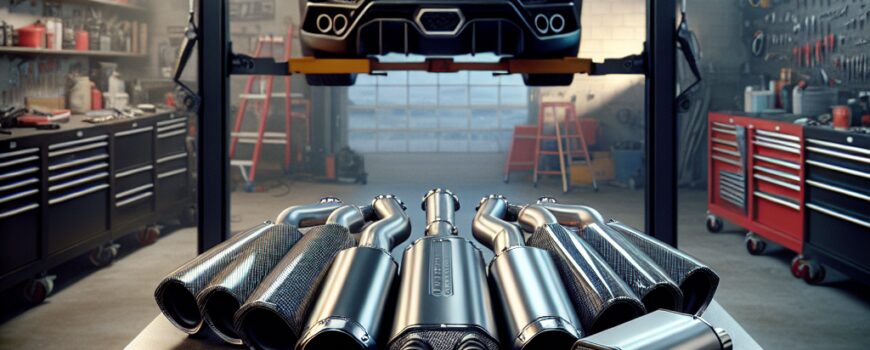
Choosing the right performance exhaust is often emotional, but it should be technical. The IPE Exhaust enters this comparison as a clear example: bold sound claims and valved control promise driver-versatility, but the reality depends on build, fitment, and engineering trade-offs.
IPE systems deliver a theatrical sound and aggressive valvetronic behavior that appeals to enthusiasts. However, raw volume and electronic valve logic sometimes prioritize theatrics over refinement.
Material choices are generally solid—stainless or titanium options exist—but installation complexity and ECU integration vary between models. Consequently, buyers should weigh brand cachet against exhaust weight, backpressure profiles, and warranty terms.
IPE emphasizes a loud, mechanical tone with pronounced turbo flutter on some turbocharged platforms. That is satisfying for street presence, but on-track or daily driving the peak loudness can be intrusive.
FI Exhaust systems aim for a balance: modular sections, adjustable valves, and a focus on flow efficiency. In practice, the modular design simplifies repairs but can introduce fitment tolerances that require precise alignment.
Performance gains are credible when paired with proper tuning; however, thermodynamic benefits depend on header design and internal baffling. Without a calibrated ECU map, perceived gains may be marginal.
Armytrix positions itself around valvetronic sophistication and smartphone control. That electronic layer is convenient, but it adds complexity and more failure points than a purely mechanical valved system.
From an engineering perspective, Armytrix excels at sound staging and loudness control. Still, critics note increased maintenance needs for the actuators and wiring harnesses, especially in harsh climates.
Akrapovic maintains a reputation for rigorous testing, lightweight titanium construction, and racing-derived flow optimization. This engineering pedigree is backed by consistent performance gains and diminished weight penalties.
The caveat is price—Akrapovic is often the premium option. For buyers prioritizing measurable gains in power-to-weight ratio and corrosion resistance, the investment is defensible. For those chasing pure sound theatrics, other brands may provide more volume per dollar.
Valvetronic-branded systems emphasize seamless valve transitions and driver-friendly sound profiles. Their advantage lies in more predictable valve actuation and often simpler ECU integration than aftermarket electronics-heavy solutions.
Operational smoothness makes Valvetronic strong for street-driven performance cars where civility and occasional spirited driving must coexist. However, peak performance tuning may still require aftermarket headers or re-mapping.
Ryft markets value-oriented, aggressive-sounding systems that appeal to budget-conscious enthusiasts. The trade-offs typically appear in materials and long-term corrosion resistance.
Installation is usually straightforward and sound is loud, but dyno-proven gains are inconsistent across platforms. Prospective buyers should demand flow data and real-world reviews specific to their vehicle.
To evaluate any of these options—IPE Exhaust, FI Exhaust, Armytrix Exhaust, Akrapovic Exhaust, Valvetronic Exhaust, or Ryft Exhaust—use consistent criteria. Focus on materials, weight, valve actuation method, flow characteristics, and compatibility with your vehicle’s ECU.
Moreover, consider legal and acoustic compliance: local noise and emissions regulations can negate the benefits of an otherwise great system. Warranty coverage and dealer support also materially affect long-term ownership satisfaction.
Exhausts engineered for maximum volume typically sacrifice backpressure control and may impair low-end torque. Conversely, performance-focused designs aim for measurable horsepower or weight savings but may offer less drama in tone.
Therefore, align your choice with driving priorities: aggressive auditory presence, lap-time gains, or daily usability.
Before purchase, verify fitment for your chassis, request dyno or flow data, confirm valve control method (electronic vs. pneumatic), and check available materials and tip options. Additionally, ensure warranty terms explicitly cover corrosion and actuator failures where applicable.
Finally, plan for a professional installation and post-installation tuning to unlock the advertised performance gains.
Choosing among IPE, FI, Armytrix, Akrapovic, Valvetronic, and Ryft requires separating marketing claims from engineering outcomes. Prioritize documented flow improvements, material durability, and system integration for your vehicle. With that checklist in hand, you can select the exhaust that matches your goals—be it measured track performance, controlled valved dynamics, or maximal street presence—while minimizing regrets and unexpected costs.