
An automotive exhaust system is a coordinated assembly that channels combustion gases away from the engine, neutralizes pollutants, manages noise, and directly influences engine performance and sound. Every car owner who has wondered why their vehicle sounds different after a modification, or why a check engine light appeared, is dealing with exhaust system anatomy explained in real time. The system runs from the cylinder head to the tailpipe, and each component along that path has a specific job. Exhaust gases can reach 1,400°F directly from the cylinder head, which tells you immediately why the materials and design of each part matter so much.
What are the main parts of an exhaust system?
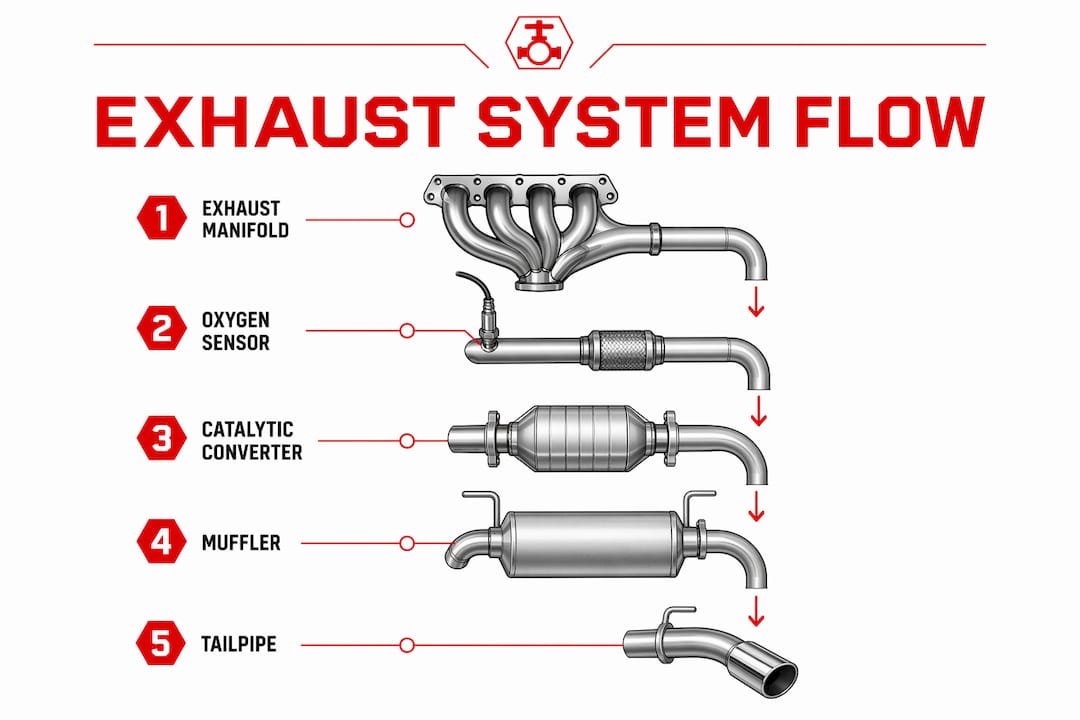
The exhaust system is made up of six core components, each handling a distinct stage of the gas flow process. Knowing what each part does gives you a real advantage when diagnosing problems or planning upgrades.
-
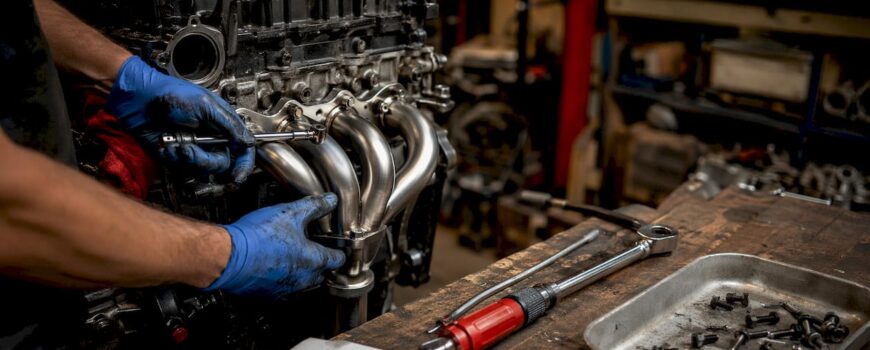
Exhaust manifold: This is the first stop for combustion gases leaving the cylinders. It collects hot exhaust from each cylinder and funnels it into a single pipe. Cast iron is the traditional material, but tubular steel versions are common in performance builds. Exhaust manifolds set the tone for system performance more than most drivers realize, because gas collection efficiency here affects everything downstream.
-
Oxygen sensors (O2 sensors): Mounted before and after the catalytic converter, these sensors read oxygen levels in the exhaust stream. They send real-time data to the engine control unit (ECU), which uses that information to adjust the air-fuel mixture. Oxygen sensors optimize the air-fuel mixture continuously, and a faulty sensor throws that balance off immediately.
-
Catalytic converter: This component chemically converts harmful gases, including carbon monoxide, hydrocarbons, and nitrogen oxides, into less harmful carbon dioxide and water vapor. It uses a ceramic honeycomb coated with precious metals like platinum, palladium, and rhodium to trigger those reactions. The catalytic converter is also one of the most theft-prone parts on any vehicle because of those metals.
-
Resonator: The resonator is a tuning chamber that targets specific sound frequencies before the exhaust reaches the muffler. Think of it as a pre-filter for sound. It does not eliminate noise overall; it cancels out certain tones that would otherwise create an unpleasant drone inside the cabin.
-
Muffler: The muffler handles the bulk of noise reduction using internal chambers and baffles that reflect and cancel sound waves. Standard mufflers prioritize quiet operation. Performance mufflers often use a straight-through design that trades some noise reduction for better exhaust flow.
-
Tailpipe: The tailpipe is the final exit point for exhaust gases. Its diameter affects both the sound and the flow rate of gases leaving the system. Larger diameter pipes generally allow freer flow, which matters at high engine speeds.
Here is a quick reference for each component’s primary role:
| Component | Primary function | Location in system |
|---|---|---|
| Exhaust manifold | Collects gases from cylinders | Directly at engine head |
| Oxygen sensor | Monitors oxygen for ECU feedback | Before and after catalytic converter |
| Catalytic converter | Neutralizes harmful pollutants | Mid-system, after manifold |
| Resonator | Cancels specific sound frequencies | Before muffler |
| Muffler | Reduces overall exhaust noise | Near rear of vehicle |
| Tailpipe | Expels gases from the vehicle | Rear exit point |
How does the exhaust system work as a whole?
The system works as a continuous flow path, and each component influences the next. Understanding that flow is the key to understanding how exhaust systems work at a level beyond the basics.
-
Combustion gases exit the cylinders. Each time a cylinder fires, it pushes a pulse of hot gas into the exhaust port. The manifold collects these pulses from all cylinders and merges them into a single stream.
-
The oxygen sensor reads the stream. Before the gas reaches the catalytic converter, the upstream O2 sensor measures its oxygen content. The ECU uses this reading to fine-tune fuel injection in real time.
-
The catalytic converter cleans the gas. The hot gas passes through the converter’s ceramic substrate, triggering chemical reactions that break down toxic compounds. The downstream O2 sensor then confirms how well the converter is doing its job.
-
The resonator shapes the sound. Gas pulses carry sound energy. The resonator uses its internal geometry to cancel specific frequencies, typically the mid-range drone that becomes annoying at highway speeds.
-
The muffler finishes the noise reduction. Internal chambers reflect sound waves against each other, causing them to cancel out. The result is the exhaust note you hear at the tailpipe.
-
The tailpipe releases the gas. Pipe diameter here determines how freely gas exits. Proper pipe diameter continuity avoids turbulence, preserves gas velocity, and improves overall performance.
Back-pressure is the critical variable in this entire process. Back-pressure too high hinders exhaust flow; too low may sacrifice torque at lower RPMs. The goal is a balanced system where flow is free enough to support power but controlled enough to maintain low-end torque.
Pro Tip: If your car feels sluggish at low RPM after a full exhaust upgrade, the pipe diameter may be too large for your engine’s displacement. Bigger is not always better when it comes to exhaust flow.

What common problems affect exhaust components?
Exhaust problems rarely announce themselves clearly. Most start as subtle symptoms that worsen over time. Knowing what to look for by component saves you from expensive repairs.
-
Cracked exhaust manifold: Thermal stress from repeated heating and cooling cycles causes cracks over time. Thermal stresses on exhaust manifolds cause cracks that lead to performance loss and toxic gas leaks into the engine bay. A ticking or popping sound at startup that fades as the engine warms up is the classic symptom.
-
Faulty oxygen sensor: A bad O2 sensor causes the ECU to run the engine too rich or too lean. You will notice reduced fuel economy, rough idling, and a check engine light. Replacing an O2 sensor is one of the most cost-effective fixes in automotive maintenance.
-
Clogged catalytic converter: A failed converter restricts exhaust flow severely. Catalytic converter failures cause a rotten egg smell, noticeable power loss, and in severe cases, a rattling sound from the broken substrate inside. A clogged converter also causes the engine to run hot.
-
Muffler damage: Rust is the primary enemy of mufflers, especially in regions that use road salt. A rusted or damaged muffler produces a loud rumbling or roaring sound that gets worse under acceleration. Physical damage from road debris can also punch holes in the muffler shell.
-
Exhaust leaks at joints: Gaskets and clamps at connection points between components wear out. An exhaust leak produces a hissing or tapping sound and can allow carbon monoxide to enter the cabin. This is a safety issue, not just a performance one.
Pro Tip: Run your hand carefully near exhaust joints (never touching hot pipes) while the engine idles. You can often feel the puff of an exhaust leak before you hear it clearly.
For performance upgrades, tubular headers replace the cast iron manifold and dramatically improve gas collection efficiency. High-flow catalytic converters reduce restriction while maintaining emissions compliance. Both upgrades work best together as part of a planned system rather than isolated changes.
How do exhaust modifications affect performance and sound?
Aftermarket exhaust modifications change how the system handles gas flow, back-pressure, and sound. The effects depend heavily on which components you change and how they interact with the rest of the system.
The biggest performance gain comes from replacing the stock manifold with tubular headers. Equal-length runner headers optimize pressure equalization, which means exhaust pulses from each cylinder arrive at the collector at equal intervals. This prevents one cylinder’s exhaust pulse from blocking another’s, which is exactly what happens with poorly designed cast iron manifolds.
Muffler choice shapes the sound character more than any other single component. Straight-through muffler designs reduce back-pressure and increase horsepower but increase noise, which is why enthusiasts favor them. A chambered muffler produces a deeper, more controlled tone but restricts flow more than a straight-through design.
The exhaust sound depends more on pipe diameter, resonator design, and muffler structure than on engine size. This surprises many enthusiasts who assume a bigger engine automatically produces a better sound. A well-designed exhaust on a four-cylinder can produce a more satisfying note than a poorly designed system on a V8.
| Modification | Performance effect | Sound effect | Material options |
|---|---|---|---|
| Tubular headers | Increases torque and horsepower | Minimal direct effect | Stainless steel, mild steel |
| Straight-through muffler | Reduces back-pressure, gains power | Louder, more aggressive | Stainless steel, titanium |
| High-flow catalytic converter | Reduces restriction, improves flow | Slight tone change | Ceramic substrate, precious metals |
| Larger tailpipe | Improves flow at high RPM | Fuller, deeper exit note | Stainless steel, titanium |
Material choice matters beyond sound. Titanium is lighter than stainless steel and handles heat exceptionally well, which is why it appears on Ferrari and Lamborghini builds. Stainless steel offers excellent corrosion resistance at a lower cost. Mild steel is the cheapest option but rusts faster, especially in wet climates. For aftermarket exhaust performance, the material you choose affects both longevity and the character of the sound.
Regulatory compliance is a real constraint. Many aftermarket mufflers and high-flow catalytic converters are sold for off-road or track use only. Street use in states with strict emissions testing, like California, requires components that meet specific standards. Always confirm compliance before purchasing.
Key Takeaways
A well-maintained exhaust system balances gas flow, emissions control, and sound management, and knowing each component’s role is the foundation for every smart upgrade or repair decision.
| Point | Details |
|---|---|
| Exhaust manifold sets the baseline | Gas collection efficiency at the manifold determines how well the entire system performs downstream. |
| Back-pressure must be balanced | Too much restricts power; too little sacrifices low-end torque. Match pipe sizing to your engine’s displacement. |
| O2 sensors protect fuel economy | A faulty oxygen sensor throws off the air-fuel mixture and raises fuel costs immediately. |
| Sound is shaped by design, not engine size | Pipe diameter, resonator geometry, and muffler type determine exhaust note more than displacement. |
| Material choice affects durability | Titanium saves weight and handles heat well; stainless steel resists corrosion at a lower cost than titanium. |
Why knowing your exhaust system changes everything
Most car owners treat the exhaust system as a single unit. They hear a noise, they take it to a shop, and they pay whatever they are told. That approach costs money and leaves you dependent on someone else’s diagnosis.
Knowing the anatomy changes that dynamic completely. When you hear a ticking sound at cold start that fades after a few minutes, you recognize it as a likely manifold crack, not a random engine noise. When your fuel economy drops and the check engine light appears, you check the O2 sensor first before assuming the worst. Knowledge of exhaust anatomy enables better maintenance and smarter aftermarket upgrades. That is not a minor benefit. It is the difference between a $50 sensor replacement and a $500 diagnostic bill.
Sound tuning is where this knowledge becomes genuinely interesting. Most enthusiasts focus on the muffler when they want a better exhaust note. The smarter move is to look at the entire system as a tuned instrument. The resonator removes unwanted frequencies. The pipe diameter controls gas velocity. The muffler shapes the final tone. Change one without understanding the others and you often get a result you did not want. I have seen builds where a premium muffler produced a harsh, raspy note because the resonator was removed to save money. The system works as a whole, and you need to treat it that way.
The safety dimension is the one most enthusiasts underestimate. A cracked manifold or a leaking joint does not just hurt performance. It can push carbon monoxide toward the firewall and into the cabin. That risk is real, and it is silent. Regular visual inspections of your exhaust system, especially at joints and the manifold, are not optional maintenance. They are a basic safety check.
— Info
What Valvecontrolexhaust offers for serious exhaust upgrades
Car enthusiasts who understand their exhaust system are the best candidates for a real upgrade. You know what you want, you know why you want it, and you are not guessing about the outcome.

Valvecontrolexhaust specializes in customizable exhaust systems built for high-performance vehicles including Audi, BMW, Ferrari, and Lamborghini. Their valve-controlled systems let you adjust exhaust noise and performance in real time, which means you can run quiet in residential areas and open the system up on an open road. For enthusiasts who want to understand how exhaust sound shapes the driving experience, Valvecontrolexhaust offers both the hardware and the expertise to get the result right. Contact their team for fitment advice specific to your vehicle.
FAQ
What is an exhaust manifold and why does it matter?
The exhaust manifold collects combustion gases from each cylinder and channels them into a single pipe. Its design directly affects gas flow efficiency and sets the performance baseline for the entire exhaust system.
How do oxygen sensors affect exhaust system function?
Oxygen sensors send real-time data to the ECU, which uses it to adjust the air-fuel mixture. A faulty sensor reduces fuel economy and increases emissions immediately.
What causes a rotten egg smell from the exhaust?
A rotten egg smell indicates a failing catalytic converter. The converter is no longer processing sulfur compounds properly, which signals it needs inspection or replacement.
Does a bigger exhaust pipe always improve performance?
Not always. Pipe diameter must match the engine’s displacement and RPM range. Oversized pipes reduce gas velocity at low RPM, which hurts torque even if high-RPM power improves.
What is the difference between a resonator and a muffler?
A resonator cancels specific sound frequencies to reduce cabin drone. A muffler reduces overall exhaust volume using internal chambers. Most systems use both to manage different aspects of exhaust noise.