
An electronically controlled exhaust system is a motorized valve setup built into your exhaust piping that adjusts sound, flow, and backpressure on demand. The industry standard term for this technology is “active exhaust,” and it covers any system where electric actuators control exhaust valve position in real time. Unlike a fixed pipe that does one thing at one volume, an active exhaust system responds to your input in milliseconds. Valvecontrolexhaust builds these systems specifically for high-performance vehicles like Audi, BMW, Ferrari, and Lamborghini, where sound and power are equally non-negotiable.
What is electronically controlled exhaust and how does it work?
An electronically controlled exhaust system centers on a butterfly valve mounted inside the exhaust pipe. That valve is a flat disc on a rotating shaft. When the shaft turns, the disc opens or closes, changing how much exhaust gas flows through the pipe.
An electric actuator drives the shaft. The actuator receives a signal from the engine control unit (ECU), an aftermarket controller, or a Bluetooth app, then rotates the valve to the commanded position. Actuators respond in milliseconds, which is fast enough to match throttle inputs in real time. That speed is what separates active exhaust from any mechanical or vacuum-based alternative.
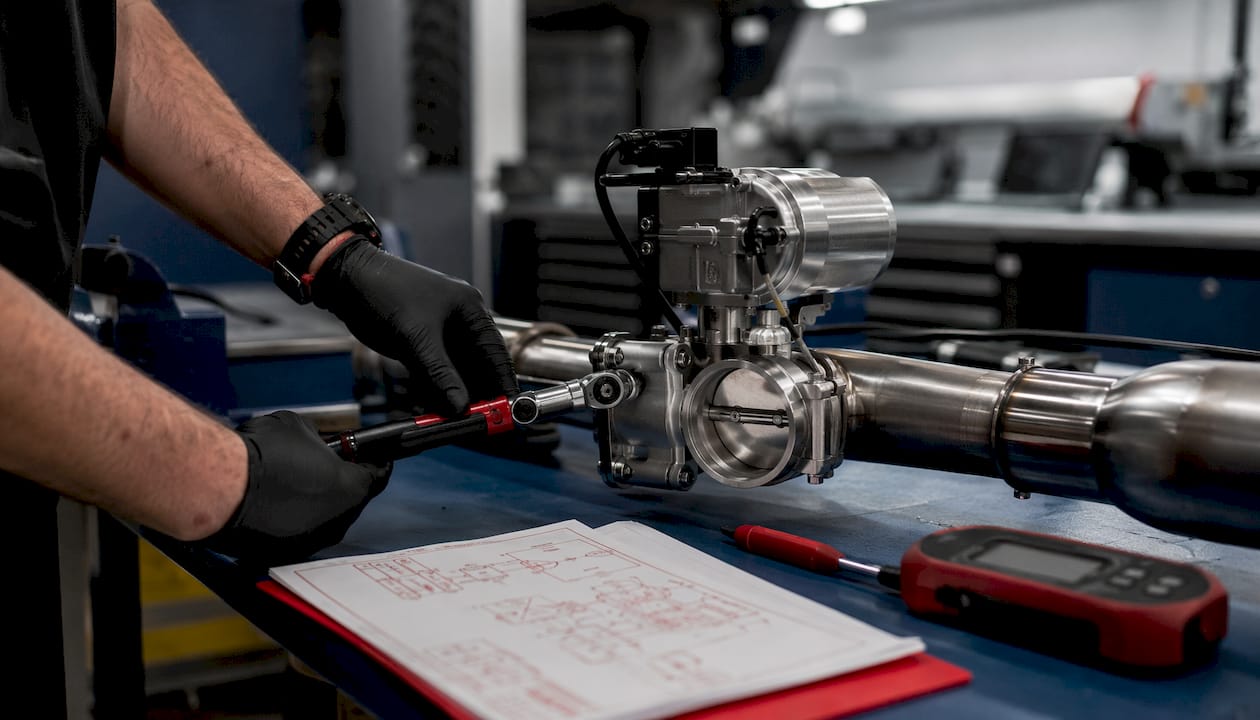
The key distinction worth understanding: these valves live in the exhaust pipe, not inside the engine. They control sound and flow only. They are not the same as engine-internal power valves used in two-stroke or four-stroke racing engines, which manage combustion chamber dynamics entirely differently.
Control options vary by kit. Factory systems on newer BMWs and Ferraris tie valve behavior to the drive mode selector. Aftermarket kits from Valvecontrolexhaust typically use a Bluetooth app, a wired remote, or CAN-Bus integration to trigger sport mode automatically. The result is a system that changes character based on where you are and how you want to drive.
Pro Tip: If you plan to use sport mode integration, confirm your vehicle’s CAN-Bus protocol before purchasing a kit. Not every controller reads every car’s data stream.
What are the benefits of an electronically controlled exhaust system?
The most direct benefit is sound control. You can switch between a quiet, neighbor-friendly mode and a full-throated aggressive note without touching a wrench. Active exhaust systems deliver this switch instantly, which matters when you leave a residential area and hit an open road.
Performance is the second major gain. Closing the valve increases backpressure, which can improve low-end torque on certain engine configurations. Opening the valve fully reduces restriction, freeing up horsepower at high RPM. The ability to tune this relationship on the fly gives you a level of control that a fixed pipe simply cannot offer.
Sound quality is a subtler benefit that most enthusiasts overlook until they experience it. Electronic valves manage Helmholtz resonance by adjusting the effective pipe volume, which directly reduces the low-frequency drone that plagues many performance exhausts at highway speeds. That drone is not just annoying. It causes fatigue on long drives and makes a performance car genuinely unpleasant to live with daily.
The key benefits at a glance:
- Instant sound switching: Move from quiet to aggressive mode in under a second via app or remote.
- Variable valve positioning: Set the valve at 25%, 50%, or 75% open for fine-tuned sound frequency control, unlike binary vacuum systems.
- Drone reduction: Helmholtz resonance management keeps cabin noise comfortable at cruising speeds.
- Performance adjustment: Reduce backpressure at high RPM for power gains without permanent modification.
- Driver convenience: Bluetooth apps and sport mode integration mean the system responds automatically to your driving style.
The exhaust valves and sound relationship is more nuanced than most buyers expect. Getting it right requires variable positioning, not just open or closed.
How do electronic exhaust valves compare to vacuum-based systems?
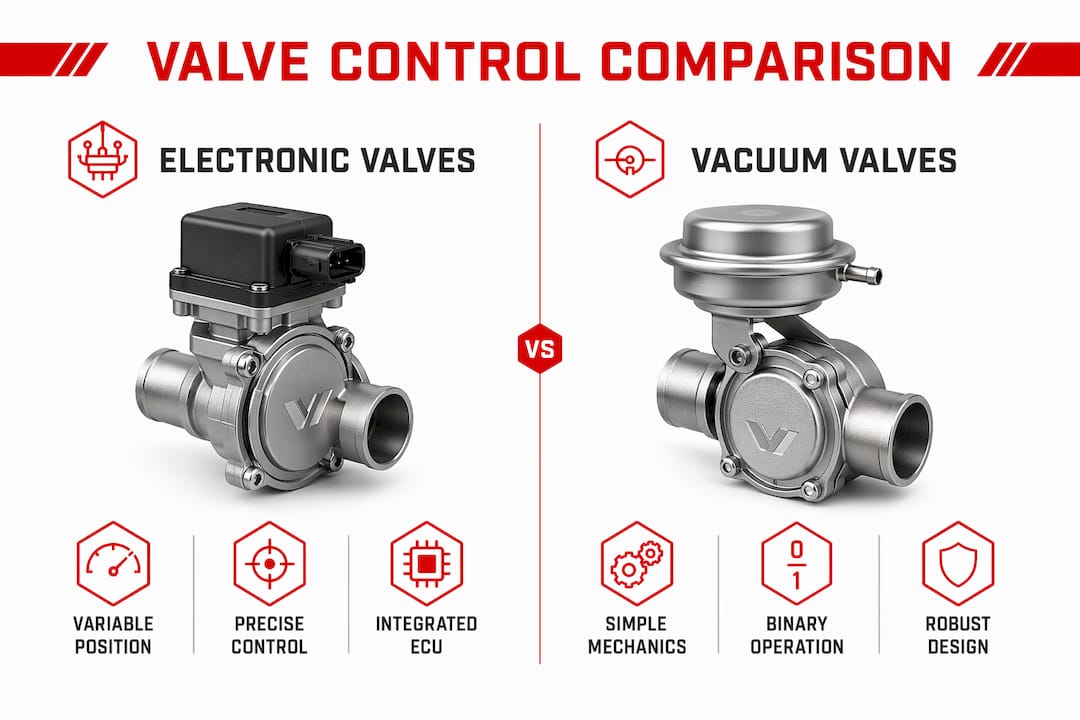
Vacuum valves use engine vacuum pressure to open or close. Electronic valves use a 12V motor. That single difference creates a cascade of practical consequences.
| Feature | Electronic valves | Vacuum valves |
|---|---|---|
| Positioning | Variable (0–100%) | Binary (open or closed) |
| Response speed | Milliseconds | Slower, pressure-dependent |
| Installation complexity | 12V wire only | Vacuum lines required |
| Drone control | Yes, via partial positioning | Limited |
| Environmental durability | Requires sealed actuator | Generally simpler mechanically |
| Sport mode integration | Yes, via CAN-Bus or app | Rarely supported |
Variable positioning is the defining advantage of electronic systems. A vacuum valve is either open or closed. An electronic valve can sit at any point between those extremes. That range is what makes drone elimination and precise sound tuning possible.
Vacuum valves do have one genuine advantage: mechanical simplicity. There are no electronics to fail, no firmware to update, and no Bluetooth pairing to troubleshoot. For a track-only car that never needs quiet mode, a vacuum valve is a defensible choice.
The durability picture for electronic valves is more nuanced. Salt, road grime, and moisture degrade actuator motors over time. Quality kits use weather-sealed motors to address this, but the seal quality varies significantly between entry-level kits and purpose-built performance systems. Valvecontrolexhaust uses sealed actuators rated for the thermal and environmental conditions found under a Lamborghini or BMW M-series.
Pro Tip: When evaluating any electronic exhaust kit, ask specifically about the actuator’s IP rating. An IP65 or higher rating means the motor is protected against dust and water jets, which is the minimum standard for an undercar application.
What should you consider when installing an electronically controlled exhaust system?
Installation of an aftermarket electronic exhaust valve kit typically takes about 30 minutes and requires only a 12V power source. That simplicity is a genuine advantage over vacuum systems, which require routing vacuum lines and risk introducing leaks that affect engine performance.
The numbered steps below reflect the standard installation sequence for most aftermarket kits:
- Identify the mounting location. Choose a section of exhaust pipe with enough straight run for the valve body. Avoid mounting directly after a bend, where turbulence affects valve accuracy.
- Cut and weld or clamp the valve body. Most kits use V-band clamps for a no-weld option. Welded installations are more permanent and better suited to track use.
- Install thermal isolation spacers. Thermal spacers prevent heat transfer from exhaust gases to the actuator motor. Skipping this step is the single most common cause of premature actuator failure.
- Route the 12V power wire. Connect to a switched 12V source so the system powers down with the ignition. Avoid routing near exhaust heat sources.
- Pair the controller. For Bluetooth kits, pair the app and test valve movement through the full range before driving.
Pipe diameter compatibility matters more than most buyers realize. Valve bodies are sized for specific pipe diameters, typically 2.5 inches, 3 inches, or 3.5 inches. Measure your existing pipe before ordering. A mismatch creates turbulence and defeats the purpose of variable flow control.
For vehicles with factory CAN-Bus integration, standalone controllers are the simpler choice. CAN-Bus integrated systems offer automatic sport mode behavior but require vehicle-specific calibration. Valvecontrolexhaust provides compatibility guides for Audi, BMW, Ferrari, and Lamborghini platforms to remove the guesswork from this step.
Pro Tip: Wrap the actuator body in heat-reflective tape in addition to using isolation spacers if your exhaust runs close to the chassis. Double thermal protection extends actuator life significantly on high-output engines.
The full installation process for valve control exhausts covers vehicle-specific fitment details that generic guides miss.
Key Takeaways
An electronically controlled exhaust system delivers variable sound and performance control through motorized butterfly valves, making it the most capable active exhaust technology available for performance vehicles in 2026.
| Point | Details |
|---|---|
| Core mechanism | Motorized butterfly valves adjust exhaust flow and sound in real time via electric actuators. |
| Variable positioning | Electronic valves open at any percentage, enabling drone control that binary vacuum valves cannot match. |
| Installation simplicity | Most kits install in about 30 minutes using only a 12V power source, with no vacuum lines required. |
| Thermal protection | Isolation spacers are non-negotiable. Skipping them is the leading cause of actuator failure. |
| Control options | ECU integration, Bluetooth apps, and wired remotes all provide instant mode switching for sound and performance. |
Why electronic exhaust control changed how I think about performance cars
The conventional wisdom says exhaust upgrades are about noise. Louder equals better. I disagree, and a decade of working with performance exhaust systems on Audis and BMWs taught me why.
The real value of an electronically controlled exhaust system is precision. The ability to run a Ferrari at 30% valve opening on a Sunday morning in a residential neighborhood, then open it fully on a canyon road, changes the entire relationship between driver and car. You stop making compromises. The car becomes genuinely usable every day without sacrificing what makes it exciting.
The detail most enthusiasts miss is drone management. A fixed aggressive exhaust sounds great at wide-open throttle and miserable at 70 mph on a highway. Electronic valve positioning solves this by tuning the resonance frequency of the exhaust path. That is not a marketing claim. It is physics, and it works.
My practical recommendation: prioritize actuator quality and thermal protection over feature count. A kit with fewer app features but a properly sealed, thermally protected actuator will outlast a feature-rich kit with a cheap motor by years. The variable valve exhaust advantage over fixed systems is only realized if the hardware survives long enough to deliver it.
The next frontier is predictive valve control, where the system reads throttle position, vehicle speed, and GPS location to anticipate mode changes before you trigger them. That technology exists in prototype form on several European OEM platforms. Expect it in the aftermarket within two years.
— Info
Valvecontrolexhaust: built for drivers who want both
Valvecontrolexhaust designs active exhaust systems for the vehicles where sound and performance are inseparable. Their kits cover Audi, BMW, Ferrari, and Lamborghini platforms with fitment-specific valve bodies, sealed actuators, and full control options including Bluetooth and sport mode integration.

For enthusiasts who want to understand exactly what fits their car and why, the performance exhaust buyer’s guide covers the full range of valved systems with honest evaluations. Drivers looking at daily use alongside track days will find the customizable exhaust appeal breakdown especially useful. Every kit ships with installation support and compatibility documentation, so you know what you are getting before you order.
FAQ
What is an electronically controlled exhaust system?
An electronically controlled exhaust system uses motorized butterfly valves inside the exhaust pipe to adjust sound, flow, and backpressure on demand. Control comes from an ECU, Bluetooth app, or wired remote.
How fast do electronic exhaust valves respond?
Electronic actuators respond in milliseconds, fast enough to match real-time throttle inputs. This speed is significantly faster than vacuum-based valve systems.
Do electronic exhaust valves improve performance?
Yes. Opening the valve fully reduces backpressure and frees horsepower at high RPM. Partial valve positions also allow fine-tuning of exhaust frequency to eliminate cabin drone at cruising speeds.
What are exhaust control valves made of?
Exhaust control valves use a stainless steel butterfly disc on a rotating shaft, driven by an electric actuator. Quality kits use weather-sealed actuators rated for the heat and moisture exposure found under a performance vehicle.
How long does it take to install an electronic exhaust valve kit?
Most aftermarket kits install in about 30 minutes using basic hand tools and a 12V power source. No vacuum lines or engine modifications are required.