
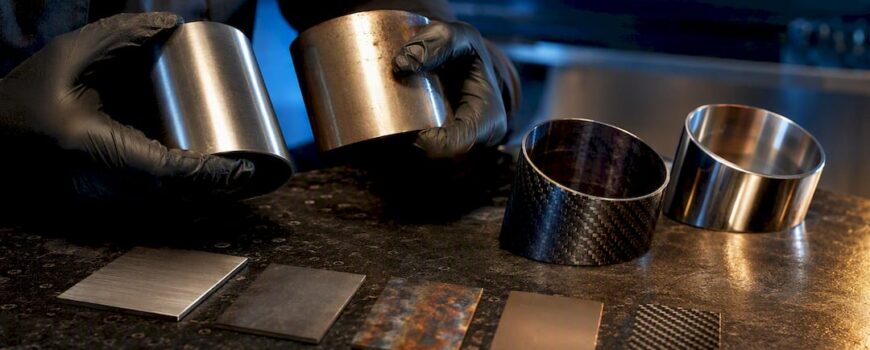
For most drivers who want long life and minimal upkeep, T304 stainless steel is the best exhaust tip material available. If cost matters more than a decade of shine, T409 or 201 stainless gets the job done for less. Chrome delivers the brightest show-car finish but demands the most babying, while titanium and carbon-fiber suit anyone chasing lighter weight, and black finishes suit anyone chasing a stealth look. Every choice trades cost against longevity against appearance. The sections below explain why.
TL;DR:
- Choose T304 stainless steel for the best corrosion resistance and polish longevity, especially if expecting long-term durability in harsh climates.
- Avoid generic “stainless” labels; specify grades like 304, 409, or 201 to ensure material quality and expected lifespan.
- Prioritize finish quality and application details, such as heat-resistant powder coat or black chrome, to prevent peeling, fading, or discoloration over time.
- Material choice has minimal impact on exhaust tone or performance but significantly affects weight, heat resistance, and longevity.
- For sound customization, focus on tip design (resonated or straight-through) rather than material, as it influences exhaust tone more effectively.
Table of Contents
- What Are Exhaust Tip Materials Made Of?
- Which Finish Holds Up Best Over Time?
- Does Tip Material Actually Change Performance or Sound?
- How Do You Choose the Right Exhaust Tip Material?
- How Do You Install and Maintain an Exhaust Tip?
- Why Does Grade Matter More Than the “Stainless” Label?
- How Valvecontrolexhaust Approaches Tip Material Selection
- Upgrade Beyond the Tip: Full Valved System Control
- Sources
What Are Exhaust Tip Materials Made Of?
Exhaust tips look interchangeable on a shelf, but the metal underneath decides whether they still look good in three years. Four materials dominate the aftermarket: stainless steel (in three common grades), titanium, carbon-fiber, and occasionally aluminum. Each behaves differently under heat, road salt, and UV exposure.
T304 stainless carries higher nickel and chromium content than the other stainless grades, and that combination is what makes it the premium choice for corrosion resistance and polishability. It resists rust, holds a mirror polish longer, and shrugs off heat discoloration better than cheaper alternatives. It costs more to produce, which is why it shows up on premium aftermarket tips rather than base-trim factory parts.
T409 stainless is the grade you’ll find on most stock exhausts. Manufacturers favor it because it’s easier to weld at high volume and cheaper to source, even though it carries less nickel and is more prone to surface rust over time. It’s not a bad material. It’s a budget-conscious one.
T201 stainless sits below both. It trades some corrosion resistance for affordability and easier forming, which is why 201 shows up so often in entry-level tips sold on price alone. It’ll hold up fine in dry climates. It won’t age gracefully near salted roads.
Titanium and carbon-fiber solve a different problem: mass. Titanium tips are lighter than stainless and tolerate high heat without warping, which matters on track cars and lightweight builds where every pound counts. Carbon-fiber sleeves reduce weight and are typically wrapped around metal liners due to heat limitations. Both cost significantly more than stainless.
Aluminum shows up occasionally on economy applications. It’s light and cheap, but it can’t take sustained exhaust heat the way stainless or titanium can, and it corrodes faster in wet or salted conditions.
Here’s the catch that trips up a lot of buyers:
- “Stainless steel” on a listing means nothing on its own. Ask which grade.
- 304, 409, and 201 all qualify as “stainless,” but their real-world lifespans differ by years.
- A vendor who won’t name the grade is usually selling 201 at a 304 price.
- Magnet tests can help in a pinch. Cheaper stainless grades are often slightly magnetic; true 304 is largely non-magnetic, though this isn’t foolproof.
If you’re weighing titanium against stainless for a full system rather than just the tip, the weight and heat tolerance differences carry over. That comparison holds regardless of which titanium exhaust system you’re evaluating.
Which Finish Holds Up Best Over Time?
Finish impacts the visible appearance and wear pattern of exhaust tips. And finishes fail in very different ways.
Polished stainless looks clean and requires the least specialized maintenance. It can dull over time without occasional wiping, but it won’t peel or flake. It’s the lowest-maintenance option for anyone who doesn’t want a weekend hobby out of tip care.
Chrome plating gives the deepest shine of any finish, which is exactly why show builds gravitate toward it. The trade-off is durability. Chrome is a thin layer bonded to a base metal, and once moisture gets underneath through a scratch or chip, it peels rather than fades. Salt-belt winters accelerate that failure fast.
Black powder coat delivers a matte stealth look and resists chipping better than chrome. Extreme, sustained heat can fade or discolor it over years, especially close to the outlet.
Black chrome is a middle ground: darker, plated finish with more heat tolerance than standard powder coat. Some manufacturer-backed black chrome tips have published on-vehicle corrosion and heat-soak testing to back their durability claims, which is worth asking about before buying an unverified version.
Carbon-fiber sleeves hold their look well as long as the resin coating stays intact, but any heat exposure beyond the sleeve’s rating causes yellowing or cracking.
A quick reference for how each fails:
- Chrome: peels at scratches, worst in road-salt climates.
- Powder coat: fades or discolors under sustained extreme heat.
- Bare stainless: can develop a blue heat tint near the outlet edge on hard-driven cars.
- Carbon sleeve: yellows or cracks if heat exceeds the resin’s rating.
Statistic to remember: the corrosion-resistance gap between 304 and lower stainless grades is well documented enough that most vendor comparison guides lead with it before discussing finish at all. Get the base material right first; the finish is secondary insurance.
Does Tip Material Actually Change Performance or Sound?
Short answer: barely, and not the way marketing implies. A tip sits at the very end of the exhaust path, past the point where flow restriction or resonance really shapes horsepower. Swapping materials won’t unlock power.
Where material does matter:
- Weight. Titanium tips can shave meaningful ounces versus stainless, which adds up on track-focused builds chasing every gram, but it’s irrelevant for a daily driver.
- Heat soak. Stainless and titanium handle sustained heat without damage. Cheaper coated finishes near the outlet can discolor or fail faster, which matters if the tip sits close to bumper plastic or a rear diffuser.
- Tone. This is the part people get backwards. Tip geometry and resonator design change exhaust tone far more than the metal itself. A resonated tip mellows tone; a straight-through design opens it up. Material choice barely registers by comparison.
Pro Tip: If you want a deeper, more aggressive tone, shop tip designs (resonated vs. straight-through) before shopping materials. You’ll get a bigger sound change for the same dollar.
Spend on lightweight titanium if you’re building for track weight savings or show-car bragging rights. Spend on durable T304 if you just want the tip to look the same in five years without touching it.
How Do You Choose the Right Exhaust Tip Material?
Match the material to your climate, budget, and how long you plan to keep the car, in that order.
- Confirm the material grade in writing. Don’t accept “stainless steel” as a full answer. Ask specifically for 304, 409, or 201.
- Ask how the finish is applied. Plated chrome and bonded chrome age differently; powder coat quality varies by manufacturer.
- Check for a warranty on the finish, not just the part. A tip that’s warrantied against cracking but not discoloration tells you something about expected failure points.
- Measure your inlet diameter and tip length before ordering. Fitment mismatches are the most common return reason, and a tip diameter size guide makes this a five-minute check instead of a guessing game.
- Weigh your climate honestly. Coastal or salt-belt drivers should lean toward T304 or a well-tested black chrome over budget 201 chrome, even at a higher price point.
Red flags worth walking away from: a listing that says “stainless” with zero grade specified, chrome plating over an unstated base metal (grade not specified), and a seller who can’t answer whether the finish has been heat-tested at all; for more on potential legal and mechanical issues, see how DPF delete works: ECU logic, risks and workflow.
How Do You Install and Maintain an Exhaust Tip?
Fitment starts with three measurements: inlet diameter (where it clamps or welds onto your existing pipe), outlet diameter (the visible finished size), and overall length. Get these wrong and the tip either won’t seat or will stick out awkwardly.
Clamp-on tips are the DIY-friendly option. Loosen, slide, tighten, done in under 20 minutes with basic tools. Welded tips look cleaner with no visible seam, but they require a shop with a MIG or TIG welder. If you’re not equipped to weld stainless, this is the one step worth paying a professional for.
Maintenance depends on finish:
- Polished stainless: wipe down periodically, occasional metal polish for shine.
- Chrome: avoid road salt exposure where possible, address chips immediately before moisture gets underneath.
- Powder coat and black chrome: mild soap and water, inspect edges near the outlet for fading.
Pro Tip: Check for pitting or bubbling under any coating every few months. Once a coating starts lifting, it spreads. Catching it early is the difference between a $20 touch-up and a full tip replacement.
Why Does Grade Matter More Than the “Stainless” Label?
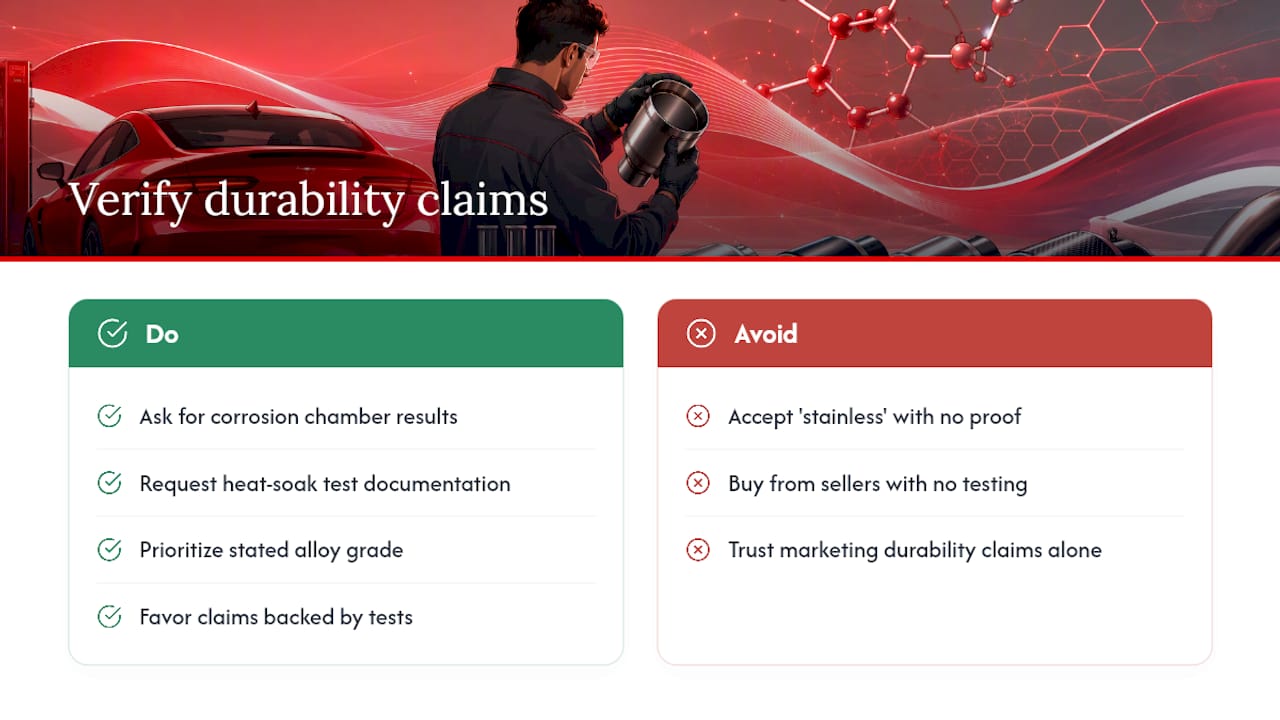
That’s the core metallurgy split driving nearly every price gap you’ll see between tips. Manufacturers validate premium claims with corrosion chamber and heat-soak testing before marketing a tip as long-lasting. If a seller can’t point to any testing behind a durability claim, treat the claim as unverified.
How Valvecontrolexhaust Approaches Tip Material Selection
Tip material choice doesn’t happen in isolation on a valved exhaust system. It has to work alongside the thermal load near valves and actuators, which run hotter and cycle more than a static pipe. Durable tip materials like T304 stainless are preferred near valve hardware, with titanium or lighter finishes chosen when weight savings or aesthetics take priority over heat concerns. The exhaust customization decisions that matter most on luxury and performance platforms usually come down to this same balance.
— Info
Upgrade Beyond the Tip: Full Valved System Control
Swapping a tip changes how your exhaust looks. It does nothing for how your exhaust sounds when you actually want it to change, at the push of a button, between a quiet commute and a full open growl. That’s the gap a valved exhaust system closes, and it’s the natural next step for anyone who’s already spent time comparing metals and finishes for appearance alone.

Remote-controlled valve systems enable adjusting exhaust sound and response without swapping parts each time your mood changes. If you want to understand exactly how that control works before deciding whether a full system makes more sense than another tip upgrade, read the full guide on how exhaust valves toggle automatically and see which setup fits your car.
Sources
The material and finish claims in this guide draw on the following references:
- 304 vs 409 stainless: choosing the right grade for exhaust (Action Stainless)
- Types of Exhaust Tips: Styles, Materials & Sound Guide (AmericanTrucks)