Pick axle-back if you want a quick, budget-friendly sound change and nothing else. Pick cat-back if you want real flow gains, a deeper tone, and a base you can build on later. Axle-back kits run cheaper and install faster; cat-back kits cost more but deliver both the bigger horsepower bump and the fuller sound most enthusiasts actually want. The rest of this guide breaks down exactly why.
TL;DR:
- A cat-back system replaces everything from the catalytic converter outlet to the tailpipe, offering greater flow gains and deeper sound than axle-back systems.
- Cat-back kits add 5 to 15 horsepower through improved scavenging, while axle-backs typically increase power by only 1 to 5 horsepower.
- The muffler design primarily determines sound; straight-through mufflers produce louder, raspier tones, while chambered mufflers create deeper, more controlled notes.
- Installing a cat-back system takes longer and costs more, especially with premium materials like titanium, but provides better performance and sound.
- Valved exhaust systems let drivers switch between quiet and aggressive tones electronically, offering maximum flexibility without hardware swaps.
Table of Contents
- Cat Back vs Axle Back: What Each System Actually Replaces
- Cat Back vs Axle Back Sound: Tone, Loudness, and Drone
- Cat Back vs Axle Back Performance: What the Numbers Actually Show
- Cost and Installation: What to Budget For
- Does Cat Back vs Axle Back Affect Emissions Legality?
- How to Choose Between Axle Back and Cat Back
- Where a Valved Exhaust Changes the Equation
- What Actually Matters When You’re Choosing
- Get the Sound and Performance Without Guessing
- Sources
Cat Back vs Axle Back: What Each System Actually Replaces
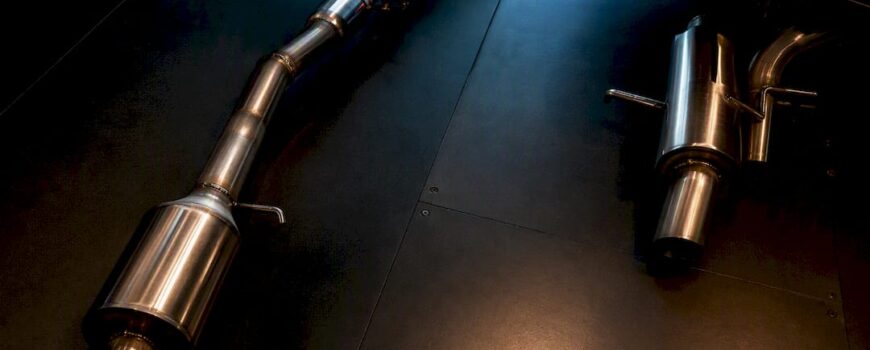
The names describe where the pipe starts, not some marketing gimmick. A cat-back system replaces everything from the outlet of the catalytic converter to the tailpipe. That usually means a new mid-pipe, resonator, muffler, and tips all in one kit, which is why cat-back kits typically include more hardware than an axle-back box.
An axle-back system only swaps the section behind the rear axle, which in practice means the muffler and the tips. Everything ahead of that, including the resonator and mid-pipe, stays factory.
- Cat-back: cat outlet → mid-pipe → resonator → muffler → tips
- Axle-back: rear axle → muffler → tips only
- Turbo-back or downpipe: replaces everything from the turbo (or headers) forward, including the catalytic converter itself, which is a different category entirely and often a bigger legal gray area
Most kits ship with new hangers and clamps, but tip styles vary by brand, so confirm what is included before you order.
Cat Back vs Axle Back Sound: Tone, Loudness, and Drone
The muffler design inside each kit drives most of what you hear. Straight-through mufflers use a perforated core wrapped in packing material, which produces a raspier, louder tone with less flow restriction. Chambered mufflers bounce sound waves through internal baffles to cancel certain frequencies, giving a deeper, more controlled note. Resonators, when present, smooth out raw exhaust pulses before they hit the muffler, which is part of why a full cat-back setup tends to sound fuller than a tailpipe-only swap.
- Axle-back changes are tailpipe-centric: louder, sharper at idle and cruise, but the core tone underneath doesn’t shift much
- Cat-back changes reach further upstream, so the midrange growl and overall depth change more noticeably
- Valved systems let you switch between a quiet and an aggressive profile electronically, without swapping any physical hardware
Pro Tip: If cabin drone at highway speed is your main worry, ask about resonator design before you buy. A poorly tuned resonator delete or a straight-through muffler with no baffling can turn a fun exhaust note into a headache on a two-hour drive.
Cat Back vs Axle Back Performance: What the Numbers Actually Show
Cat-back systems commonly add 5 to 15 horsepower, while axle-back systems typically land in the 1 to 5 horsepower range. Those figures shift depending on engine type, whether you have a tune, and what other mods are already on the car. A naturally aspirated four-cylinder won’t respond the same way a turbocharged V8 does to the same pipe.
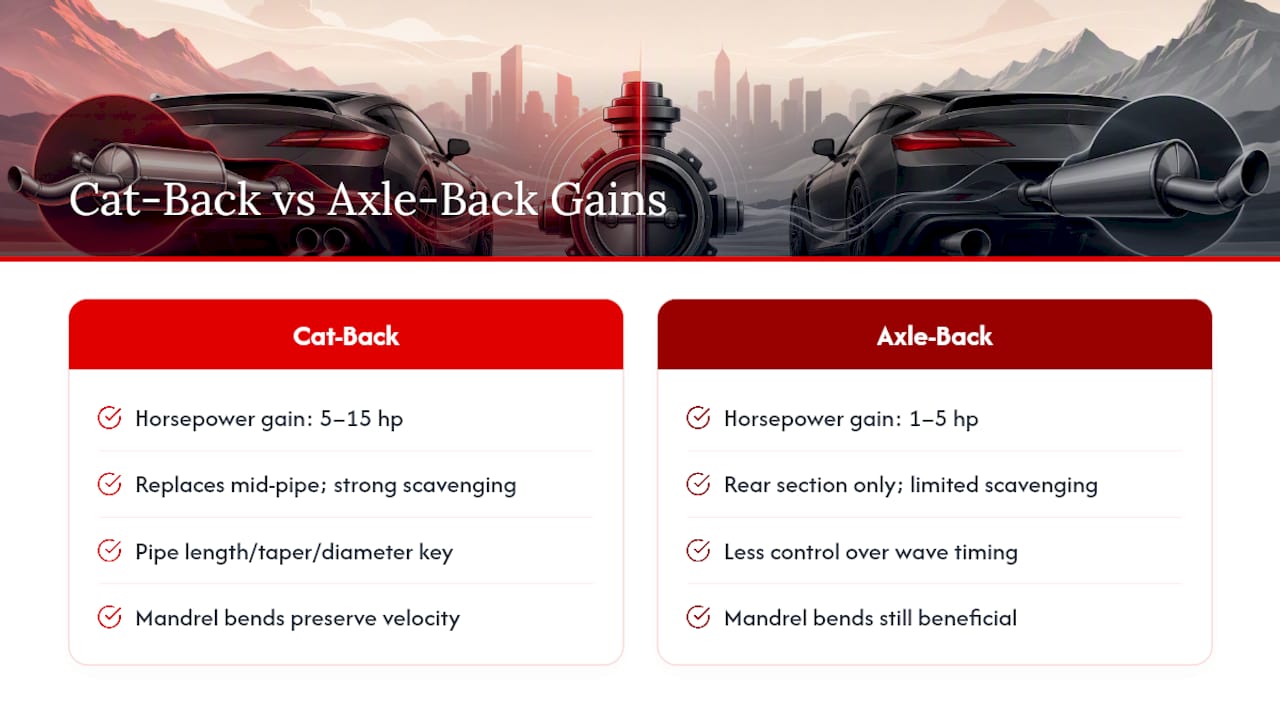
The mechanical reason cat-back wins on power comes down to scavenging. As each cylinder fires, the departing exhaust pulse creates a low-pressure wave behind it that helps pull the next charge of spent gas out faster. Summit Racing’s technical breakdown explains that this effect depends on pipe length, taper, and diameter working together, not just bigger pipe being better. Since cat-back systems replace the mid-pipe, they have far more influence over that wave timing than an axle-back kit ever could.
Mandrel-bent piping matters here too. It keeps the pipe’s internal diameter consistent through every bend, which preserves exhaust gas velocity instead of choking it at each curve. Oversized piping on a small engine can actually hurt low-end torque by slowing gas velocity too much. Most axle-back and cat-back swaps don’t require a tune, but if you’re adding a cat-back alongside intake or downpipe work, a tune helps the engine make full use of the new flow.
Cost and Installation: What to Budget For
Axle-back kits generally cost less because they’re smaller and simpler. Cat-back kits cost more upfront but replace far more of the system, which is part of what you’re paying for. Material choice moves the price too:
- Stainless T304: the common mid-range choice, resists corrosion well, moderate cost
- Aluminized steel: budget-friendly, less rust resistance long-term
- Titanium: premium cost, but meaningfully lighter than steel
Axle-back installs often take under an hour with basic hand tools and ramps. Cat-back installs run longer, sometimes two to four hours, and having a lift makes cutting old hangers and lining up new mid-pipe sections far easier. Weight savings matter most on track-focused builds or lighter chassis, where a few pounds off the rear of the car can be felt in handling. On a daily-driven sedan, the weight difference is nice but rarely the deciding factor.
Does Cat Back vs Axle Back Affect Emissions Legality?
Neither swap usually causes emissions problems, because the catalytic converter stays in place with both cat-back and axle-back systems. What can get you flagged has nothing to do with the category name and everything to do with specific choices:
- Removing or gutting the catalytic converter itself (a different modification entirely)
- Exceeding your state’s decibel limit at idle or cruise
- Tampering with factory emissions sensors or O2 sensor placement
Rules vary by state, so check the specifics before you buy. A state-by-state legal checklist is available to verify your situation before ordering anything.
How to Choose Between Axle Back and Cat Back
Run through this before you buy:
- Set your budget first. If you’re working with a tight number, axle-back gets you sound for less money and less shop time.
- Decide what you actually want to hear. A sharper tailpipe bark points to axle-back; a deeper, fuller growl points to cat-back.
- Think about future mods. If a tune, intake, or downpipe is coming later, cat-back gives you a better foundation to build on. Owners frequently start with axle-back and upgrade later, so plan the order of purchases if budget forces a choice.
- Consider your daily drone tolerance. If you commute long distances, ask specifically about resonator design and cabin noise at cruise.
- Rate your installation comfort. DIY-friendly axle-back kits need less time; cat-back benefits from a lift and an experienced hand.
Before booking a shop, ask about fitment guarantees, warranty terms, expected drone at highway RPM, and whether a tune is recommended for your specific combination.
Where a Valved Exhaust Changes the Equation
A conventional exhaust locks you into one tone permanently, which is exactly the trade-off a valved system is built to remove. Some customizable systems include remote electronic valve control, letting the driver switch between a quiet mode for early mornings and a fuller, more aggressive profile for weekend drives, all without touching a wrench.
- Valve position adjusts sound output on demand, from near-stock quiet to full open
- Some systems focus on fitment for European and luxury performance platforms including Audi, BMW, Porsche, Mercedes-AMG, Ferrari, and Lamborghini.
- Professional installation is recommended given the electronics and precision fitment involved on these platforms
For an owner who can’t decide between the subtlety of axle-back and the depth of cat-back, a valved setup sidesteps the choice entirely. You get both profiles in one system, controlled from the driver’s seat.
What Actually Matters When You’re Choosing
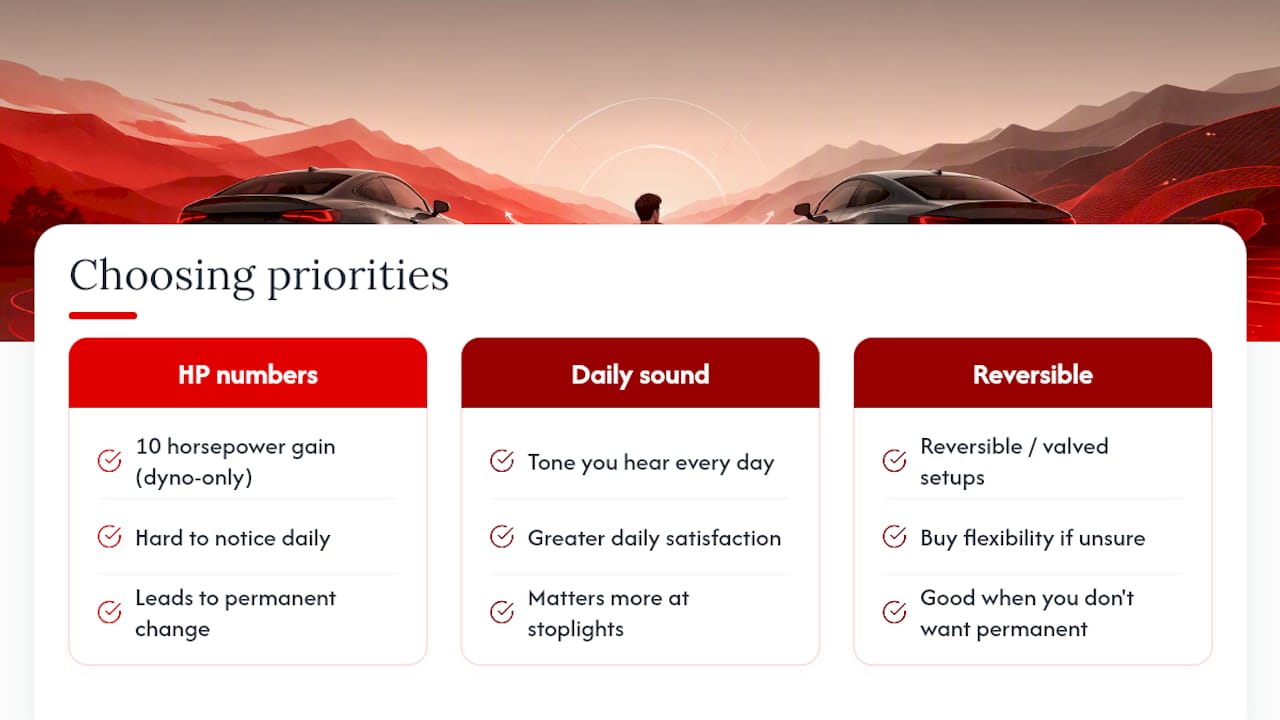
Most people overthink the horsepower numbers here and underthink how they’ll feel about the sound every single day. A 10 horsepower gain you can’t measure without a dyno matters less to daily satisfaction than a tone that makes you smile at every stoplight. If you’re torn between the two options, that’s usually a sign you don’t need to choose permanently.
Reversible or valved setups exist for exactly that indecision. Buy the flexibility if you’re not sure yet.
— Info
Get the Sound and Performance Without Guessing
Choosing between axle-back and cat-back forces a trade-off between cost and capability. Some exhaust systems combine both profiles in one adjustable system, controllable from inside the cabin, and designed for European and luxury performance platforms rather than a generic universal fit.
If you drive an Audi, BMW, Porsche, Mercedes-AMG, Ferrari, or Lamborghini and want a system that adapts to your mood instead of committing you to one tone, start with the exhaust system anatomy guide to see how the components fit your specific model. Then consider fitment advice and installation guidance tailored to your car, and check the installation benefits breakdown to learn what a valved setup adds over a standard fixed exhaust.
Sources
- Cat-Back Vs. Axle-Back Exhaust Systems: What’s The Difference? — Jalopnik
- Summit Racing knowledgebase: scavenging and exhaust basics
- Engineerskill