
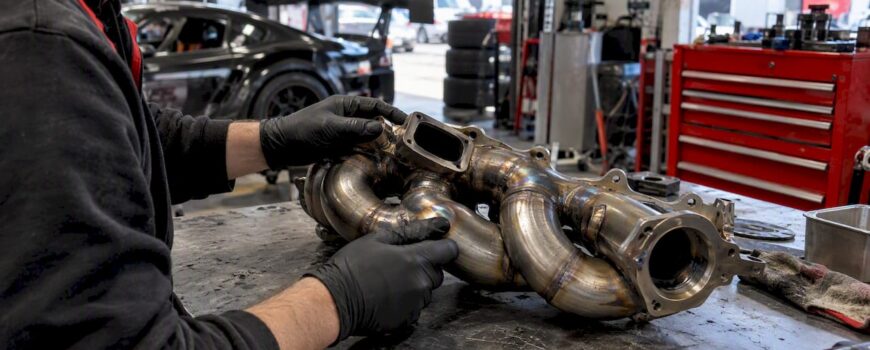
Inconel delivers the highest heat and oxidation resistance of any common exhaust material, handling sustained temperatures exceeding about 1,000°C where stainless starts to lose strength. That capability makes it the right call for race cars, turbo exotics, and extreme forced-induction builds, but it comes with a real cost and fabrication penalty that most street cars don’t need to pay.
TL;DR:
- Inconel can withstand exhaust temperatures above 1,000°C, significantly higher than stainless steel’s limit of around 870°C, making it ideal for racing and turbocharged engines.
- Its ability to retain strength during repeated heat cycles allows for thinner tubing, reducing weight and enabling tighter, more complex piping layouts.
- Inconel’s superior oxidation and corrosion resistance extend exhaust system longevity, especially in aggressive environments with salt, acids, and high heat.
- The material’s fabrication requires specialized welding with nickel-based filler metals, increasing costs and installation complexity compared to stainless or titanium.
- Its higher cost generally limits Inconel use to race, OEM exotic applications, or extreme forced induction setups, while stainless or titanium suffice for most street-driven cars.
Table of Contents
- Key benefits at a glance
- Durability and temperature resistance: how hot can Inconel run and why that matters
- Weight and design: how thinner walls enable lighter systems
- Corrosion, oxidation and long-term durability in real-world exhaust environments
- Performance effects: exhaust flow, back pressure and realistic gains
- Sound, aesthetics and resale considerations
- When to choose Inconel vs stainless or titanium: a practical decision checklist
- Fabrication, welding, inspection and maintenance: what installers must plan for
- Valve Control Exhaust perspective: where our products fit the Inconel conversation
- Picking the right alloy for your build
- How Valve Control Exhaust fits your next build
- FAQ
- Sources
Key benefits at a glance
Before getting into the thermal data and trade-offs, here’s what Inconel actually brings to an exhaust system:
- High-temperature strength: holds mechanical integrity well beyond where stainless starts to soften.
- Oxidation resistance: resists scaling and pitting under repeated heat cycles.
- Thinner-wall fabrication: enables meaningful weight savings without sacrificing strength.
- Thermal stability: a low coefficient of expansion reduces stress on welds and mounts during heat cycling.
- Routing freedom: thinner, stronger tubing allows tighter bends and more flexible packaging.
- Distinct acoustic character: a deeper, denser tone compared to titanium.
- Long service life: in the right application, it can outlast stainless and titanium alike.
The catch is price and fabrication complexity. Inconel costs significantly more than stainless and demands specialized welding, which limits who can build with it and how fast.
Durability and temperature resistance: how hot can Inconel run and why that matters
The headline number is temperature. Inconel 625 maintains structural integrity and mechanical strength at temperatures exceeding roughly 1,000°C, while common stainless grades like 304 and 321 typically begin losing strength above 800 to 870°C. That gap matters because modern turbocharged, downsized engines can push exhaust gas temperatures toward 950°C, close enough to stainless’s ceiling to shorten its service life under sustained hard driving.

The real advantage shows up in thermal fatigue, not just peak heat. Exhaust components don’t fail from one hot lap. They fail from thousands of heat up, cool down cycles that crack welds and warp flanges. Inconel’s alloy structure resists that creep better than stainless, which is why it shows up in turbocharger housings, race manifolds, and manifolds on extreme forced-induction setups where the metal spends most of its life near its thermal limit. A Formula 1 in-service study of Inconel 625 components documented how the alloy behaves under repeated exposures between 650 and 1,000°C, confirming it resists oxidation well even as the surface chemistry evolves over a race season.
Weight and design: how thinner walls enable lighter systems
Inconel’s strength at temperature lets fabricators use thinner tubing than stainless requires. A typical comparison runs about 1.2 millimeters of Inconel versus 1.6 millimeters of stainless for the same application, and that difference can translate into a notable lower system weight in comparable designs.
Inconel is denser than titanium, so the weight edge comes entirely from how thin a wall engineers can safely run, not from the raw material itself. Done right, aggressive wall thinning lets Inconel approach titanium’s weight savings. It matters most where every pound counts: track cars and exotic OEM applications built around lap times, with parts available at Supercars.
Corrosion, oxidation and long-term durability in real-world exhaust environments
Exhaust systems face more than heat. Condensate, road salt, and acidic byproducts of combustion attack metal from the inside and out. Inconel’s resistance to oxidation and many corrosive chemistries holds up against chloride and acidic exposure better than stainless, which is part of why it shows up in marine and industrial settings beyond motorsport.
That resistance generally means fewer replacements and less maintenance over the system’s life. It isn’t immune to degradation, though. The same in-service F1 study that documented Inconel’s oxidation performance also found surface contamination and microstructural changes building up over a racing season, a reminder that even the toughest alloy accumulates wear under extreme duty cycles.
Performance effects: exhaust flow, back pressure and realistic gains
Material choice doesn’t move the needle on flow the way geometry does. Smooth bends, correct piping diameter, and minimal restriction are what actually lower back pressure and improve throttle response. Where Inconel contributes is design freedom: because it tolerates thinner walls and tighter radius bends without cracking, engineers can route piping more aggressively in tight engine bays, something stainless sometimes can’t match without added weight or wall thickness.
On the street, that design freedom tends to produce modest gains on its own. Expect quicker heat dissipation from the system and marginally crisper throttle response rather than a dramatic power jump. The bigger gains come from pairing an Inconel system with supporting changes: a properly sized downpipe like the FI Exhaust Sport 200 Cell Downpipe, a tune to match, and intake or turbo upgrades that actually move more air. Inconel enables the packaging. It doesn’t replace the tuning work.

Sound, aesthetics and resale considerations
Material density shapes resonance, and that’s part of why titanium systems often sound crisper and higher pitched while Inconel tends toward a deeper, denser tone. In practice, muffler design and valve systems do more to shape the final sound than the alloy itself, which is where adjustable valve control technology becomes the bigger lever for tuning exhaust character to the moment.
Among collectors, an Inconel system on the right car (think OEM exotic or documented race build) carries genuine niche resale appeal, since buyers recognize the cost and engineering behind it.
When to choose Inconel vs stainless or titanium: a practical decision checklist
Inconel earns its premium when operating conditions actually demand it. Engineers generally agree it becomes justified once sustained exhaust gas temperatures exceed roughly 800°C, which covers race environments, dedicated track cars, and tightly packaged turbo setups where thinner walls solve a fitment problem stainless can’t.
- Choose stainless for street cars and daily drivers where corrosion resistance and lower cost matter more than extreme peak temperature.
- Choose titanium when weight is the priority and operating temperatures stay moderate.
- Choose Inconel when temperatures consistently run hot, packaging is tight, or the build is race-oriented.
Before committing, run through a short checklist: what temperature does the system actually see, what’s the real budget including fabrication, is there a shop nearby with documented Inconel experience, and how long do you need the system to last. For a deeper look at titanium’s own cost curve, see when titanium exhausts are worth it.
Fabrication, welding, inspection and maintenance: what installers must plan for
Inconel welding is its own discipline. It requires specific nickel-based filler metals and tight heat control, because inexperienced work can create carbide precipitation and brittle heat-affected zones that undercut the alloy’s fatigue resistance before the car ever sees a track. Industry commentary consistently flags fabrication difficulty and cost as Inconel’s biggest practical drawbacks, since specialized labor and longer lead times raise the final price well above stainless.
Maintenance itself is low once the system is built correctly: inspect welds periodically for discoloration or cracking, and watch flange connections for the kind of thermal stress that shows up after repeated hard cycles.
Pro Tip: Ask any prospective fabricator what filler rod they use, request proof of prior Inconel work, and ask for inspection photos of the heat-affected zone before signing off on the job.
- Confirm documented Inconel welding experience, not just general stainless or titanium fabrication.
- Request post-weld inspection photos to check for discoloration or brittleness in the heat-affected zone.
Valve Control Exhaust perspective: where our products fit the Inconel conversation
This company focuses on customizable, valved exhaust systems built for a variety of performance and luxury platforms, with compatibility across a wide range of models. For many builds, including turbocharged street and track-day cars, high-grade stainless with remote valve control can deliver desirable sound and response without the fabrication premium Inconel demands. Exotic materials may be recommended only when sustained operating temperature or a dedicated race application calls for it, with exhaust parts, downpipes, and accessories available through authorized manufacturers to fit the build.
Picking the right alloy for your build
If a car spends its life on the street, even a hard-driven one, stainless with a good valve controller covers nearly every need. Inconel earns its place when the car lives near its thermal limit: dedicated track builds, heavy forced induction, or OEM exotics where the factory already made that call. Match the material to the operating conditions and the budget, not to which one sounds most impressive on a spec sheet.
— Info
How Valve Control Exhaust fits your next build
Whether your build calls for a high-temperature downpipe, a full exhaust upgrade, or small accessories, genuine parts compatible with various luxury performance platforms are available, sourced from authorized manufacturers.

Browse Exhaust Parts or Down Pipe options to find the right fit, or check the Performance Exhaust Buyer’s Guide if you’re still weighing which system suits your car.
FAQ
Is Inconel good for exhaust?
Yes, Inconel performs well in exhaust systems that run hot and cycle repeatedly, since it holds strength and resists oxidation at temperatures exceeding roughly 1,000°C. It’s the preferred choice for race and extreme turbo applications, though its cost makes it overkill for most daily-driven cars.
What is the best sounding material for exhaust?
Sound depends heavily on wall thickness, muffler design, and valve systems rather than the alloy alone. Titanium tends to produce a crisper, higher-pitched tone while Inconel leans deeper and denser, and stainless sits closer to a traditional, fuller exhaust note.
What are the disadvantages of using Inconel?
The main drawbacks are cost and fabrication difficulty. Industry sources note that specialized welding and skilled labor drive up both price and lead time compared with stainless or titanium systems.
What does putting a potato in exhaust do?
This is an old prank, not a real modification, and it has no connection to exhaust material choice. Blocking an exhaust pipe with a potato or similar object can stall an engine or cause damage, and it has no legitimate place in exhaust performance work.
Sources
- Inconel vs stainless steel: key differences
- Inconel alloy 625 technical bulletin (Special Metals)
- Multiscale modeling of corrosion and oxidation performance and their impact on high-temperature fatigue of automotive exhaust manifold components
Recommended
- Downpipe Heat Management: The Right Fix for Your Build
- $3,500–$8,000: When Titanium Exhausts Are Worth It for Enthusiasts
- Technical Appraisal: Choosing Between IPE, FI, Armytrix, Akrapovic, Valvetronic and Ryft Exhausts
- Evaluating High-Performance Exhausts: IPE, FI, Armytrix, Akrapovic, Valvetronic, and Ryft Compared