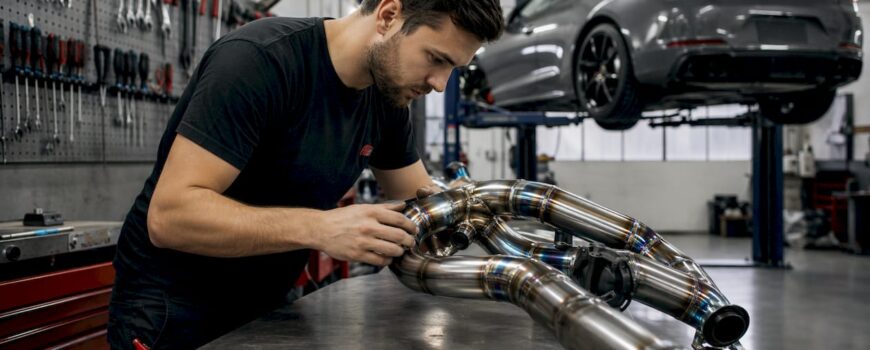
For luxury and sports car owners who want real sound control, Valvecontrolexhaust is the strongest alternative to gthaus.com, offering remote electronic valve control across Audi, BMW, Porsche, Ferrari, Lamborghini, and Mercedes-AMG platforms. GTHAUS itself operates as a US-based distributor of Meisterschaft systems, founded in 2001, which means your options when looking for similar sites to gthaus.com span a wide range of categories, from high-end valved European systems to lightweight titanium race setups.
Here’s how the main alternative categories break down:
- High-end valved/valvetronic systems (e.g., Valvecontrolexhaust, Armytrix, iPE): best for luxury and sports car owners who want adjustable sound for daily driving and track days.
- Lightweight titanium race systems (e.g., Akrapovič): best for track-focused builds where every pound matters and peak sound is the priority.
- Premium stainless bolt-on systems (e.g., AWE Tuning, Borla, Remus): best for OEM+ refinement, strong US dealer networks, and straightforward installation.
- Boutique handcrafted systems (e.g., Fabspeed, Eisenmann): best for show cars, concours builds, and owners who want custom fabrication with a regional specialist.
One critical note before you buy: catless downpipes and certain high-flow systems are not CARB-legal and may fail emissions in California and other states that follow CARB standards. Valve capability, not just sound, is the tiebreaker for daily-driven luxury cars.
Table of Contents
- How do the best gthaus.com alternatives compare at a glance?
- Which alternative category actually fits your build?
- How do you choose the right system for your car?
- What does a premium exhaust system actually cost, and what do you get?
- How does valve control actually change what your exhaust does?
- When should you choose Valve Control Exhaust over other options?
- Key Takeaways
- Why valve control is the feature most buyers underestimate
- Valvecontrolexhaust: real valve control for your platform
- Useful sources for deeper research
How do the best gthaus.com alternatives compare at a glance?
The table below maps each system category to the key decision dimensions most buyers care about. Sound clips and demo videos are available on vendor product pages and on YouTube channels run by independent reviewers; BMW and Porsche forums like BimmerPost and 1Addicts are reliable community sources for real-world sound impressions.
| Best For | Valve / Valvetronic | Materials / Weight | Sound Character | Typical Price (USD) | US Availability | Performance Gains | Warranty | Ease of Install |
|---|---|---|---|---|---|---|---|---|
| Daily luxury / adjustable sound | Yes — remote electronic | Stainless or titanium | Refined to aggressive on demand | $2,000–$4,500 | Direct e-commerce + dealers | notable horsepower gains (cat-back) | 1–3 years | Bolt-on (most models) |
| Track / lightweight race | Limited / OEM active only | Titanium / Inconel | Aggressive, high-rev focused | $4,500–$8,000+ | Authorized dealers | noticeable horsepower gains with tuning | 1–2 years | Bolt-on to semi-custom |
| OEM+ refinement / street | No (passive) | High-grade stainless | Refined, moderate aggression | $800–$2,000 | Wide US dealer network | horsepower gains around 5 hp | 1–3 years (some lifetime) | Bolt-on |
| Boutique / show / concours | Optional | Stainless / titanium | Custom-tuned character | $2,000–$4,500 | Regional specialists | Varies | 1–2 years | Semi-custom to custom |
| European boutique tuner | Yes (some models) | Stainless / titanium | Sport to race | $4,500–$8,000+ | Limited US dealers | 10–20 hp | 1–2 years | Bolt-on to semi-custom |
A few things worth flagging from this snapshot:
- Valved systems consistently outperform passive systems for daily usability on luxury cars because you can dial the sound down in residential areas or early mornings.
- Titanium saves meaningful weight on supercars but costs significantly more than stainless; for most street-driven BMWs or Audis, high-grade stainless is the practical call.
- US availability varies sharply: broad retail hubs like Vivid Racing carry wide fitment coverage across many brands, while boutique makers require direct ordering and careful fitment verification.
Which alternative category actually fits your build?
Site aggregators consistently surface a handful of brand types when mapping the gthaus.com competitive space: high-end European valved specialists, American stainless performance brands, and broad-market retailers. Here’s what each category actually delivers.
High-end valved European systems (Armytrix, iPE, Valvecontrolexhaust)
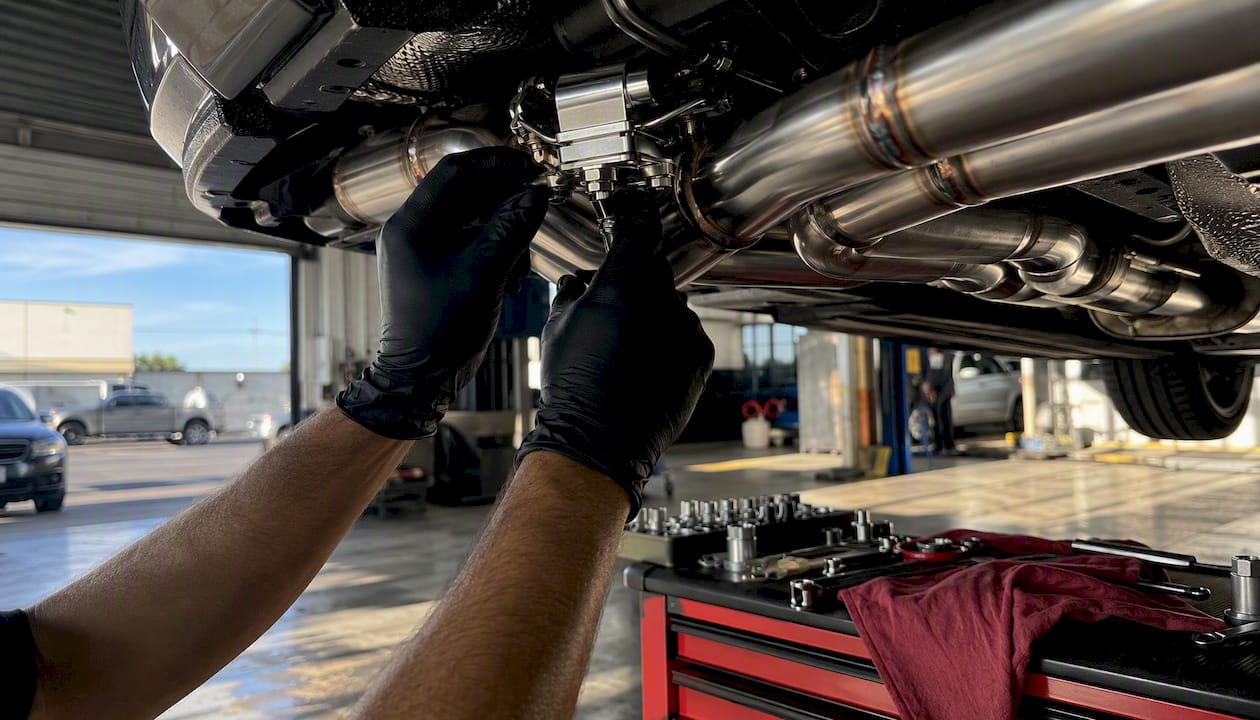
These are the closest functional equivalents to what GTHAUS distributes, and in many cases, they go further. Valvecontrolexhaust’s remote electronic valve control lets you switch sound profiles without touching a phone app or OBD port, which is a real advantage on a car you drive every day.
Pros:
- Adjustable sound on demand, from near-stock quiet to full-open aggressive
- Strong fitment coverage for Audi, BMW, Porsche, Ferrari, Lamborghini, Mercedes-AMG
- Typically available as active exhaust systems with CAN-bus or analog controllers
Cons:
- Higher price point than passive systems
- Valve actuator quality varies significantly between brands; cheaper actuators fail faster
- Some models require bumper trimming or heat shielding
Lightweight titanium race systems (Akrapovič)
Akrapovič is the benchmark for titanium construction. Their systems appear repeatedly across aggregator lists as a top-tier alternative, and for good reason: the weight savings on a Porsche GT3 or BMW M4 are measurable. The trade-off is that most Akrapovič systems are passive, and the price reflects the material, not valve functionality.
Pros:
- Exceptional build quality and titanium weight reduction
- Strong brand recognition and resale value
- Available through authorized US dealers
Cons:
- Limited valve/valvetronic capability on most models
- Premium pricing for the material, not the sound control
- Dealer network is narrower than mass-market brands
Premium stainless bolt-on systems (AWE Tuning, Borla, Remus)
AWE Tuning and Borla are the workhorses of the US aftermarket. Borla in particular has a strong dealer network and a lifetime warranty on many products, which is hard to beat for a street-driven car. Remus brings a European character to the stainless category, with fitment coverage across German platforms.
Pros:
- Wide US dealer network and straightforward returns
- Borla’s lifetime warranty is among the best in the category
- Bolt-on fitment for most popular platforms
Cons:
- No valve control; sound is fixed
- Less dramatic performance gains than valved or catless systems
- Sound character tends toward refined rather than aggressive
Boutique handcrafted systems (Fabspeed, Eisenmann)
Fabspeed and Eisenmann occupy a specific niche: owners who want something hand-built, often with custom tip configurations or bespoke sound tuning. Community-driven lists also surface bodykit and tuning specialists like MEC Design and Pandem USA for buyers whose priority is visual integration rather than pure sound performance.
Pros:
- Custom fabrication options and unique tip/diffuser configurations
- Strong reputation in the Porsche and BMW communities
- Sound character can be tuned to spec on some builds
Cons:
- Regional availability; not always easy to source in every US state
- Longer lead times for custom work
- Warranty and support vary by shop
Pro Tip: Before ordering from any boutique brand, ask specifically whether they have a fitment chart for your exact model year and trim. Subframe clearances and diffuser cutouts differ between production years on the same platform, and a system built for a 2021 BMW M3 may not clear a 2023 bumper without modification.
How do you choose the right system for your car?
The right exhaust comes down to four questions answered in the right order: Does it fit? Is it legal in your state? Does it sound the way you want? And does the brand back it up?
Fitment checklist:
- Confirm the exact model year, trim, and any factory options (sport exhaust delete, adaptive suspension) that affect clearances.
- Request the brand’s fitment chart, not just a compatibility dropdown, and verify subframe, diffuser, and bumper clearances.
- Ask whether the system requires bumper trimming or additional heat shielding for your specific platform.
- Check whether the system is a true bolt-on or requires welding/custom fabrication.
Emissions and legality checklist:
- Confirm whether the system is CARB-compliant if you’re in California or a CARB-adopting state.
- Ask whether the system is catted or catless; catless downpipes are not street-legal in most US states.
- Verify local noise ordinances if you’re buying a high-flow open-valve system for a car you park in a residential area.
Performance and sound verification:
- Ask for dyno data on the same platform, not a different engine family, and confirm whether the test car was stock or previously modified.
- Search YouTube and forums like BimmerPost or 1Addicts for independent sound clips on your specific model before committing.
- If the brand claims ECU tuning is required for the advertised gains, factor that cost into your budget.
Red flags to walk away from:
- No fitment chart, only a generic “fits all M3/M4” claim
- Valve function described vaguely (“electronic control”) with no explanation of the control method (CAN-bus, analog, app-based)
- Dyno gains quoted without specifying baseline (stock vs. tuned) or correction method
- No US dealer or support contact, only a generic email address
- Warranty terms that exclude “track use” without defining it
What does a premium exhaust system actually cost, and what do you get?
Price bands in the US aftermarket break into three tiers, and what you’re paying for shifts meaningfully between them.
Entry premium ($800–$2,000): High-grade stainless cat-back systems from established US brands. You get solid build quality, bolt-on fitment, and a fixed sound character. No valve control. Installation at a shop typically runs a variable cost depending on complexity.
Mid-premium ($2,000–$4,500): This is where valved stainless systems and entry-level titanium options live. You’re paying for valve electronics, better muffler internals, and usually a more refined tip and diffuser package. Installation can have higher costs if the system requires controller wiring.
Ultra-premium ($4,500–$8,000+): Full titanium or Inconel construction, advanced valve control, and bespoke fitment for supercars. Akrapovič’s titanium systems for Porsche and BMW fall here, as do high-spec valved systems for Ferrari and Lamborghini. Shop labor for these builds can be costly on complex platforms.
On realistic performance gains: a cat-back system alone on a well-tuned car can add noticeable horsepower. Adding catted downpipes increases gains on turbocharged platforms. Catless setups potentially offer higher gains but require ECU tuning and are not street-legal in CARB states. The material and valving trade-offs that drive these numbers are worth understanding before you set a budget.
Pro Tip: Always ask the shop for the dyno sheet from the specific test vehicle, not a “typical results” range. Many published gain figures come from cars with other modifications already in place, which inflates the number for a stock baseline.
How does valve control actually change what your exhaust does?
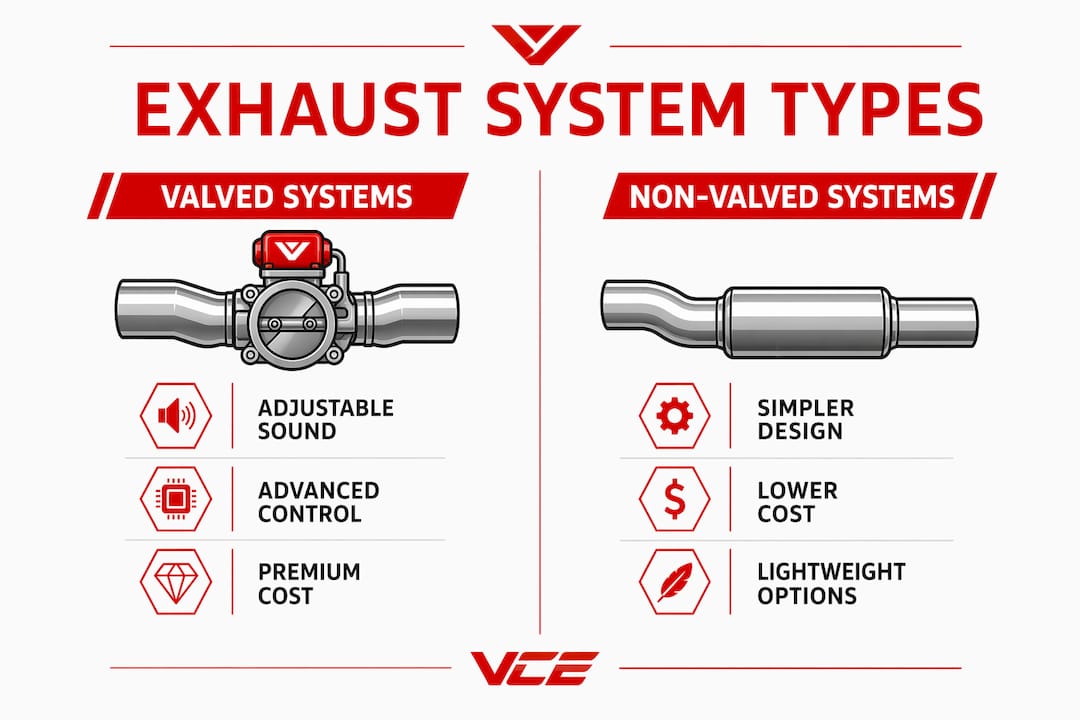
A valved exhaust system places one or more butterfly valves inside the exhaust path, typically at the muffler or mid-pipe. When the valve is closed, exhaust gas takes a longer, more restrictive route through baffles, which reduces sound and increases backpressure slightly. Open the valve and the gas exits more directly, dropping backpressure and raising both volume and high-frequency character.
The quality of the actuator and control logic matters as much as the valve itself. CAN-bus integrated systems read throttle position, RPM, and driving mode from the car’s own ECU, opening and closing valves progressively rather than in a binary snap. Analog controllers and remote fobs work too, but they’re manual, which means you have to remember to switch modes. The control strategy and actuator quality directly affect both sound character and how long the system lasts.
Material trade-offs:
- Stainless steel (304/316 grade): Durable, corrosion-resistant, and cost-effective. The right call for most street and track-day cars.
- Titanium: Roughly 40% lighter than stainless and handles higher sustained temperatures. Worth the premium on supercars where unsprung and rotational weight matter.
- Inconel: Used in extreme heat applications (turbo outlets, race downpipes). Expensive and rarely necessary for street use.
For AWD European cars where drivetrain interactions matter, understanding how Haldex AWD systems respond to power delivery changes from exhaust modifications is worth a look before you tune.
Pro Tip: When the system is installed, cycle the valve manually before the car starts. The actuator arm should move smoothly through its full range with no binding. A valve that sticks at installation will fail early under heat cycling.
When should you choose Valve Control Exhaust over other options?
Valvecontrolexhaust is the right call for luxury and sports car owners who want adjustable sound, strong US support, and confirmed fitment on European platforms. If you drive your Audi RS, BMW M, Porsche, Ferrari, or Lamborghini daily and want the car to be quiet enough for a parking garage at 7 AM and loud enough to turn heads at a weekend drive, a fixed passive system will always disappoint you. That’s the core case for valve-controlled exhaust.
For other use cases, here’s the honest breakdown:
- Track day / lightweight priority: A titanium system from a specialist like Akrapovič is the better tool. You’re buying weight reduction and peak sound, not daily flexibility.
- Show / concours build: Fabspeed or Eisenmann give you custom fabrication and unique aesthetics that a catalog system can’t match.
- OEM+ refinement on a budget: AWE Tuning or Borla deliver reliable, bolt-on quality with strong US dealer support and, in Borla’s case, a lifetime warranty.
- Broad platform coverage with valve control: Valvecontrolexhaust covers Audi, BMW, Porsche, Ferrari, Lamborghini, and Mercedes-AMG, which is a wider valved fitment range than most single-brand specialists.
Before ordering anything, pull the brand’s fitment sheet for your exact VIN configuration, listen to at least two independent sound clips on your platform, and confirm the warranty covers your intended use.
Key Takeaways
Valvecontrolexhaust is the strongest gthaus.com alternative for luxury and sports car owners who need adjustable sound, confirmed European platform fitment, and remote electronic valve control.
| Point | Details |
|---|---|
| Valve control is the tiebreaker | For daily-driven luxury cars, adjustable valve systems outperform passive setups in real-world usability. |
| Material choice affects more than price | Titanium saves meaningful weight on supercars; stainless is the practical choice for most street and track-day builds. |
| CARB/emissions check is non-negotiable | Catless systems are not street-legal in California and CARB-adopting states; confirm compliance before buying. |
| Dyno gains require context | Cat-back systems typically add horsepower gains around 5 hp stock; catless setups can reach 25–40 hp but need ECU tuning and are not street-legal in most states. |
| Valvecontrolexhaust | Covers Audi, BMW, Porsche, Ferrari, Lamborghini, and Mercedes-AMG with remote electronic valve control and direct US e-commerce ordering. |
Why valve control is the feature most buyers underestimate
There’s a tendency in the exhaust market to treat valve control as a luxury add-on, something you pay extra for if you want to show off. That framing misses the actual value proposition. The real reason valve control matters on a $100,000+ car isn’t the theater of pressing a button and hearing the car wake up. It’s that a fixed aggressive exhaust on a luxury GT car becomes genuinely unpleasant to live with. Drone at highway speeds, noise complaints from neighbors, the constant low-level fatigue of a car that’s always performing. A valved system solves that problem structurally, not as a compromise.
The secondary benefit is resale. A car with a well-fitted, brand-name valved system from a recognized specialist holds its value better than one with a catless race setup that fails emissions. Buyers at the $80,000–$200,000 used-car price point care about that. The case for exhaust customization on luxury cars is ultimately a daily usability argument, not a performance one. Performance is the bonus.
Valvecontrolexhaust: real valve control for your platform
If you’ve read this far and your car is an Audi, BMW, Porsche, Ferrari, Lamborghini, or Mercedes-AMG, Valvecontrolexhaust is the direct answer to what you’re looking for. The catalog covers valved cat-back systems, downpipes, mufflers, remote electronic controllers, rear diffusers, and tips, all with fitment confirmed for specific model years and trims.
What sets Valvecontrolexhaust apart from the broader field of gthaus.com competitors is the combination of remote electronic valve control and platform-specific fitment coverage in one place. You’re not sourcing a valve kit separately from a cat-back and hoping they integrate. The system is designed as a unit, and the fitment chart covers the clearance details that cause returns elsewhere.
- Valved cat-back systems for BMW M, Audi RS, Porsche, Ferrari, and Lamborghini
- Downpipes and mufflers with matching tip and diffuser packages
- Remote electronic controllers for sound profile switching without app dependency
- Direct US e-commerce ordering with expert support for fitment questions
Check the full system comparison to see how Valvecontrolexhaust’s valve implementation stacks up against the other premium options covered in this article, and confirm fitment for your specific platform before you order.
Useful sources for deeper research
These are the most reliable places to verify fitment, check emissions compliance, and find real-world sound and dyno media before committing to a purchase.
- BimmerPost forums: Community threads on exhaust sound, fitment, and real-world dyno results for BMW M platforms. One of the most reliable independent sources for owner impressions.
- 1Addicts BMW forums: Active community covering BMW 1 and 2 Series fitment and exhaust discussions; useful for F20/F44 platform owners.
- CARB Executive Orders database: The primary source for confirming whether a specific exhaust system holds a CARB Executive Order number. Check this before buying any catted or catless system if you’re in California or a CARB-adopting state.
- Valvecontrolexhaust high-end exhaust comparison: Covers IPE, FI Exhaust, Armytrix, Akrapovič, Valvetronic, and Ryft with material, valve type, and sound character breakdowns.
- Valvecontrolexhaust fitment and anatomy guide: Explains component trade-offs (materials, muffler types, valve placement) in plain language before you buy.
- YouTube independent reviewers: Search your specific platform plus the brand name for unsponsored sound clips. Channels focused on BMW M, Porsche GT, and Ferrari platforms regularly post before/after comparisons with valve open/closed demos.
- Haldex AWD performance guide: Relevant for Audi RS and S owners on AWD platforms where drivetrain tuning interacts with exhaust modifications.
This article is general information for research purposes. Confirm emissions compliance, fitment specifications, and warranty terms directly with the vendor or a qualified installer for your specific vehicle and state.