
A Lamborghini exhaust valve upgrade is the modification that gives you direct control over your car’s exhaust flow, letting you switch between a subdued street tone and a full-throttle wail at will. The industry term for this technology is a valved exhaust system, and it sits at the intersection of acoustic engineering and performance tuning. Brands like Capristo, Valvetronic Designs, and K2 Industries have built entire product lines around this concept for models including the Aventador, Huracán, and Urus. This guide covers everything you need: the right parts, a clear installation process, what to expect from the sound and performance gains, and how to keep the system running reliably for years.
What does a lamborghini exhaust valve upgrade actually do?
A valved exhaust system controls sound and flow by routing exhaust gases through different internal paths depending on valve position. When the valves are closed, exhaust passes through muffling chambers tuned to reduce cabin drone, making the car livable in residential areas or on long highway runs. When the valves open, exhaust flows unrestricted, producing the sharp, F1-style wail that Lamborghini owners actually paid for.
Performance and acoustic gains vary between Lamborghini models depending on engine platform and factory system design. The LP700 Aventador, Huracán V10, and Urus V8 each respond differently to valve tuning in both sound character and throttle responsiveness. That model-specific variation is why choosing a system built for your exact platform matters more than picking the loudest option on the market.
What components and tools do you need?
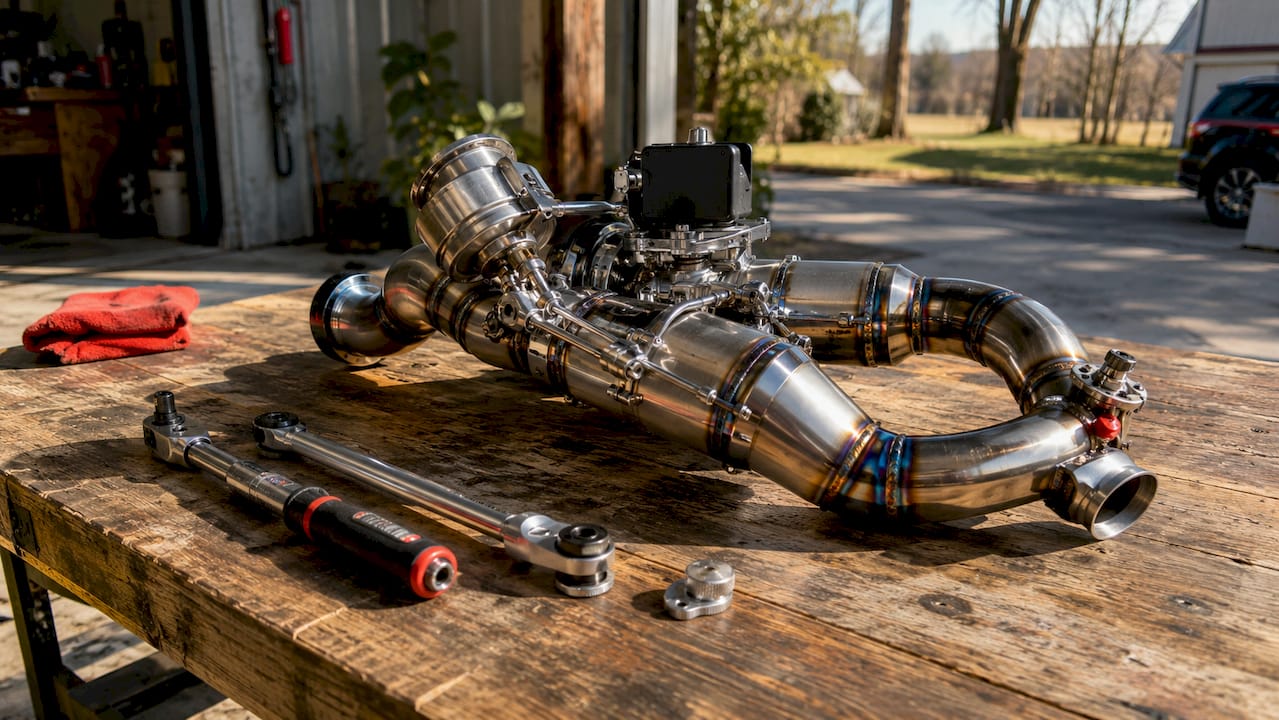
Getting the hardware right before you start saves you from mid-installation surprises. Here is what a complete Lamborghini exhaust system upgrade typically requires.
Core hardware:
- Valved cat-back exhaust sections (model-specific for Aventador, Huracán, or Urus)
- Valve actuators (vacuum-operated or electronic, depending on the system)
- A controller unit: either a standalone remote kit like those from Capristo or Forza Componenti, or an OEM integration harness that ties into factory drive modes
- Gaskets, hardware, and OEM-compatible mounting brackets
Tools required:
- Standard hand tools: metric socket set, torque wrench, penetrating oil for stubborn fasteners
- A vehicle lift or quality jack stands rated for the car’s weight
- An ECU interface cable if you are integrating with factory drive mode logic
- A multimeter for verifying controller wiring connections
Compatibility is non-negotiable. Systems designed for the Huracán LP610-4 do not transfer to the LP580-2 without modification, and Urus fitment is entirely different from either V10 platform. High-quality upgrades reuse factory mounting points to deliver OEM-level fit and avoid voiding warranties. That detail alone separates purpose-built kits from generic aftermarket parts.
Pro Tip: Choose systems built from T304 stainless steel or aerospace-grade titanium. Titanium saves significant weight and resists heat discoloration, while T304 stainless offers excellent corrosion resistance at a lower price point. Both outperform mild steel on a car that sees track days.
How to install and configure your valved exhaust system
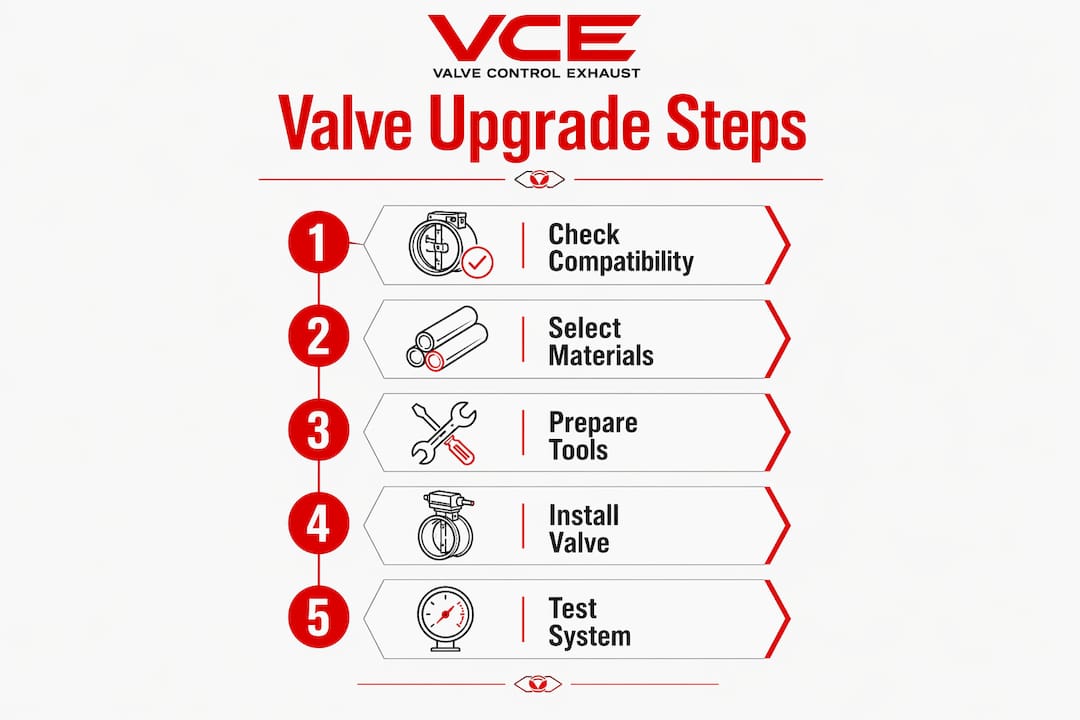
Preparation determines whether this job takes three hours or three days. Follow this sequence to keep the process clean and the result reliable.
-
Prepare the workspace. Park the car on a level surface, engage the parking brake, and allow the factory exhaust to cool completely. A cold exhaust is easier to handle and safer to remove.
-
Lift and secure the vehicle. Use a quality lift or rated jack stands placed at the manufacturer’s specified lift points. Lamborghinis sit low, and improper support risks chassis damage.
-
Remove the stock exhaust sections. Spray all fasteners with penetrating oil at least 30 minutes before removal. Work from the rear tips forward, loosening clamps and hangers progressively. Keep all factory hardware in case you need to reinstall for a dealer visit.
-
Fit the valved exhaust sections. Align the new sections to the factory mounting points before tightening anything. Hand-tighten all connections first, confirm alignment, then torque to the manufacturer’s specification. Skipping this step causes exhaust leaks at the joints.
-
Install the valve actuators and route wiring. Secure actuator wiring away from heat sources and moving components. Use factory-style loom clips where possible to keep the installation looking professional.
-
Configure the controller. Valve controllers can integrate with OEM drive modes or operate independently via a remote. OEM integration ties valve position to Strada, Sport, and Corsa modes automatically. A standalone remote gives you manual override regardless of drive mode selection. Many owners use both: OEM logic as the default and a remote for quick overrides.
-
Test valve operation across the RPM range. Start the engine and cycle through open and closed valve positions at idle, then at 2,000 RPM, 4,000 RPM, and above. Listen for any rattles, hissing, or inconsistent valve response. These are signs of a loose connection or a wiring fault, not a defective system.
Pro Tip: Before final torquing, start the engine briefly with connections hand-tight. Any exhaust leak will be audible immediately, letting you adjust fitment before everything is locked down.
A common installation mistake is over-tightening flex joints. Flex sections need slight movement to absorb thermal expansion. Torque them to spec, not to feel, or you will crack the joint within a few heat cycles.
How do valve upgrades affect sound and performance?
The acoustic difference between a valved and a non-valved aftermarket exhaust is not just volume. It is character. Automotive experts emphasize harmonic clarity and pulse timing over raw loudness, and that philosophy shows up in how the best systems are engineered.
Sound characteristics by valve position:
| Mode | Valve Position | Sound Profile | Best Use |
|---|---|---|---|
| Quiet | Closed | Low drone, muffled tone | Daily driving, neighborhoods |
| Sport | Open | Sharp, high-frequency wail | Spirited road driving |
| Track | Open + no cat | Full F1-style scream | Circuit use |
The twin-X-pipe design used in systems like the Yonristic titanium cat-back for the Urus eliminates drone and muddiness by merging pressure waves between cylinder banks early in the exhaust path. This creates the clean, exotic high-frequency tone that separates a well-tuned Lamborghini exhaust from a car that is simply loud. Equal-length downpipes serve a similar function by harmonizing exhaust pulses before they reach the muffler section.
On the performance side, reducing backpressure through an unrestricted valve-open path improves throttle response at mid to high RPM. The gain is not dramatic in horsepower terms on a modern Lamborghini, but the improvement in throttle feel and engine response is immediately noticeable. The dual personality of a valved system is its real advantage: quiet enough for a Monday morning commute, aggressive enough for a Saturday track session, with the same hardware.
How to troubleshoot and maintain your upgraded system
A valved exhaust system has more components than a standard cat-back, and each one needs attention to stay reliable. Regular inspection of valve actuators and electronic controllers prevents the two most common failures: valve sticking and inconsistent response.
Watch for these warning signs:
- Valve sticking open or closed: Usually caused by carbon buildup on the valve plate or a failing actuator. Clean the valve plate with a suitable solvent and test actuator voltage before replacing the unit.
- Exhaust hissing or ticking: Points to a leak at a joint or gasket. Installation errors like improper torque or poor connection are the leading cause. Re-torque all joints to spec and inspect gaskets for damage.
- Controller not responding: Check the wiring harness for chafing against heat shields. A multimeter test at the actuator connector will confirm whether the fault is in the controller or the actuator itself.
- Unusual drone at highway speeds: Often a sign that the valve is not fully closing. Inspect the actuator linkage for wear or misalignment.
Pro Tip: Inspect the full system every 10,000 miles or once per season if the car sees track use. Pay particular attention to actuator mounting hardware, which vibrates loose over time on high-revving V10 and V12 platforms.
Warranty considerations matter on a car at this price point. Professional installation preserves factory warranty coverage and vehicle reliability in ways that a DIY job with generic parts cannot guarantee. If you are within the factory maintenance program, have a certified shop perform the installation and document everything.
Key takeaways
A valved exhaust system is the single most versatile Lamborghini performance upgrade because it delivers both sound control and improved throttle response without sacrificing daily usability.
| Point | Details |
|---|---|
| Valve position controls everything | Open valves produce unrestricted flow and aggressive sound; closed valves route exhaust through muffling chambers for quiet driving. |
| Model-specific fitment is non-negotiable | Aventador, Huracán, and Urus platforms require dedicated systems; generic fitment risks leaks and warranty issues. |
| Controller choice shapes your experience | OEM integration automates valve logic with drive modes; a remote kit adds manual override for maximum flexibility. |
| Harmonic clarity beats raw volume | X-pipe layouts and equal-length downpipes refine sound quality, not just loudness, for a genuinely exotic tone. |
| Regular maintenance prevents failure | Inspect actuators and wiring every 10,000 miles to catch valve sticking and connection faults before they become costly repairs. |
Why valve upgrades are the smartest lamborghini modification you can make
I have spent years working with valved exhaust systems across multiple Lamborghini platforms, and the one thing that consistently surprises owners is how much the upgrade changes the relationship with the car. Not just the sound. The relationship.
Most people come in focused on getting louder. What they leave with is something more useful: control. The ability to pull out of a hotel at 7 a.m. without waking the floor, then open the valves on the on-ramp and hear the V10 do what it was built to do. That duality is what makes a valved system the right first modification on any Lamborghini, before you touch anything else.
What I have also learned is that the quality of the sound matters far more than the quantity. A poorly designed system just makes the car obnoxious. A well-engineered one, with proper X-pipe routing and equal-length headers, produces a harmonic clarity that makes the stock exhaust sound muffled by comparison. The unique acoustic character of a Lamborghini comes from its engine architecture. A good valved system reveals that character rather than burying it under noise.
My recommendation: prioritize systems that use factory mounting points, come with a proper controller, and are built from T304 stainless or titanium. Skip anything that requires cutting or welding on the factory system. The extra cost of a precision-fit kit pays for itself in installation time, fit quality, and the peace of mind that your warranty is intact.
— Info
Upgrade your lamborghini’s exhaust with Valvecontrolexhaust
Valvecontrolexhaust builds valved exhaust systems specifically for high-performance vehicles including the Lamborghini Aventador, Huracán, and Urus. Their systems deliver real-time sound and performance control through adjustable valve technology, with full compatibility across factory drive modes and standalone remote operation.

If you are ready to choose the right system for your car, the performance exhaust buyer’s guide at Valvecontrolexhaust walks through every major brand, including IPE, Armytrix, Akrapovic, and Valvetronic, with side-by-side comparisons built for Lamborghini owners. Expert support is available for installation questions and system configuration. Visit Valvecontrolexhaust to find the right fit for your platform and driving style.
FAQ
What is a valved exhaust system on a lamborghini?
A valved exhaust system uses electronically or vacuum-controlled valves to switch between a quiet, muffled sound mode and an unrestricted, aggressive tone. It gives the driver direct control over exhaust flow and sound character without changing any hardware.
Which lamborghini models support exhaust valve upgrades?
The Aventador, Huracán, and Urus all support valved exhaust upgrades, but each requires a model-specific system. Performance and acoustic results vary by platform because the LP700 V12, Huracán V10, and Urus V8 each have different factory exhaust architectures.
Will an exhaust valve upgrade void my lamborghini warranty?
Systems that use factory mounting points and are installed by a certified shop generally preserve factory warranty coverage. Modifications that require cutting, welding, or altering OEM components carry a higher risk of warranty complications.
How do i control the valve position after installation?
Most systems offer two control options: OEM integration that ties valve position to factory drive modes like Strada and Corsa, and a standalone remote that lets you open or close the valves manually at any time. Many owners use both methods simultaneously.
How often should i service a valved exhaust system?
Inspect actuators, wiring connections, and mounting hardware every 10,000 miles or once per track season. Regular checks prevent valve sticking and catch loose connections before they cause exhaust leaks or controller failures.