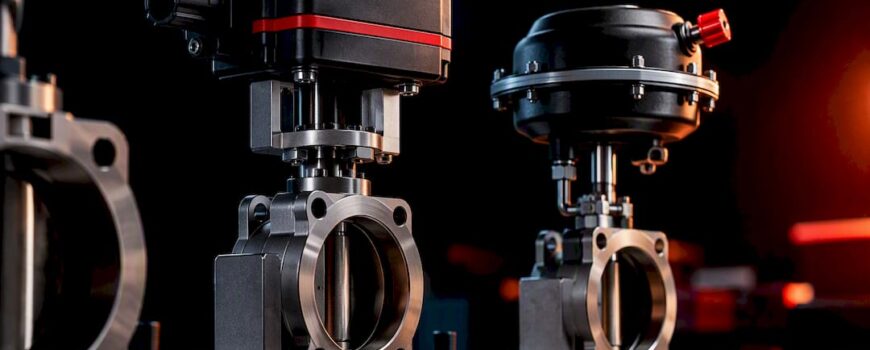
Electronic exhaust valves win on speed, precision, and integration with modern turbocharged cars, so most late-model performance builds should go electronic. Vacuum valves still make sense for classic and naturally aspirated cars where mechanical simplicity and heat tolerance matter more than millisecond response. The gap comes down to actuation speed and control precision. Some companies build electronic systems for owners who want that precision without guessing at compatibility.
TL;DR:
- Electronic exhaust valves respond in under 0.2 seconds, providing real-time control that benefits turbocharged engines and high-modulation driving styles.
- Vacuum valves are simpler, lower-cost, and heat-tolerant but only offer binary open/closed states and can degrade over time due to cracked lines and diaphragm wear.
- Proper installation and maintenance require attention to heat protection and wiring, with electronic systems often needing professional setup, especially for CAN-bus integration.
- For consistent, quick response and tunable positions, electronic valves are preferable, but vacuum valves remain effective for basic loud/quiet switching on naturally aspirated cars.
- Choosing the right system depends on engine type, driving style, and how much control flexibility is desired, rather than only on cost or brand.
Table of Contents
- How Do Vacuum-Actuated Exhaust Valves Work?
- How Do Electronic Exhaust Valve Actuators Work?
- How Much Faster Are Electronic Valves Than Vacuum Valves?
- Installation and Durability: What to Expect
- Which Sound and Performance Profile Fits Your Car?
- Vacuum vs Electronic Exhaust Valves: Pros, Cons, and Decision Rules
- How Valvecontrolexhaust Tackles Heat and Compatibility
- Why the “Just Get Electronic” Advice Misses the Point
- Get Precise Valve Control Built for Your Car
- Sources
- FAQ
How Do Vacuum-Actuated Exhaust Valves Work?
A vacuum valve is a pressure switch wearing a muffler flap costume. Engine vacuum pulls on a rubber diaphragm connected to a spring-loaded actuator, which rotates a butterfly valve inside the pipe between two states: open or closed. There is no in-between position in most factory and aftermarket setups, which is the core trade-off you’re accepting with this system.
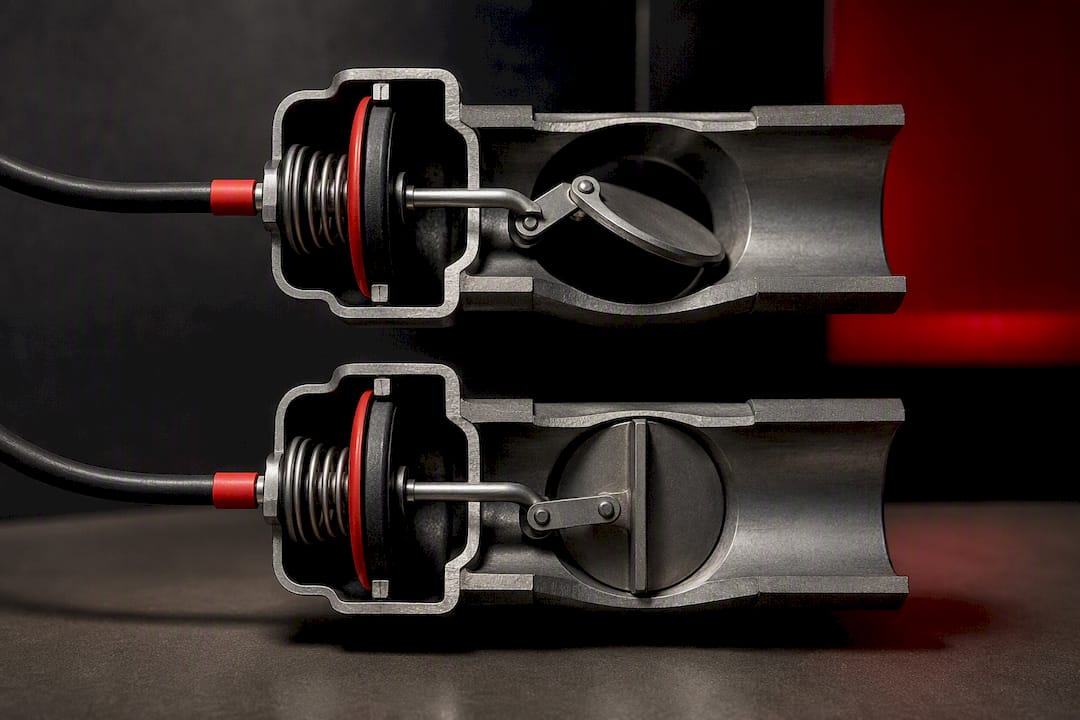
Vacuum comes from two places. Naturally aspirated engines usually tap the intake manifold directly, since it reliably produces enough negative pressure at idle and cruise. Turbocharged and supercharged engines often can’t, because vacuum drops or disappears entirely under boost, so builders add a dedicated electric vacuum pump to keep the valve responsive regardless of throttle position.
Failure modes are predictable and mostly mechanical:
- Vacuum lines crack or lose their crimp with age, causing slow or inconsistent valve movement.
- Diaphragms dry out and lose elasticity, leading to a valve that hangs half open and rattles at certain RPM.
- Dedicated vacuum pumps introduce their own whine or clicking noise under the car.
These issues rarely show up on a new install. They show up two or three years later, which is why aging vacuum plumbing is the real reliability question on any vacuum-based system, not the valve hardware itself.
How Do Electronic Exhaust Valve Actuators Work?
An electronic valve swaps the diaphragm for a small motor and gearset that rotates the butterfly directly, controlled by a signal instead of air pressure. That distinction matters because a motor can be told to stop anywhere in its rotation, not just fully open or fully closed. Good electric kits hold the valve at partial positions, 25%, 50%, 75%, letting you dial in a middle ground between stealth and full volume.
Control options have expanded well past a dashboard switch:
- Remote key fobs for quick open/closed toggling from outside the car.
- Bluetooth or smartphone apps for on-the-fly tone adjustment and saved presets.
- CAN-bus integration that ties valve position to driving mode, RPM, or throttle input automatically.
Electronics don’t love exhaust heat, so serious kits build in protection: thermal isolation spacers between the valve body and the actuator, and sealed housings rated against moisture and road grime. Wiring runs need a switched power source and a routing path that avoids hot pipes and moving suspension components, which is where a wiring guide for exhaust actuators earns its keep during a retrofit.
How Much Faster Are Electronic Valves Than Vacuum Valves?
Electronic actuators respond significantly faster than vacuum-based valves, which take noticeably longer to fully open or close. That’s not a marginal gap. It’s the difference between a valve that reacts to throttle input in real time and one that noticeably lags behind it.
Response Time Snapshot
| System | Typical Actuation Time |
|---|---|
| Electronic actuator | Under 0.2 seconds |
| Vacuum actuator | 0.5 to 1.0 seconds |
That speed advantage shows up most when driving matters. Punch the throttle on a track day and an electronic valve snaps open almost instantly, matching the sound to the moment you actually want it loud. A vacuum valve gets there eventually, but the half-second delay reads as sluggish once you’re used to the electronic version. Faster actuation also lets tuners map valve position to specific RPM thresholds or driving modes, something a binary vacuum switch simply can’t replicate.
On a Sunday cruise at steady speed, none of this matters. The valve sits in one position for minutes at a time, and 0.8 seconds versus 0.15 seconds is invisible. Speed only becomes a real factor once you’re modulating throttle constantly, which is exactly the driving style that draws people to a valved exhaust in the first place.
Installation and Durability: What to Expect
Installing either system is a manageable weekend project, but the steps and failure points differ.
- Vacuum systems: route vacuum lines from the manifold or pump to the actuator, install any needed check valves, and confirm the diaphragm holds pressure without leaking down over a few minutes.
- Electronic systems: mount the actuator away from direct exhaust radiant heat, run a switched power lead, and pair the controller (fob, app, or CAN interface) before final torque on the valve linkage.
Maintenance realities split along the same lines. Vacuum systems age through leak diagnosis, cracked lines, and eventual diaphragm replacement. Electronic systems fail through connector corrosion, actuator seal breakdown, or heat soak into the motor housing over years of highway driving.
Pro Tip: Add a thermal isolation spacer between the valve body and any electric actuator before you bolt it on. It’s cheap insurance against the single most common cause of premature actuator failure.
Either install is DIYable with basic tools, but wiring and CAN integration push electronic retrofits toward professional installation more often than vacuum swaps, which rely on parts most home mechanics already understand.
Which Sound and Performance Profile Fits Your Car?
Valve choice mainly changes exhaust tone and how quickly that tone shifts under throttle. Neither system adds meaningful horsepower on its own. Any gains come from reduced backpressure at high RPM, not from the actuation method itself.
Electronic valves earn their premium through tuning flexibility:
- Mapped, mode-based operation (comfort, sport, track) that adjusts valve position automatically.
- Partial-open positions that cut highway drone without going fully quiet.
- Consistent behavior on turbocharged engines where vacuum is too unreliable under boost to trust for valve timing.
Vacuum valves keep things simpler: mostly a two-tone setup, quiet at idle and cruise, open under load. That’s genuinely enough for a lot of builds.
Match the system to the car. Daily drivers chasing a quiet commute and an aggressive weekend voice lean electronic for the mode switching. Track cars want instant open on demand, which favors electronic actuation. Classic and naturally aspirated builds that value mechanical simplicity do fine on vacuum. Turbocharged platforms should default to electronic given the vacuum inconsistency under boost.
Vacuum vs Electronic Exhaust Valves: Pros, Cons, and Decision Rules
Vacuum valve pros and cons:
- Simple, well-understood mechanism with few electronic points of failure.
- Naturally heat-tolerant since there’s no motor or circuit board near the pipe.
- Lower cost to buy and install.
- Binary operation only, no partial positions.
- Lines and diaphragms degrade over time, leading to leaks and inconsistent behavior.
Electronic valve pros and cons:
- Fast, sub-0.2 second response with precise partial-position control.
- Integrates with apps, fobs, and CAN-based driving modes, per manufacturer comparisons of electric versus vacuum systems.
- Higher upfront cost and more complex installation.
- Requires heat mitigation and is more vulnerable to corrosion and wiring faults over time.
Three quick rules: if you want app control and instant response, go electronic. If you’re on a tight budget and driving a naturally aspirated car, vacuum is fine. If you’re turbocharged, skip vacuum entirely.
How Valvecontrolexhaust Tackles Heat and Compatibility
Valvecontrolexhaust builds its electronic systems around the two failure points that matter most: heat and fitment. The company documents customizable electronic control across a wide range of luxury and performance platforms, including Audi, BMW, Porsche, Ferrari, Lamborghini, and Mercedes-AMG.
On durability, that means sealed actuator housings and thermal isolation between the valve and the motor, the same protections this article flagged as non-negotiable for any electronic setup. Systems that include only genuine parts direct from authorized manufacturers have fewer fitment issues than generic electronic kits. For readers evaluating actuator hardware or wiring accessories before a purchase, the exhaust parts catalog and accessories selection cover both.
Why the “Just Get Electronic” Advice Misses the Point
Most comparison articles treat this as a settled question: electronic wins, end of story. That’s lazy. The research actually supports a narrower claim: electronic wins on speed and control granularity, full stop, but that advantage only pays off if you’re actually driving in a way that exploits it.
Here’s what gets underestimated. A vacuum valve on a well-maintained naturally aspirated car, with fresh lines and a healthy diaphragm, is a genuinely good piece of engineering. It’s not a downgrade; it’s a different set of priorities. The mistake isn’t choosing vacuum, it’s choosing vacuum on a turbo car and expecting consistent behavior under boost, or choosing it and then never checking the lines for the next five years.
What should come first isn’t brand or price. It’s an honest look at your engine’s vacuum behavior and how much you actually care about partial-position tuning versus a simple loud/quiet switch. Get that right, and either system will serve you well for years.
— Info
Get Precise Valve Control Built for Your Car
Vacuum systems get you a decent loud/quiet switch. Exact control mapped to driving mode is available on hardware sold direct from authorized manufacturers for Audi, BMW, Porsche, Ferrari, Lamborghini, and Mercedes-AMG platforms.

That last point matters more than it sounds. Generic electronic kits may present fitment risks on expensive cars. Buying genuine parts built for specific platforms can reduce fitment risks, and real-time sound and performance adjustment allows variable valve behavior for different drives. Whether you’re replacing a tired vacuum diaphragm or upgrading straight to electronic, start with the exhaust parts catalog to check compatibility for your model, or browse downpipe options if you’re planning a fuller system upgrade alongside the valve swap.
Sources
- Electronic vs Vacuum Exhaust Valves: Which Control System is Best for Your Exhaust? – TOT Valve
- Exhaust
- Engineerskill
- Detailed Comparison of Electric Exhaust Valves And Vacuum Exhaust Valves – GRWA Automotive
FAQ
Is a Valved Exhaust Illegal?
Valved exhausts themselves are legal in most places, but noise limits still apply, and some jurisdictions restrict aftermarket exhaust modifications regardless of valve type. Check local noise ordinances and vehicle inspection rules before installing one, since enforcement varies significantly by region.
What Are the Downsides to Exhaust Cutout Valves?
The main downsides are reliability and legality risk. Vacuum-based cutouts can leak or stick over time, while both cutout types risk noise violations if left fully open on public roads, and any valve adds a point of mechanical failure that a fixed pipe doesn’t have.
What Does an Electronic Exhaust Valve Do?
An electronic exhaust valve uses a motor-driven butterfly to control exhaust flow and sound, opening, closing, or holding partial positions on command. It typically responds in under 0.2 seconds, compared to 0.5 to 1.0 seconds for a vacuum-actuated valve, and can integrate with apps or driving-mode systems like those offered on Valvecontrolexhaust systems.
What Are the Different Types of Exhaust Valves?
The two main types are vacuum actuated and electronic (motor driven) actuated valves. Vacuum valves use engine or pump vacuum to move a diaphragm between open and closed, while electronic valves use a motor and controller for precise, often adjustable positioning.
Do some companies sell electronic valve systems?
Yes, Valvecontrolexhaust sells customizable electronic valve control systems designed for compatibility with luxury and performance brands including Audi, BMW, Porsche, Ferrari, Lamborghini, and Mercedes-AMG. Pricing for specific components is available directly on the exhaust parts category page.