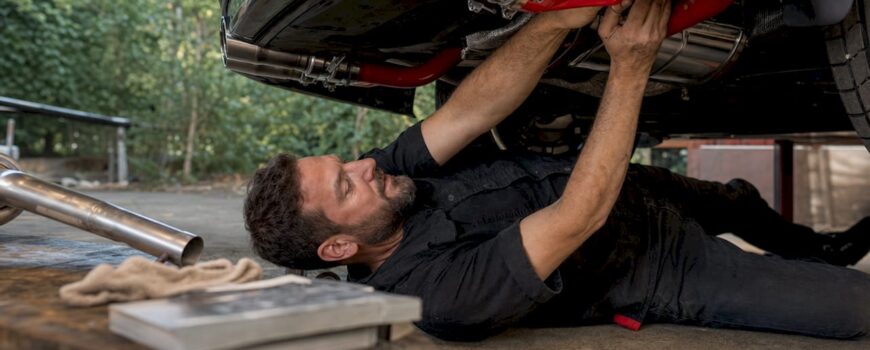
BMW exhaust upgrade best practices start with one rule: match the system to how you actually drive, not to the loudest clip you found online. A well-chosen aftermarket exhaust transforms your BMW’s character through improved throttle response, a more engaging sound, and modest power gains. The wrong choice leaves you with cabin drone, a check engine light, and a car you dread taking on the highway. This guide covers every decision point, from system type selection to fitment, tuning, and sound quality, so you get the result you want on the first attempt.
1. Understanding the main types of BMW exhaust upgrades
Choosing the right exhaust type is the foundation of every successful BMW aftermarket exhaust project. The four main categories are axle-back, cat-back, midpipes and resonators, and downpipes. Each sits at a different point in the exhaust path and delivers a different mix of sound change and performance gain.
Axle-back systems replace only the muffler section behind the rear axle. They are the easiest to install, carry the lowest cost, and produce a noticeable tone change without touching emissions hardware. Power gains are minimal, typically under 5 hp, but for owners who want a cleaner sound without complexity, axle-back is a solid starting point.
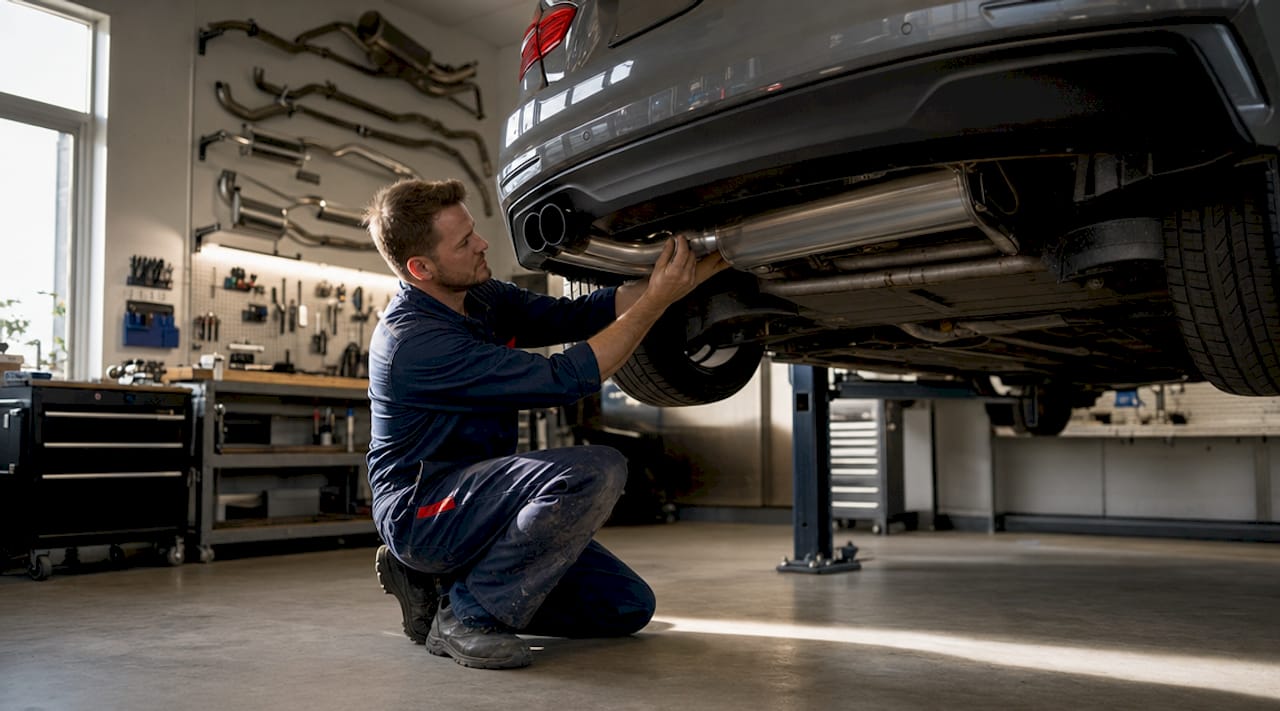
Cat-back systems run from the catalytic converter back to the tips and represent the most popular bolt-on upgrade for BMW owners. They deliver a meaningful sound improvement and modest power gains in the 5 to 10 hp range without triggering check engine lights, since they sit downstream of the oxygen sensors. Brands like Akrapovic, Armytrix, and FI Exhaust all offer cat-back options tuned specifically for BMW models.
Midpipes and resonators sit between the catalytic converter and the muffler. Swapping or deleting a resonator fine-tunes the exhaust note, but removing resonators too aggressively is the primary cause of low-frequency cabin drone on highway drives. Treat this section carefully.
Downpipes connect the turbocharger directly to the rest of the exhaust system and represent the single largest performance gain available. A downpipe upgrade on a turbocharged BMW delivers 20 to 40 hp with an ECU flash, but it also requires tuning to avoid CEL codes P0420 and P0430.
| Exhaust type | Power gain | Sound impact | Install complexity | CEL risk |
|---|---|---|---|---|
| Axle-back | Under 5 hp | Moderate tone change | Low | None |
| Cat-back | 5 to 10 hp | Significant improvement | Low to medium | None |
| Midpipe/resonator | Minimal | Fine-tunes tone | Medium | Low |
| Downpipe | 20 to 40 hp | Dramatic increase | High | High without tune |
Pro Tip: Start with a cat-back before adding a downpipe. You will learn what sound profile you actually want before committing to the more complex and expensive modifications.
2. How to avoid common mistakes when upgrading BMW exhaust systems
The most expensive mistake BMW owners make is buying an exhaust based on a cold start video. Cold start clips always sound more aggressive than the same system at highway cruise speed. Expert advice from The Bavarian Garage consistently points to resonance control at cruise speed as the real measure of a daily-driver exhaust. Prioritize how the car sounds at 70 mph, not at 7 am in a parking garage.
Deleting resonators too early is the second most common error. Resonators manage specific frequency ranges, and removing them without understanding the full system often introduces a 2,000 to 3,000 rpm drone that makes long drives genuinely unpleasant. Cabin drone results directly from removing the components that control low-frequency resonance.
Fitment mismatches cause real problems. BMW models share platform codes but not always exhaust dimensions. An F30 330i and an F30 340i use different pipe diameters and hangers. Always verify part numbers against your specific chassis code, not just the body style.
Swapping only the exhaust tips is another common disappointment. Tips are cosmetic. They will not fix drone, add measurable power, or meaningfully change the exhaust note. If your goal is sound improvement, the muffler and resonator sections are where the work happens.
Pro Tip: Before purchasing any system, search your specific BMW chassis code plus the exhaust brand name on forums like Bimmerpost or TempaDrive. Real owner feedback on drone and fitment is worth more than any product description.
3. What are the best sound quality practices for daily driven BMW exhaust upgrades?
Sound quality for a daily driver is defined by the cruise tone, not the startup bark. A balanced cat-back with resonance control reduces driver fatigue and keeps the car comfortable on long trips while still delivering a satisfying note under hard acceleration. The goal is a system that sounds purposeful at 40 mph and exciting at full throttle.
Valved exhaust systems are the most practical solution for BMW owners who want both worlds. Valved systems integrating with factory drive modes deliver aggressive sound when you want it and near-stock civility when you do not. K2 Industries describes this as the pinnacle of BMW exhaust modification because it removes the compromise entirely. You get the track sound on Sunday and the quiet commute on Monday.
Keep at least one resonator in the system if you drive the car more than three days a week. Fully deleting both the resonator and the muffler creates a sound that impresses for the first week and exhausts you for the next three years. Aggressive setups suit weekend cars and track-day vehicles far better than daily drivers.
“Choose your exhaust based on how you drive: daily drivers need more balanced, less aggressive sound profiles.” — The Bavarian Garage
Sound profiles worth targeting for daily use include a deep, low-frequency burble at idle, a clean linear note under light throttle, and a sharp crack on aggressive downshifts. Systems from Akrapovic, Armytrix, and Valvetronic are engineered specifically to hit these targets on BMW platforms.
4. Performance considerations: how exhaust upgrades affect BMW power
Power gains from exhaust upgrades follow a clear hierarchy. Downpipes deliver the most, cat-back systems deliver some, and axle-back systems deliver almost none. Understanding this hierarchy prevents spending money in the wrong place when performance is the primary goal.
For turbocharged BMW engines, the stock catalytic converter is the biggest flow restriction in the exhaust path. High-flow 200-cell sport cats offer roughly 90% of the performance gain of a catless downpipe while significantly reducing exhaust smell and legal risk. This is the practical choice for street-driven cars. The FI Exhaust 200-cell downpipe for the BMW 535i F10/F11 is a direct example of this balance in a bolt-on package.
Cat-back and axle-back systems do not trigger check engine lights because they sit downstream of the oxygen sensors. Downpipes sit upstream, which is why ECU tuning is non-negotiable after installation. Skipping the tune after a downpipe upgrade is the fastest way to generate a P0420 or P0430 code and spend money at the dealer undoing what you just paid to install.
| Upgrade type | Expected power gain | Tune required | Emissions impact |
|---|---|---|---|
| Axle-back | Under 5 hp | No | None |
| Cat-back | 5 to 10 hp | No | None |
| 200-cell sport cat downpipe | 20 to 40 hp | Yes | Reduced vs. catless |
| Catless downpipe | 20 to 40 hp | Yes | Significant, illegal in many states |
For BMW X5M F95 and X6M F96 owners, the FI Exhaust 200-cell downpipe provides the same performance principle applied to the S63 V8 platform, where the gains are even more pronounced given the twin-turbo configuration.
5. Tips for selecting and installing BMW exhaust tips and aesthetic upgrades
Exhaust tips are the most misunderstood component in a BMW exhaust upgrade guide. Tips influence appearance but provide minimal tone change. Buying tips expecting a sound transformation leads to disappointment every time. Their value is purely visual, and that is a legitimate reason to upgrade them, as long as you go in with accurate expectations.
Sizing is where most tip installations go wrong. The inlet diameter of the tip must match the outlet diameter of your existing exhaust pipe. The outlet diameter must fit cleanly within the bumper cutouts without touching the surrounding trim. Oversized tips can melt plastic bumper trim from heat exposure, which turns a cosmetic upgrade into a repair bill.
Style choices worth considering include:
- Polished stainless steel for a clean, factory-premium look that complements most BMW exterior colors
- Black chrome or matte black for a more aggressive, sport-focused appearance popular on M Sport and M Performance models
- Oval slash-cut tips for a subtle nod to motorsport heritage without looking aftermarket-heavy
- Dual round tips to match the factory M Performance Exhaust aesthetic on models like the M3, M4, and M5
Check your factory setup before ordering. Many BMW M models already run dual tips from the factory, and adding a second set of tips to a single-exit system requires a Y-pipe adapter, which adds complexity and cost.
Key takeaways
The most effective BMW exhaust upgrade combines the right system type, proper fitment, and an ECU tune where required to deliver performance, sound, and daily comfort without compromise.
| Point | Details |
|---|---|
| Match system to driving style | Daily drivers need resonance control; weekend cars can run more aggressive setups. |
| Downpipes need ECU tuning | Skipping the tune after a downpipe install causes CEL codes P0420 and P0430. |
| Valved systems offer the most flexibility | Adjustable valves deliver aggressive sound on demand and quiet cruising when needed. |
| Tips are cosmetic only | Tip upgrades improve appearance but do not fix drone or add meaningful power. |
| 200-cell sport cats are the practical choice | They deliver near-catless performance gains while remaining street-legal in most states. |
What I’ve learned from watching BMW owners get this wrong
The pattern I see most often is this: an owner watches a few YouTube clips of a loud BMW exhaust, orders the most aggressive system available, and then spends the next six months complaining about drone on the highway. The exhaust sounded incredible in a 45-second video filmed at wide-open throttle. It sounds like a jackhammer at 65 mph in traffic.
The advice I give every time is to start with a quality cat-back from a brand that engineers for cruise tone, not just peak noise. Akrapovic and Armytrix both publish sound data across the RPM range, not just at redline. That data tells you far more than any video clip.
Valved systems changed my perspective on what a BMW exhaust upgrade should be. The ability to switch sound modes means you are not locked into one compromise. You get the aggressive note when the road opens up and the quiet mode when you are driving through a neighborhood at 7 am. That flexibility is worth more than raw decibels for anyone who drives their BMW every day.
The other thing I would tell every BMW owner is to understand your car’s use before spending anything. A track-day M4 and a daily-driven 340i need completely different exhaust strategies. The M4 can run a full resonator delete and a catless downpipe because it lives at high RPM. The 340i needs a balanced cat-back with at least one resonator intact, or the commute becomes a chore. Getting that distinction right from the start saves money and regret.
— Info
Upgrade your BMW exhaust with the right system from Valvecontrolexhaust
Valvecontrolexhaust specializes in valve-controlled exhaust systems built specifically for high-performance BMWs, from the F30 340i to the X5M F95. Their systems integrate with factory drive modes, giving you real-time control over sound and performance without sacrificing OEM reliability.
If you are ready to move beyond guesswork, the performance exhaust buyer’s guide on Valvecontrolexhaust covers IPE, FI Exhaust, Armytrix, Akrapovic, Valvetronic, and Ryft side by side, with real-world sound and fitment data for BMW models. For owners who want a deeper technical breakdown before committing, the practical exhaust evaluation covers each brand’s engineering approach in detail. Valvecontrolexhaust’s catalog spans dozens of BMW chassis codes, making it straightforward to find a system matched to your exact model and driving goals.
FAQ
What is the best exhaust upgrade for a daily driven BMW?
A cat-back system with resonance control is the best starting point for daily drivers. It delivers a meaningful sound improvement without drone, requires no ECU tuning, and carries no check engine light risk.
Do I need an ECU tune after installing a BMW downpipe?
Yes. Downpipe upgrades on turbocharged BMWs require an ECU flash to prevent CEL codes P0420 and P0430 and to unlock the full 20 to 40 hp gain the upgrade provides.
Will BMW exhaust tips change how my car sounds?
Exhaust tips provide minimal tone change and are primarily a cosmetic upgrade. For meaningful sound improvement, the muffler and resonator sections of the system are where the real difference is made.
What causes exhaust drone in a BMW?
Drone results from removing resonators or mufflers that manage low-frequency resonance in the exhaust system. Keeping at least one resonator intact is the most reliable way to prevent highway drone on a daily driver.
Are valved exhaust systems worth it for BMW owners?
Valved systems are the most versatile option for BMW owners who want both aggressive sound and daily comfort. They integrate with factory drive modes and allow real-time switching between loud and quiet settings without any hardware changes.