
A dyno tested exhaust system is an exhaust setup validated on a dynamometer to confirm real power gains, sound tuning, and thermal safety before it reaches your vehicle. The term “dyno tested” is the common shorthand; the recognized industry process is dynamometer validation, where engineers measure wheel horsepower, torque curves, backpressure, exhaust gas temperatures (EGTs), and sound resonance under controlled conditions. Real examples make the stakes clear: a twin-turbo V8 Toyota 200 Series LandCruiser gained from 166 kW to 178 kW after exhaust installation, and a Yamaha YFZ450R recorded over 5 HP in peak gains. Brands like Dinan Engineering and STILLEN use this process to separate marketing claims from measurable results.
How does the dyno testing process work for exhaust systems?
Dynamometer validation follows a structured sequence. Skipping any step produces numbers that cannot be trusted or compared.
- Baseline run. The vehicle runs on the dyno with the stock exhaust installed. The dyno records wheel horsepower, torque across the RPM range, throttle response lag, backpressure readings, and EGTs at multiple points in the exhaust path.
- Exhaust swap. Technicians install the aftermarket system under identical ambient conditions. Temperature, humidity, and dyno settings stay fixed. Environmental variables like heat and humidity shift raw numbers significantly, which is why same-dyno, same-day testing is the standard.
- Post-install run. The vehicle repeats the same pull sequence. Engineers compare the two data sets as a delta, meaning the difference between before and after, not the raw peak figures.
- Sound and thermal capture. Microphones record interior and exterior audio at multiple locations. Thermal sensors log EGTs and surface temperatures on headers, cats, and mufflers.
- Iteration. If backpressure is too high or a resonance frequency creates cabin drone, engineers revise the design and retest. Dinan Engineering and Paulsen Motorsports both describe this iterative loop as the core of responsible exhaust development.
The delta improvement is the only number that matters when comparing dyno results across different vehicles or test facilities. A raw peak number from one dyno tells you almost nothing without the baseline from the same session.
Pro Tip: Ask any exhaust manufacturer for the before-and-after dyno sheet from the same test session on the same vehicle platform as yours. If they only supply a post-install number, the data is incomplete.
What are the performance benefits of a dyno tested exhaust system?
Dyno validation confirms three categories of gain: power output, throttle response, and thermal management. Each one affects how the car feels and how long the engine lasts.
Power and torque gains
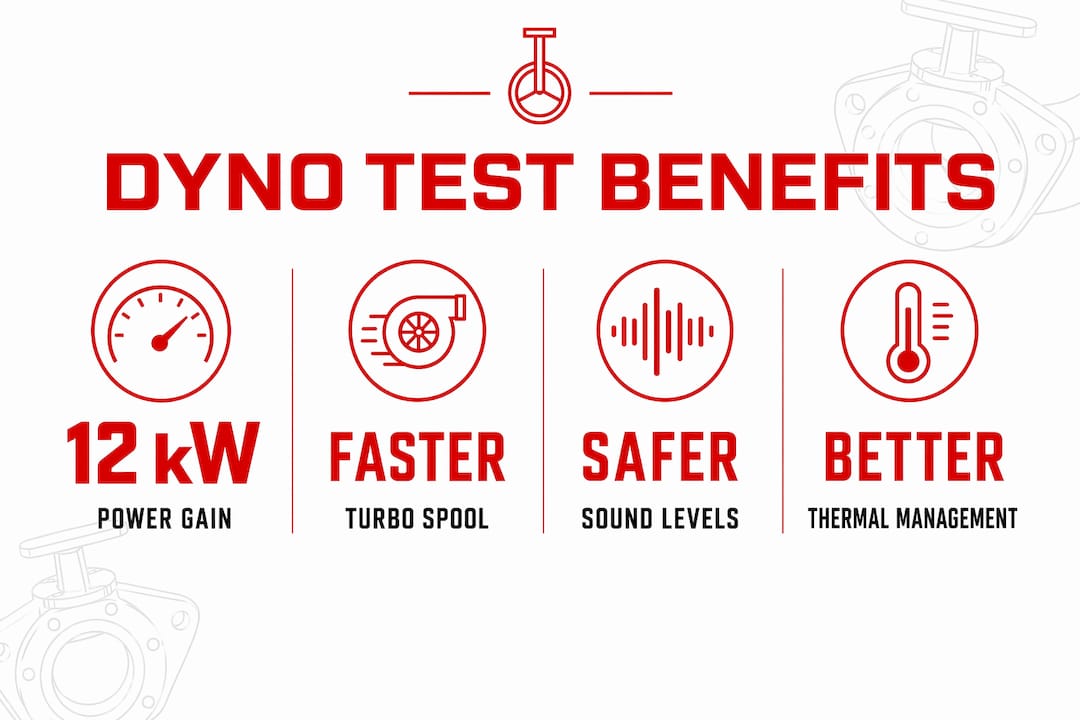
The LandCruiser data is a useful benchmark. A stock twin-turbo V8 producing 166 kW at the wheels climbed to 178 kW with an exhaust upgrade alone. That is a meaningful gain for a heavy SUV platform. The Yamaha YFZ450R, a high-revving single-cylinder ATV, added over 5 HP at peak. Both results reflect what exhaust-only upgrades realistically deliver: noticeable mid-range torque fill and modest peak power increases.
Exhaust gains alone are moderate. Combining exhaust upgrades with ECU tuning pushed the LandCruiser past 200 kW from the 178 kW exhaust-only baseline. The exhaust creates the conditions for tuning to work. Without the tuning, you leave power on the table.
Throttle response and turbo spool
Reduced backpressure shortens the time between throttle input and engine response. On turbocharged platforms like the LandCruiser’s twin-turbo V8, lower exhaust restriction means the turbines spool faster. Drivers report this as a sharper, more immediate feel under acceleration. Dyno charts confirm it through torque curve shape: a well-designed system broadens the torque band rather than just raising the peak.
Thermal management
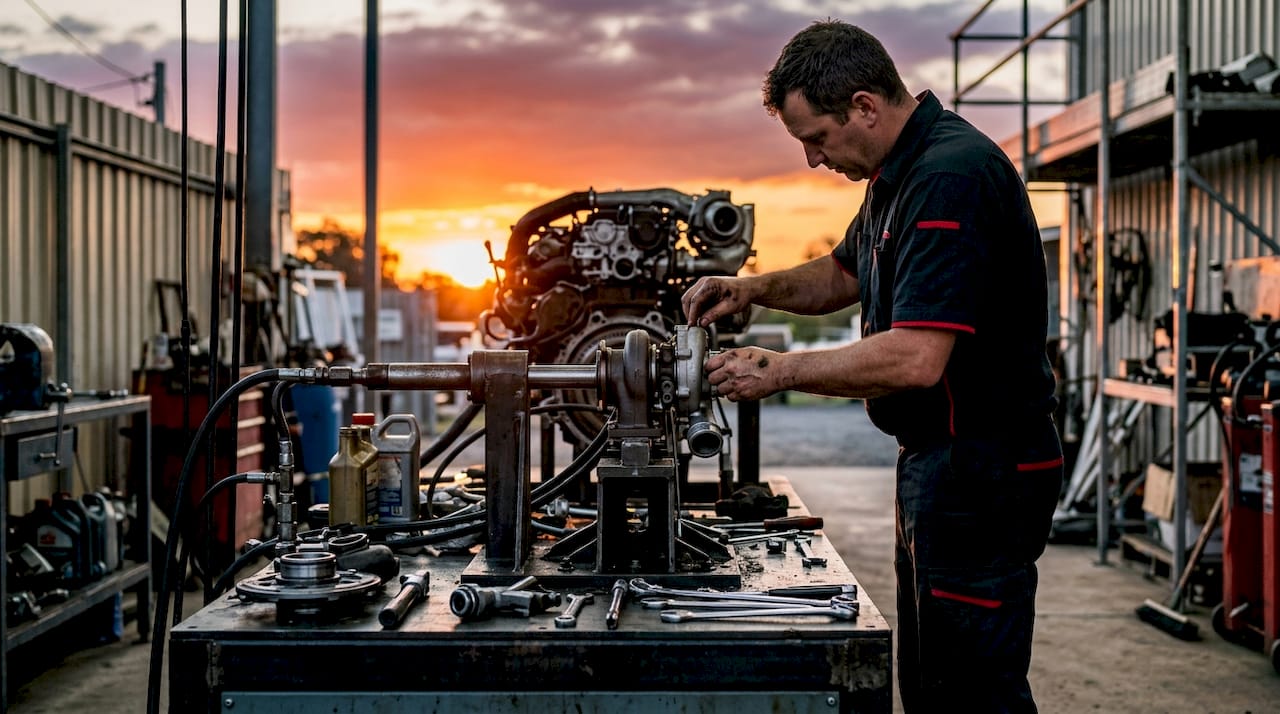
Dyno testing validates that EGTs stay within safe limits under full load. High EGTs damage turbine blades, melt gaskets, and accelerate catalytic converter degradation. A system that raises power but also raises EGTs beyond safe thresholds is a net negative. Thermal sensor data during dyno runs catches this problem before the system ships.
| Metric | Stock baseline | Post-exhaust result |
|---|---|---|
| Wheel power (LandCruiser V8) | 166 kW | 178 kW |
| Peak HP gain (YFZ450R) | Baseline | +5 HP |
| Power with ECU tune added | 178 kW | 200+ kW |
| EGT status | Measured | Validated within limits |
- Broader mid-range torque curve, not just a higher peak number
- Faster turbo spool on forced-induction engines
- Lower backpressure reducing thermal stress on exhaust components
- ECU tuning amplifies all gains when combined with a validated exhaust
How does dyno testing ensure safe sound and exhaust management?
Sound is not a side effect of exhaust design. It is an engineered output, and dyno testing treats it that way.
Dinan engineers use microphones and binaural recordings during dyno sessions to capture sound resonance at interior and exterior positions simultaneously. This lets them identify frequencies that create cabin drone at highway speeds, a common complaint with poorly designed aftermarket systems. If a prototype produces a 200 Hz resonance that amplifies inside the cabin, the design changes before production begins.
Backpressure measurement runs alongside sound testing. Too little backpressure at low RPM hurts low-end torque. Too much at high RPM restricts power and raises temperatures. The dyno session maps the full backpressure curve so engineers can tune pipe diameter, muffler volume, and valve positioning to hit the right balance across the entire RPM range.
“A truly great exhaust system validated by dyno testing not only delivers peak power but carefully manages backpressure, exhaust gas temperature, and acoustic characteristics to optimize engine health and driving experience.” — Dinan Engineering
Dyno environments also require proper fume capture. Carbon monoxide and exhaust gases must be extracted at the source to protect technicians and prevent contaminated air from affecting sensor readings. A facility without proper extraction produces unreliable data and creates a health hazard.
- Microphone arrays capture interior and exterior sound at multiple RPM points
- Resonance frequencies that cause drone are identified and eliminated before production
- Backpressure curves are mapped across the full RPM range, not just at peak power
- Thermal sensors confirm surface temperatures on headers and mufflers stay within material limits
- Fume extraction systems protect both technicians and measurement accuracy
Pro Tip: When reviewing a manufacturer’s dyno data, ask specifically whether sound measurements were taken at idle, cruise, and wide-open throttle. A system tuned only at peak RPM often drones at 70 mph.
How to interpret and use dyno results when choosing an exhaust system?
Dyno results are relative, not absolute. Two dynos in different facilities will produce different raw numbers for the same car. The only comparison that holds up is before-and-after on the same machine under the same conditions.
When you review a manufacturer’s dyno sheet, look for these specifics:
- Both runs on the same dyno. If the baseline and post-install runs happened at different facilities, the delta is meaningless.
- Same ambient conditions. Temperature and humidity corrections should be noted on the sheet.
- Torque curve shape, not just peak numbers. A system that adds 10 HP at redline but loses torque at 3,000 RPM makes the car feel slower in daily driving.
- Sound data alongside power data. A sheet with only power numbers tells half the story.
- EGT and backpressure readings. These confirm the system is safe, not just powerful.
Golen Engine Service states that dyno testing objectively confirms modification effectiveness. That objectivity only holds when the test protocol is sound. A single post-install run with no baseline is not a dyno test. It is a measurement.
| What to look for | Why it matters |
|---|---|
| Before-and-after on same dyno | Eliminates facility-to-facility variation |
| Torque curve, not just peak HP | Reflects real-world drivability |
| EGT and backpressure data | Confirms engine safety under load |
| Sound measurements at multiple RPMs | Identifies drone risk before purchase |
| Ambient condition notes | Validates data integrity |
Ask the manufacturer directly: “What vehicle platform was this tested on, and can I see the full dyno sheet including baseline?” If the answer is vague, treat the performance claims with skepticism. Brands like Akrapovic and Armytrix publish detailed test documentation because their engineering process supports it. That transparency is itself a quality signal.
Key Takeaways
A dyno tested exhaust system delivers verified power, sound, and thermal gains because engineers measure before-and-after results under controlled conditions, not just peak output.
| Point | Details |
|---|---|
| Delta is the only valid metric | Compare before-and-after runs on the same dyno, not raw numbers across facilities. |
| Sound is engineered, not accidental | Manufacturers like Dinan use microphone arrays to eliminate drone before production. |
| Thermal data protects your engine | EGT and backpressure readings confirm safety under full load, not just power gains. |
| Exhaust alone has limits | Pairing a validated exhaust with ECU tuning unlocks the full performance gain. |
| Transparency signals quality | Brands that publish full dyno sheets, including baselines, stand behind their engineering. |
Why dyno data changed how I evaluate exhaust upgrades
The first time I pulled a dyno sheet for a client’s BMW M3 exhaust upgrade, the peak horsepower number looked impressive. Then I noticed there was no baseline run. The manufacturer had measured output after installation on a warm engine, on a hot day, with no correction factor noted. The number was real in the sense that the dyno produced it. But it was useless for understanding what the exhaust actually contributed.
That experience taught me something most enthusiasts learn too late: the sound and performance audit matters more than the headline claim. A system from Akrapovic or Armytrix that ships with a complete before-and-after sheet is worth more than a cheaper system with a single post-install number, even if the raw figures look similar.
The other mistake I see constantly is treating exhaust upgrades as standalone solutions. The LandCruiser data makes this concrete: 178 kW from exhaust alone, then 200+ kW once tuning was added. The exhaust created the headroom. The tune captured it. Buying a dyno tested exhaust without planning for a tune is like buying a better intake manifold and leaving the fuel map untouched.
Sound data is the most underrated part of the dyno sheet. Enthusiasts obsess over horsepower and ignore the resonance measurements. Then they install a system that drones at 2,500 RPM on the highway and live with it because returning it feels like admitting a mistake. Check the sound data first. A well-validated system from brands like IPE or Valvetronic will show you exactly what the cabin sounds like at cruise speed, because they measured it.
— Info
Premium dyno tested exhaust systems worth considering

Valvecontrolexhaust carries a curated selection of exhaust systems from brands including IPE, FI Exhaust, Armytrix, Akrapovic, Valvetronic, and Ryft, all validated through rigorous dyno testing processes. Each system is matched to specific platforms including Audi, BMW, Ferrari, and Lamborghini, with documented performance and sound data. Valved systems from these brands let you control sound output in real time, shifting between quiet and full-aggressive modes without sacrificing the dyno-verified performance underneath. Warranties and fitment guarantees back every system. The performance exhaust buyer’s guide at Valvecontrolexhaust walks through each brand’s dyno results, sound profiles, and compatibility by vehicle model.
FAQ
What does “dyno tested” mean for an exhaust system?
A dyno tested exhaust system has been validated on a dynamometer with before-and-after runs to confirm horsepower, torque, backpressure, EGT, and sound improvements under controlled conditions. The label indicates objective engineering validation, not just a marketing claim.
How much power does a dyno tested exhaust system add?
Power gains depend on the platform. A Toyota 200 Series LandCruiser twin-turbo V8 gained 12 kW from exhaust alone, while a Yamaha YFZ450R added over 5 HP at peak. Adding ECU tuning after the exhaust install typically delivers significantly larger total gains.
Why does the same dyno test produce different numbers on different days?
Temperature, humidity, and dyno calibration all shift raw output readings. Meaningful results come from comparing baseline and post-install runs on the same dyno under the same ambient conditions, not from comparing raw numbers across different facilities or sessions.
Does a dyno tested exhaust system affect sound as well as power?
Sound is a primary engineering output in dyno testing. Manufacturers like Dinan use microphone arrays and binaural recordings during dyno sessions to measure interior and exterior resonance at multiple RPM points, eliminating drone before the system reaches production.
Do I need ECU tuning after installing a dyno tested exhaust?
An exhaust upgrade alone delivers moderate gains. Full performance benefits emerge when dyno testing includes ECU tuning to optimize air/fuel ratios and boost pressure alongside the new exhaust. The exhaust creates the conditions; the tune captures the remaining power.
Recommended
- Comparing High-Performance Exhausts: IPE, FI, Armytrix, Akrapovic, Valvetronic, and Ryft – Valve Control Exhaust
- Comparing Premium Aftermarket Systems: IPE, FI, Armytrix, Akrapovic, Valvetronic and Ryft Exhausts – Valve Control Exhaust
- Why Exhaust Sound Matters for Performance Vehicles
- Tuning the Exit: Practical Evaluation of IPE, FI, Armytrix, Akrapovic, Valvetronic and Ryft Exhausts – Valve Control Exhaust