Daily driver exhaust customization is the process of modifying your vehicle’s exhaust system to improve sound quality and performance without sacrificing comfort during everyday use. The best custom exhaust setups balance an aggressive tone with drone-free cabin comfort, and valved exhaust systems are the technology that makes that balance possible. Mandrel-bent 304 stainless steel cat-back systems and electronically controlled exhaust valves are the two most impactful upgrades for daily drivers. This guide covers every decision you need to make, from component selection to sound tuning to legal compliance, so you get the result you actually want.
What are the essential components for daily driver exhaust customization?
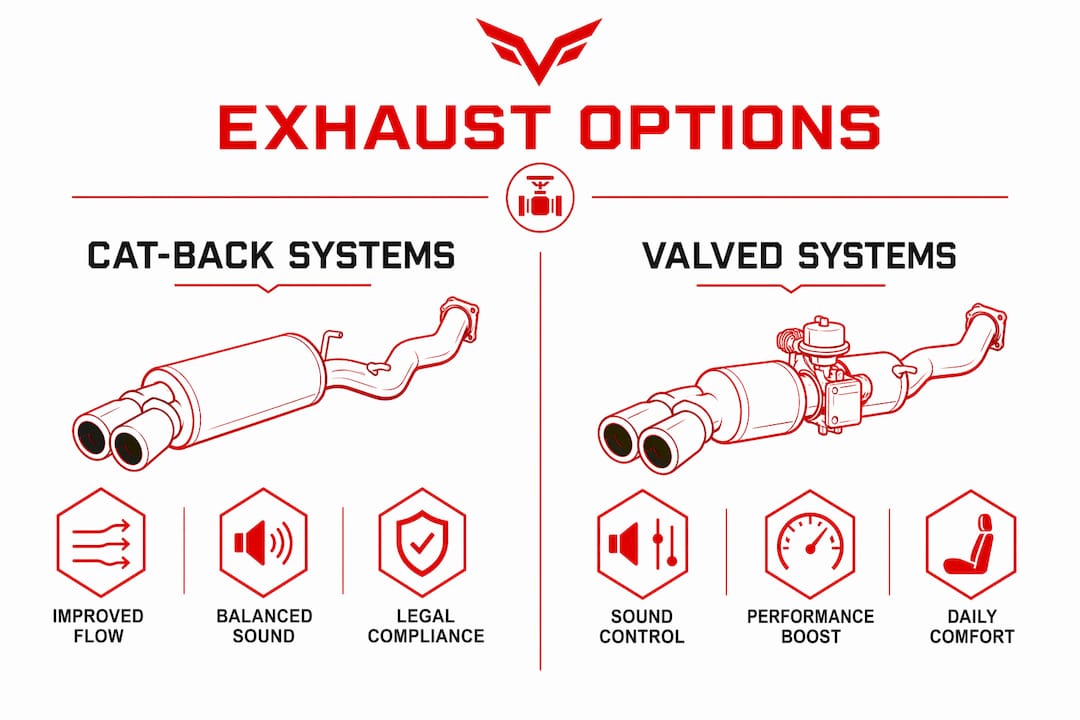
Cat-back exhaust systems replace everything from the catalytic converter rearward, making them the best starting point for most daily drivers. They deliver sound improvement and moderate power gains while keeping emissions compliance intact. Header-back systems go further by replacing the headers too, but they add cost and complexity that most daily drivers do not need.
Pipe material and bending method matter more than most enthusiasts realize. Mandrel-bent 304 stainless steel maintains a consistent internal diameter through every bend, which keeps exhaust flow smooth and prevents the power losses that crush-bent pipes create. Stainless steel also resists corrosion far better than mild steel, which matters when your car sees rain, road salt, and daily heat cycles year after year.
The core components of a well-built daily driver exhaust system include:
- Cat-back piping: Mandrel-bent 304 stainless steel for durability and consistent flow
- Muffler: Controls overall volume and tone character, from deep rumble to sharp bark
- Resonator: Filters harsh high-pitched frequencies while preserving a full, aggressive note
- Exhaust valves: Electronic or mechanical valves that switch between quiet and loud modes
- Tip style and diameter: Affects the visual finish and slightly influences exit tone
Muffler deletes are a common mistake on daily drivers. Removing the muffler creates excessive volume and a raspy, thin sound that fatigues quickly on long drives. A quality resonator-based system gives you a deep, controlled tone without the harshness.
How to select and tune exhaust sound for daily driving
Sound tuning is where most enthusiasts make their biggest mistakes. The goal is not maximum volume. The goal is a tone that sounds great at every RPM range without creating cabin resonance that wears you down on a 45-minute commute.

Cabin resonance between 1,900–2,100 RPM is the most common complaint among daily drivers who chose an exhaust purely for track sound. That RPM range is exactly where highway cruising happens, so drone in that band turns every long drive into an endurance test. Resonators placed strategically in the mid-pipe section absorb those frequencies before they reach the cabin.
Pipe diameter also shapes the sound character. Larger diameter pipes shift the tone lower and fuller, while pipes that are too large for the engine’s displacement create a hollow, unimpressive note. A fabricator or exhaust specialist can match pipe diameter to your engine’s output for the best result.
Key sound tuning decisions to get right before you buy:
- Listen to real-world sound clips at highway RPM, not just wide-open throttle pulls
- Check resonator placement in the system you are considering, not just muffler type
- Match pipe diameter to engine displacement to avoid a hollow or overly aggressive tone
- Test for drone by finding reviews from owners who daily drive the same car and setup
Pro Tip: Search for owner forums specific to your exact car model and exhaust brand. Owners who daily drive the setup for six months give far more accurate drone feedback than short YouTube reviews.
Exhaust upgrades on daily drivers work best when the focus stays on throttle response and sound quality rather than peak power numbers. A well-tuned cat-back system improves how the car feels to drive, not just how it sounds at full throttle.
What are the best practices for custom exhaust fabrication?
Custom exhaust fabrication produces better results than off-the-shelf kits for vehicles with modifications or unusual routing requirements. Tailored pipe routing and resonator placement account for your specific engine setup, suspension geometry, and driving goals in a way that generic systems cannot.
The fabrication process follows a specific sequence that separates professional work from amateur results:
- Measure the existing system and document all clearances, including suspension travel and heat-sensitive components nearby
- Mock up the new routing using flexible tubing or tack-welded sections before committing to final cuts
- Tack-weld or clamp pipes on the vehicle to confirm fitment under real conditions before moving to the bench
- Complete final welds off the chassis once fitment is confirmed, then reinstall and check for leaks
- Check local noise ordinances and HOA rules before the final setup is locked in
Professional fabricators tack-weld on the vehicle first because welding parts together on the floor almost always produces poor fitment and potential exhaust leaks. The car’s geometry under load is different from how it sits on a lift, and that difference matters.
Checking local noise regulations before installation is not optional. Experts recommend pre-checking noise ordinances and HOA rules before custom exhaust installation. Getting cited for a noise violation or failing an inspection after spending money on a custom build is an avoidable problem that starts with a 10-minute research step.
Legal compliance is a real concern, especially in states with strict vehicle inspection requirements. Keeping the catalytic converter in place and choosing a cat-back configuration protects you from emissions failures while still delivering meaningful sound and performance improvements.
How do valved exhaust systems enhance daily drivability?
Valved exhaust systems are the single best technology for daily drivers who want both comfort and performance from one setup. Electronic exhaust valves control sound modes in real time, letting you run a quiet touring mode during your morning commute and open up to a full aggressive tone when you want it.
The practical benefit is significant. Without valves, you choose one sound level and live with it everywhere. With valves, the same exhaust system works in a quiet neighborhood at 7:00 AM and on an open highway at full throttle. Valvecontrolexhaust builds this technology into systems designed for high-performance vehicles including Audi, BMW, Ferrari, and Lamborghini, with real-time control over both sound and performance character.
The core benefits of a valved exhaust system for daily use include:
- Mode switching: Toggle between Touring and Track modes based on driving conditions
- Drone elimination: Close the valve at cruise RPM to cut the resonance frequency that causes fatigue
- Neighborhood compliance: Run quiet mode in residential areas without losing performance capability
- Sound on demand: Open the valve under load for the full exhaust note when the road calls for it
Variable valve exhaust systems outperform fixed systems specifically because they solve the core daily driver problem. A fixed aggressive exhaust is loud everywhere, including where you do not want it. A fixed quiet exhaust never satisfies the enthusiast side of the equation. Valved systems eliminate that compromise entirely.
The benefits of a valve control exhaust system extend beyond sound. Owners of luxury sports cars report improved engine response and a more connected driving feel when the exhaust system is properly matched to the vehicle’s power delivery. Sound and performance are not separate goals. They reinforce each other when the system is built correctly.
Key Takeaways
Daily driver exhaust customization delivers the best results when valved systems, quality materials, and sound tuning work together to eliminate drone while preserving performance.
| Point | Details |
|---|---|
| Cat-back systems are the best starting point | They improve sound and flow while keeping emissions compliance intact for daily use. |
| Resonators prevent cabin drone | Strategic resonator placement filters the 1,900–2,100 RPM frequencies that cause highway fatigue. |
| Valved systems solve the core tradeoff | Electronic valves let you switch between quiet touring and aggressive track modes in real time. |
| Custom fabrication beats generic kits | On-car tack-welding and tailored routing produce better fitment and sound than off-the-shelf systems. |
| Legal compliance starts before installation | Check local noise ordinances and keep the catalytic converter in place to avoid inspection failures. |
Why most enthusiasts get their daily exhaust wrong
The most common mistake I see is treating a daily driver build like a track build. Enthusiasts chase the loudest, most aggressive setup they can find, then spend the next six months annoyed by drone on every commute. The exhaust that sounds incredible in a 30-second YouTube clip at wide-open throttle is often unbearable at 2,000 RPM on the freeway.
The second mistake is ignoring the legal side until it is too late. A custom exhaust that fails a state inspection or draws a noise citation costs more to fix than it would have cost to get right the first time. Checking ordinances takes 10 minutes. Retrofitting a system to pass inspection takes much longer.
What actually works is starting with your driving habits. If 80% of your miles are commuting, drone elimination is your top priority. If you spend weekends on canyon roads, sound character under load matters more. The right exhaust customization for luxury cars always starts with an honest assessment of how the car gets used, not how it sounds in someone else’s video.
Valved systems changed my thinking on this entirely. The ability to run quiet in the morning and open up on a weekend drive is not a compromise. It is the correct solution to a problem that fixed systems cannot solve. If you are building a daily driver exhaust and not considering valved technology, you are leaving the best part of the experience on the table.
— Info
Valvecontrolexhaust: built for drivers who want both
Car enthusiasts who want real sound control without giving up daily comfort have a clear path forward with Valvecontrolexhaust. Their systems are engineered specifically for high-performance vehicles including Audi, BMW, Ferrari, and Lamborghini, with adjustable valve technology that puts sound mode control in your hands.

Valvecontrolexhaust’s valve-controlled systems let you run a quiet mode through residential streets and switch to full performance sound when the road opens up. Every system is built for the specific vehicle, not adapted from a generic platform. If you want to understand exactly how this technology works and whether it fits your build, the exhaust valve customization guide covers the full technical picture. For Audi owners specifically, the Audi exhaust customization guide walks through model-specific options and fitment details.
FAQ
What is daily driver exhaust customization?
Daily driver exhaust customization is modifying your vehicle’s exhaust system to improve sound and performance while maintaining comfort for everyday use. The best setups use cat-back systems and valved technology to balance aggressive tone with drone-free driving.
What exhaust system works best for a daily driver?
A mandrel-bent 304 stainless steel cat-back system with a quality resonator and exhaust valve gives the best balance of sound, performance, and daily comfort. Valved systems let you switch between quiet and aggressive modes depending on driving conditions.
How do I avoid exhaust drone on a daily driver?
Place a resonator in the mid-pipe section to filter the 1,900–2,100 RPM frequencies that cause cabin fatigue at highway speeds. Valved exhaust systems also eliminate drone by closing the valve during cruise conditions.
Is custom exhaust fabrication better than a kit?
Custom fabrication produces better fitment and sound quality for modified vehicles or unusual routing requirements. Professional fabricators tack-weld pipes on the car before final welding to confirm fitment under real conditions.
Are aftermarket exhausts legal for daily driving?
Cat-back systems that keep the catalytic converter in place are legal in most states and pass emissions inspections. Always check local noise ordinances before installation, as some areas have strict decibel limits for street-driven vehicles.