
Audi exhaust system customization is the process of upgrading your car’s exhaust to improve sound, performance, and style while ensuring proper fitment and valve control compatibility. The right upgrade transforms an Audi from a refined daily driver into something that genuinely sounds and performs like a performance machine. Quality aftermarket systems start around $500, with costs climbing based on materials like T304 stainless steel or titanium and whether you add electronic valve technology. Getting the most from your build means understanding system types, fitment requirements, and sound control options before you spend a dollar.
What types of Audi exhaust systems can you customize?
The four main system types for Audi exhaust customization are axle-back, cat-back, header-back, and full custom. Each delivers a different level of sound change, power gain, and installation complexity. Choosing the wrong type for your goals is the most common and most expensive mistake enthusiasts make.
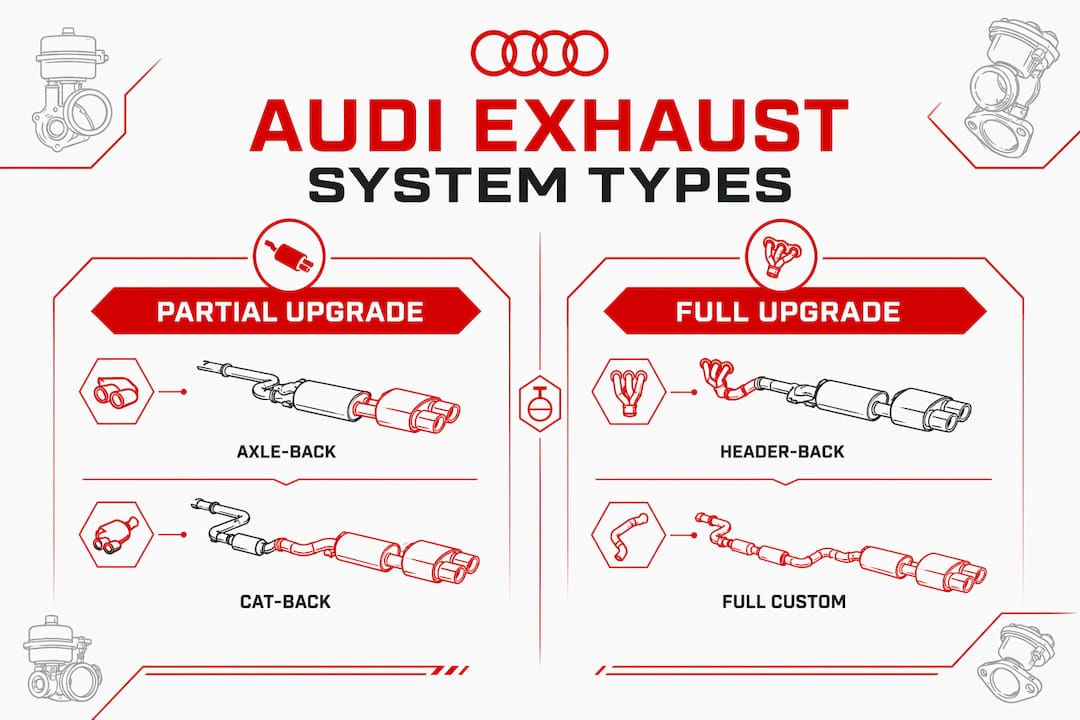
Axle-back systems replace only the rear section of the exhaust, from the rear axle to the tips. They are the easiest to install and the most affordable entry point. Sound changes are noticeable but modest, and power gains are minimal.
Cat-back systems run from the catalytic converter to the exhaust tips. They deliver moderate sound enhancement and measurable performance gains without touching emissions components. Most Audi owners doing their first upgrade choose cat-back because the balance of cost, sound, and legality is hard to beat.
Header-back and full systems replace everything from the exhaust manifold back. Header-back systems deliver 15–30+ HP in gains but require professional installation and carry a higher price. That power jump is real, but so is the complexity. Full custom builds with valve technology sit at the top of this category, giving you real-time sound control on top of performance gains.
| System Type | Sound Change | Power Gain | Install Difficulty | Relative Cost |
|---|---|---|---|---|
| Axle-back | Subtle | Minimal | Easy | Low |
| Cat-back | Moderate | Low to moderate | Moderate | Mid |
| Header-back | Aggressive | 15–30+ HP | High | High |
| Full custom with valves | Fully adjustable | High | Professional | Premium |
- Axle-back: best for enthusiasts who want a cleaner sound without major changes
- Cat-back: the most popular choice for daily drivers wanting real sound improvement
- Header-back: for track-focused builds where maximum power is the goal
- Full valved systems: for owners who want both performance and sound flexibility
How to check aftermarket exhaust compatibility for your Audi
Fitment is where most Audi exhaust upgrades succeed or fail. Exhaust routing differs by engine and emissions package, and mismatching flange types or pipe diameters causes installation failure. Buying based on photos or sound clips alone is a shortcut that leads to costly returns.
Your aftermarket exhaust compatibility check must cover these specifics before you order:
- Model year and trim: A 2020 Audi S4 and a 2022 Audi S4 can have different mounting points and pipe routing.
- Engine code: The 3.0T TFSI and 2.0T TFSI share a platform but not exhaust geometry.
- Emissions package: California emissions vehicles often have different catalytic converter placements than federal spec cars.
- Inlet and outlet diameters: Confirm the exact pipe diameter in millimeters. A 2.5-inch inlet on a 3-inch system creates a leak point and kills performance.
- Flange type and bolt pattern: OEM flanges vary across Audi generations. A mismatched flange requires an adapter or a weld.
- Body style: Coupe models often require modification even when a system is marketed as a direct fit for the sedan variant.
Most buyers underestimate fitment details, leading to expensive returns or poor installation results. The fix is simple: contact the manufacturer with your full VIN before ordering, not after.
Pro Tip: Cross-reference your build against the manufacturer’s fitment guide using your VIN, not just the model name. Two cars with the same model name can have different exhaust configurations based on factory options.
Mixing components from different aftermarket vendors adds another layer of risk. Pipe diameters, bend angles, and flange styles rarely align perfectly across brands. A single-package system from one manufacturer eliminates that problem entirely.
Choosing materials and valve control technology for your Audi
Material choice defines how your exhaust sounds, how long it lasts, and how much it weighs. The two dominant options for performance Audi builds are T304 stainless steel and titanium. Each has a clear use case.
T304 stainless steel is the standard for quality aftermarket systems. It resists corrosion, handles high heat cycles, and produces a full, deep exhaust note. Most mid-range and premium systems use T304 because it balances durability and cost well. Valvetronic Designs, for example, uses T304 stainless steel with electronic valve control in their single-piece system for the 2017–2024 Audi S4 and S5 sedans.
Titanium is lighter than stainless steel and produces a sharper, higher-pitched tone that many track enthusiasts prefer. The tradeoff is cost. Titanium systems carry a significant price premium. For a deeper look at how titanium compares in real-world use, Valvecontrolexhaust covers the titanium exhaust system differences in detail.
Valve control technology is the biggest upgrade shift in the aftermarket exhaust space right now. Electronic valve control exhausts reduce drone and let you switch between an aggressive motorsport tone and OEM-like refinement for daily driving. Open the valve and you get a loud, crackling exhaust note. Close it and the cabin stays quiet enough for a highway commute.
- Valve open: aggressive, high-volume tone suited for spirited driving
- Valve closed: quiet, refined sound that matches factory expectations
- Electronic control: operated via a smartphone app, OEM button, or dedicated remote
- Drone reduction: closed valve position eliminates the low-frequency cabin resonance that makes long drives uncomfortable
Pro Tip: If you drive your Audi daily and also want weekend performance sound, an electronic valve system is the only upgrade that genuinely serves both needs without compromise.
Electronic valve control exhausts give enthusiasts flexible drive modes, making the upgrade practical for daily use and weekend performance. That versatility is why valve control systems have become the default recommendation for Audi owners who do not want to choose between comfort and excitement.
What does installing an Audi exhaust system actually involve?
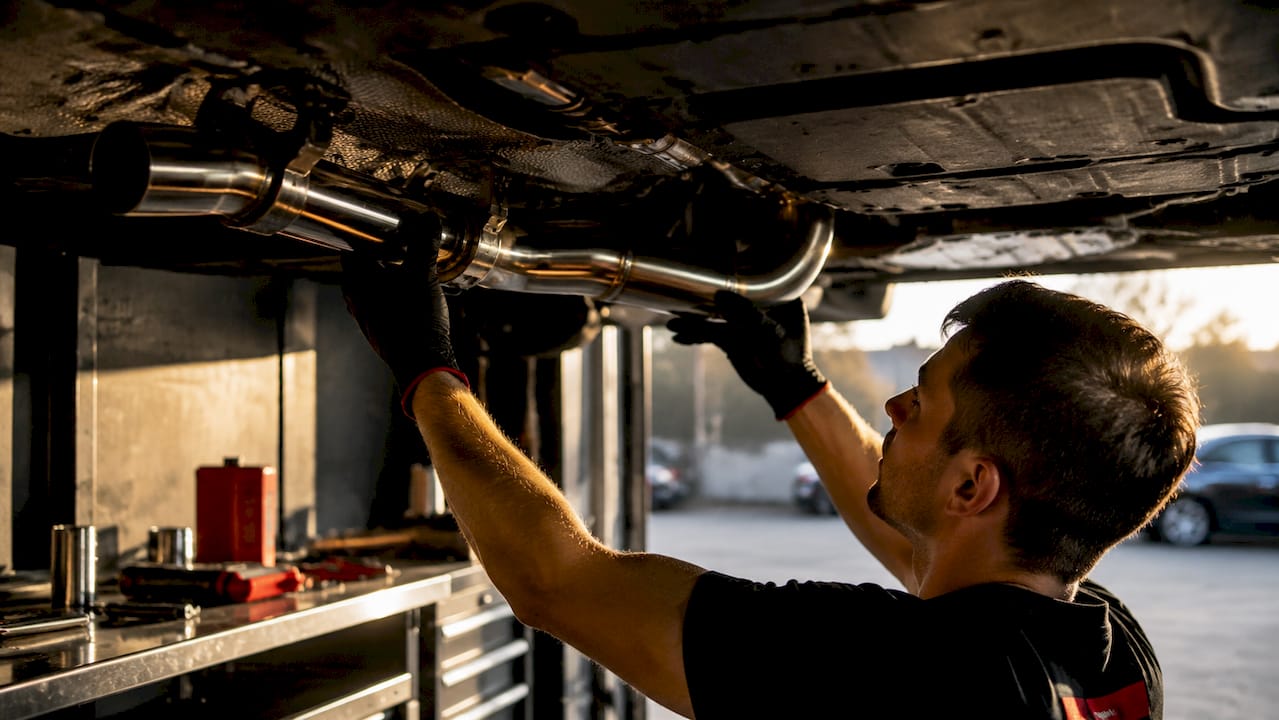
Installation complexity depends entirely on the system type you choose. An axle-back swap on an Audi A4 is a genuine DIY project for anyone with basic tools and a lift. A full header-back system with valve control wiring is a professional job.
Tools you need for a basic installation:
- Vehicle lift or quality jack stands rated for your Audi’s weight
- Penetrating oil applied to OEM exhaust bolts 24 hours before removal
- Ratchet set with metric sockets (10mm, 13mm, 15mm cover most Audi fasteners)
- Torque wrench for proper flange bolt tightening
- Exhaust hanger removal tool to avoid tearing rubber mounts
Installation steps for a cat-back system:
- Lift the vehicle and support it safely on stands
- Spray all OEM flange bolts and hangers with penetrating oil
- Remove the OEM system from the catalytic converter back
- Dry-fit the new system before tightening anything
- Align all hangers and confirm clearance from the chassis and heat shields
- Torque flange bolts to spec and secure all hangers
- Start the engine and check for leaks at every joint
Even bolt-on systems sometimes need mid-section trimming or minor modification, especially on coupe models or when mixing aftermarket parts. Do not assume “bolt-on” means zero adjustment.
Professional installation costs range from $150 to $500+, depending on system complexity. Full systems with valve control wiring and welded sections sit at the higher end of that range.
For valve control systems, wiring the electronic actuator to your Audi’s cabin adds time and requires basic electrical knowledge. Most manufacturers include a wiring harness and instructions. If you are not comfortable with automotive electrical work, budget for professional installation. The benefits of a valve control exhaust system are only fully realized when the valve actuator is wired and calibrated correctly.
Post-installation, run the engine through a full heat cycle and re-check all fasteners. Exhaust components expand significantly when hot, and joints that felt tight when cold can develop small leaks after the first drive.
Key Takeaways
Audi exhaust customization delivers the best results when system type, material, fitment specs, and valve control technology are matched to your specific model and driving goals.
| Point | Details |
|---|---|
| System type drives results | Cat-back suits most daily drivers; header-back delivers 15–30+ HP for track builds. |
| Fitment requires exact specs | Confirm model year, engine code, emissions package, and pipe diameters before ordering. |
| Material affects sound and cost | T304 stainless steel balances durability and tone; titanium adds weight savings at a premium. |
| Valve control solves the daily driver problem | Electronic valves let you switch between aggressive and refined sound on demand. |
| Installation complexity varies | Axle-back is DIY-friendly; full systems with valve wiring need professional installation. |
What I’ve learned from watching Audi owners get this wrong
The most common mistake I see is buying an exhaust based on a YouTube sound clip. That clip was recorded outside the car, on a cold morning, with a microphone that flatters the tone. Inside the cabin at 70 mph on the highway, that same system can produce a low-frequency drone that makes every commute miserable. Choosing based on sound clips overlooks real cabin drone and system quality. Always seek out in-car recordings and owner reviews from people who daily drive the same Audi model.
The second mistake is underestimating fitment. “Fits B9 S4” is not enough information. Sedan and coupe chassis differ. Federal and California emissions cars differ. Factory sport exhaust delete packages change the routing. I have seen enthusiasts receive a system that physically cannot bolt up without cutting because they skipped the compatibility check.
My honest recommendation for most Audi owners is a full single-package valved system from a reputable manufacturer. Mixing components from multiple vendors to save money almost always creates fitment headaches. A complete system designed for your exact chassis eliminates that risk. Valvecontrolexhaust covers the Audi exhaust sound system in depth if you want to understand what you are actually buying before you commit.
Budget realistically. The system price is only part of the cost. Add installation labor, any needed hardware, and potential modifications. A $700 system with a $400 professional install is still a better outcome than a $700 system that does not fit and costs $200 to return.
— Info
Valvecontrolexhaust: customizable Audi exhaust systems built for enthusiasts
Valvecontrolexhaust specializes in valve control exhaust systems for high-performance vehicles including Audi, BMW, Ferrari, and Lamborghini. Their systems are designed as complete single-package builds, which eliminates the fitment problems that come from mixing components across brands.

Every Valvecontrolexhaust system features electronic valve control, giving you real-time sound adjustment between aggressive and refined tones. Their team provides model-specific fitment verification before purchase, so you know the system fits your exact Audi before it ships. For enthusiasts comparing top-tier brands, the performance exhaust buyer’s guide covers IPE, FI Exhaust, Armytrix, Akrapovic, Valvetronic, and Ryft side by side. If you want to understand why valve control has become the standard for serious Audi builds, the customizable exhaust appeal page breaks it down clearly.
FAQ
What is the best exhaust system type for an Audi daily driver?
A cat-back system with electronic valve control is the best choice for Audi daily drivers. It delivers real sound improvement and moderate performance gains while keeping emissions components intact and allowing quiet cabin operation when needed.
How do I verify exhaust compatibility with my Audi?
Confirm your model year, engine code, body style, emissions package, and exact pipe diameters before ordering. Providing your full VIN to the manufacturer is the most reliable way to verify fitment.
Does a valve control exhaust reduce highway drone?
Yes. Advanced valve control exhausts reduce drone by allowing you to close the valve at highway speeds, which quiets the cabin to near-OEM levels while retaining the aggressive tone for spirited driving.
Can I install an Audi aftermarket exhaust myself?
Axle-back and most cat-back systems are DIY-friendly with basic tools and a lift. Full systems require professional installation due to welding, alignment, and valve control wiring, with labor costs running $150 to $500+.
Is titanium worth the cost over stainless steel for an Audi exhaust?
Titanium saves weight and produces a sharper tone, which benefits track-focused builds. For street and daily use, T304 stainless steel delivers comparable durability and sound quality at a lower price point.