
Supercar exhaust decibel management is the practice of controlling exhaust noise levels to balance aggressive sound with local regulations and driver comfort. For owners of Ferraris, Lamborghinis, BMWs, and Audis, getting this balance right is not optional. Enforcement is tightening across the US, and the technology to manage it has never been more capable. This guide covers the 10 most effective methods available in 2026, from physics-based muffler designs to valve-controlled systems that let you switch sound modes on the fly.
1. Reflective Sound Cancellation (RSC) mufflers
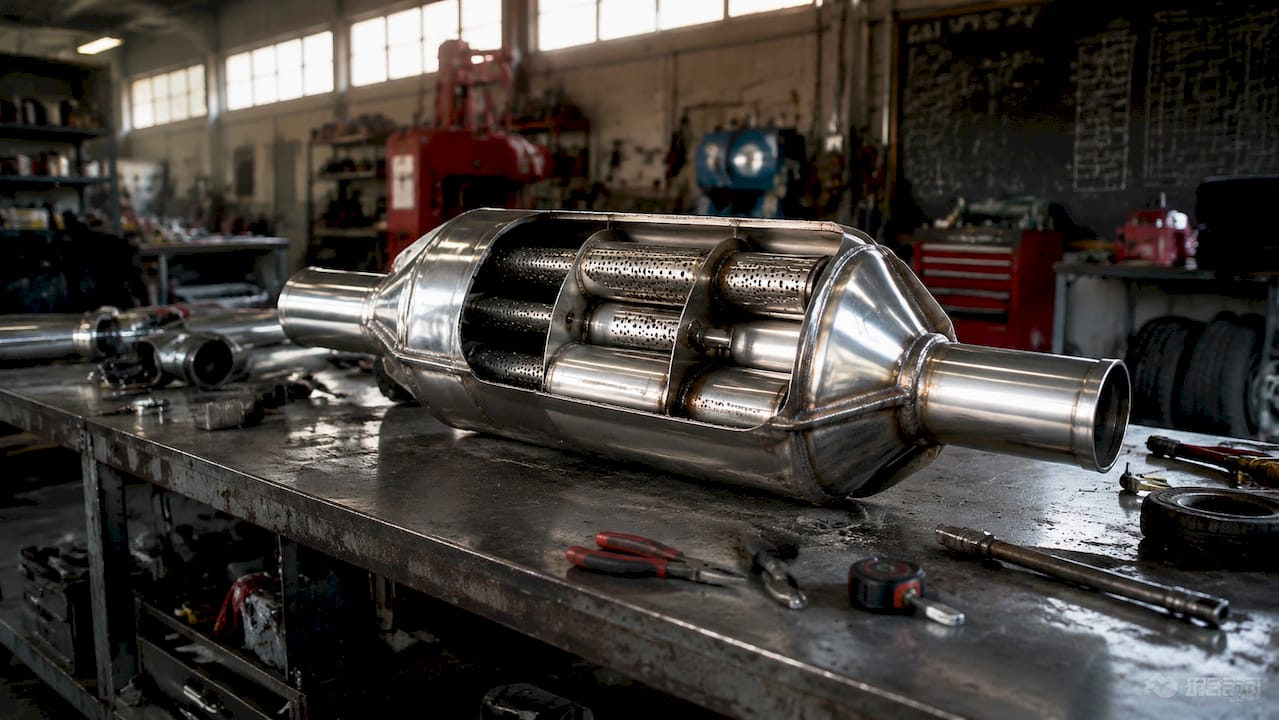
RSC mufflers are the most technically advanced passive solution for supercar noise control. Corsa Performance’s RSC technology uses pulse channels to reflect sound waves 180 degrees out of phase, canceling low-frequency drone through destructive interference. The result is a quieter cabin and a cleaner exhaust note without any restriction to exhaust flow. That means full horsepower and torque are preserved, which is the critical advantage over traditional baffled mufflers.
RSC outperforms chambered and straight-through designs specifically because it targets drone frequencies rather than simply absorbing or redirecting sound. Owners who have struggled with highway drone on their Corvettes or Porsches will recognize this as the solution that actually works.
2. Active exhaust noise cancellation systems
Active systems use microprocessors and speakers to emit sound waves that cancel exhaust noise inside the cabin. Active exhaust noise cancellation works by detecting the exhaust sound signature and generating an opposing wave in real time. The cancellation happens electronically, not mechanically, which means no physical restriction to flow. The trade-off is installation complexity. These systems require electrical integration and are best suited to factory or professional fitment.
Active cancellation excels at reducing cabin NVH (noise, vibration, and harshness) rather than controlling tailpipe output. For owners focused on interior comfort during long drives, this is the right tool.
3. Valve-controlled exhaust systems
Valved exhaust systems offer both loud and quiet modes with no loss of exhaust flow. The driver selects the sound level through a button, app, or OEM integration. This is the most practical solution for owners who want track-level sound on weekends and neighborhood-friendly quiet on weekday mornings. Valvecontrolexhaust builds these systems specifically for high-performance vehicles including Audi, BMW, Ferrari, and Lamborghini, with real-time control as the core feature.
A common misconception is that louder always means better performance. Valved systems disprove that directly. You get the aggressive note when you want it and compliance when you need it, all from the same hardware.
4. Decibel reducers and muffler inserts
Decibel reducers like Jetex and Decibel Slayer are the fastest, lowest-cost fix for vehicles sitting near legal limits. Inserts placed inside or outside the tailpipe reduce noise output by 3–5 dB without permanent modification. That margin is often enough to pass a roadside inspection or a track day noise test. They are also reversible, which matters for owners who want to restore full sound for events.
The limitation is that inserts do not address drone or cabin noise. They work at the tailpipe exit and are best used as a compliance tool, not a full sound management strategy.
5. Acoustic tuning matched to engine firing frequencies
Exhaust drone occurs between 1,500 and 2,500 RPM for most performance engines. Universal mufflers fail at drone deletion because they are not tuned to a specific engine’s firing order. Effective exhaust sound management requires matching resonator placement and chamber geometry to the exact RPM range where drone appears in your vehicle. Specialized manufacturers solve this through acoustic modeling and physical testing on the target platform.
Pro Tip: Before buying any aftermarket muffler, ask the manufacturer whether it was tested on your specific engine configuration. A muffler tuned for a V8 firing order will not eliminate drone on a flat-six.
6. Multi-chamber mufflers for variable sound control
Multi-chamber mufflers use a series of internal chambers to absorb and redirect sound waves at different frequencies. They are quieter than straight-through designs and louder than turbo mufflers, placing them in the middle of the passive performance exhaust spectrum. For supercar owners who want a sportier note than stock without crossing legal decibel limits, a well-specified multi-chamber unit is a reliable choice. Brands like Borla and Magnaflow offer vehicle-specific fitments that maintain this balance.
The key variable is chamber count and volume. More chambers reduce sound further but can introduce backpressure at high RPM. Matching chamber design to your engine’s output range is the difference between a great exhaust note and a restrictive one.
7. Heat shielding for long-term noise control
Thermal management with heat shielding is critical in turbocharged supercars because heat degrades sound-deadening materials over time. When insulation breaks down, exhaust components vibrate more, and noise levels rise unpredictably. Quality heat shielding protects the integrity of muffler packing, gaskets, and surrounding body panels. This is a maintenance issue as much as a performance one, and it is frequently overlooked until noise levels spike.
Owners running high-output turbocharged engines, including those in the Audi RS and BMW M families, should inspect heat shielding annually. Replacing degraded shielding costs far less than diagnosing a noise complaint after the fact.
8. Cat-back exhaust systems and legal boundaries
Cat-back exhaust systems are federally legal but can violate state noise limits if they remove mufflers or push decibel output past local thresholds. The legal risk is about noise output, not emissions. A cat-back that sounds great on a private track may generate a citation on a California or New York street. Owners should verify state-specific limits before installing any cat-back system that removes or replaces the factory muffler.
The safest approach is to choose a cat-back that retains a muffler and has documented decibel output from standardized testing. Systems with published dB figures give you a defensible baseline if you are ever stopped.
9. Passive muffler comparison: chambered, straight-through, and turbo
The three core passive muffler types each serve a different purpose. Chambered mufflers produce an aggressive, deep tone and are the loudest of the three. Straight-through (or glasspack) mufflers offer minimal restriction and a raspy, high-pitched note. Turbo mufflers use a spiral baffle to reduce sound across a broader frequency range, making them the quietest and most compliant option.
| Muffler type | Sound level | Flow restriction | Best use |
|---|---|---|---|
| Chambered | Loudest | Low | Track and weekend driving |
| Straight-through | Loud, raspy | Minimal | Racing applications |
| Turbo | Quietest | Low to moderate | Street compliance |
| RSC | Targeted drone reduction | None | Daily driving and compliance |
For supercar owners navigating noise regulations, turbo and RSC designs offer the best compliance profile without gutting performance.
10. Acoustic materials and emerging sound absorption technology
New acoustic materials, including aerogel-based wraps and multi-layer composite panels, are entering the performance exhaust market. These materials absorb sound energy across a wider frequency range than traditional fiberglass packing. Effective noise management combines acoustic engineering with drivetrain knowledge, addressing exhaust output, vibration, and cabin NVH together. The aftermarket is moving toward these technology-driven solutions as noise laws tighten across major US cities.
The practical takeaway is that materials matter as much as design. A well-packed muffler using aerogel insulation will maintain its noise reduction performance longer than one using standard packing, especially in high-heat applications.
How exhaust sound regulations vary by state
US states impose exhaust noise limits between 80 and 95 dB(A) using the SAE J1169 stationary testing procedure. That 15 dB range is enormous. A system that passes in Texas may fail in California. Fines for non-compliance or refusal to test reach up to $600, and some jurisdictions add points to your license.
The enforcement picture is more complicated than the numbers suggest. Police use calibrated meters at roadside, but subjective “excessive noise” citations remain common even when a vehicle passes a meter test. Beverly Hills launched a targeted loud exhaust crackdown in 2026, and similar programs are active in Miami and Austin. Passing a decibel test does not guarantee immunity from an officer’s judgment.
- Know your state’s specific dB limit and the SAE J1169 test conditions before modifying your exhaust.
- Test your own vehicle with a calibrated meter at the correct distance and RPM before any inspection.
- Local ordinances can be stricter than state law. Check city-level rules, not just state rules.
- Aftermarket cat-back systems are federally legal but must still meet state noise thresholds.
Pro Tip: Keep a printed record of your vehicle’s decibel test results in the glove box. If you are stopped, documented evidence of compliance gives you a concrete defense against a subjective citation.
Passive vs. active noise control: which suits your situation?
Passive systems, including RSC mufflers, multi-chamber designs, and decibel inserts, control sound at the source. They require no electrical integration and work at all times. Active systems use speakers and microprocessors to cancel noise electronically, primarily inside the cabin.
| Feature | Passive (RSC, mufflers) | Active (electronic cancellation) |
|---|---|---|
| Installation complexity | Low to moderate | High |
| Tailpipe noise reduction | Yes | Limited |
| Cabin noise reduction | Moderate | Excellent |
| Performance impact | None (RSC) to low | None |
| Cost | Moderate | High |
| Best for | Street compliance, sound tuning | Long-distance comfort |
Active exhaust systems are the right choice when cabin comfort is the priority. Passive systems are the right choice when tailpipe output and legal compliance are the focus. Valve-controlled systems sit in a third category, combining passive hardware with driver-selectable modes for the most flexible outcome.
Practical tips for keeping your exhaust within legal limits
Routine maintenance is the most underrated part of exhaust sound management. Exhaust leaks, cracked gaskets, and loose hangers all increase noise output and can push a compliant vehicle over the legal limit without any modification.
- Inspect exhaust joints and gaskets every 12 months or after any track day.
- Use a handheld decibel meter to test your vehicle at the SAE J1169 RPM and distance before driving in a new jurisdiction.
- Install decibel inserts for track days or noise-sensitive areas and remove them afterward.
- Have a specialist address drone frequencies with vehicle-specific resonator tuning rather than universal mufflers.
- Choose mufflers with durable heat shielding to maintain noise reduction performance over time.
Pro Tip: The goal is not the loudest legal exhaust. The goal is the best-sounding exhaust that keeps you on the road. A valved system gives you both without compromise.
Key takeaways
Effective supercar exhaust decibel management requires combining the right passive hardware, driver-selectable valve control, and knowledge of local noise laws to protect both performance and compliance.
| Point | Details |
|---|---|
| RSC mufflers lead passive tech | Reflective Sound Cancellation eliminates drone without restricting flow or reducing power. |
| Valve systems offer the most flexibility | Driver-selectable modes let you switch between compliant and aggressive sound instantly. |
| State limits vary widely | US noise limits range from 80 to 95 dB(A); always verify local rules before modifying. |
| Inserts are a fast compliance fix | Jetex and Decibel Slayer inserts cut 3–5 dB at the tailpipe with no permanent changes. |
| Maintenance prevents surprise violations | Exhaust leaks and degraded heat shielding raise noise levels without any modification. |
The case for treating exhaust sound as an engineering problem
The supercar community has spent decades treating exhaust sound as a personality statement. That instinct is not wrong. The sound of a Lamborghini V10 or a Ferrari flat-plane V8 is part of what makes these cars worth owning. But the enforcement environment has changed, and the technology has changed with it.
What I have seen shift in 2026 is that the best solutions are no longer compromises. RSC technology and valve-controlled systems do not ask you to choose between sound and compliance. They solve both simultaneously, using physics and engineering rather than restriction. That is a fundamentally different proposition than what was available five years ago.
The owners who get into trouble are the ones who treat noise management as an afterthought. They install the loudest cat-back they can find, skip the decibel test, and then act surprised when they receive a citation in a jurisdiction they did not research. Responsible ownership means knowing your local limits, testing your setup, and choosing hardware that gives you control rather than locking you into one sound level.
The passion for supercar sound is legitimate. The community around it is real. But that passion is best expressed through technology that lets you enjoy the sound on your terms, not the terms of whoever happens to be parked next to you at a stoplight.
— Info
Valvecontrolexhaust: precision sound control for high-performance vehicles
Valvecontrolexhaust specializes in valve-controlled exhaust systems built for Audi, BMW, Ferrari, and Lamborghini. Their systems give you real-time control over exhaust sound without any compromise to flow or power output.

Whether you are looking for a full system comparison or a targeted solution for a specific model, Valvecontrolexhaust offers detailed resources to help you choose correctly. Their performance exhaust buyer’s guide covers top-tier brands including IPE, FI Exhaust, Armytrix, Akrapovic, Valvetronic, and Ryft, with side-by-side analysis of sound profiles, compliance, and fitment. For owners ready to compare specific systems, the high-end aftermarket comparison is the most thorough resource available for making a confident, informed decision.
FAQ
What decibel level is legal for supercar exhausts in the US?
Most US states set exhaust noise limits between 80 and 95 dB(A), measured using the SAE J1169 stationary testing procedure. Fines for non-compliance reach up to $600, and limits vary significantly by state and city.
Do valved exhaust systems reduce performance?
Valved exhaust systems provide both loud and quiet modes with no restriction to exhaust flow, so performance is not reduced. The valve opens fully in sport mode, delivering the same output as an unrestricted system.
Can I pass a decibel test and still get cited for noise?
Yes. Enforcement officers can issue subjective “excessive noise” citations even when a vehicle passes a calibrated meter test. Beverly Hills and other cities have active crackdown programs that rely on officer judgment alongside equipment.
What is the fastest way to reduce exhaust noise without permanent changes?
Decibel inserts like Jetex or Decibel Slayer reduce tailpipe noise by 3–5 dB and are fully reversible. They are the quickest solution for vehicles near legal limits or for use in noise-sensitive areas.
Why does exhaust drone happen and how do I fix it?
Exhaust drone occurs between 1,500 and 2,500 RPM and is caused by exhaust frequencies matching the resonant frequency of the vehicle’s cabin or exhaust system. The fix is vehicle-specific acoustic tuning, not a universal muffler.