

A sports car exhaust bypass setup is a modification that routes exhaust gases around restrictive components, typically mufflers, to increase flow, boost power, and sharpen sound. Exhaust bypass upgrades can increase horsepower by 3%–5%, which translates to 5–10 hp on most cars and up to 50 hp on high-displacement engines. That gain matters on a track day or a canyon run. The modification also changes how your car sounds, but getting the sound right requires more than just cutting pipes. Proper valve selection, ECU tuning, and sealing technique all determine whether the result is exhilarating or embarrassing.
What does a sports car exhaust bypass setup require?
A bypass exhaust setup redirects flow through a secondary path that skips one or more mufflers. The industry term for the broader category is a “valved exhaust system” when electrically controlled valves manage that bypass path. Understanding this distinction matters because a simple open bypass and a valved bypass produce very different results in daily driving.

Before you touch a wrench, you need the right tools and materials on the table. The table below covers the core requirements.
| Item | Purpose |
|---|---|
| Angle grinder or reciprocating saw | Cutting existing exhaust piping cleanly |
| MIG or TIG welder | Joining new sections to the existing system |
| Exhaust flange kit | Bolt-on connection points for bypass sections |
| Electric or vacuum bypass valves | Controlling flow between bypass and main path |
| Multi-layer steel or copper gaskets | Sealing joints against heat and pressure |
| Wide-diameter aftermarket piping | Maintaining flow volume through the bypass |
| Wire harness and relay kit | Powering electric valve actuators |
| Jack stands and exhaust hanger hardware | Safe vehicle support and mounting |
Wide-diameter piping and proper sealing materials maintain exhaust pressure and prevent leaks that kill both performance and longevity. Skimping on gasket quality is the single most common reason a bypass setup develops rattles within six months.
Professional vs. DIY installation
DIY installation is realistic for enthusiasts with welding experience and a lift. Without both, professional installation is the safer call. Misaligned components cause exhaust leaks, rattles, and check engine lights that cost more to fix than the original labor would have. A premium full exhaust system replacement including bypass work typically runs $1,000–$1,700 plus labor. Budget for that range if you want the job done once.
Prerequisites before starting:
- Vehicle in sound mechanical condition with no existing exhaust leaks
- Safety glasses, heat-resistant gloves, and proper ventilation
- Confirmed valve and pipe sizing matched to your specific platform
- A clear understanding of your local emissions laws before cutting anything
How to install an exhaust bypass step by step
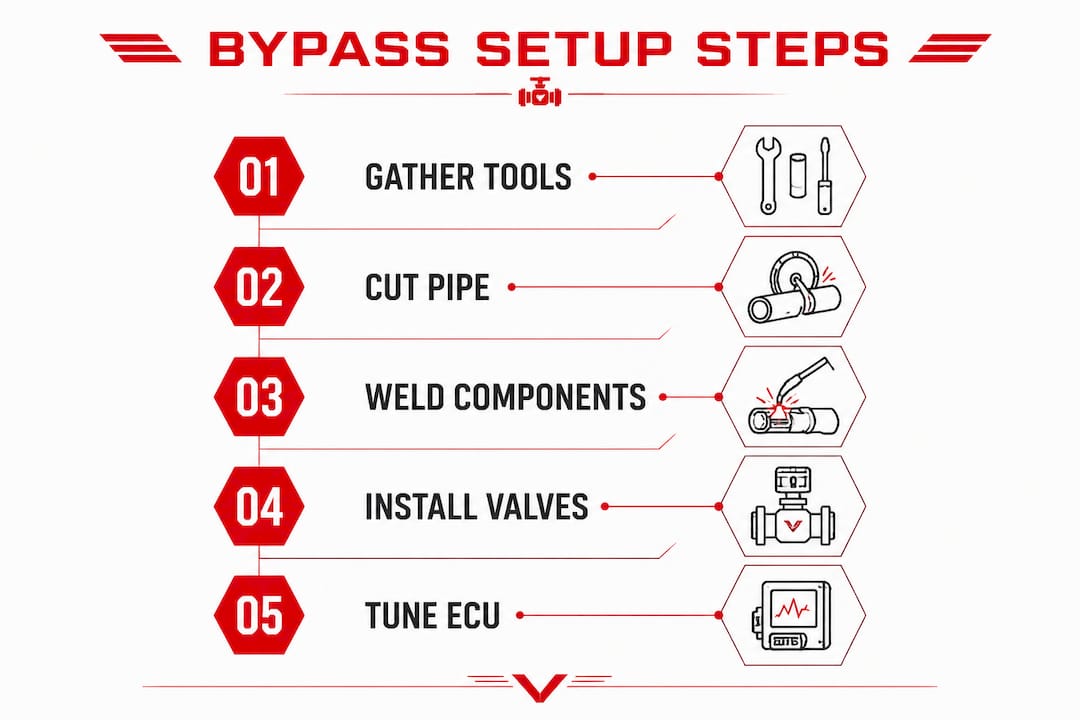
Installation follows a logical sequence. Rushing any stage creates problems that are difficult to diagnose later.
-
Lift and inspect. Raise the vehicle on jack stands and examine the full exhaust run from the catalytic converter back. Mark the section you plan to bypass with chalk or tape.
-
Cut the existing pipe. Use an angle grinder to cut cleanly at both ends of the bypass section. Deburr the cut edges so they seat flush against flanges.
-
Fabricate or fit the bypass loop. Bend new wide-diameter tubing to route around the muffler. A dual-loop cat-back design with an X-pipe sharpens exhaust tone and increases power without requiring welding on some bolt-on platforms.
-
Install the bypass valve. Mount the electric or vacuum valve at the entry point of the bypass loop. Electric valves give you driver-selectable control from the cabin. Vacuum valves are simpler but offer less precision.
-
Seal every joint. Fit multi-layer steel gaskets at each flange connection. Copper crush gaskets work well at high-heat zones near the headers. Torque flange bolts to spec, not by feel.
-
Wire the control system. Run the valve actuator wire through the firewall to a relay and switch. Many enthusiasts wire this to a dedicated toggle or integrate it with an existing drive-mode selector.
-
Check for leaks before driving. Start the engine cold and listen at every joint. A rag held near a joint will flutter if exhaust is escaping. Fix leaks before the first drive.
-
Road test and recheck torque. Heat cycles cause metal to expand and contract. Retorque all flange bolts after the first 50 miles.
Pro Tip: Apply a thin layer of high-temperature anti-seize compound to all flange bolt threads before assembly. This prevents bolts from seizing due to heat and makes future maintenance far easier.
How do you optimize bypass exhaust performance and sound?
Installation is only half the job. Getting the most from a bypass exhaust setup requires tuning and a clear understanding of what good exhaust sound actually means.
ECU tuning is not optional
Modern vehicles require ECU tuning after exhaust bypass installation to avoid lean running conditions that risk engine damage. Improved exhaust flow changes the oxygen sensor readings your ECU uses to calculate fuel delivery. Without a retune, the engine runs lean, which raises combustion temperatures and accelerates wear. ECU data from oxygen sensors is the primary input the engine management system uses to set fuel trim. Ignoring this step turns a performance upgrade into a liability.
Volume is not the same as quality
Simply removing mufflers increases volume but often produces unpleasant drone. High-end bypass setups target specific resonance frequencies to create the layered, exotic note you hear from a Ferrari or Lamborghini at full throttle. That sound is engineered, not accidental. Understanding why exhaust sound matters for performance vehicles helps you set realistic expectations before you commit to a configuration.
Key factors that shape bypass exhaust sound:
- Pipe diameter and length of the bypass loop affect resonance frequency
- X-pipe vs. H-pipe crossover changes the harmonic character of the note
- Valve position at idle, cruise, and wide-open throttle each produce a distinct sound profile
- Muffler design in the retained section of the system shapes the baseline tone
Valve-controlled systems for daily usability
Valve timing control systems maintain a quiet mode for daily use and an aggressive mode on demand. This balance is what separates a livable performance mod from one that exhausts your patience on a commute. Variable valve exhaust outperforms fixed systems precisely because it gives you both modes without compromise. Valvecontrolexhaust builds its systems around this principle, offering real-time sound control for platforms including Audi, BMW, Ferrari, and Lamborghini.
Pro Tip: If your bypass setup produces cabin drone at highway speeds, try adjusting the valve to a partially open position at cruise. Many electric valve controllers allow intermediate positions, not just fully open or fully closed.
How do you troubleshoot and maintain a bypass exhaust setup?
A well-installed bypass system is reliable, but it does require attention. Most problems trace back to installation shortcuts or neglected maintenance.
Common issues and their causes:
- Exhaust leaks at flanges: Usually caused by undertorqued bolts or incorrect gasket material. Retorque and replace gaskets with the correct heat rating.
- Check engine light after installation: Typically an oxygen sensor reading outside expected parameters. An ECU tune resolves this in most cases.
- Rattling at idle or low RPM: Loose heat shields, undertorqued hangers, or a valve not fully seating. Inspect every mounting point systematically.
- Valve not responding: Check the relay, fuse, and actuator wiring before replacing the valve itself. Wiring faults are far more common than valve failures.
- Drone at 2,000–3,000 RPM: A resonance issue in the bypass loop length. A resonator added to the bypass section often eliminates this without reducing peak sound.
Professional installation aligns components to avoid leaks, rattles, and emissions compliance failures. If your check engine light returns after tuning, have a specialist inspect the system before assuming the tune is at fault.
“Proper gasket selection and sealing materials matched to the exhaust components’ temperature and pressure profiles significantly extend system life and maintain performance by preventing leaks and rattles common in bypass setups.” — The Exhaust Upgrade Blueprint
Regular maintenance keeps the system performing as intended. Inspect valve actuators every 12,000 miles. Check all gaskets and flanges annually, especially if the vehicle sees track use. Review your local noise ordinances and emissions regulations before opening the bypass valve in areas with active enforcement. For detailed valve care, the exhaust valve maintenance guide from Valvecontrolexhaust covers inspection intervals and wear indicators specific to high-performance platforms.
Key Takeaways
A sports car exhaust bypass setup delivers real horsepower gains and better sound, but only when paired with ECU tuning, quality sealing, and a valve-controlled system that suits your driving habits.
| Point | Details |
|---|---|
| Horsepower gains are real but modest | Bypass upgrades add 5–10 hp on most cars, up to 50 hp on high-displacement engines. |
| ECU tuning is mandatory | Skipping a retune after installation risks lean running and engine damage. |
| Sound quality beats raw volume | Targeting resonance frequencies produces an exotic note; simply removing mufflers creates drone. |
| Valve control enables daily usability | Electric valves let you switch between quiet cruise and aggressive modes without hardware changes. |
| Sealing quality determines longevity | Multi-layer steel or copper gaskets prevent the leaks and rattles that undermine the whole setup. |
Why tuning matters more than most enthusiasts expect
The exhaust modification community spends enormous energy debating pipe diameter, muffler brands, and valve types. Far less attention goes to the ECU tune that makes all of it work safely. That imbalance costs people engines.
I have seen well-funded builds on BMWs and Ferraris develop lean misfire conditions within weeks of installation because the owner skipped the tune to save money. The bypass opened up flow the ECU was not calibrated for, and the engine ran hot. The repair bill dwarfed what the tune would have cost.
The other thing most guides understate is the trade-off between raw aggression and daily drivability. A fully open bypass on a high-displacement V8 sounds extraordinary at wide-open throttle and genuinely unpleasant at 40 mph in traffic. The enthusiasts who end up happiest with their setups are the ones who invested in a valve-controlled system from the start. They get the theater when they want it and silence when they need it.
My honest recommendation: treat the valve controller and the ECU tune as non-negotiable line items in your budget, not optional extras. The pipe work is the easy part. Getting the engine management and sound profile right is where the real expertise lives. If you are not confident in your tuning knowledge, find a specialist who works specifically with your platform. A Subaru tuner and a Ferrari tuner are not interchangeable.
— Info
Valvecontrolexhaust: built for bypass setups on performance cars
Choosing the right components for a bypass exhaust setup on a luxury sports car is not a generic parts-bin exercise.

Valvecontrolexhaust designs valved exhaust systems specifically for platforms like Audi, BMW, Ferrari, and Lamborghini, where fitment precision and sound character are non-negotiable. Their systems give you real-time control over exhaust note and flow through driver-selectable valve positions, so you are not locked into one sound profile. For enthusiasts comparing options before committing, the performance exhaust buyer’s guide at Valvecontrolexhaust covers the leading valved systems in detail. If you want a deeper technical breakdown, the critical analysis of valved exhaust systems walks through performance and sound data across the top configurations.
FAQ
What is an exhaust bypass setup on a sports car?
An exhaust bypass setup routes exhaust gases around a muffler or other restrictive component through a secondary pipe, reducing backpressure to increase power and change the exhaust note.
How much horsepower does a bypass exhaust add?
Bypass exhaust upgrades typically add 5–10 hp on most cars, with gains reaching up to 50 hp on certain high-displacement performance engines.
Do I need an ECU tune after installing an exhaust bypass?
Yes. Modern vehicles require ECU tuning after a bypass installation to correct the air-fuel ratio and prevent lean running conditions that can damage the engine.
How do I stop exhaust drone after a bypass install?
Adding a resonator to the bypass loop targets the specific frequency causing drone. Alternatively, a valve-controlled system lets you partially close the bypass at cruise speeds to eliminate the issue.
Is a bypass exhaust street legal?
Legality depends on your local noise ordinances and emissions regulations. A bypass that removes catalytic converters is illegal for street use in most U.S. states. Always confirm compliance before installation.