
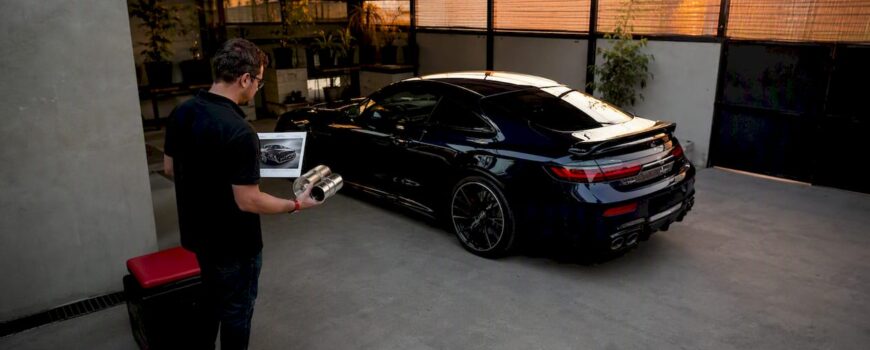
For U.S. owners looking for tubistyle.it alternatives, Valvecontrolexhaust leads the practical shortlist, alongside premium valved system categories and boutique titanium specialists, for the best combination of adjustable sound, engineering quality, and US-compatible compliance support.
Here is the shortlist at a glance:
- Valvecontrolexhaust — remote electronic valve control, broad European luxury compatibility, and US-focused support make it the strongest direct alternative for American buyers
- Premium valved exhaust systems (category) — brands like Akrapovič, Armytrix, IPE, Valvetronic, and Ryft offer ECU-integrated or remote valve options across a wide model range; compare their key differences here
- Boutique titanium/Inconel specialists (category) — handcrafted, bespoke fitment for exotic platforms; strongest on material quality and sound character, but lead times and US emissions documentation vary widely
- OEM-sport exhaust programs (category) — factory-sourced or dealer-installed systems that maintain warranty coverage; limited sound adjustability but zero compliance risk
The demand for sites like tubistyle.it reflects how many owners want more than a single boutique source. The sections below break down the trade-offs so you can choose with confidence.
Table of Contents
- What do tubistyle.it alternatives actually offer compared to the original?
- How do materials and valve design actually change performance and longevity?
- What performance gains should you realistically expect?
- What should you verify before buying any premium exhaust system?
- How do you choose the right system step by step?
- Why Valvecontrolexhaust is a strong practical choice for U.S. buyers
- How do alternatives compare on customer service and support?
- What custom and personalized options are available?
- What should you know about shipping and delivery times?
- Key Takeaways
- The case for configurable exhausts on cars that actually get driven
- Valvecontrolexhaust: adjustable sound, US support, broad compatibility
- Useful sources and references
What do tubistyle.it alternatives actually offer compared to the original?
| Dimension | Valvecontrolexhaust | Tubi Style (tubistyle.it) | Premium valved systems (category) | Boutique titanium/Inconel specialists (category) |
|---|---|---|---|---|
| Best for | US luxury/performance owners wanting adjustable sound | European exotic owners prioritizing artisan craftsmanship | Broad model range, ECU integration | Rare exotics, weight-critical builds |
| Valve/control features | Remote electronic valve control, ECU-compatible | Limited or passive valve options | Remote, app, or ECU-integrated | Typically passive; some custom valve options |
| Materials & construction | Stainless steel, titanium options, TIG-welded | Stainless, some Inconel; handcrafted near Fiorano | Titanium, SS304/SS309, varies by brand | Inconel 600, titanium; bespoke fabrication |
| Sound character & adjustability | Fully adjustable quiet to aggressive | Fixed or limited; tuned for exotic character | Adjustable via valve position | Fixed; optimized for maximum tone |
| Expected hp/torque change | Modest cat-back gains; larger with headers/tune | Modest; sound-focused more than power-focused | Modest to moderate; headers add more | Modest unless full system with headers |
| Price range | Mid to premium | Premium to high | Mid to premium | Premium to very high |
| Warranty & durability | Manufacturer warranty; heat-rated components | Varies; boutique support | Brand-specific; typically 1–2 years | Limited; bespoke terms |
| US emissions compliance | US-focused support; CARB/EO guidance available | Limited US CARB EO documentation | Varies; some brands have CARB EO numbers | Rarely documented for US compliance |
| Availability & fitment | BMW, Audi, Porsche, Ferrari, Lamborghini, AMG | Extensive exotic catalog; long-established distribution | Wide; model-specific SKUs | Narrow; custom order |
| Installation complexity | Bolt-on with valve controller; specialist recommended | Bolt-on; specialist recommended for exotics | Bolt-on to moderate; ECU flash may be needed | Custom; specialist required |
Price ranges reflect material cost, valve electronics, custom fabrication, and international shipping where applicable. Boutique and bespoke systems carry the highest premiums for hand-finishing and rare alloys.
How do materials and valve design actually change performance and longevity?
The single biggest factor in long-term ownership is not the brand name on the tip. It is the combination of alloy choice and how the system manages thermal expansion under repeated heat cycles.
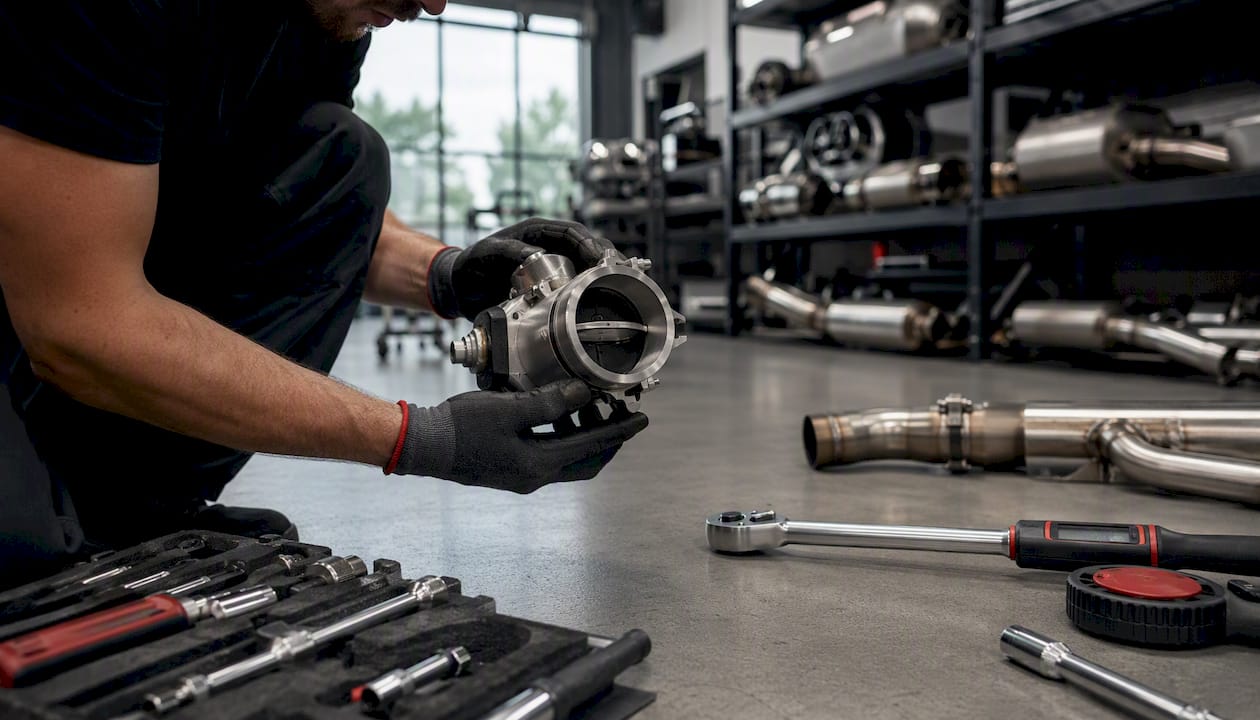
Alloy trade-offs in practice. Inconel 600 handles extreme heat cycles without fatiguing the way standard stainless does, which is why it appears on manifold-adjacent sections of high-output exotics. SS309 sits between Inconel and the more common SS304 on heat resistance, and it is easier to fabricate, which keeps cost down. SS304 is the workhorse of mid-range systems: weldable, corrosion-resistant, and adequate for street use. FerrariChat threads comparing premium systems consistently flag Inconel 600’s superior thermal fatigue resistance as the deciding factor for track-driven Ferraris, alongside visible differences in heat shielding and warranty coverage.
Valve architecture matters as much as the pipe. A fully valved system with remote or ECU control lets you run near-stock sound in a residential garage and open up to full aggression on a back road. Passive systems lock you into one sound profile. Placement of the valve in the exhaust path also changes backpressure characteristics: a valve positioned post-muffler affects tone more than flow, while a mid-pipe valve can influence both. For a deeper look at how exhaust customization affects luxury car ownership, the engineering trade-offs are worth understanding before you buy.
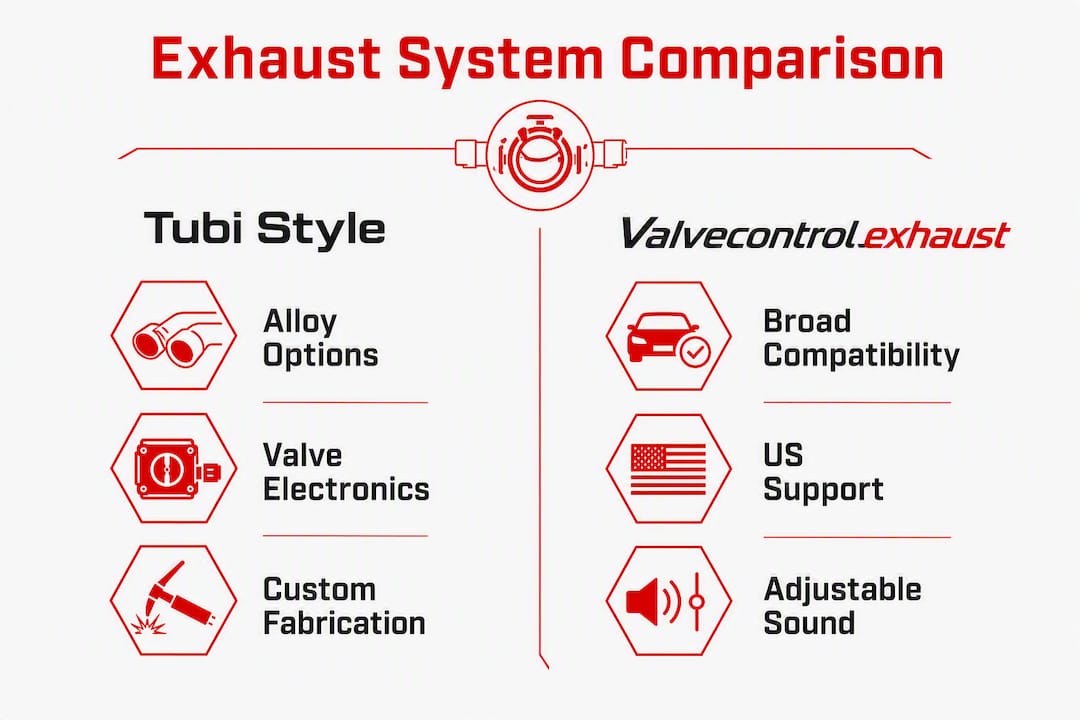
Bracket and support design is the overlooked failure point. Poorly constrained mounting points force headers to absorb thermal expansion stress rather than the hangers. Forum data shows that some exotic OEM cracking issues trace directly back to rigid brackets that do not allow the system to move as it heats and cools. A well-designed aftermarket system builds expansion relief into the hanger geometry.
Pro Tip: For track use, specify Inconel 600 or SS309 for any section near the manifold. For street-only builds, SS304 is sufficient and saves meaningful cost. Always ask the vendor for tube diameter, wall thickness, flange type, and whether CARB/EO documentation exists for your state.
Specs to request from any vendor before ordering:
- Tube outer diameter and wall thickness (mm)
- Alloy grade for each section (manifold, mid-pipe, muffler)
- Flange type and gasket material
- Valve type (active/passive), actuation method, and controller compatibility
- CARB Executive Order number or state emissions documentation
What performance gains should you realistically expect?
Cat-back and valved systems alone produce modest dyno gains on most platforms. Professional installers are clear that real horsepower improvements require addressing the factory system’s flow restrictions, which usually means headers, downpipes, or ECU tuning alongside the exhaust swap. A cat-back on a well-tuned exotic may show 5–15 hp at the wheels on a dyno, but the number swings based on the vehicle’s baseline, intake setup, and whether the ECU has been reflashed to account for the new flow characteristics.
Dyno variance is real and often understated in marketing copy. Two runs on the same car on the same day can show 8–10 hp of spread depending on intake air temperature, exhaust temperature at the start of the pull, and load cell calibration. Vendor-supplied dyno sheets rarely document these conditions, which is why independent testing matters.
Before you accept any dyno claim, ask:
- Were baseline and post-install runs done on the same dyno, same day, with matched conditions?
- Were intake and exhaust temperatures logged for each run?
- How many runs were averaged, and what was the spread?
- Does the gain appear across the RPM band or only at peak?
Sound character, not peak power, is the honest reason most enthusiasts buy premium exhaust systems. The relationship between exhaust sound and performance perception is well-documented in the enthusiast community, and a valved system that lets you tune that character daily is worth more to most owners than 12 hp on paper.
What should you verify before buying any premium exhaust system?
The single most important pre-purchase check is confirming model-specific fitment at the VIN level and verifying US emissions compliance before you place an order. A system that fits a 2019 Ferrari 488 GTB may not clear the 2020 Pista’s revised hanger points, and a system without a CARB Executive Order number is illegal for street use in California and several other states.
Pre-purchase checklist:
- Confirm exact application by year, model, and trim (VIN-level if possible)
- Request CARB EO number or state emissions guidance for your registration state
- Review warranty terms specifically for heat-related failures and bracket cracking
- Ask about bracket and hanger design, especially for mid-engine exotics
- Check shipping lead times and customs handling for overseas suppliers; availability varies sharply by model rarity
- Confirm return and exchange policy before ordering custom or bespoke work
Installation on most European performance platforms requires a two-post lift, basic hand tools, and 2–4 hours for a straightforward cat-back. Add ECU flashing time if the system includes valve electronics that need integration. For mid-engine exotics or full-system installs, a shop with documented experience on that specific platform is not optional. Specialist fitting prevents the bracket stress and heat shield misalignment that cause problems six months later.
Pro Tip: Photograph the OEM exhaust, brackets, and surrounding heat shielding before removal. Document engine condition with a short video log. Both protect you if a warranty claim arises later.
How do you choose the right system step by step?
Prioritize in this order: (1) compliance and fitment, (2) material and valve features, (3) installer capability, (4) warranty and support. Everything else is secondary.
- Define your use case. Daily driver, weekend track car, or both? Track use demands Inconel or SS309 near the manifold and a system designed for repeated heat cycles.
- Set sound and performance targets. Do you need quiet mode for a garage or neighborhood? A fully valved system is the only way to get both ends of the spectrum.
- Compare material and valve trade-offs. Use the spec checklist above. A critical comparison of leading valved systems can help you map features to your priorities.
- Verify emissions and fitment. CARB EO or equivalent documentation is non-negotiable for US street use. Confirm VIN-level fitment with the seller.
- Get installer quotes including any required tuning. ECU integration adds cost and time; factor it in before comparing prices across brands.
- Request documented dyno data or independent test results. Matched-condition before/after runs only.
Red flags to walk away from:
- Seller cannot confirm fitment beyond year/model (no VIN or trim verification)
- Material specs listed as “stainless steel” with no grade specified
- No CARB EO number and no guidance on US emissions compliance
- Dyno sheets with no baseline conditions documented
- Warranty that excludes heat-related failures
Why Valvecontrolexhaust is a strong practical choice for U.S. buyers
Valvecontrolexhaust stands out among tubistyle.it alternatives specifically because it combines remote electronic valve control with US-focused compliance support and broad compatibility across the European luxury and performance platforms most American enthusiasts actually drive.
Product highlights:
- Remote electronic valve controller for real-time sound adjustment
- Systems available in stainless steel and titanium configurations
- TIG-welded construction with model-specific fitment
- Downpipes, mufflers, rear diffusers, and tips available alongside full systems
- Installation support and guidance for US buyers
Compatible vehicle segments:
- BMW (M-series and performance variants)
- Audi (RS and S-line platforms)
- Porsche (911, Cayman, Panamera, and more)
- Ferrari and Lamborghini exotic platforms
- Mercedes-AMG performance variants
Check the full vehicle compatibility list to confirm your specific model and year before ordering.
How do alternatives compare on customer service and support?
Support quality separates a frustrating purchase from a smooth one, especially when fitment questions arise post-order. Boutique European makers like Tubi Style carry deep product knowledge but limited US-based support infrastructure. Response times for US buyers can stretch across time zones, and warranty claims on international orders add customs complexity.
Premium valved system brands with US distribution networks generally offer faster response and clearer warranty processing. Valvecontrolexhaust operates with a US-focused support model, which means fitment questions, compliance queries, and post-install issues get handled without the transatlantic delay. For exotic platforms where installer questions come up mid-job, that accessibility matters.
What custom and personalized options are available?
Boutique titanium and Inconel specialists offer the deepest customization: tip shape, finish (brushed, polished, raw), valve placement, and even bespoke tube routing for one-off builds. The trade-off is lead time, often measured in weeks, and pricing that reflects hand fabrication.
Valvecontrolexhaust offers configurable options including tip style, valve controller type, and finish selection across its catalog. Premium valved system brands typically offer tip finish variants and occasionally custom-length mid-pipes for specific applications. Full bespoke fabrication, where the system is built from scratch around your car’s specific geometry, remains the domain of specialist shops and carries a corresponding price premium. For performance builds that also touch drivetrain components, coordinating exhaust and AWD system upgrades at the same time can simplify the install process.
What should you know about shipping and delivery times?
Domestic US suppliers ship most in-stock systems within 3–7 business days via freight or ground carrier. Overseas boutique makers, including Italian and European specialists, typically quote 2–6 week lead times for in-stock items, longer for custom or bespoke work. Customs clearance adds unpredictability, and import duties on automotive parts apply at the US border.
Aggregator data confirms that availability varies sharply by vehicle model. Rare exotics with low production numbers may require custom fabrication regardless of supplier, pushing lead times to 8–12 weeks. Always confirm stock status and lead time in writing before ordering, and ask whether the supplier handles customs documentation or whether that falls to you.
Key Takeaways
For U.S. luxury and performance car owners, Valvecontrolexhaust offers the most practical combination of adjustable valve control, broad European platform compatibility, and US compliance support among tubistyle.it alternatives.
| Point | Details |
|---|---|
| Compliance first | Verify CARB EO number or state emissions documentation before ordering any system for US street use. |
| Material by use case | Specify Inconel 600 or SS309 for track or manifold-adjacent sections; SS304 is sufficient for street-only builds. |
| Valved systems for flexibility | Fully valved remote or ECU-integrated systems are the only way to get both quiet daily driving and aggressive open sound. |
| Dyno claims need context | Request matched-condition before/after runs; cat-back gains alone are modest without headers, downpipes, or an ECU tune. |
| Valvecontrolexhaust for US buyers | Broad compatibility across BMW, Audi, Porsche, Ferrari, Lamborghini, and AMG with US-focused support and adjustable valve control. |
The case for configurable exhausts on cars that actually get driven
The conventional wisdom in the exotic exhaust world is that a fixed, full-open system is the purest expression of the car. That argument makes sense on a track day. It makes considerably less sense at 7 AM in a residential neighborhood, on a highway cruise where drone sets in at 2,200 RPM, or in a state where a loud exhaust triggers a fix-it ticket.
Valved and configurable systems are not a compromise. They are the honest answer to how performance cars actually get used. Most owners drive their car to work, to a car meet, and occasionally to a track. A system that handles all three without forcing a choice is better engineering, not a lesser version of the boutique fixed-tone alternative.
The forum reputation data backs this up. Threads on FerrariChat and model-specific communities consistently show that owners who regret their exhaust choice usually regret a fixed system that was too loud for daily use, not a valved system that was too quiet. The ability to dial back the sound for a specific context, then open it up when the road clears, is the feature that holds its value over years of ownership.
Valvecontrolexhaust: adjustable sound, US support, broad compatibility
If you have been comparing tubistyle.it-style systems and finding that European boutique lead times, limited US compliance documentation, and fixed sound profiles do not fit how you actually use your car, Valvecontrolexhaust is built around exactly those gaps. You get remote electronic valve control, model-specific fitment across the major European luxury and performance platforms, and a US-focused team that can answer compliance and installation questions without a five-day email lag.
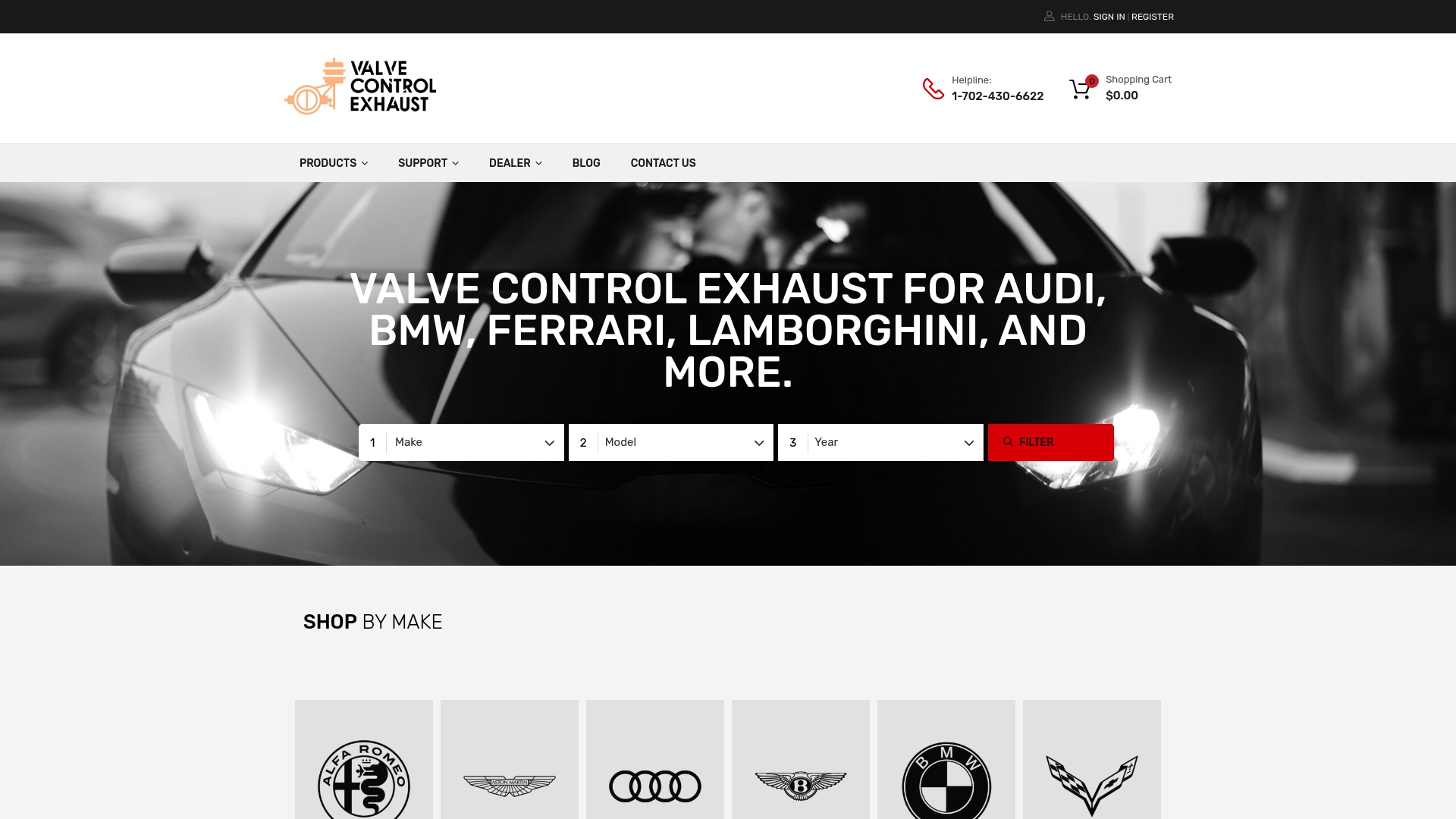
The product catalog covers customizable valved exhausts, downpipes, mufflers, rear diffusers, tips, and controllers for BMW, Audi, Porsche, Ferrari, Lamborghini, and Mercedes-AMG. Check the full benefits of a valve control exhaust system and confirm your vehicle on the compatibility page to see what fits your build.
Useful sources and references
- FerrariChat: Tubi Style or Capristo for my F430 — owner forum thread covering Inconel vs stainless trade-offs, bracket design, and real-world warranty experience on exotic platforms
This article is general information for research purposes. Verify current CARB EO numbers, state emissions rules, and warranty terms directly with your supplier or a qualified installer before purchasing.