
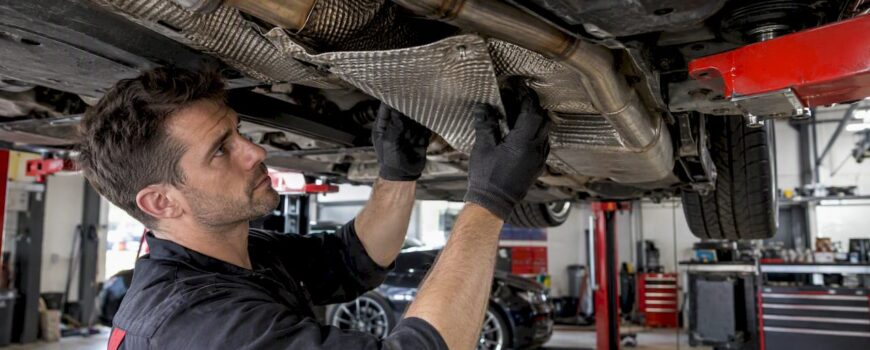
A loose or contacting heat shield is a common source of that tinny, metallic exhaust heat shield rattle, often loudest at idle or at one RPM range where the metal resonates. Stop and get towed if you smell exhaust in the cabin, see smoke, or hear a sudden roar. Otherwise, do a quick listen test and a cool-engine underbody check before your next long drive.
TL;DR:
- A metallic buzz that changes with engine speed can point to a loose shield, but pipes and other exhaust parts can produce similar rattles.
- Stop driving and seek immediate professional help if fumes enter the cabin, smoke appears, exhaust noise suddenly grows louder, or a shield drags.
- A phone recording at idle and at the RPM where the noise peaks can help a mechanic understand the symptom, but cannot confirm its source.
- Leave underbody inspection to a qualified mechanic; if checking anything yourself, park level, secure the vehicle, and wait until the exhaust cools completely.
- Do not bend or patch the shield yourself; ask a mechanic to diagnose it, check for exhaust leaks, and explain how the repair was verified.
Table of Contents
- How do you know the rattle is the heat shield?
- What causes a heat shield to rattle?
- Is a rattling heat shield dangerous?
- How can you diagnose it safely at home?
- What temporary fixes work, and what should you avoid?
- What will a shop do to fix it permanently?
- Why fix it once instead of patching it twice?
- Where can you find parts for the repair?
- FAQ
- Sources
How do you know the rattle is the heat shield?
A heat shield helps protect nearby vehicle components from exhaust heat. Have a mechanic identify which components need protection on your vehicle. It’s held on by a few bolts, clips, or tabs. A loose heat shield may buzz or rattle.
AAA notes that rattling often comes from a loose part such as an exhaust pipe or heat shield, and that a persistent rattle deserves an underbody inspection. These clues may help you describe the noise to a mechanic:
- A metallic, tinny, or buzzing sound
- A noise that changes with engine speed or driving conditions
- A sound that seems to come from beneath the vehicle
These clues cannot confirm the cause. Ask a mechanic to inspect the vehicle.
Pro Tip: Record a short phone video of the noise with the engine at idle and again at the RPM where it peaks. A recording may help a shop understand what you’re hearing, but it cannot confirm the cause.
What causes a heat shield to rattle?
A rattle can have several causes. A mechanic can inspect the vehicle to identify the problem.
- Loose or missing hardware: Loose or missing fasteners may allow a shield to move.
- Corrosion or damage: Corrosion or damage to the shield or its mounts may cause a rattle.
- Contact with the exhaust: A shield or exhaust component may be contacting another part.
- Vibration: Vibration can make a loose or contacting component rattle. A mechanic can determine the cause.
A rattle may change between stationary and driving conditions, so a mechanic may need to inspect the vehicle in context. If you want to understand how exhaust components amplify or damp vibration, our piece on the role of resonators covers the basics. And if the sound has more going on than a shield, our exhaust rattle diagnosis checklist walks through the other usual suspects.
Is a rattling heat shield dangerous?
A rattle alone cannot establish whether the exhaust system is safe or whether fumes are escaping. If you suspect an exhaust leak, stop driving and get professional help.

AAA explains that the exhaust carries heat and noxious gases away from the vehicle, and that holes or leaks make the engine louder and create hazards that should be addressed as soon as possible. If you suspect more than a shield, our guide to exhaust leak symptoms helps you separate the two.
If you notice exhaust fumes in the cabin, smoke, a sudden change in exhaust noise, a dragging shield, flames, or glowing metal, stop driving as soon as you safely can and seek immediate professional help. If there is fire or an immediate danger, contact emergency services.
AAA’s guidance: a suspected exhaust leak should be addressed as soon as possible. A rattle with no fumes and no change in loudness is a plan-a-repair problem, not a pull-over problem.
How can you diagnose it safely at home?
Because inspecting the exhaust underside can be hazardous, have a qualified mechanic perform the inspection.
- Park on level ground, set the parking brake, chock the wheels, and let the exhaust cool completely. Use jack stands, never just a jack, if you lift the car.
- Wear gloves and eye protection, since underbody rust flakes fall straight down.
- Reproduce the noise first: note whether it happens at idle, at a set RPM, or only while driving. Have a helper rev the engine while you listen from a safe distance beside the car.
- With the exhaust cold, tap the shield gently with the rubber mallet. If it buzzes the way you’ve been hearing, you’ve found it.
- Inspect for missing bolts, empty clip holes, rusted brackets, and spots where the shield touches the pipe. Photograph any missing hardware before you touch anything.
If you suspect an exhaust leak or see damage to the exhaust, stop driving as soon as you safely can and seek professional help.
Pro Tip: Do not use a hose to probe the vehicle while it is running. Have a mechanic diagnose the noise.
What temporary fixes work, and what should you avoid?
Do not attempt a temporary repair or bend the shield yourself. Ask a qualified mechanic to assess the vehicle and make an appropriate repair.
Do not use improvised materials to secure or repair exhaust components. Have a qualified mechanic assess and repair the vehicle.
Pro Tip: After a repair, ask the mechanic whether the vehicle is safe to drive and whether any follow-up inspection is needed.
What will a shop do to fix it permanently?
A mechanic can inspect the vehicle and recommend a repair based on the cause and condition of the components.
A mechanic can determine whether the shield, its mounts, or other exhaust components need repair or replacement. Ask the mechanic to check for exhaust leaks and explain how the repair was verified.

If a warning light is on, the shop may also scan for codes. AAA notes that an OBD2 scanner can help troubleshoot engine and exhaust faults, and that a flashing check engine light can signal a serious problem that needs prompt service. For tricky electrical diagnostics, this guide on airbag diagnostics steps for DIYers shows the same methodical approach to avoiding unnecessary parts.
Why fix it once instead of patching it twice?
Our view: patch it if you must, but plan the real repair. A clamp may quiet a noise without addressing its cause. Have a mechanic identify and repair the underlying problem.
If you’ve fitted an aftermarket downpipe or valved system, check shield clearance during installation, because new routing can change where metal touches. And ask your shop for photos of the replaced parts and write down part numbers, so warranty claims and future sourcing are easy.
— Info
Where can you find parts for the repair?
If you’re looking for exhaust-related parts, browse our categories:

Check vehicle fitment before you order, and contact our support team if you want installation guidance first. Browse our Exhaust Parts category to find compatible hardware for your car.
FAQ
Can I drive if my heat shield fell off?
Do not assume it is safe to drive with a heat shield missing. Arrange a professional inspection before driving, especially if the shield is dragging or you notice fumes or smoke.
Why does my car rattle at idle but not when I accelerate?
A rattle that changes with engine speed can have several causes. A mechanic can inspect the vehicle to identify the source.
What else could cause an exhaust rattle?
Besides a heat shield, AAA lists loose exhaust pipes as a common source of rattling. Other exhaust components may also be responsible for a rattle. A mechanic can inspect the system to identify the cause. A persistent noise deserves an underbody inspection to identify the cause.
Is a rattling heat shield dangerous?
A rattle alone cannot establish whether the vehicle is safe or whether there is an exhaust leak. If you notice fumes, smoke, or a sudden change in exhaust noise, stop driving as soon as you safely can and seek professional help.