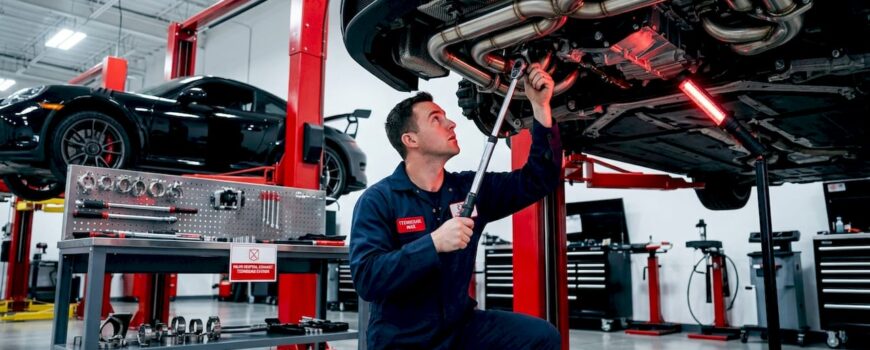
A high-rev exhaust performance setup is a customized exhaust system engineered to maximize engine output, throttle response, and sound quality at elevated RPMs through precise component selection, pipe geometry, and ECU tuning. The industry term for this discipline is exhaust flow optimization, and it covers everything from pipe diameter calculations to elbow radius choices and active valve integration. Done right, a properly tuned setup on vehicles like a BMW M3, Audi RS5, or Lamborghini Huracán delivers measurable horsepower gains alongside a sound profile you can actually control. This guide covers every layer of that build, from system type selection through installation and legal compliance.
What exhaust system type fits your performance goals?
Choosing the right exhaust system type is the single decision that determines how much power, sound, and tuning complexity you take on. Exhaust system types break into three distinct categories, each with a different performance profile.
- Axle-back systems replace only the muffler and tailpipe section behind the rear axle. Sound improvement is immediate and noticeable, but horsepower gains are minimal. This is the right choice if you want a more aggressive exhaust note without touching your tune or catalytic converter.
- Cat-back systems replace everything from the catalytic converter back. Flow improves meaningfully, and most drivers see moderate power gains alongside a significant sound upgrade. Cat-back upgrades are the most popular aftermarket exhaust option for street-driven performance cars because they rarely require a mandatory ECU retune.
- Turbo-back systems replace the entire exhaust path from the turbocharger outlet to the tailpipe, including the downpipe. This is where maximum flow and power live, but turbo-back installs require a tune without exception. Running one without ECU recalibration risks lean air-fuel conditions and engine damage.
Matching system type to your actual goals prevents wasted money. A track-focused turbocharged Subaru WRX or Porsche 911 Turbo benefits from a turbo-back setup with a supporting tune. A daily-driven BMW 340i that needs a better exhaust note without inspection headaches is better served by a quality cat-back from brands like Akrapovic or Armytrix. Budget and use case define the answer more than brand preference does.
Pro Tip: If you are on a turbocharged platform and want maximum gains, budget for the tune before you buy the exhaust. The hardware cost is only half the equation.
How does pipe diameter affect high-rev power?
Pipe diameter is the most misunderstood variable in a high-rev exhaust performance setup. Bigger is not always better. Exhaust gas velocity between 70 and 95 m/s is the target range for optimizing scavenging and pressure wave tuning at high RPM. Drop below 60 m/s with an oversized pipe and scavenging collapses. Push above 100 m/s with an undersized pipe and backpressure climbs fast.
The practical implication is that pipe diameter must be calculated against your engine’s displacement, RPM range, and target power output. Using an exhaust diameter calculator from resources like FIRGELLI’s engineering tools gives you a starting point based on real fluid dynamics rather than guesswork. For naturally aspirated engines, total system backpressure should stay below 3 psi to preserve high-RPM output. Catalysts and mufflers both contribute to that budget, so component selection matters at every stage.
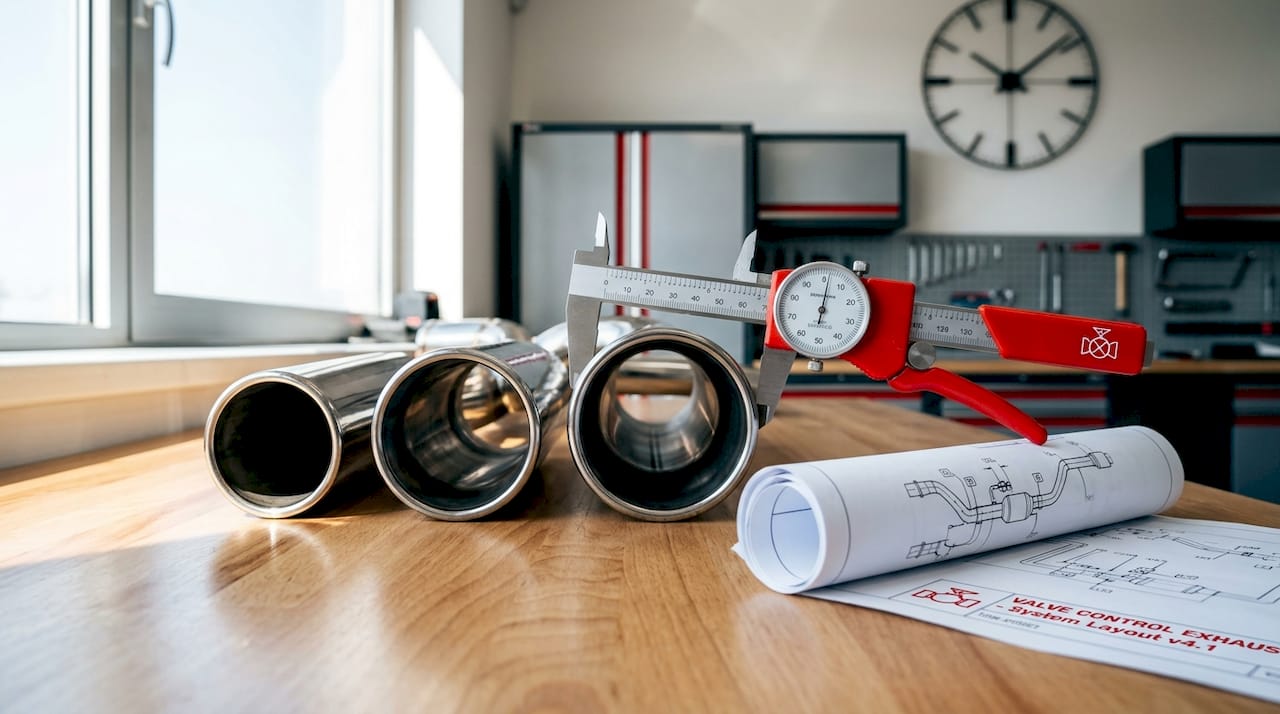
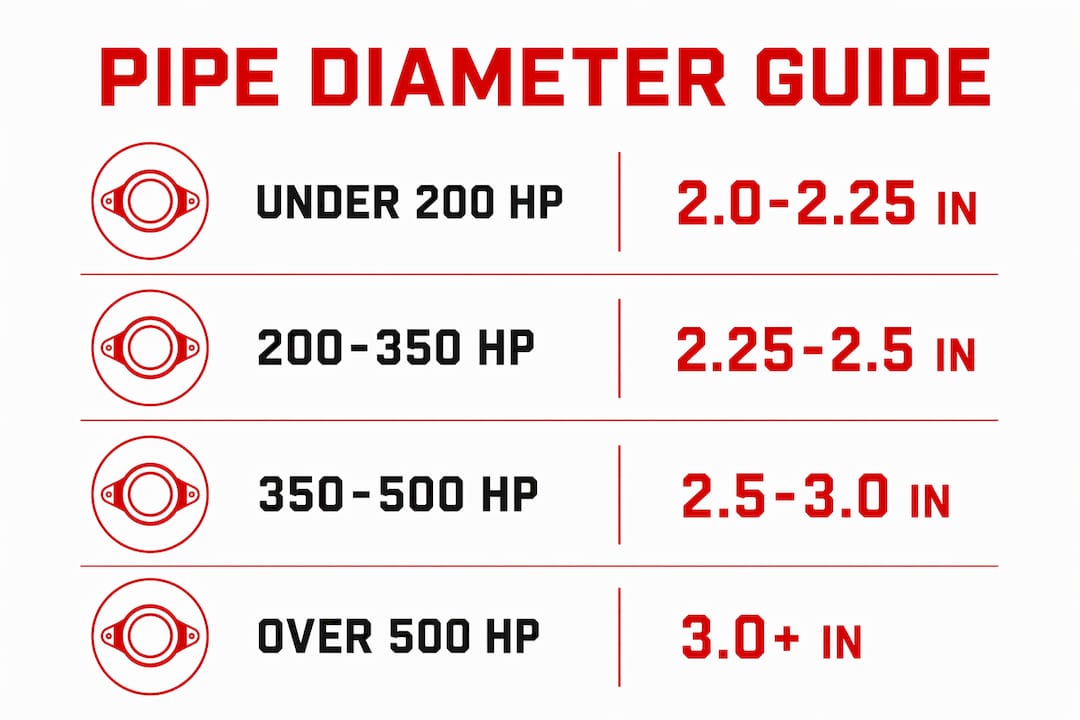
The table below gives general diameter recommendations by power level as a starting reference. These are not absolutes. Engine architecture, cam timing, and header design all shift the ideal number.
| Engine output (hp) | Recommended pipe diameter |
|---|---|
| Under 200 hp | 2.0 to 2.25 inches |
| 200 to 350 hp | 2.25 to 2.5 inches |
| 350 to 500 hp | 2.5 to 3.0 inches |
| 500 to 700 hp | 3.0 to 3.5 inches |
| Over 700 hp | 3.5 inches and above |
One counterintuitive point: going one size larger than the table suggests on a high-revving naturally aspirated engine, like a Ferrari 458 or Honda S2000, often hurts mid-range torque without adding peak power. The pressure wave timing that creates that signature high-rev surge depends on velocity staying in range throughout the RPM band, not just at redline.
Pro Tip: Use an online exhaust diameter calculator with your engine’s actual displacement and peak RPM as inputs. A 3-inch pipe on a 2.0L four-cylinder at 8,000 RPM will kill velocity and flatten the powerband.
What exhaust geometry delivers the best flow at high RPM?
Pipe diameter gets most of the attention, but elbow geometry is where real flow losses hide. Long-radius elbows reduce pressure losses by up to 30% compared to short-radius bends. For a high-rev setup where every psi of backpressure matters, that number is significant. STR Performance recommends using 1.5D to 2D radius elbows throughout the system, where D equals the pipe diameter. A 2.5-inch pipe should use elbows with a centerline radius of at least 3.75 inches.
The elbow diameter must also match the main pipe diameter exactly. Mismatched transitions create turbulence that disrupts the pressure wave pulse tuning responsible for the high-rev powerband character. Short-radius bends not only increase backpressure but also degrade sound quality at high RPM, producing a raspy, broken note instead of a clean, linear scream.
Material selection matters as much as geometry for reliability:
- Stainless steel 304 and 304L are the standard for performance exhausts. Stainless 304 offers excellent corrosion resistance and handles the thermal cycling of hard track use without cracking or warping.
- Ceramic coating on headers and downpipes manages underhood heat, protects wiring and rubber components, and improves thermal efficiency by keeping exhaust gases hotter and faster through the system.
- Flex pipes absorb vibration and thermal expansion at connection points. Skipping them on a high-rev build leads to cracked welds and exhaust leaks within a season of hard driving.
Pro Tip: Ceramic coat your headers before installation, not after. Post-install coating is possible but far less effective because the coating cannot reach all surfaces once the system is assembled.
What are the installation and tuning steps for a high-rev setup?
A well-specified exhaust system built from quality components still fails if installation is sloppy. Professional installation is the standard recommendation for performance exhaust upgrades because fitment errors cause leaks, rattles, and sensor damage that undermine everything the hardware was designed to deliver.
Follow this sequence for a reliable high-rev exhaust build:
- Inspect and clean all mating surfaces before fitting any new component. Rust, carbon deposits, or warped flanges cause exhaust leaks that trigger check engine lights and reduce power.
- Install new gaskets and hardware at every joint. Reusing old gaskets on a high-rev application is a false economy. Heat cycling destroys them faster than on a stock setup.
- Torque all fasteners to spec and re-torque after the first heat cycle. Thermal expansion loosens connections on the first drive.
- Retain all oxygen sensors and temperature sensors in their original positions unless the new system includes properly relocated bungs. Sensor placement affects ECU feedback accuracy.
- Schedule an ECU tune immediately after a turbo-back or downpipe install. Running without a tune risks a lean condition that can damage pistons and valves. For cat-back installs, a tune is recommended but not always mandatory. Understand the difference before you drive.
- Test for leaks at idle and under load before any hard driving. A smoke test or propane enrichment test at a shop takes 20 minutes and prevents expensive damage.
Active exhaust valve integration adds another layer. Factory valve systems on vehicles like the BMW M4 or Dodge Challenger can fail over time. Plug-and-play valve delete kits from manufacturers like EGR Performance bypass faulty factory valves without triggering CELs or creating drivability issues. For enthusiasts who want to add active valve control rather than remove it, Valvecontrolexhaust systems provide real-time sound management through adjustable valves compatible with Audi, BMW, Ferrari, and Lamborghini platforms. Understanding why aftermarket exhaust improves response helps you set realistic expectations before committing to a specific configuration.
How do you stay legal while building a high-rev exhaust?
Sound and power gains mean nothing if your car fails inspection or earns a fix-it ticket. The U.S. Clean Air Act prohibits disabling emissions controls on certified road vehicles, and state-level enforcement varies from lenient to aggressive. California, New York, and Colorado run the strictest programs. Texas and Florida are more permissive but not without limits.
The practical rules for staying road-legal are straightforward:
- Retain your catalytic converters unless the vehicle is track-only and never registered for road use. High-flow cats from brands like Magnaflow preserve most of the power gain from a downpipe swap while keeping emissions monitors satisfied.
- Do not disable OBD-II readiness monitors. Cleared codes or incomplete monitors are an automatic inspection failure in most states, regardless of actual emissions output.
- Check local sound ordinances. Many municipalities cap exhaust noise at 95 dB at a specific distance. A full-open valve exhaust on a Ferrari or Lamborghini can exceed that limit at wide-open throttle.
- Use compliant valve delete solutions when bypassing factory active exhaust systems. Kits engineered to avoid CELs protect your inspection status.
The misconception that valve deletes are simple and universally legal can result in costly emissions problems. Careful planning is required for any legal high-rev sound build.
Consulting your state’s DMV or emissions program website before purchasing hardware takes 10 minutes and can save thousands in fines or failed inspections. The track and off-road calibration risks associated with aggressive tune files are equally real for road-registered vehicles.
Key takeaways
A high-rev exhaust performance setup requires matching system type, pipe diameter, elbow geometry, and ECU tuning to your specific engine and use case, with legal compliance built in from the start.
| Point | Details |
|---|---|
| System type determines complexity | Axle-back suits sound goals; turbo-back maximizes power but requires a mandatory ECU tune. |
| Velocity range drives diameter choice | Target 70 to 95 m/s exhaust gas velocity; oversized pipes kill scavenging at high RPM. |
| Elbow geometry cuts backpressure | Long-radius 1.5D to 2D elbows reduce pressure losses by up to 30% versus short-radius bends. |
| Tuning is not optional after downpipes | Running a turbo-back system without an ECU recalibration risks lean conditions and engine damage. |
| Legal compliance requires planning | Retain catalytic converters and OBD-II monitors; check local sound limits before finalizing the build. |
What I have learned building high-rev exhaust setups
The most common mistake I see is builders obsessing over brand names while ignoring pipe velocity. A $3,000 titanium cat-back sized incorrectly for the engine will underperform a $900 stainless system built to the right diameter. The physics do not care about the badge on the tip.
Active valve systems are genuinely useful for street cars, but factory implementations on some platforms are fragile under sustained high-rev use. I have watched original equipment valve actuators fail on BMW M cars and Dodge platforms within two seasons of track driving. The solution is not always a delete kit. Sometimes it is upgrading to a purpose-built aftermarket valve system like those from Valvecontrolexhaust, which are designed for the thermal and mechanical stress that high-performance driving actually produces. The technical comparison between IPE, FI, Armytrix, Akrapovic, Valvetronic, and Ryft is worth reading before committing to any of them.
My honest recommendation: build the tune and the exhaust together, not sequentially. Shops that tune and fabricate under one roof produce better results because the calibration accounts for the actual hardware, not a generic map. That integration is where the real performance lives.
— Info
Explore valved exhaust systems built for high-rev performance
Valvecontrolexhaust specializes in adjustable valve exhaust systems for Audi, BMW, Ferrari, and Lamborghini platforms, giving you real-time control over sound and flow without sacrificing reliability. Whether you are selecting between IPE, FI, Armytrix, Akrapovic, Valvetronic, and Ryft or evaluating a full turbo-back build, the right starting point is a detailed comparison of what each system actually delivers.

The performance exhaust buyer’s guide from Valvecontrolexhaust covers sound profiles, power trade-offs, and compatibility across all major luxury performance platforms. For deeper tuning analysis, the practical exhaust evaluation breaks down real-world performance data for each brand. Both resources are free and built for enthusiasts who want to make an informed decision before spending.
FAQ
What is a high-rev exhaust performance setup?
A high-rev exhaust performance setup is a customized exhaust system designed to maximize engine output and sound at elevated RPMs through precise pipe sizing, elbow geometry, and ECU tuning. It differs from a standard aftermarket exhaust by prioritizing exhaust gas velocity and pressure wave optimization across the full RPM range.
Do I need a tune after installing a cat-back exhaust?
A cat-back exhaust rarely requires a mandatory tune, but ECU recalibration is recommended for turbocharged platforms to fully realize the flow gains. A turbo-back or downpipe swap always requires a tune to avoid lean conditions and potential engine damage.
What pipe diameter should I use for a 400 hp engine?
A 400 hp engine typically performs best with a 2.5 to 3.0-inch pipe diameter, targeting exhaust gas velocity between 70 and 95 m/s. Going larger than 3 inches on most 400 hp street engines drops velocity below the scavenging threshold and reduces high-RPM response.
Will a performance exhaust fail emissions inspection?
Retaining your catalytic converters and OBD-II readiness monitors keeps most performance exhaust setups emissions-compliant. Removing cats or running a tune that disables monitors will cause inspection failures in most U.S. states under Clean Air Act enforcement.
What are the benefits of active exhaust valve systems?
Active exhaust valve systems allow real-time control over exhaust sound and flow, letting drivers switch between a quiet street mode and a full-open performance mode. Purpose-built systems from Valvecontrolexhaust are designed for sustained high-rev use on platforms like Audi, BMW, Ferrari, and Lamborghini, where factory valve actuators often fail under track conditions.