
That faint ticking from your BMW’s exhaust or the subtle power loss you’ve noticed in your Ferrari are not quirks you should ignore. Luxury car exhaust valve maintenance, or more precisely the upkeep of your vehicle’s exhaust valve control system, directly affects engine performance, fuel efficiency, and that signature exhaust note you paid a premium to enjoy. Neglecting it long enough and you are looking at replacement costs between $800 and $3,000, with labor accounting for the bulk of that bill. This guide walks you through preparation, step-by-step procedures, troubleshooting, and modified system care so you stay ahead of expensive problems.
Table of Contents
- Key Takeaways
- What luxury car exhaust valve maintenance actually involves
- Tools and materials you need before starting
- Step-by-step exhaust valve inspection and service
- Troubleshooting exhaust valve problems in luxury vehicles
- Maintaining modified or aftermarket valve control systems
- My honest take on where most owners go wrong
- Upgrade and protect your exhaust system with Valvecontrolexhaust
- FAQ
Key Takeaways
| Point | Details |
|---|---|
| Check clearances regularly | Inspect valve clearances every 30,000 to 60,000 miles to prevent seating failures and performance loss. |
| Read your exhaust smoke | Black, blue, or white tailpipe smoke are early diagnostic signals that point to specific valve problems. |
| Use OBD diagnostics actively | A P0078 code and a multimeter test can confirm whether your solenoid or a mechanical jam is the real culprit. |
| Driving habits matter | Long idling accelerates carbon buildup on valve seats; regular highway driving helps burn deposits off naturally. |
| Modified valves need biannual checks | Aftermarket valve control systems require their own inspection routine to preserve both sound quality and mechanical integrity. |
What luxury car exhaust valve maintenance actually involves
The term “exhaust valve maintenance” covers two distinct but related systems. The first is the engine’s internal exhaust valves, which open and close thousands of times per minute to expel combustion gases. The second is the electronically controlled exhaust flap or valve control system found in performance vehicles from Audi, BMW, Ferrari, and Lamborghini. Both systems interact. When one degrades, the other often follows.
Most owners focus on the flap system because it controls sound. That is understandable. But exhaust valves primarily need maintenance focused on preventing carbon contamination and maintaining proper sealing, not just tuning for a particular exhaust note. Treating sound changes as cosmetic misses system-wide symptoms that affect emissions, performance, and trigger engine codes.
Understanding both layers is what separates proactive luxury car owners from those who end up with a cylinder head on the shop floor.
Tools and materials you need before starting
Getting this right starts before you touch the car. Showing up underprepared to work on a Lamborghini Huracán or a BMW M5 is how you create new problems while trying to fix existing ones.
Here is what you need assembled before beginning any high-end exhaust valve service:
| Tool or Material | Purpose |
|---|---|
| Compression tester | Measures cylinder pressure to detect valve sealing failures |
| OBD scanner with active test capability | Reads fault codes and activates solenoids for electrical diagnosis |
| Digital multimeter | Tests solenoid coil resistance to confirm electrical integrity |
| Valve adjustment tools (feeler gauges, shim kit) | Used to set precise valve clearances per manufacturer spec |
| Borescope camera | Inspects valve seats and carbon deposits without head removal |
| Vehicle-specific service manual | Provides torque specs, clearance tolerances, and wiring diagrams |
| High-quality fuel system cleaner | Dissolves soft carbon deposits during normal driving cycles |
| OEM or quality aftermarket valves | Replacement parts that meet manufacturer tolerances |
Your service manual is not optional. Every luxury vehicle has unique clearance tolerances, torque sequences, and solenoid specifications. A generic approach on a Ferrari 458 or an Audi RS7 will cost you more than the repair itself.
Pro Tip: Using OEM or quality aftermarket valves built to manufacturer standards extends valve life significantly. Avoid the cheapest parts available. On a luxury vehicle, the labor to reinstall is far more expensive than the price difference between a quality part and a budget one.
Step-by-step exhaust valve inspection and service
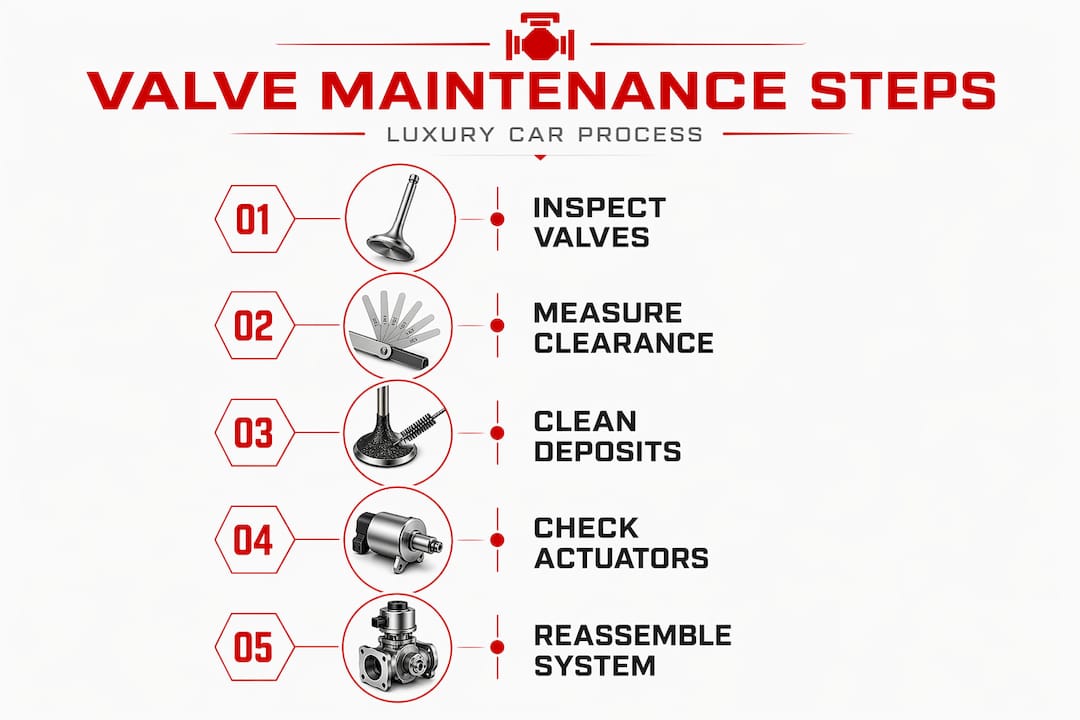
Work through these steps in order. Skipping ahead is tempting, especially when you suspect a simple fix, but each step informs the next.
-
Pull fault codes first. Connect your OBD scanner before touching anything mechanical. A stored P0078 code, for example, points directly to the exhaust valve control solenoid circuit on Bank 1. Knowing this before you start saves hours of guesswork.
-
Perform a compression test. With the engine cold, test each cylinder. Low compression in one or more cylinders confirms valve sealing issues. This tells you whether you are dealing with a cleaning job or a replacement situation.
-
Inspect valve clearances. Check clearances every 30,000 to 60,000 miles using feeler gauges against your service manual specs. Too tight and the valve cannot seat properly. Too loose and you get the ticking noise that sounds harmless but signals real wear.
-
Use a borescope to check for carbon deposits. Insert the camera through the spark plug bore to view the valve head and seat. Soft, sooty carbon is manageable with chemical treatment. Hard, caked deposits typically require professional cleaning or mechanical removal.
-
Treat soft carbon deposits chemically. Add a quality fuel system cleaner to a full tank of premium fuel. Then take the car on a sustained highway run at higher RPMs. Highway driving burns soft carbon deposits that accumulate from low-speed city use and extended idling. This is not a substitute for mechanical cleaning when deposits are severe, but it works well as a preventive measure.
-
Test the exhaust valve control solenoid. Disconnect the solenoid connector and measure resistance across the terminals with your multimeter. A reading between 6.0 and 12.0 ohms is normal. An open loop reading or zero ohms means the coil has failed and needs replacement.
-
Run an active OBD test on the solenoid. With the scanner connected, activate the solenoid through the active test function. Listen for an audible click. A click confirms the electrical circuit is working. No click with correct resistance readings suggests a mechanical jam rather than an electrical fault.
-
Change the engine oil. Using high-quality oil and changing it on schedule directly reduces valve stem wear and prevents the oil sludge that accelerates carbon buildup on valve seats. On a turbocharged luxury engine, this step matters more than most owners realize.
-
Reassemble and retest. After any adjustments or cleaning, clear stored codes, run the engine to operating temperature, and recheck compression. Verify that the exhaust note sounds consistent and that no new codes appear.
Pro Tip: Long idling is one of the fastest ways to build up soft carbon on valve seats. If your driving is mostly short city trips, schedule a monthly highway run of at least 20 minutes at sustained speed. It costs nothing and extends the service interval noticeably.
Troubleshooting exhaust valve problems in luxury vehicles
Knowing what to look for cuts diagnostic time dramatically. These are the signals that tell you something is wrong before it becomes catastrophic.
- Ticking or tapping noises at idle or acceleration. Ticking noises are a primary symptom of incorrect valve clearance or early valve seat wear. Do not normalize this sound on a luxury vehicle.
- Unusual exhaust smoke color. Black smoke points to rich combustion or carbon buildup. Blue smoke indicates oil burning past valve seals. White smoke suggests coolant intrusion, which is a serious sealing failure.
- Check engine light with exhaust-related codes. Codes like P0078 directly flag solenoid circuit faults. Leaving these unresolved risks cascading damage to catalytic converters and oxygen sensors.
- Noticeable power loss under load. A valve that cannot seal properly bleeds compression, reducing power output. You will feel this on acceleration before it shows up in any scan.
Here is a quick reference for matching symptoms to appropriate action:
| Symptom | Likely Cause | Recommended Action |
|---|---|---|
| Ticking at idle | Valve clearance out of spec | Feeler gauge check, shim adjustment |
| Black exhaust smoke | Carbon buildup or rich mixture | Chemical treatment, fuel system inspection |
| Blue exhaust smoke | Valve seal failure | Seal replacement, possible valve inspection |
| P0078 code stored | Solenoid circuit fault | Multimeter test, active OBD solenoid test |
| Low cylinder compression | Valve not seating | Compression test, borescope inspection |
| Intermittent power loss | Mechanical valve jam | OBD active test to isolate fault |
Early diagnosis saves money by preventing cascade damage to catalytic converters and broader engine degradation. The repair cost for a catalytic converter on a Ferrari or Lamborghini makes exhaust valve service look cheap by comparison.
When you do need professional repair, understand that labor is 70 to 80 percent of the total cost on luxury vehicles. Cylinder head removal on a mid-engined sports car or a transversely mounted V8 is genuinely complex work. Choosing a shop that specializes in your specific brand is worth the premium. For additional valve control troubleshooting steps, the Valvecontrolexhaust resource library covers brand-specific diagnostic approaches in detail.
Maintaining modified or aftermarket valve control systems
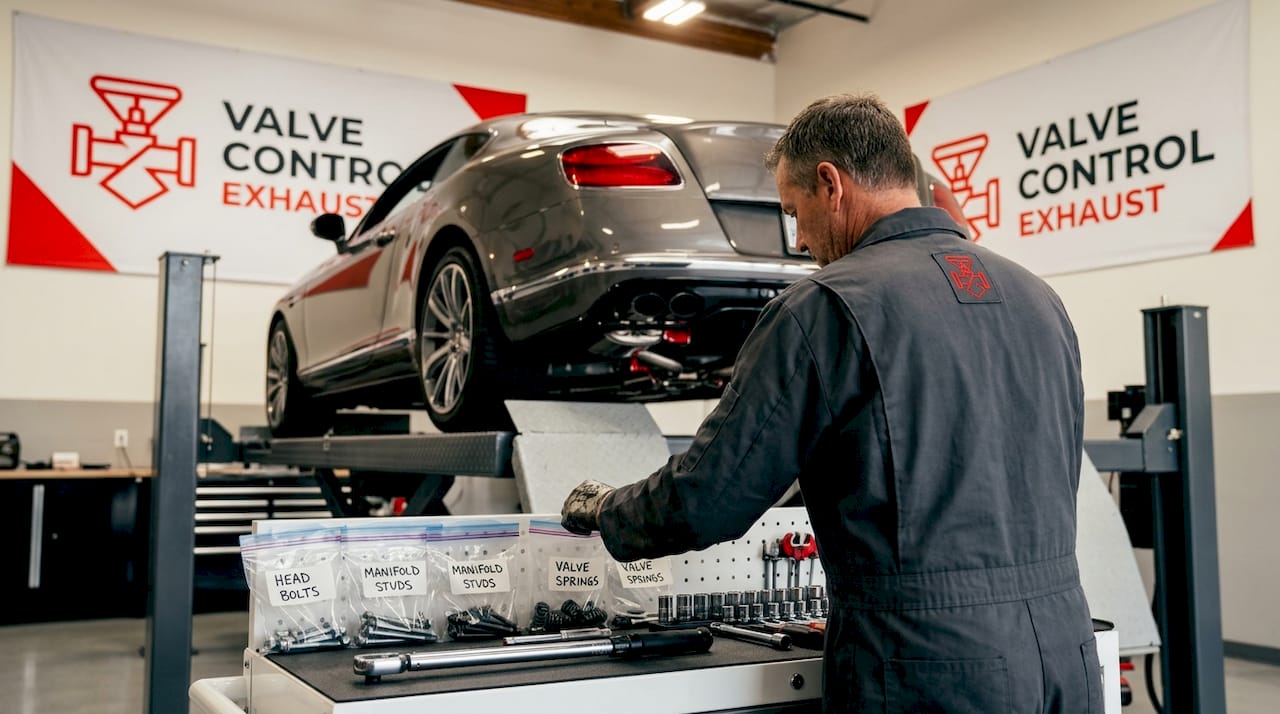
If your car runs an aftermarket valve control exhaust from a brand like Armytrix, IPE, or Akrapovic, the maintenance picture changes. These systems are engineered for performance and sound flexibility, but they introduce additional components that need their own attention.
Follow these practices to keep a modified system performing correctly:
- Inspect the full system every six months. Biannual visual checks should cover the valve body, actuator connections, mounting hardware, and all joints for rust, cracks, or leaks. Even a small exhaust leak at a valve housing changes the sound profile and can introduce exhaust gases into the cabin.
- Check actuator wiring and connectors. Vibration loosens connections over time. A loose actuator connector is one of the most common causes of an exhaust valve that stops responding to the control module.
- Verify compliance with local noise and emissions laws. Modified exhaust systems that keep valves open at all times can exceed legal noise limits in many jurisdictions. Know your local regulations and use the control module to set appropriate valve behavior for street driving.
- Use the control module to manage valve position. Most quality aftermarket systems allow you to set default valve openness, create driving mode profiles, and limit noise at startup. Using these features is not just convenient. It reduces wear on the actuator by avoiding unnecessary full-open and full-close cycling.
- Schedule professional inspections annually. Annual exhaust system checks around every 10,000 miles catch rust and leaks before they compromise the system. For modified setups, find a shop familiar with the specific brand you are running.
Pro Tip: If you are running a valve bypass or a permanently open configuration, post-modification inspections must include checking actuator connections and valve bodies for leaks. A leak in a bypassed system degrades both sound quality and back-pressure balance, which affects performance in ways that are not always obvious until you run a dyno.
You can also explore how OEM compares to aftermarket systems when deciding whether a modification is worth the added maintenance commitment.
My honest take on where most owners go wrong
I have seen a consistent pattern among luxury car owners who end up with expensive valve repairs: they treat exhaust sound changes as personality, not symptoms. A Ferrari that suddenly sounds raspier at idle, or a BMW M car that develops a subtle tick at cold start, gets written off as “character.” Months later, that character turns into a compression problem and a four-figure repair bill.
The uncomfortable truth about exhaust valve upkeep for luxury cars is that the vehicles most worth protecting are often the ones whose owners are most reluctant to put on a lift. There is a psychological barrier around touching a car that cost six figures. But neglect does not care about the sticker price.
What I have found actually works is building a simple trigger system. Any new noise, any new code, any change in exhaust color or sound quality gets investigated within two weeks. Not eventually. Not at the next service. Within two weeks. That discipline, combined with scheduled valve maintenance tips and quality parts, keeps these systems running for well over 100,000 miles without major intervention.
The other thing worth saying: diagnostic tools have become accessible enough that any serious enthusiast can do meaningful pre-diagnosis at home. A quality OBD scanner with active test capability costs a few hundred dollars. The VANOS and variable valve timing diagnostics available through platforms like Tuningbot give you enough insight to walk into a shop with real information rather than a vague complaint. That alone can save you from being upsold on unnecessary work.
Invest in the tools. Build the habit. The cars that stay spectacular are the ones that get treated that way.
— Info
Upgrade and protect your exhaust system with Valvecontrolexhaust
If you are serious about getting the most from your luxury vehicle’s exhaust system, Valvecontrolexhaust builds valve control solutions specifically for Audi, BMW, Ferrari, and Lamborghini owners who want real-time control over performance and sound.

Their systems are engineered with maintenance in mind, using quality actuators and control modules that integrate cleanly with factory electronics. Whether you are looking to upgrade an aging OEM setup or optimize an existing aftermarket system, the performance exhaust buyer’s guide at Valvecontrolexhaust covers IPE, FI Exhaust, Armytrix, Akrapovic, Valvetronic, and Ryft in detail, with side-by-side comparisons to help you choose the right fit for your car and driving style.
FAQ
How often should I inspect exhaust valves on a luxury car?
Valve clearances should be checked every 30,000 to 60,000 miles, while the full exhaust system benefits from a visual inspection annually or around every 10,000 miles.
What does a P0078 code mean for my exhaust valve system?
The P0078 code flags a fault in the exhaust valve control solenoid circuit on Bank 1. Test the solenoid with a multimeter and confirm resistance falls between 6.0 and 12.0 ohms; a reading outside that range means the coil needs replacement.
Can I clean exhaust valve carbon deposits without removing the head?
Yes, for soft deposits. Adding a quality fuel system cleaner and completing a sustained highway run at higher RPMs will burn off light carbon accumulation. Hard, baked-on deposits require mechanical or professional cleaning.
Why is exhaust valve replacement so expensive on luxury vehicles?
Labor accounts for 70 to 80 percent of the total repair cost because cylinder head removal on mid-engined or complex luxury vehicles is a highly labor-intensive process, often pushing total costs between $800 and $3,000.
Do aftermarket valve control systems need different maintenance than OEM?
Yes. Modified systems require biannual inspections of actuator connections, valve bodies, and mounting hardware for leaks and rust. Control module settings should also be reviewed to manage actuator wear and maintain compliance with local noise regulations.