
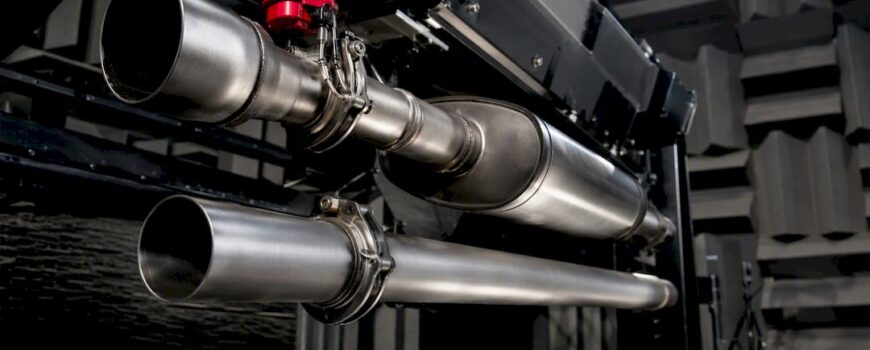
A straight pipe strips out mufflers, resonators, and often the catalytic converter, making it the loudest and legally riskiest exhaust modification you can do. A muffler delete only removes the muffler, so it’s loud but usually stays livable and reversible. For a daily-driven car, skip the straight pipe entirely and start with a muffler delete, resonator delete, or a valved exhaust; save the full straight pipe for track or off-road builds only.
TL;DR:
- A muffler delete costs between $100 and $300 and offers a louder but more moderate sound compared to a full straight pipe, which is significantly louder and riskier legally.
- Removing just the resonator alters the tone more than volume, while a full straight pipe often produces harsher, raspier exhaust sounds with higher drone potential.
- Straight pipes can fail emissions tests and violate noise laws, especially if they remove the catalytic converter, making legal compliance a major concern.
- The main power gains from deletions come from larger piping and ECU tuning; simple muffler or resonator deletes rarely produce noticeable horsepower improvements.
- Valved exhaust systems provide a legal and reversible solution, allowing owners to switch between quiet and aggressive modes without permanent modifications.
Table of Contents
- Straight Pipe vs Muffler Delete: The Quick Comparison
- What Is a Muffler Delete vs a Straight Pipe?
- How Loud Is a Straight Pipe Compared to a Muffler Delete?
- Does a Muffler Delete or Straight Pipe Add Horsepower?
- Is a Muffler Delete Bad for Legality or Warranty?
- What Does a Muffler Delete or Straight Pipe Cost?
- How Do You Decide Between These Options?
- Why Valved Exhaust Systems Solve the Delete Dilemma
- Does Deleting the Muffler Hurt Fuel Efficiency?
- What Noise Laws Should You Check Before Modifying?
- Which Sounds Better: Not Just Louder, But Richer?
- A Publisher’s Take on Responsible Modification
- Get the Sound You Want Without the Straight Pipe Risk
- Sources
Straight Pipe vs Muffler Delete: The Quick Comparison
Before you commit to either modification, here’s how they stack up on the four things that actually matter to a street-driven car.
- Loudness: Straight pipe is the loudest by a wide margin; muffler delete is loud but generally less extreme.
- Tone: Straight pipe tends toward raw, raspy, and unfiltered; muffler delete keeps more of the engine’s natural growl.
- Legal risk: Straight pipe carries high risk if it removes the catalytic converter; muffler delete carries moderate risk depending on your state’s noise laws.
- Inspection outcome: Straight pipes commonly fail emissions and safety inspections; muffler deletes usually pass emissions but can fail a visual noise check.
- Typical cost: Muffler delete runs roughly $100 to $300 at a shop; a full straight pipe job costs considerably more depending on pipe length and labor.
- Best use case: Muffler delete suits daily drivers and weekend cars; straight pipe suits track cars, drag builds, and off-road vehicles that never see a public road.
If you only remember one thing from this section, remember that scope is what separates these two mods, not just volume.
What Is a Muffler Delete vs a Straight Pipe?
A muffler delete removes the muffler and replaces it with a straight section of pipe or a simple delete pipe, leaving the rest of the exhaust system intact. The catalytic converter, resonator, and factory piping stay in place. You get more flow and a louder, deeper tone, but the rest of the system still shapes the sound.
A straight pipe, by contrast, usually means gutting most or all of the sound and emissions equipment between the engine and the tip: resonators, mufflers, and sometimes the catalytic converter itself. That’s why it’s the loudest configuration and also the one most likely to run afoul of emissions law.
Two related terms get thrown around loosely, and knowing them prevents a costly mistake at the shop:
- Resonator delete removes only the resonator, a component that targets specific frequencies rather than overall volume. It changes tone more than loudness and is often the mildest, most reversible starting point.
- Catback refers to everything from the catalytic converter back, including the resonator, muffler, and tip. A catback exhaust swap replaces this section with an aftermarket setup rather than deleting parts outright, which is why straight pipe vs catback comparisons come up so often. A catback replacement keeps emissions equipment intact while still improving flow and sound.
- Catless means the catalytic converter itself has been removed or replaced with a straight section, which is the step that creates the most legal exposure.
Picture the stock exhaust path: engine, manifold, downpipe, catalytic converter, resonator, muffler, tip. Each deletion you perform removes one link from that chain, and each one changes sound, flow, and legality a little differently.
How Loud Is a Straight Pipe Compared to a Muffler Delete?
Sound is where the muffler delete vs straight pipe decision gets personal, because tone matters as much as volume. A muffler delete tends to produce a deeper, throatier growl, since the resonator (if kept) still smooths out some harsh frequencies. A straight pipe, especially one that removes the resonator and cat, produces a rawer, often raspier or higher-pitched howl, particularly on four and six-cylinder engines that lack the low-end rumble of a big V8.
Drone is the part nobody warns you about until it’s too late. It shows up as a droning resonance, usually somewhere in the 1,800 to 2,500 RPM range, right where cruising speed on the highway lands. It’s caused by exhaust pulses resonating inside the cabin, and it gets worse the more sound-shaping equipment you remove. A muffler delete on a car with an intact resonator often drones less than a full straight pipe, because the resonator is still doing its job of taming specific frequencies even without the muffler.
Mitigation is possible without going back to stock. Keeping the resonator while deleting only the muffler is another middle path. Valved exhaust systems solve it differently: they let you close the valve for cruising and open it for backroads.
Pro Tip: If drone is your biggest fear, ask your shop about resonator placement before you ask about pipe diameter. A well-placed resonator does more for cabin comfort than almost any other single component.
Does a Muffler Delete or Straight Pipe Add Horsepower?
Neither modification is a horsepower magic trick, and you should walk in with realistic expectations. Removing a muffler or resonator reduces backpressure slightly, which can free up a small amount of flow, but simple deletes rarely produce large gains on their own. Real, measurable power increases come from a combination of factors working together, not from pulling one part off the car.
Here’s where actual gains come from, in rough order of impact:
- A larger-diameter downpipe paired with an ECU tune, which addresses flow and fueling together.
- Turbocharged engines respond more to exhaust changes than naturally aspirated engines, since backpressure and turbo spool interact directly.
- Full catback replacement with larger piping, rather than just deleting one component.
- Removing oxygen sensors or the catalytic converter without recalibrating the ECU, which risks a check-engine light and can make the car run worse, not better.
Naturally aspirated engines see the smallest gains from any delete, sometimes nothing measurable at all. Turbo platforms see more benefit because reduced backpressure helps the turbo spool and exhale more efficiently, but that benefit disappears fast if the ECU isn’t tuned to match the new flow characteristics. If horsepower is genuinely the goal, a downpipe paired with a proper tune beats a muffler delete every time.
Is a Muffler Delete Bad for Legality or Warranty?
This is the section that separates enthusiasts who keep their cars for years from ones who end up back at the shop paying to undo their own work. Federal law under the Clean Air Act prohibits tampering with emissions control equipment for vehicles used on public roads, which means removing a catalytic converter is illegal in every state, not just the strict ones. A muffler delete that leaves the cat intact doesn’t violate this federal rule, but a straight pipe that removes the cat does.
State and local rules stack on top of that federal baseline:
- Many states require emissions or smog inspections that check for an intact catalytic converter and functioning sensors.
- Some states add a visual or exhaust-note check during safety inspections, which a very loud straight pipe can fail even with the cat intact.
- Local noise ordinances vary by city and county, and some measure decibels at idle or at a set distance from the tailpipe.
- Straight pipes are frequently cited as a common cause of failed inspections, especially in states with strict smog programs.
Before modifying anything, check your state’s specific inspection requirements and any city noise ordinance; a quick call to a local inspection station saves you from an expensive surprise. Warranty coverage is its own risk. Dealers and manufacturers can deny warranty claims on components they can plausibly link to an aftermarket exhaust, and a resale buyer’s mechanic will often flag a deleted cat or missing resonator during a pre-purchase inspection. A detailed legal checklist is worth reviewing before you touch a wrench, and keeping factory emissions equipment intact remains the simplest way to stay compliant while still gaining sound and flow.
What Does a Muffler Delete or Straight Pipe Cost?
Budget depends heavily on whether you go welded or clamp-on, and whether you do it yourself or pay a shop.
- Resonator delete: Often the cheapest and most reversible option, with shops typically charging $100 to $300 depending on labor and pipe access.
- Muffler delete: Similar range to a resonator delete, though full welded jobs on harder-to-reach mufflers can push toward the higher end.
- Full straight pipe: Costs more overall since it typically involves replacing multiple sections of pipe, not just cutting one component out.
Welded deletes resist leaks and rattling but make reversing the job expensive, since you’re paying to weld a muffler or resonator back in. Clamp-on solutions cost less upfront and stay reversible, but they can develop leaks or rattle loose if the shop doesn’t torque them correctly. If you ever need to restore a car to stock for resale or warranty reasons, budget for a new muffler or catalytic converter plus labor. That restoration cost often surprises owners who assumed a delete was a one-way decision with no financial consequence down the road.
How Do You Decide Between These Options?
Match the modification to how you actually use the car, not how you wish you used it.
- Daily driver: Choose an aftermarket muffler, resonator delete, or valved exhaust. You want sound on demand, not drone at every stoplight.
- Weekend car: A muffler delete or catback replacement usually hits the sweet spot between attitude and livability.
- Track or off-road only: A full straight pipe makes sense here, since you’re not worried about inspections or neighbors.
Before any shop touches your car, ask these three questions:
- Will this pass my state’s emissions and safety inspection with the cat and sensors intact?
- Will removing this component trigger a check-engine light, and does it need an ECU tune to run correctly afterward?
- How does this affect my factory warranty, and is the modification reversible if I need to sell the car?
Walk away if a shop can’t answer those clearly, if they suggest deleting sensors without any plan for the resulting fault codes, or if they wave off your state’s inspection rules as “not a big deal.” A conservative daily-driver setup almost always beats a straight pipe you regret three months later.
Why Valved Exhaust Systems Solve the Delete Dilemma
The core tension in this entire comparison is that owners want aggressive sound without the legal, warranty, and livability costs of a straight pipe. A valved exhaust system resolves that tension directly instead of forcing a compromise.
These systems use electronically controlled valves that open for an aggressive, loud mode and close for a quiet, compliant mode, all from the same exhaust, on the same drive. That flexibility matters most on:
- Luxury daily drivers, where drone at cruising speed is unacceptable but a loud exhaust at a car meet is the whole point.
- Vehicles still under manufacturer warranty, since a valved system from a reputable brand typically preserves the catalytic converter and emissions sensors rather than deleting them.
- Cars headed for resale, since keeping factory emissions equipment intact avoids the inspection failures tied to gutted exhausts.
Valve Control Exhaust builds these systems specifically for platforms like Audi, BMW, Porsche, and Lamborghini, where owners want the option of aggressive sound without permanently altering the car’s emissions compliance. Instead of choosing between loud-but-risky and quiet-but-boring, a valved system gives you both settings on the same button press.
Does Deleting the Muffler Hurt Fuel Efficiency?
Fuel efficiency rarely changes in a way you’d notice from either modification, and that surprises a lot of first-time modifiers who expect either a penalty or a bonus. A muffler or resonator delete slightly reduces backpressure, which in theory helps the engine breathe with marginally less effort. In practice, that effect is too small to show up reliably on a fuel economy readout for most street-driven engines.
Where fuel efficiency actually suffers is when a delete throws off sensor readings or forces the ECU to run in a fallback mode. Removing a catalytic converter without addressing the downstream oxygen sensor commonly triggers a check-engine light, and depending on the platform, that can push the engine into a conservative fuel map that actually hurts efficiency rather than helping it. This is one more reason ECU tuning matters more than the delete itself: a properly tuned setup keeps the fuel map optimized for the new exhaust flow, while an untuned one can leave you worse off at the pump than before you touched the car.
Turbocharged engines see slightly more variability here than naturally aspirated ones, since turbo systems rely more heavily on exhaust-side sensor feedback to manage boost and fueling together. If fuel economy matters to you as much as sound, keep the sensors functional and skip any delete that requires disconnecting or relocating them.

What Noise Laws Should You Check Before Modifying?
Noise regulations vary more by city and county than most drivers expect, which means “it’s legal where my buddy lives” doesn’t mean much for your own driveway. Many jurisdictions set a maximum decibel level measured at idle or at a fixed distance from the tailpipe, and police in some areas can issue citations based on a subjective “plainly audible” standard rather than a meter reading at all.
Neighborhood considerations matter just as much as legal ones, especially if you leave for work before sunrise or come home late. A straight pipe that sounds great revving at a car meet can become a genuine source of tension with neighbors when it echoes off houses at 6 a.m. Homeowners’ associations and apartment complexes sometimes have their own noise rules layered on top of city ordinances, and a loud exhaust is one of the more common complaints that gets filed against a car owner by name.
Practical steps before you modify:
- Call your local police department’s non-emergency line and ask about decibel limits or noise ordinances specific to vehicles.
- Check whether your city measures noise by meter or by officer discretion, since that changes how much risk a loud straight pipe carries.
- Consider a valved exhaust or noise-control setup if you live somewhere with strict quiet hours, so you can stay compliant at night and loud on a weekend drive.
A little research here prevents the awkward conversation with a neighbor or the far less pleasant one with a police officer.
Which Sounds Better: Not Just Louder, But Richer?
Loudness is the easiest thing to measure and the least useful way to judge these two modifications, because tone quality is what actually determines whether you’ll love or regret the sound six months in. A muffler delete on a V8 tends to keep a deep, resonant rumble because the engine’s natural firing order already produces low-frequency tones; removing the muffler just lets more of that existing character through. The same muffler delete on a four-cylinder or six-cylinder engine often sounds thinner and raspier, because there’s less low-end content to begin with.
A straight pipe amplifies whatever tone was already there, for better or worse. On a big-displacement engine with a good stock tone, a straight pipe can sound genuinely great, if aggressive. On a smaller engine, it frequently turns into a harsh, buzzy drone that gets old fast, especially at highway RPM.
This is exactly why enthusiast guides so often steer daily drivers toward glasspacks, resonator deletes, or aftermarket mufflers instead of a full straight pipe: those options shape tone deliberately instead of just removing whatever was controlling it. A resonator’s specific job is tone-shaping, not volume control, which is why keeping one while deleting the muffler often produces a richer, more deliberate sound than either extreme on its own.
A Publisher’s Take on Responsible Modification
If there’s one lesson worth taking from every angle of this comparison, it’s that reversible beats permanent almost every time. Straight pipes look tempting in a video, but the drone, the inspection risk, and the resale headache tend to outweigh the thrill within a year of ownership.
Our recommendation for daily-driven cars leans toward measured choices: a resonator delete, an aftermarket muffler, or ideally a valved system that lets you dial sound up or down depending on where you’re driving. If you’re weighing fitment on a specific platform, reach out to a shop that specializes in valved performance exhaust systems before committing to anything permanent. The car you love loud on Saturday still has to be livable on Monday’s commute.
— Info
Get the Sound You Want Without the Straight Pipe Risk
Valve Control Exhaust solves the exact problem this article just walked through: you don’t have to choose between a quiet, compliant commute and a loud, aggressive weekend drive. Our adjustable valve technology gives Audi, BMW, Porsche, Ferrari, and Lamborghini owners a button-press switch between a compliant mode that keeps emissions equipment intact and a full-throttle mode built for backroads and track days.

Unlike a straight pipe or muffler delete, a valved system doesn’t force a permanent, irreversible decision on a car you might sell in two years. It preserves the sensors and catalytic converter that keep you compliant at inspection time, while still giving you the aggressive tone a straight pipe promises. If you’re comparing premium valved options across brands like IPE, Armytrix, Akrapovic, or Ryft, our performance exhaust buyer’s guide breaks down fitment, sound modes, and compatibility by vehicle. Browse compatible systems for your model and get a fitment recommendation before you commit to anything permanent.
Sources
- Muffler Delete vs Straight Pipe: Differences, Sound, Cost, and Legality — TorqueNotes
- Resonator vs muffler: the key differences — Jalopnik
- Resonator vs muffler: Key differences explained — DieselPowerProducts (2026-06-05)
- Uknowledge
Recommended
- Exhaust Valves and Sound: How They Shape Your Drive
- Why Variable Valve Exhaust Outperforms Fixed Systems
- Valved Exhausts Compared: Practical Critique of IPE, FI, Armytrix, Akrapovic, Valvetronic, and Ryft
- What Separates Premium Valved Exhausts: Practical Analysis of IPE, FI, Armytrix, Akrapovic, Valvetronic & Ryft