Running a downpipe without a tune is possible short-term, but it’s not something to leave alone for months. Expect modest power gains, a louder exhaust note, and a real chance of a check engine light or failed emissions readiness. The safer path: install a high-flow catted downpipe rather than a catless one, and book a tune within a few weeks rather than treating the untuned setup as a permanent solution.
TL;DR:
- Installing a downpipe without a tune can cause check engine lights and failed emissions tests due to ECU misinterpretation of oxygen sensor signals.
- Untuned gains are modest, typically 5 to 25 horsepower, with significantly higher improvements possible after a proper tune that adjusts fuel, boost, and O2 thresholds.
- Legal risks are high for street use of catless downpipes in the US, as they violate EPA regulations and can lead to inspection failures and fines.
- Proper installation with OEM-compliant hardware and a high-flow catted design reduces the risk of CELs and ensures better long-term legality and engine health.
- Getting a tune within a few weeks of installation is crucial to prevent engine damage and to fully realize the performance benefits of the hardware upgrade.
Table of Contents
- What a Downpipe Changes Mechanically and Why the ECU Notices
- Untuned Gains vs. What a Real Tune Unlocks
- Is a Catless Downpipe Illegal for Street Use?
- Why Is My Check Engine Light on After a Downpipe Install?
- How to Reduce Risk if You Can’t Tune Right Away
- When Should You Get a Tune After a Downpipe Install?
- Shop Checklist and What Valve Control Exhaust Brings to the Build
- Balancing Enthusiast Goals With Legal and Longevity Concerns
- Get Compliant Hardware and Fitment Support From Valve Control Exhaust
- Sources
- FAQ
What a Downpipe Changes Mechanically and Why the ECU Notices
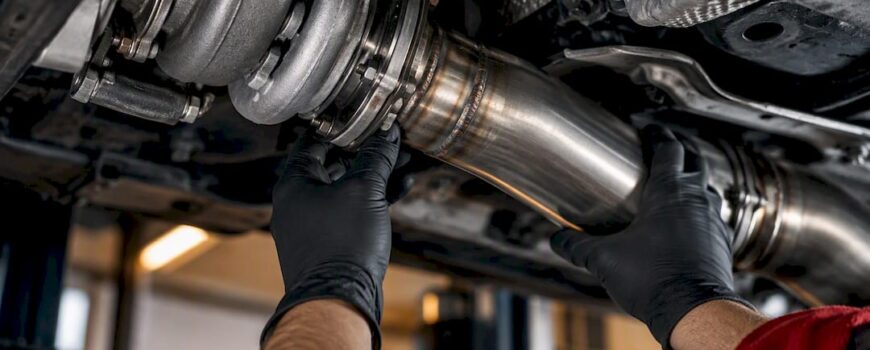
A downpipe sits between the turbo and the rest of your exhaust system, and its diameter, taper, and internal geometry directly affect how fast exhaust gas can escape. Swap a narrow, restrictive factory downpipe for a wider aftermarket one, and you cut backpressure at the turbine. Less backpressure means the turbo spins down and back up faster, which translates to quicker spool and sharper throttle response. Technical breakdowns of downpipe design show this pressure drop is the whole point of the upgrade. It’s also why the ECU starts paying closer attention the moment you install one.
Every modern gasoline engine relies on oxygen sensors to keep the fuel mixture in check and to confirm the catalytic converter is doing its job. There’s typically one O2 sensor upstream of the catalyst (or catalysts) and one downstream. The upstream sensor tells the ECU how rich or lean combustion is running. The downstream sensor watches how much oxygen variation survives the catalyst, which is how the computer judges catalytic efficiency.
When you install a downpipe, three things can shift the picture your ECU relies on:
- Sensor position changes. Moving the O2 sensor bung even a few inches alters gas temperature and flow characteristics at the sensor tip, which changes how quickly it reacts.
- Catalyst volume or type changes. A smaller or more free-flowing catalyst than stock lets more oxygen fluctuation reach the downstream sensor, which can look like reduced catalytic efficiency to the computer even when nothing is actually wrong.
- Airflow and pressure change. Faster spool means more air moving through the system sooner, and without recalibrated fueling and boost targets, the mixture can run leaner than the factory tune expects.
That combination is why ECUs on unmodified fuel maps sometimes see downstream oxygen readings that “mirror” the upstream sensor too closely. Aftermarket changes can make the two sensors behave almost identically, which the computer reads as a catalyst that isn’t converting exhaust gas properly. It’s not always a real efficiency problem. It’s often just the sensor picking up a different flow pattern than the factory calibration was written for.
None of this means the engine is in immediate danger. It means the computer is running open-loop assumptions that were tuned for a different piece of hardware, and it will eventually tell you about it with a warning light or a failed readiness check.
Untuned Gains vs. What a Real Tune Unlocks
Realistic expectations matter here more than anywhere else in this conversation. A downpipe by itself, without any change to the fuel or boost tables, is a flow improvement. It’s not a fueling improvement, and it’s not a boost improvement. That distinction is the whole story of why the numbers people quote online vary so much.
Statistic snapshot: Enthusiast community data and shop reports commonly put untuned downpipe gains in the 5 to 25 horsepower range, depending on the platform, whether the downpipe retains a catalyst, and how restrictive the factory setup was to begin with. A tune on the same hardware frequently unlocks noticeably more, particularly in the midrange, because the ECU can finally use the extra flow instead of fighting it.
Why the range is so wide comes down to a handful of variables specific to your car:
- Factory torque limiters. Many manufacturers cap torque output in software regardless of how much air the engine could physically move, so a downpipe alone does nothing until a tune raises that ceiling.
- Turbo sizing. A larger factory turbo has more headroom to benefit from reduced backpressure; a small, low-inertia turbo may already be near its spool limit and shows smaller gains.
- Fuel system capacity. Injectors and fuel pumps sized for stock boost levels limit how much benefit a tune can safely extract, even with better exhaust flow.
- Catted vs. catless design. A catless downpipe usually shows a bit more raw flow than a catted one, but the difference on a dyno is often smaller than people expect, and it comes with real legal downside covered in the next section.
The role of exhaust flow in turbo response explains why spool and midrange torque respond disproportionately to backpressure reduction compared to peak horsepower. That’s usually the gain you’ll actually feel driving around, even before a tune, more than any number on a printout.
Is a Catless Downpipe Illegal for Street Use?
Federal guidance treats a catless downpipe as a form of tampering in most cases, and street use carries real legal exposure in the United States. This isn’t a gray area the way some forum threads suggest.
The EPA’s exhaust system repair guidance is explicit: replacing a catalytic converter’s function with a pipe that bypasses it can violate the Clean Air Act, and both the installing shop and the vehicle owner can face penalties. Separate EPA tampering policy reinforces that removing or defeating emissions control devices is prohibited at the federal level, and many states layer their own inspection and tampering rules on top of that.
Here’s what actually happens when tampering gets caught:
- Visual inspection. Many states check for a catalytic converter as part of an emissions or safety inspection, and a catless pipe is easy to spot on a lift.
- OBD readiness monitors. A catless setup often fails the catalyst monitor outright, which shows up automatically during an OBD-II emissions check in states that use one.
- Roadside and dealership scans. Diagnostic scans during unrelated service visits can flag missing catalyst codes even outside a formal inspection.
Enforcement varies by jurisdiction and how aggressively local agencies pursue tampering cases, but variable enforcement isn’t the same as legal cover. If the car sees regular street use, the practical move is a high-flow catted downpipe rather than a catless one. The catted vs. catless comparison breaks down where each configuration actually lands on flow versus compliance. Keep your receipts and installation paperwork, too. Documentation showing you installed EPA-compliant hardware is worth more at inspection time than any explanation you give verbally.
Why Is My Check Engine Light on After a Downpipe Install?
A check engine light after a downpipe swap almost always traces back to catalyst efficiency codes or an O2 sensor behavior the ECU doesn’t recognize. The two most common culprits are P0420 and P0430, which flag “catalyst system efficiency below threshold” on bank 1 and bank 2 respectively. These codes don’t necessarily mean your catalyst is failing. More often, they mean the downstream O2 sensor is reading a pattern the factory calibration wasn’t written to expect.

That mirroring behavior is worth understanding on its own. In a healthy stock system, the downstream sensor’s oxygen readings should be fairly flat and slow-changing compared to the upstream sensor’s constant back-and-forth swings, because the catalyst smooths out the exhaust as it passes through. When a smaller or more efficient-flowing catalyst lets more of that fluctuation through, the downstream trace starts to resemble the upstream one. The ECU interprets that similarity as reduced catalytic efficiency and throws the code, even when the catalyst itself is working fine.
If the light comes on, work through these steps in order:
- Scan for stored codes with an OBD-II reader and note the exact code, not just “check engine light.”
- Save the freeze frame data, which captures engine conditions the moment the fault triggered and helps a technician distinguish a sensor issue from a real catalyst problem.
- Run the manufacturer’s specified drive cycle for the affected monitor, since a single short trip often won’t clear or confirm anything.
- Compare O2 waveforms if you or a shop can pull live data. Shops that track pre- and post-downpipe O2 traces can usually tell within one drive cycle whether a code is a real efficiency drop or a calibration mismatch.
- Consult a tuner or exhaust specialist before assuming the part is defective. Most post-downpipe CELs resolve once fueling and O2 thresholds are recalibrated, not by swapping hardware again.
A step-by-step CEL diagnostic checklist walks through this same process with more detail on interpreting specific codes.
How to Reduce Risk if You Can’t Tune Right Away
Choosing the right hardware up front does more to protect you than any driving trick once the part is installed. A high-flow catted downpipe, with the O2 sensor bung positioned close to where the factory sensor sat, gives the ECU a signal that’s closer to what it already expects. That alone prevents a large share of the CELs people run into after a downpipe swap.

Pro Tip: Ask whoever installs the downpipe to measure the distance from the turbo flange to the O2 bung and compare it to the factory dimension. A mismatch of even two or three inches can change sensor response time enough to trigger a code that a slightly different design would have avoided entirely.
Installation quality matters just as much as the part itself. Sloppy work creates leaks, and leaks introduce outside air that throws off every oxygen reading downstream:
- Always use a new turbo-to-downpipe gasket rather than reusing the old one, since a compressed gasket rarely reseals properly.
- Torque every fastener to the factory specification, not by feel.
- Reface the flange if it shows any warping, especially on higher-mileage cars where heat cycling has taken a toll.
- Check every joint for leaks with the engine running and warm, not just cold.
- Avoid flex-section hardware that’s already past its rated service life, since a tired flex joint is a common hidden leak source.
Driving habits matter too while you’re running untuned. Avoid repeated hard, high-boost pulls back to back, since that’s exactly the condition where an unmatched fuel map is most likely to run lean. Let the car complete a full warm-up cycle before pushing it, and if you have access to a scan tool that logs live O2 data, save a few traces early on so you have a baseline to compare against if a light comes on later.
Skip the shortcuts some forums suggest, like O2 sensor spacers or simulator plugs. Those tools mask the ECU’s view of what’s happening rather than fixing the underlying mismatch, and they can hide a real problem along with the false code. A quality catted unit solves the root cause. A sensor spacer just hides the symptom.
When Should You Get a Tune After a Downpipe Install?
Book the tune within a few weeks of installation, not months, and sooner if you’re pushing the car hard or driving it daily in stop-and-go traffic. A proper ECU recalibration after a downpipe rewrites the fuel map to match the new airflow, adjusts boost control targets now that backpressure has dropped, and resets the O2 sensor thresholds so the catalyst monitor stops comparing your new hardware against old assumptions.
That recalibration protects more than just peak horsepower numbers. Running lean under boost for an extended period raises combustion temperatures, which is hard on pistons, valves, and the turbo itself over time. A tune that corrects fueling removes that risk along with the CEL.
- Fueling correction brings air/fuel ratios back to safe targets across the boost curve, not just at idle.
- Boost control adjustment lets the ECU manage wastegate duty cycle for the new exhaust flow instead of fighting a backpressure assumption that no longer applies.
- O2 threshold recalibration teaches the catalyst monitor what a healthy signal looks like on the new hardware, which is usually what clears a P0420 or P0430 for good.
The ideal sequence is straightforward: install the downpipe, drive it enough to confirm there are no leaks or mechanical issues, then get the tune. Some owners prefer having the tuner present at install so calibration happens the same day the part goes on, which skips the untuned window entirely. Either approach beats letting the car sit untuned indefinitely.
Shop Checklist and What Valve Control Exhaust Brings to the Build
A technician doing this job right runs through the same checklist every time: fresh turbo-to-downpipe gasket, fasteners torqued to spec, triple-square tooling on hand for the fasteners that require it, correct post-catalyst O2 sensor placement, and a full leak check followed by a real drive cycle before calling the job done.
Hardware choice determines how much of that checklist actually matters. Some manufacturers build catted, high-flow downpipes and valved exhaust components for various performance platforms, engineered around a safety-first logic: keep catalyst function intact, maintain sensor geometry close to factory expectations, and provide the ECU a workable signal while waiting on a tune.
- Broad compatibility across European and luxury performance vehicle platforms.
- Remote electronic valve control can adjust exhaust sound and character in real time.
- Components are sourced from authorized manufacturers rather than gray-market copies.
- Catted assemblies can be built to align with a compliance-minded, safety-first approach to vehicle modification.
That combination matters most for owners who want the driving experience upgrade now and the tune soon after, without gambling on inspection risk in between.
Balancing Enthusiast Goals With Legal and Longevity Concerns
Most enthusiasts install the downpipe before they book the tune. That’s the reality of how budgets and shop schedules work, and there’s nothing wrong with it as a sequence, as long as you treat the untuned window as temporary rather than permanent.
Where the car lives changes the math. A daily driver needs catted, documented hardware and a tune scheduled soon, because inspection exposure and long-term drivability issues compound the longer you wait. A dedicated track car has more legal breathing room in closed-course use, but the trade-offs around emissions compliance and street legality don’t disappear just because the car spends more time on track.
Keep every receipt and installation record regardless of which category your car falls into. Documentation showing exactly what hardware went on and when is the single easiest thing you can do to reduce friction at inspection time.
— Info
Get Compliant Hardware and Fitment Support From Valve Control Exhaust
Most catless setups trade long-term inspection risk for a few extra horsepower you probably won’t feel on the street. Valvecontrolexhaust takes the other route: catted, high-flow downpipes engineered to keep catalyst function intact while still improving spool and throttle response, so you’re not choosing between performance and staying road legal.

Browse the Down Pipe category for catted options built around genuine manufacturer components, or check Exhaust Parts for the gaskets, flanges, and hardware a proper installation actually needs. Need sound or valve components to round out the build? The Accessories lineup covers electronic valve controllers and related parts. If you’re still deciding between configurations, the catted downpipe benefits guide walks through why a compliant assembly is usually the smarter long-term buy. Reach out through the site for fitment questions specific to your platform, and get the hardware ordered before your next install slot.
Sources
These sources back the legal and technical claims made throughout this guide:
- Exhaust system repair guidance (EPA)
- EPA tampering overview (Clean Air Northeast mirror)
- Downpipe tuning overview (Bar-Tek)
FAQ
Do I Need a Tune for My Downpipe?
You don’t need one immediately, but you should plan on getting one within a few weeks. Without a tune, the ECU is still running fuel and boost maps written for the old hardware, which risks a check engine light and leaves real performance on the table.
Is a Catless Downpipe Illegal?
In most cases, yes, for street use in the United States. EPA guidance treats removing catalytic function as tampering under the Clean Air Act, and many states enforce their own inspection rules on top of that.
How Much Horsepower Will a Catless Downpipe Add?
Untuned gains from a downpipe, catted or catless, typically fall in the 5 to 25 horsepower range, depending on the platform and turbo sizing. A tune on the same hardware usually unlocks meaningfully more, especially through the midrange.
Can I Run an Intake Without a Tune?
Yes, and the risk profile is generally lower than with a downpipe because an intake doesn’t move an O2 sensor or change catalyst monitoring conditions. You may still see a minor fueling shift on some platforms, but CELs are far less common than after a downpipe swap.
Will Running a Downpipe Without a Tune Damage My Engine?
Catastrophic damage in the short term is uncommon, based on wide community experience, but running lean under boost for an extended period raises combustion temperatures and adds wear to pistons, valves, and the turbo. Choosing a catted downpipe like those Valvecontrolexhaust builds and tuning promptly keeps that risk low.